


Gutters and exterior
The roof line checklist: gutters, downpipes, eaves and fascias
By the Action Garden team · Updated · 11 min read
Checked against: Better Health Channel, WorkSafe Victoria, Asbestos Victoria, CFA, Energy Safe Victoria, Victorian Department of Health
TL;DR
- Work from the top down and from the outlets out: gutters, downpipes, valleys and box gutters, fascias, eaves, then the roof edge.
- Most problems show from the ground first as stains, drips, peeling paint, sagging lines or plants growing in the gutter.
- A hose test at the far end of each gutter run tells you more than a quick look into it.
- Eaves linings in homes built or renovated before 1990 may contain asbestos cement sheeting, so never drill, cut or pressure clean them.
- Ladder and roof work is where the risk sits; anything above a single storey, on a steep roof or near power lines is a job for a professional.
| Part | When to check | What to look for |
|---|---|---|
| Gutters | Late autumn and late spring | Leaves, sludge, low spots, rust lines and split joints. |
| Downpipes and outlets | Every gutter clean | Hose test each one; listen for flow and check the base. |
| Valleys and box gutters | Late autumn | Leaf build-up, standing water, rust at joints. |
| Fascias and barge boards | Once a year | Peeling paint, soft timber, gaps behind the gutter. |
| Eaves linings | Once a year | Water stains, sagging sheets, gaps where pests get in. |
What is the roof line, and why check it as one job?
The roof line is everything along the edge of the roof that collects and carries water: the gutters, downpipes, valleys, box gutters, fascia boards, barge boards and eaves. These parts work as one system, so a fault in one usually shows up as damage in another. Checking them together, in one walk around the house, finds the cause rather than the symptom.
A blocked downpipe outlet, for example, makes the gutter overflow. The overflow soaks the fascia, the paint peels, the timber softens and the gutter brackets loosen. Fix only the peeling paint and the problem comes straight back.
A side view of the edge of a pitched roof. Labels appear one at a time as an animated line of rain runs off the roof: the roof sheeting or tiles, the gutter on its brackets, the fascia board behind the gutter, the eaves lining underneath, and the downpipe dropping to the ground. A second frame shows the same section with a blocked outlet: water rises in the gutter, spills over the back edge, runs down the fascia and stains the eaves lining. A third frame shows a valley where two roof planes meet, with leaves gathering at its base.
Melbourne makes the check worth doing twice a year. Deciduous street trees drop most of their leaves from April into May, gum trees shed bark and leaves all year, and rain days climb through winter, so a missed blockage has months to do damage before it dries out.
How should you work through the checklist?
Work from the top down and from the outlets out. Start with the gutters and the outlets that drain them, then the downpipes, then the valleys and box gutters, and finish with the timber and linings that show where water has escaped. A ground walk with binoculars comes first; a ladder only comes out for the parts that need it.
- Walk the house on a dry day with binoculars and a notepad. Sketch the roof and mark each downpipe.
- Walk it again in heavy rain with a coat on. Watch for spills, drips and silent downpipes.
- Hose test each gutter run from the far end, if you can safely reach it.
- Note every fault on your sketch, with a photo from the ground.
- Sort the list into what you can safely do, what a gutter cleaner can do, and what needs a roof plumber.
The rest of this article is the checklist for each part. For the full picture of how often to clean and what a clean involves, see our complete gutter cleaning guide for Melbourne.
What should you check on the gutters?
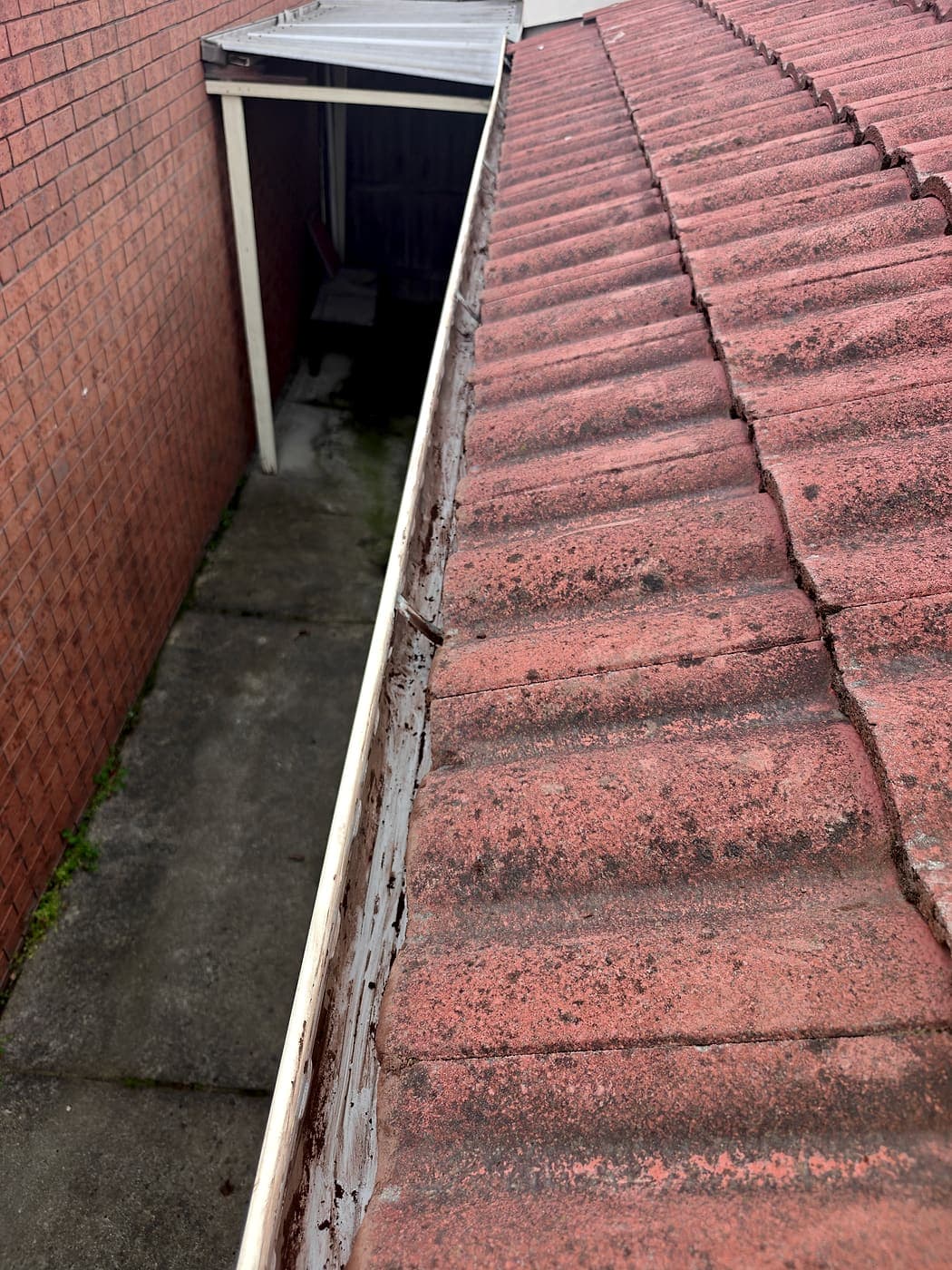
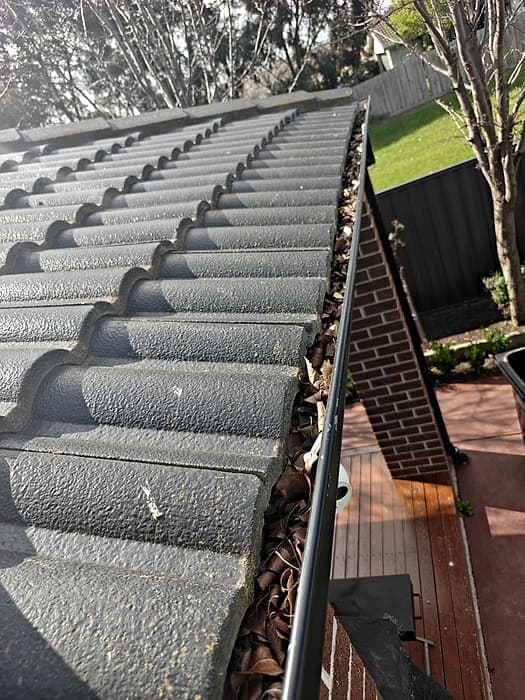
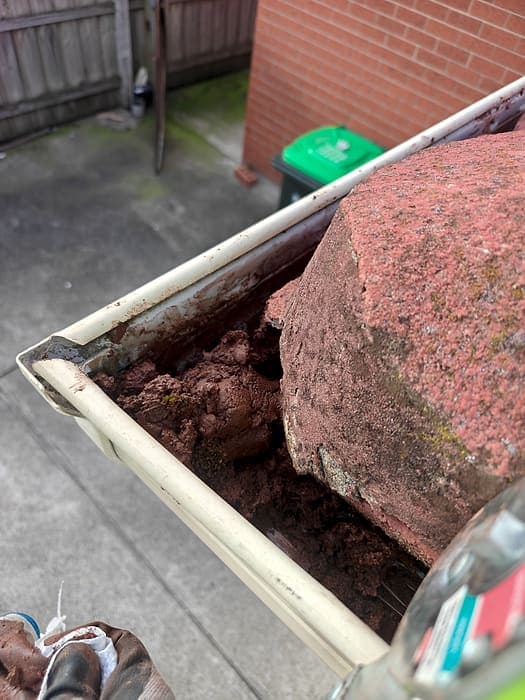
Check the gutters for debris, standing water, low spots, rust and failed joints. A gutter that looks clear from the ground can still be packed with sludge at the bottom or holding water in a dip between brackets.
The gutter checklist
- Plants, grass or seedlings growing out of the gutter: a sure sign of built-up sludge.
- A sagging line when you sight along the gutter from one end.
- Dark stripes or tide marks down the outside face, from water spilling over.
- Rust spots, rust lines along the base, or flaking inside the gutter.
- Drips from corners and joints after rain has stopped.
- Brackets that have pulled away from the fascia, or gaps between the gutter and the fascia.
- Standing water an hour or two after rain, which points to a low spot or a blocked outlet.
Rust and leaking joints are repair jobs, not cleaning jobs. Our guide on rusty, sagging or leaking gutters explains which faults a plumber needs to see and what to note before calling one.
Why the hose test beats a visual check
A gutter can look clean and still drain badly. Run a hose into the gutter at the end furthest from the downpipe and watch the water. It should flow steadily to the outlet without pooling, and the downpipe should start running within a few seconds.
If water pools halfway along, the gutter has dropped between brackets. If it reaches the outlet and backs up, the outlet or downpipe is blocked. If it disappears behind the gutter, water is getting onto the fascia. Each result points to a different fix, which is why the test comes before any repair.
What should you check on the downpipes?
Check that every downpipe runs freely, is joined and fixed to the wall, and empties where it should. A blocked downpipe turns a clean gutter into an overflowing one, so test each one rather than assuming.
The downpipe checklist
- Each downpipe runs within seconds of water entering its gutter.
- No water spraying from joints or offsets during rain.
- Brackets hold the pipe firmly to the wall.
- The base connects to a stormwater pipe, a rainwater tank inlet or a splash pad that sends water away from the wall.
- Upper-storey downpipes that discharge onto a lower roof end in a spreader, not a bare pipe.
- No dents or crushed sections near the ground, where mowers and bins hit them.
If a downpipe stays blocked after the outlet at the top is cleared, the blockage is usually at a bend or below ground. Where the downpipe feeds a tank, also check its leaf diverter and first flush device; our post on rainwater tanks and gutters goes through those parts.
What should you check in valleys and box gutters?
Valleys and box gutters collect more leaves than any other part of the roof, and their failures leak inside the house rather than outside it. Check them every autumn, and after big storms if the house has trees nearby.
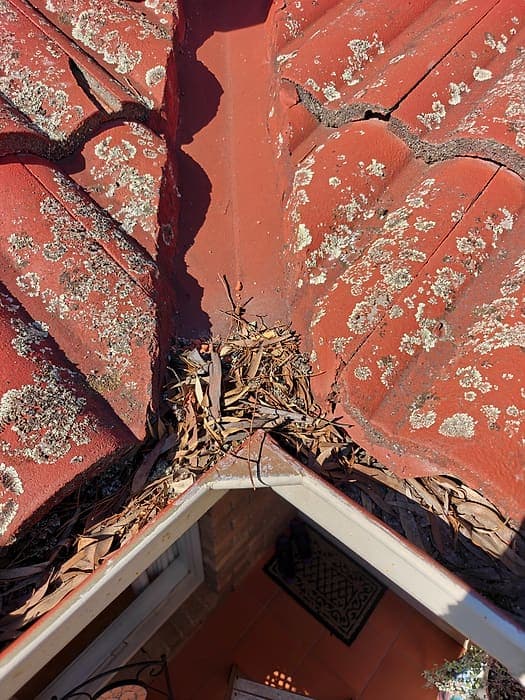
A valley is the channel where two roof planes meet. Leaves wash down into it and pile up at its base, where it meets the gutter. A box gutter sits inside the roof, often behind a parapet wall or between two roof sections, and drains through a sump or rainhead.
The valley and box gutter checklist
- Leaves and debris packed at the base of each valley.
- Tiles or sheeting lifted or cracked along the valley edges.
- Box gutter sumps and rainheads clear, with any overflow outlet open.
- Water stains on ceilings or internal walls below a box gutter.
- Rust at box gutter joints and corners.
These areas need roof access, which makes them a professional job on most homes. Our guide to box gutters, valleys and leaf traps explains how they work and why they need closer attention.
What should you check on the fascias and eaves?
Check the fascia boards and eaves linings for the marks water leaves behind: peeling paint, soft timber, stains and sagging sheets. They are the parts that tell you the gutters have been failing, even if the gutters look fine on the day.
The fascia and eaves checklist
- Peeling or blistering paint on the fascia, especially near corners and outlets.
- Soft or crumbling timber when pressed with a screwdriver from a safe position.
- Barge boards on gable ends that have split or pulled away.
- Brown or black stains on the eaves lining.
- Sagging, cracked or missing eaves sheets, and gaps at the edges.
- Bird droppings, nesting material or wasp activity at gaps.
- Black or green growth on the fascia and the wall below, a sign of long-term damp.
Gaps in the eaves and behind the gutter are how birds, possums and wasps get into the roof space. Our post on birds, possums and wasps in gutters covers what to do if you find activity. If the wall below has dark growth, our post on black mould on exterior walls and fences explains the causes and fixes.
Rotten fascia: why it matters for the gutter
On many Melbourne homes the gutter brackets are screwed straight into the timber fascia. When that timber rots, the screws lose their grip, the brackets tilt and the gutter sags. The sag then holds water, which keeps the fascia wet and speeds up the rot.
A fascia that is soft in one spot often has a leaking joint or a blocked outlet right above it. Replacing the board without fixing the leak only resets the clock. The usual order is: find and fix the water source, replace the damaged timber, then fix the gutter back on and re-level it.
What about the roof edge, trees and power lines?
Look at what sits on and above the roof line: overhanging branches, the bottom row of tiles or sheeting, and any power line running to the house. These are the outside influences that load the gutters with debris or make the work dangerous.
The roof edge checklist
- Branches touching the roof or hanging over the gutters.
- Broken or slipped tiles in the bottom row, or sheeting that stops short of the gutter.
- Moss or lichen on tiles, which washes grit into the gutters.
- The service line from the street to the house, and how close it runs to the gutter.
- Antennas, solar panel edges and roof penetrations that trap leaves.
In bushfire-prone areas, the CFA (opens in a new tab)'s property preparation advice includes keeping gutters clear of leaves and debris, which makes the roof edge part of fire preparation as well as rain preparation. The Victorian Department of Health (opens in a new tab) also advises keeping large tree branches clear of roofs that feed rainwater tanks.
Call a professional for any gutter work above a single storey, on a steep, tiled or wet roof, near the power line to the house, or where the eaves may contain asbestos. Better Health Channel (opens in a new tab) advice for ladder work includes keeping three points of contact and avoiding wet, windy or hot conditions. Energy Safe Victoria (opens in a new tab) warns to keep ladders, tools and yourself well clear of overhead power lines.
What are the most common roof line mistakes?
The most common mistakes are fixing the visible damage instead of the water source, and doing the check in fine weather only. Others:
- Cleaning without testing. Scooping out leaves but never running water through, so a blocked downpipe goes unnoticed.
- Repainting wet fascias. New paint over damp timber peels within a season.
- Sealing the overflow. Silicone across a front-face slot or a rainhead overflow sends water back into the roof in heavy rain.
- Blasting eaves with a narrow jet. High pressure aimed up into the eaves forces water into the roof space; eaves need a gentle, low-pressure wash, and old flat sheets need testing for asbestos first.
- Leaning ladders on gutters. The gutter dents, the bracket bends and the ladder can slide sideways.
- Ignoring the second storey. Upper gutters are out of sight, so they are often the ones that fail first.
A simple record to keep
Keep the sketch of your roof with each downpipe numbered, and add a dated line each time you check. Note which runs filled fastest, which outlets blocked and what repairs were done.
After two or three years the record shows you the pattern: which trees load which gutters, which outlet always blocks, and whether a twice-yearly clean is enough. It is also useful when selling, insuring or getting a plumber's opinion, because it shows the history instead of a single day's snapshot.
When is it worth handing the roof line to a professional?
It is worth handing it over when the gutters are out of easy reach, when the same faults keep coming back, or when the check shows repair work. Two-storey homes are the usual case; our guide to gutters on two-storey homes covers the access options.
Action Garden's gutter cleaning service clears gutters and downpipes, bags and removes the debris, flushes the downpipes and includes a visual check of the roof and gutters, with a photo report of anything found. Gutter guard and pressure washing of eaves are available as add-ons. Repairs are a job for a licensed plumber. More articles on this topic sit in our gutters and exterior articles.
If you would rather someone else walked the roof line twice a year, a free quote is the place to start.
Your Garden. Our Promise.
From our jobs
Frequently asked
Can I check the roof line without climbing a ladder?
What does a dark stripe down the outside of a gutter mean?
Why is the paint peeling on my fascia boards but nowhere else?
Why does water run down the fascia below the bottom row of roof tiles?
How do I know if my eaves lining contains asbestos?
Do downpipes that discharge onto a lower roof need checking?
Is the roof line checked as part of a professional gutter clean?
Sources and further reading
- Ladder safety (Better Health Channel)
- Using portable ladders in the workplace (WorkSafe Victoria)
- Where is asbestos found in the home (Asbestos Victoria)
- How to prepare your property (CFA)
- Electrical safety outdoors (Energy Safe Victoria)
- Rainwater (Victorian Department of Health)
Caring for Melbourne gardens since 2019. Updated 18 November 2026.