


Hedges and trees
A big hedge job, start to finish
By the Action Garden team · Updated · 13 min read
Checked against: Dispute Settlement Centre of Victoria, vic.gov.au, Energy Safe Victoria, WorkSafe Victoria, Water Victoria, Royal Horticultural Society
TL;DR
- A good quote starts with the hedge's length, height, species, access on both sides and a couple of photos, so the crew arrives with the right gear.
- Before the first cut, the hedge is checked for nesting birds, wires, power lines, irrigation and anything fixed into it.
- Long hedges are cut in sections against a taut line, sides first from the bottom up, top last, with the base kept a little wider than the top.
- Overgrown hedges are brought back in stages over a season or two, never into bare wood on conifers, so the plant stays healthy.
- The job finishes with cuttings removed, beds and paths swept, a photo of the result and simple aftercare for the weeks that follow.
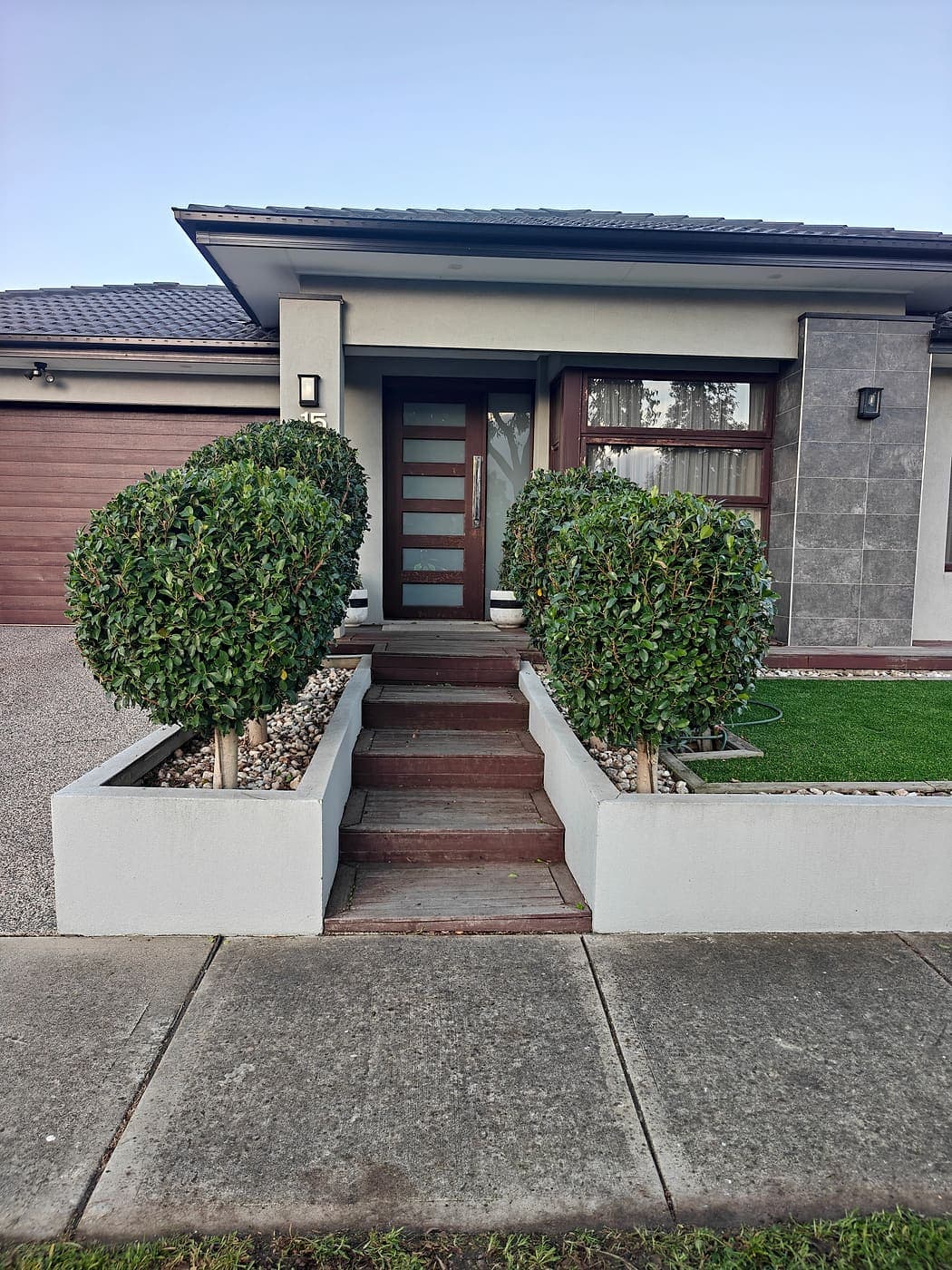
What does a big hedge job look like from start to finish?
A big hedge job follows the same six stages every time: the first message, the quote, the checks on the day, the trim itself, the clean-up, and the handover with aftercare. What makes it "big" is scale: a long boundary screen, a hedge well above head height, or one that has been left to grow for a few seasons.
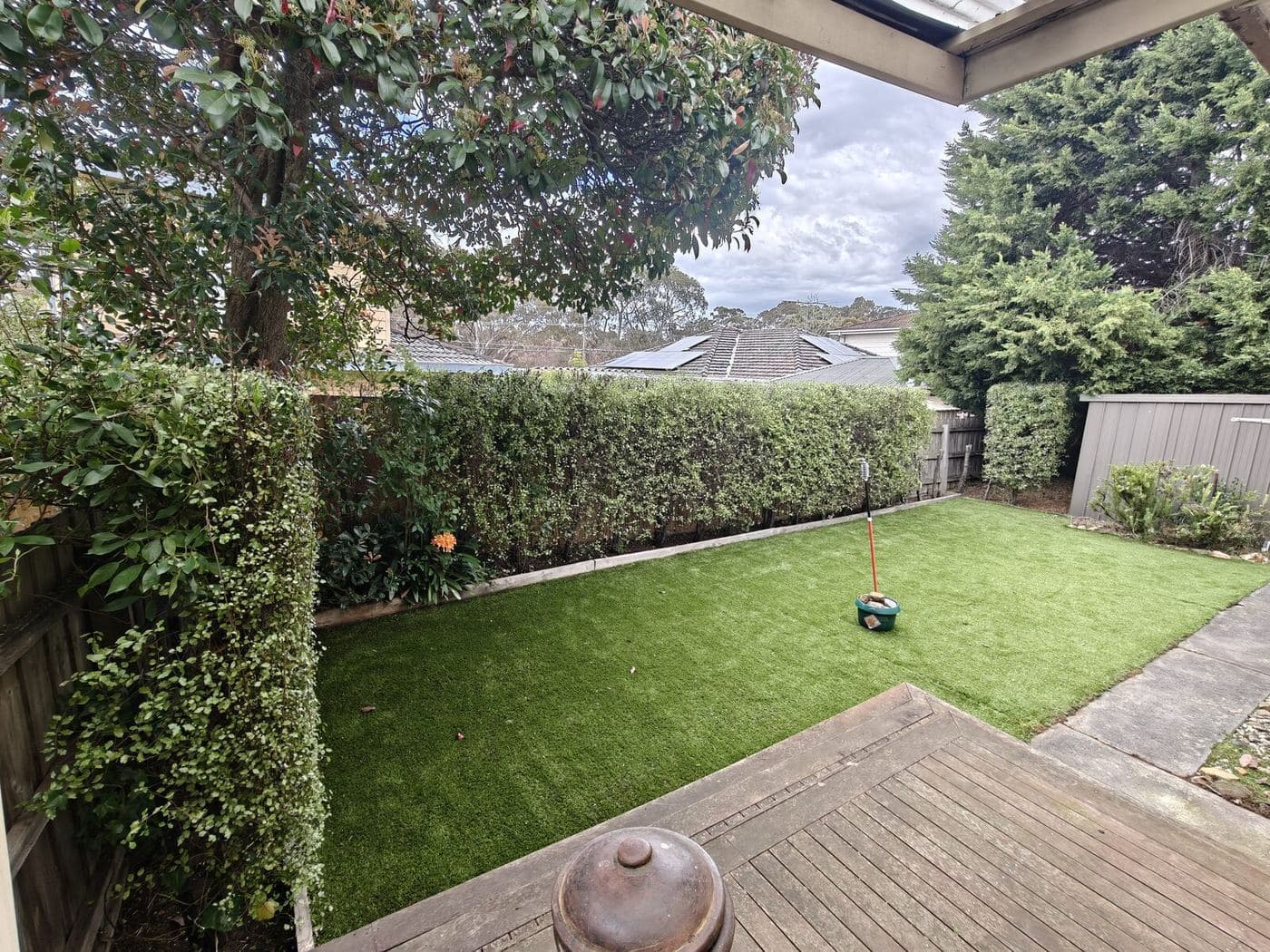
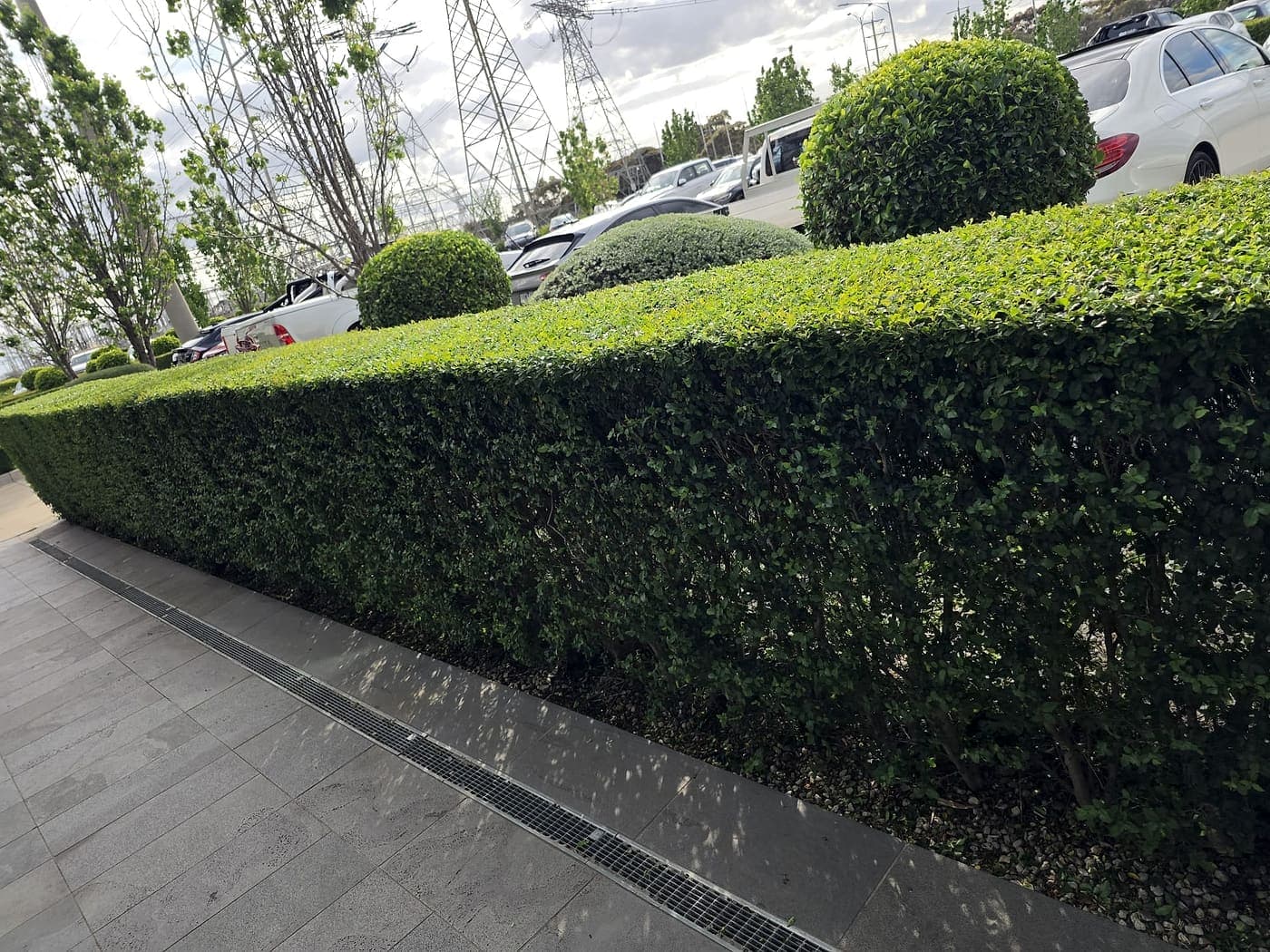
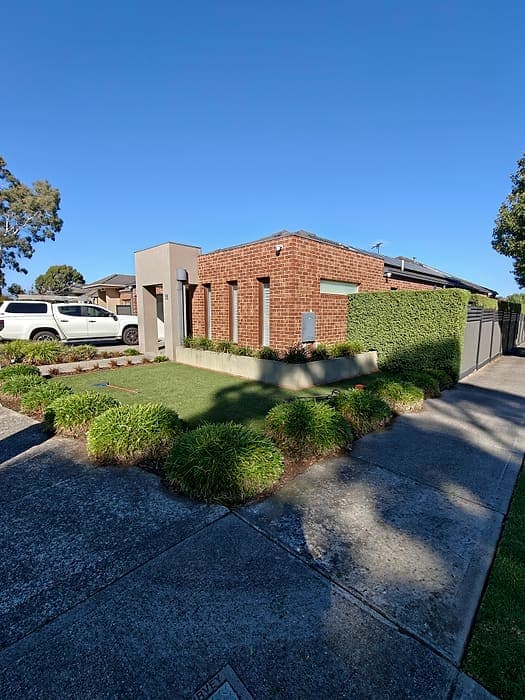
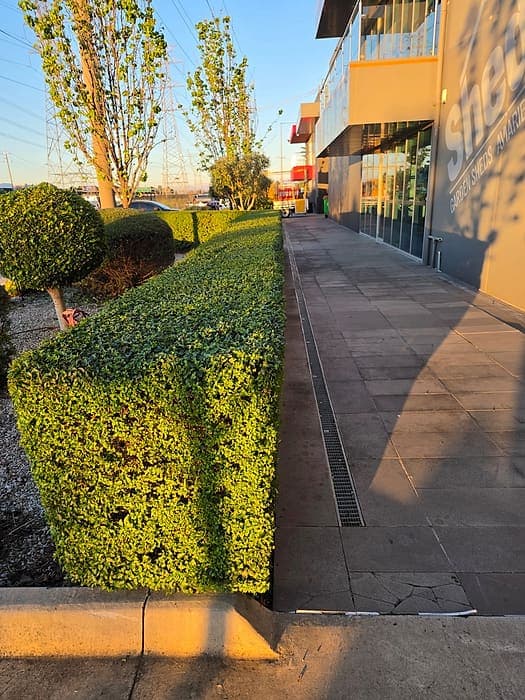
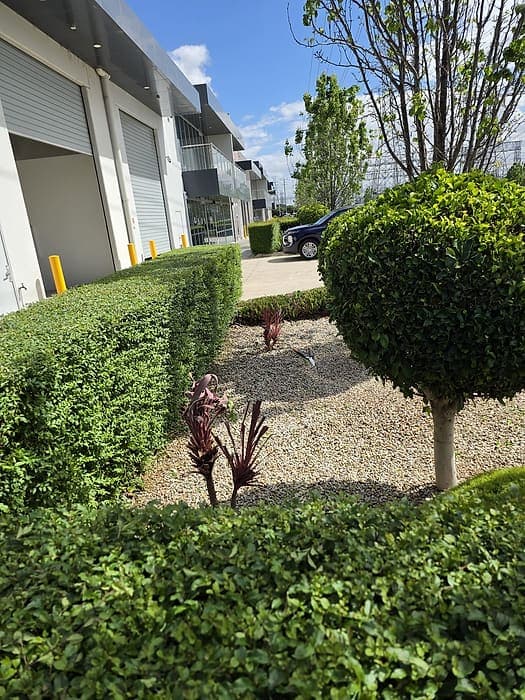
This article walks through those stages in order, so you know what to expect before you book, what the crew is doing on the day, and what to watch for in the weeks after. It is illustrated with real photos from Action Garden hedge jobs across metropolitan Melbourne.
Most hedges in Melbourne gardens are evergreen screens such as lilly pilly, photinia, pittosporum, viburnum, murraya and conifers like Leighton green. They grow in flushes, so a hedge left alone for two or three years can easily gain a metre in height and spread well over a path or a fence. Our complete guide to hedge trimming in Melbourne covers the year-round routine; this piece is about the day the routine has slipped and a big cut is needed.
A horizontal timeline with six numbered stops along a hedge outline that changes as the eye moves right. Stop 1, a phone with a photo of a shaggy hedge (first message). Stop 2, a clipboard with a tape measure (quote and site visit). Stop 3, a magnifying glass over the hedge showing a nest, a wire and a sprinkler line (checks). Stop 4, the hedge being cut in sections against a taut string line, with a side view showing the base wider than the top. Stop 5, tarps lifted and a swept path (clean-up). Stop 6, a finished, squared hedge with a small water drop and leaf icon (handover and aftercare).
How does a big hedge job get quoted?
A big hedge job is quoted from a few plain facts: how long the hedge is, how tall, what species, how easy it is to reach both sides, and what should happen to the cuttings. With those and a couple of photos, most quote requests get a reply within a few hours or by the next day, with either a price or a time for a quick site visit.
You can send the details through the quote form, by WhatsApp with a photo, or by phone. For a large hedge, these details make the biggest difference:
- Length and height. A rough figure is fine. Pacing out the length and comparing the height to a fence or doorway works.
- Species, if you know it. Lilly pilly, photinia and viburnum take a heavy cut well; conifers do not, which changes the plan.
- Access on both sides. Is the back face in a neighbour's yard, behind a pool fence, or above a retaining wall or a garden bed?
- The result you want. A light tidy, a crisp formal shape, or a real reduction in height and width.
- Cuttings. Taken away, into your green bin, or chipped on site.
- Photos from each side and from the street. They show density, height and access better than any description.
What affects the quote on a big hedge job
There are no set prices on this site, because no two hedges are the same. The quote reflects the hedge length, height and access; whether you want formal shaping or a light tidy; the species and time of year; and whether cuttings are removed or chipped on site.
Height has the biggest effect. Anything above head height needs platforms or longer equipment and more time to keep a level line safely. Access is next: a hedge that can only be reached through the house, or that backs onto a steep bank, takes longer to cut and clean up than one with open lawn on both sides.
Volume of green waste is the third. A hedge that is being reduced by half produces far more material than a maintenance trim, and that material has to be bagged, carried and loaded.
When a site visit makes sense
Very tall or very long hedges, hedges near overhead wires, and jobs that mix trimming with a big height reduction are the usual reasons to look in person first. Any big job, or any site the team cannot judge from photos, gets a free site visit before the quote. Photos sent in advance help the team understand the access first.
What gets checked before the first cut?
Before any blade touches a big hedge, the crew walks its full length and checks for anything that would make cutting unsafe or damage something. Five minutes of checking saves hours of repairs.
- Nesting birds. Spring is breeding season for many native birds, and native birds and their nests are protected in Victoria. Watch for birds flying in and out and look into dense sections; an active nest area is left until the chicks have gone.
- Overhead and hidden wires. Service lines to the house, garden lighting cables, and fence-top wiring all run through hedges. The power line rule is simple: keep well clear and call the distributor if branches are near the line.
- Irrigation. Drip lines and sprinkler risers sit at the base of many hedges and are easy to cut with a trimmer or crush with a ladder.
- Things fixed into the hedge. Wire supports, old fencing, letterboxes, hoses, children's toys and garden ornaments disappear into overgrown hedges.
- Pests and disease. Blistered lilly pilly leaves point to psyllid, which our guide to lilly pilly psyllid explains, and patches of dieback change where and how hard the hedge is cut.
- Pets and people. Gates closed, pets inside or away from the work, and a clear zone under anyone working at height.
Energy Safe Victoria (opens in a new tab) reported a case where a gardener with a pole-mounted hedge trimmer cut through an insulated low voltage service wire to a house while clearing branches around it, with no safety observer. No one was hurt, but power was affected and the work breached electrical safety regulations. If any part of the hedge touches or grows near a power line, do not cut it yourself; ask your electricity distributor or a qualified line clearance contractor. Hedges taller than you can reach from the ground, and work from ladders, are also worth handing over: WorkSafe Victoria (opens in a new tab) says ladders suit only simple, short tasks and that you should never overreach or use tools that need two hands from one.
The neighbour conversation
A boundary hedge has two sides, and a big job usually means cutting both and the top. The Victorian Government's Trees in Victoria page recommends starting with an informal chat with your neighbour, and agreeing what happens to cuttings before any work starts. Our guide to hedges and neighbours in Victoria covers overhanging branches, cuttings and where to get advice if you do not agree.
How is a long hedge cut so it stays straight and level?
A long hedge stays straight because it is cut in sections against fixed references, not by eye. The usual sequence is drop sheets down, a taut line at the finished height, sides cut from the bottom up with a slight taper, the top cut last, and frequent checks from a distance.
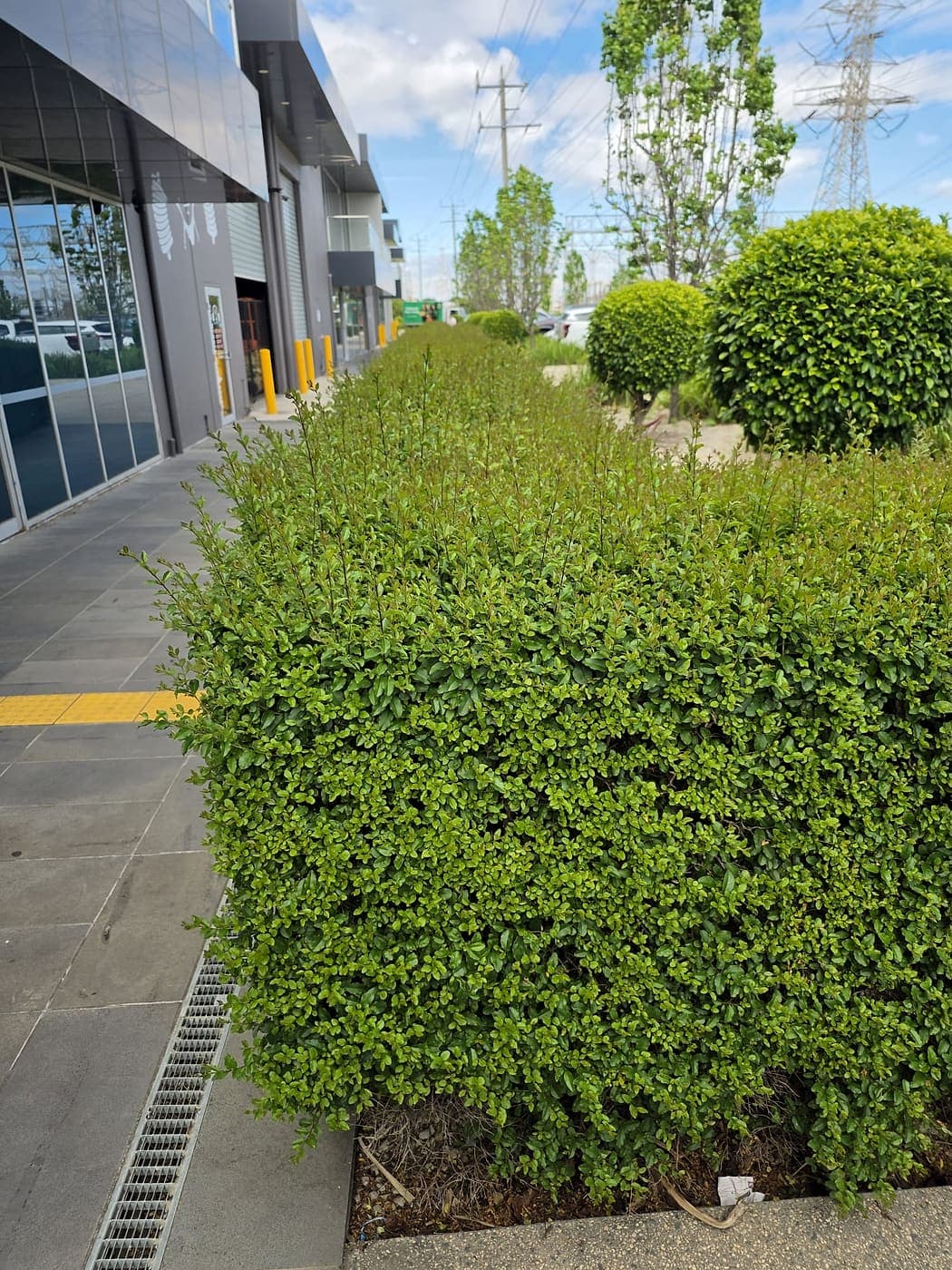
Here is how that sequence plays out on a big job:
- Lay tarps along the base. Cuttings fall onto sheets rather than into beds, mulch and lawn, which makes the clean-up far quicker.
- Set the height line. On a long or formal hedge, a string line is tied taut between stakes or poles at the finished height. On a curved hedge, the line is set in shorter straight runs.
- Cut the faces first. Work from the bottom up so cuttings fall away from the uncut face, keeping the base a little wider than the top.
- Cut the top to the line. The top is cut last with the blade kept level, in overlapping passes along the line.
- Square the corners and ends. Corners are what the eye notices first, so they are finished by hand or with careful short passes.
- Step back and check. Look from the street, the far side of the lawn and along the line of the hedge, then correct any bulges.
Action Garden uses commercial equipment on every hedge job, including tall ones.
Why the base is wider than the top
The Royal Horticultural Society (opens in a new tab) describes this slight inward slope, called a batter, as the shape that lets light reach the lower branches so the hedge stays full to the ground. A hedge cut with straight vertical sides, or wider at the top, shades its own base until the lower stems go bare.
Staged reductions on an overgrown hedge
A big hedge job is not always one big cut. When the aim is to take a hedge down a long way in height or width, the kinder plan is often a series of cuts: one side in the first season, the other side and the top in the next.
Most broadleaf hedges such as lilly pilly, photinia, pittosporum and viburnum reshoot from older wood, so a staged plan works well. Most conifers do not: the RHS notes they will not reshoot from old wood, so a big reduction leaves a permanent bare patch, and replacing the hedge can be the better option.
Our guide to bringing back an overgrown hedge sets out which species tolerate a hard cut and how to time each stage. On our own jobs, reshaping an overgrown hedge is usually done in stages over a season or two so the plant stays healthy.
How much green waste does a big hedge job produce, and where does it go?
A big hedge job produces far more green waste than most people expect, and planning for it is part of the job. A heavy reduction on a long screen can produce many times the material of a regular maintenance trim on the same hedge, because thick older wood comes out along with the leafy shell.
Unless you ask otherwise, cuttings leave with the crew. If you would rather fill your own green bin or have material chipped on site, say so when you book, because it changes how long the job takes. Green waste goes to the local council tip or transfer station, where it is disposed of safely and repurposed.
If the hedge backs onto a neighbour's yard, the cuttings from their side need a plan too. The Trees in Victoria page notes that cuttings from overhanging branches remain the neighbour's property unless you agree otherwise, which is another reason to talk before the job rather than after it.
What does the finished hedge look like on the day?
On the day, a finished big hedge has flat, even faces, a level top, sharp corners and a base a little wider than the top, with no clippings left in the beds, on the lawn or on the paths. If the hedge was reduced hard, expect some exposed stems and paler inner leaves at first; they green up as new growth comes through.
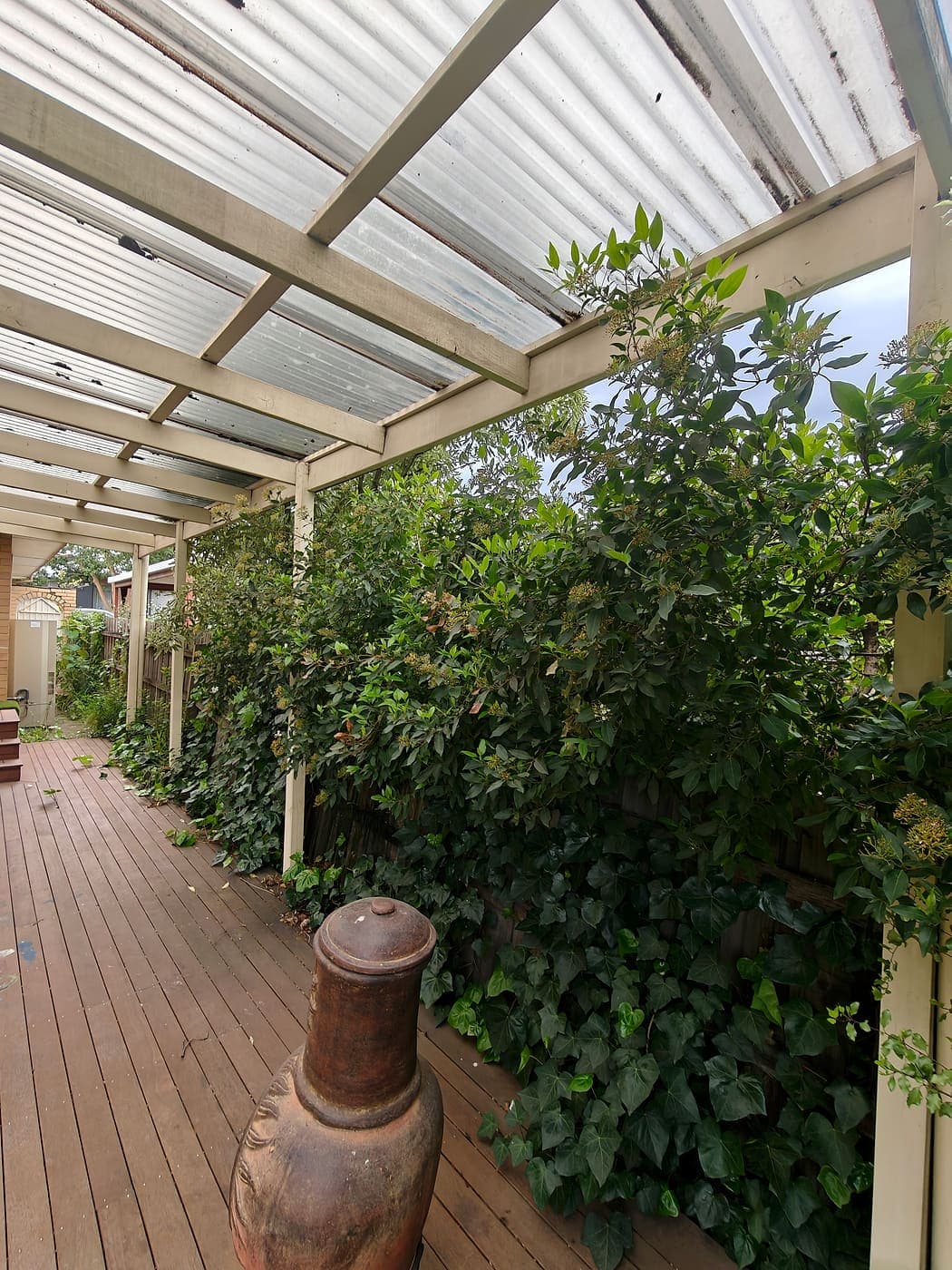
The handover is simple. You do not need to be home; the crew sends a photo of the finished work, and the invoice follows after the job, payable by bank transfer or card. Property managers receive invoices with the property address and photos attached, which helps when the job is for a rental or an owners corporation.
If something is not right, such as a missed section or an uneven corner, tell us within 48 hours and we come back and fix it at no charge. The support centre covers rescheduling, payments and what happens if anything needs attention.
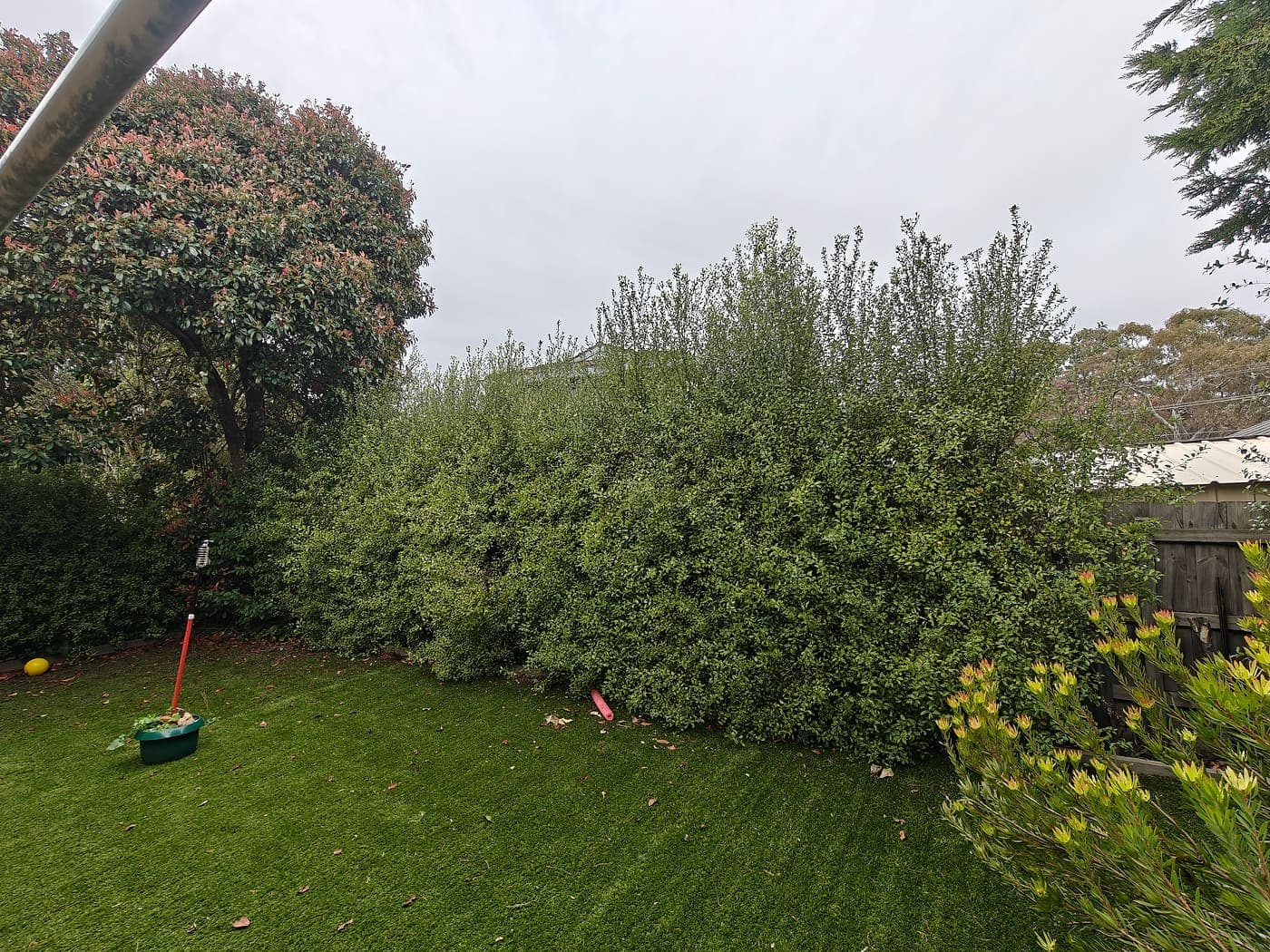
How should the hedge be looked after in the weeks after a big cut?
After a big cut, the hedge needs water, mulch and time, then a light follow-up trim once the new growth has filled in. The first four to eight weeks decide how quickly the faces thicken up again.
- Water deeply if the soil is dry. Victoria's permanent water saving rules (opens in a new tab) allow hand watering with a trigger nozzle at any time and watering systems only between 6pm and 10am. A slow, deep soak at the base beats a daily sprinkle.
- Mulch the root zone. A coarse mulch along the base, kept off the stems, holds moisture through Melbourne's dry summer weeks.
- Feed once growth starts, not before. A fertiliser applied as its label directs helps a hedge that has been cut hard, but only once fresh shoots appear. Fertiliser after trimming is one of the add-ons on our hedge trimming and pruning service.
- Watch new growth for pests. Soft new flushes on lilly pilly are exactly what psyllid targets, so check the leaves for blisters as the hedge regrows.
- Plan the next trim. A light trim after the next flush keeps the new shape. Our post on when to trim hedges in Melbourne, species by species sets out the timing.
Why some hedges look worse before they look better
A heavy cut removes the outer shell of leaves, and what sits behind it is often sparse, pale or bare, because it has been in shade for years. That is normal for an overgrown hedge.
On broadleaf species, buds along the older stems break within weeks in the warm months, and the faces start to thicken from the inside. On a hedge cut in late autumn or winter, the same recovery can take until spring, because growth slows right down in Melbourne's cooler months.
When is it worth handing a big hedge job over?
A big hedge job is worth handing over when the hedge is above head height, near power lines, very long, or overgrown enough that the green waste alone is a weekend's work. Those are the jobs where ladders, powered trimmers and fatigue combine, and where a level finish is hardest to get by eye.
It is also worth thinking about whether the hedge is still the right answer. Some owners decide after a big reduction that a lower hedge, or a fence with a softer planting in front, suits the space better; our article comparing a hedge or a fence for privacy weighs up the upkeep and the look. For more hedge and tree articles, see the hedges and trees section of the blog.
What makes a big job simpler on the day
A few small things make a big hedge job go faster and cleaner. Move cars off the driveway beside the hedge, take pots and furniture away from the base, and let us know about pets, sprinkler lines and anything fixed into the hedge.
If the back of a boundary hedge is in a neighbour's yard, confirm access with them before the day. Photos from both sides sent with the quote request help the crew plan where to start and how to get the cuttings out.
If your hedge has got away from you, or you would rather the whole job, from the first cut to the final sweep, was simply done, our team handles hedges up to roughly four metres as routine work, one-off or on a seasonal schedule. Send a couple of photos through the free quote form and we will take it from there.
Your Garden. Our Promise.
From our jobs
Frequently asked
How long does a big hedge job take from first message to finished hedge?
Does a large hedge always need a site visit before it is quoted?
Do I need to stay home while a long boundary hedge is being trimmed?
How is the neighbour's side of a boundary hedge handled on a big job?
Can a very tall hedge be lowered to a manageable height in one visit?
Where do the cuttings from a big hedge job end up?
What if part of a long hedge looks uneven a few days after the job?
Should a hedge be watered or fed after a heavy trim in summer?
Sources and further reading
- Trees in Victoria (Dispute Settlement Centre of Victoria, vic.gov.au)
- Insulated LV electric line cut by hedge trimmer (Energy Safe Victoria)
- Using portable ladders in the workplace (WorkSafe Victoria)
- Permanent water saving rules (Water Victoria)
- Pruning hedges (Royal Horticultural Society)
Caring for Melbourne gardens since 2019. Updated 18 November 2026.