


Seasonal
Melbourne autumn garden checklist
By the Action Garden team · Updated · 12 min read
Checked against: Bureau of Meteorology, Water Victoria, CFA, EPA Victoria, Australian Plants Society Victoria
TL;DR
- March: still summer in all but name, with about 5 days of 30 °C or more on BOM's long record, so keep watering deeply and hold off big plantings
- April: rain returns and evaporation drops sharply, which makes it the main planting, dividing and lawn repair month
- May: leaf fall peaks, so clear beds, paths, drains and gutters before winter rain turns leaves to sludge
- Autumn is a good window to prune many Australian natives, but leave spring-flowering shrubs alone or you cut off next year's flowers
- Check your council and CFA before burning anything, and keep blower and mower noise inside the EPA's permitted hours

| Month | Main jobs | Weather (BOM long-term means) |
|---|---|---|
| March | Water deeply, deadhead, plan planting, start bulb orders | Mean max 23.9 °C, about 5 days of 30 °C or more, rainfall 50.1 mm (BOM, Melbourne Regional Office) |
| April | Plant, divide, repair lawns, prune natives | Mean max 20.3 °C, rainfall 57.3 mm, evaporation down to 2.5 mm a day |
| May | Leaves, gutters, drains, mulch, plant bulbs | Mean max 16.7 °C, about 10 rain days of 1 mm or more, the coldest night on record just below freezing |
What are the most important autumn garden jobs in Melbourne?
The most important autumn jobs are planting while the soil is warm and moist, keeping on top of falling leaves, repairing what summer damaged, and tidying beds before winter. Spread them across March, April and May in that rough order and the garden goes into winter in good shape.
Autumn is the quiet achiever of the Melbourne gardening year. The heat eases, the rain comes back, and roots keep growing in soil that is still warm from summer. Plants put in now have months to settle before they face their first hot spell.
Here is the season on one list. The sections below explain each month.
- Keep watering deeply through March, early in the morning or after 6pm for systems
- Deadhead and lightly trim summer-flowering perennials
- Order or buy spring bulbs and plan new plantings
- Prepare beds with compost before planting
- Plant shrubs, natives, groundcovers and hedges once April rain arrives
- Divide crowded clumping perennials
- Prune many Australian natives after their main flowering
- Repair worn and bare lawn patches while the soil is warm
- Plant spring bulbs from March to May
- Rake leaves off lawns and small plants, then compost or shred them
- Clear gutters, downpipes and drains after the main leaf drop
- Weed and mulch beds before winter
Lawns have their own timetable for feeding and repairs, so this checklist covers the beds, shrubs, leaves and the rest of the garden.
What does Melbourne's autumn weather mean for the garden?
Melbourne's autumn starts hot and ends cold, and the big change is how fast the soil dries out. On the Bureau of Meteorology (opens in a new tab)'s long record for central Melbourne, mean daily evaporation falls from 3.9 mm in March to 1.6 mm in May, so the same rain does far more good at the end of the season than at the start.
March is still summer in all but name: a mean maximum of 23.9 °C and about 5 days of 30 °C or more. By May the mean maximum is 16.7 °C, rain falls on about 10 days a month, and the record shows central Melbourne has dipped just below freezing. That is the arc every job below follows.
Melbourne evaporation from late summer into winter
| Month | Mean daily evaporation (mm) |
|---|---|
| February | 5.2 |
| March | 3.9 |
| April | 2.5 |
| May | 1.6 |
| June | 1.1 |
Source: Bureau of Meteorology, climate statistics for Melbourne Regional Office (086071), evaporation 1955 to 2015.
Evaporation is measured from an open pan of water, so it is a good stand-in for how hard the weather pulls moisture from soil and leaves. Across autumn it drops by more than half, while rainfall rises a little, from 50.1 mm in March to 57.3 mm in April and 55.7 mm in May.
What should you do in the garden in March?
March is for keeping the garden alive through the last of the heat while you get ready to plant. Treat it as late summer: water deeply, deadhead, and do the planning and soil work that makes April planting quick.
- Keep watering deeply. A long soak once or twice a week beats a daily sprinkle. Systems may only run between 6pm and 10am under the permanent water saving rules (opens in a new tab); a hand-held hose with a trigger nozzle can be used at any time.
- Deadhead and trim summer flowers. Salvias, roses, daisies and other repeat-flowering plants will often give an autumn flush if you remove spent flowers now.
- Prepare new beds. Dig in compost and well-rotted organic matter where you plan to plant, so it has a few weeks to settle before planting.
- Buy or order spring bulbs. The range is best early in the season, and bulbs stored somewhere cool and dry keep well until planting.
- Take cuttings of soft-stemmed shrubs and perennials you want more of. They root readily in the still-warm weather.
- Watch for heat stress. A late heatwave can still scorch new growth. Shade young plants and water pots daily on 30 °C days.
Clay or sand: how your soil changes the autumn list
Heavy clay, common across Melbourne's north and west, stays hard and cracked until autumn rain softens it. Do not try to dig it dry: wait for a soaking rain, let it drain for a day or two, and dig when a handful crumbles rather than smears. Autumn is a good time to work compost into clay, because winter rain and soil life then carry it down.
Sandy soils in the south-east soften with the first rain but lose water and nutrients just as fast. Add compost before planting and mulch straight after, so new plants are not left in dry, hungry sand when a warm, dry spell comes in April.
What should you do in the garden in April?
April is the main planting month of the year. The soil is still warm, rain is back, and evaporation has dropped to about 2.5 mm a day on BOM's long record, so new roots grow without the stress of summer.
- Plant shrubs, natives, groundcovers and hedges. Water the plants in their pots first, plant at the same depth they were growing, water in well and mulch.
- Divide clumping perennials such as agapanthus, irises, daylilies and clumping grasses that have become crowded or bare in the middle.
- Prune many natives. The Australian Plants Society Victoria (opens in a new tab) says late summer to early winter is generally one of the best times to prune in Victoria, and that old flowers should be removed immediately after flowering.
- Lightly trim hedges for the last time before winter, so they hold their shape through the slow months. Fast growers may need one more light pass in May.
- Move shrubs that are in the wrong spot, while the soil is still warm.
- Start weeding winter weeds early. Cool-season annual weeds germinate with the first autumn rain. Pulling them as seedlings takes minutes; leaving them to flower in spring takes hours.
Azaleas, camellias, rhododendrons and many other spring-flowering shrubs set their flower buds in late summer and autumn. A tidy-up cut now removes those buds and the spring display with them. Prune them straight after they flower in spring instead.
Fruit trees are the other exception. Deciduous fruit trees are usually pruned in winter or straight after harvest, depending on the type, and our guide to pruning fruit trees in Melbourne goes through each one.
What should you do in the garden in May?
May is leaf month. Deciduous trees drop most of their leaves, rain falls on about 10 days, and the first cold nights arrive, so the jobs shift from planting to tidying and protecting.
- Rake leaves off lawns and small plants. A thick, wet layer of leaves blocks light and can leave yellow patches in the lawn and rot in low groundcovers.
- Shred and reuse leaves. Running a mower over dry leaves chops them small enough to compost quickly or spread as a thin mulch.
- Clear gutters, downpipes and drains after the main leaf drop, before winter rain packs leaves into sludge.
- Plant the last bulbs, including tulips, once the soil has cooled.
- Weed and mulch beds while the soil is moist. Mulch over damp soil holds that moisture and keeps roots a little warmer through winter.
- Cut back finished perennials by about a third, but leave frost-tender plants unpruned in cold suburbs, because the old growth protects the crown.
- Clean and put away summer gear. Drain hoses, flush the irrigation filter and note any broken drippers to fix before spring.
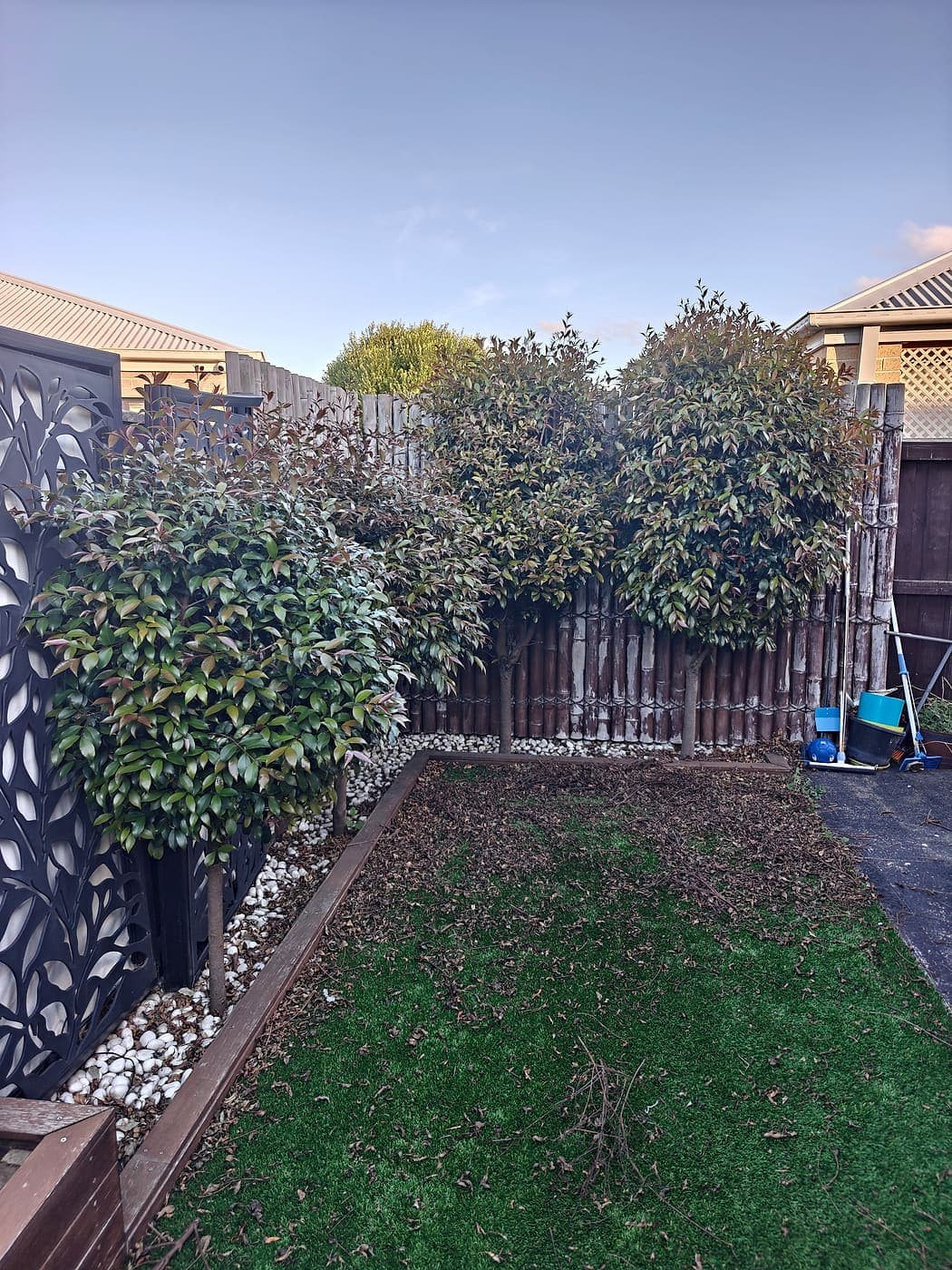
Leaves are the biggest single job of the season for many Melbourne gardens. Our planned article on autumn leaf season for lawns, gutters and paths goes deeper into where leaves cause trouble and how often to clear them.
Leaf blowers, mowers and the noise rules
EPA Victoria (opens in a new tab) sets the times when noisy residential equipment must not be used so that it can be heard in a neighbour's home. For lawnmowers and other grass-cutting devices, equipment with a combustion engine, and electric garden tools, the prohibited times are "weekdays before 7 am and after 8 pm" and "weekends and public holidays before 9 am and after 8 pm".
Daylight saving in Victoria ends on the first Sunday in April, so the light goes earlier in the evening from then on. Plan bigger leaf clean-ups for weekend mornings after 9am, or weekday daylight, rather than a late-afternoon rush.
How should you deal with garden waste in autumn?
Compost or mulch what you can, use the green bin for the rest, and check the rules before burning anything. Autumn produces a lot of waste at once, between leaves, prunings and finished summer plants.
- Leaves and soft prunings compost well, especially once shredded. Mix dry leaves with green material such as lawn clippings so the heap stays active.
- Woody prunings under about a finger thick can be cut small for the green bin or chipped for mulch.
- Diseased material, such as leaves with black spot or fruit with brown rot, is best kept out of the home compost.
- Bulky loads from a big autumn cut-back may need more than the green bin; the garden maintenance guide explains how waste removal fits into a regular programme.
CFA (opens in a new tab) says burning off grass, weeds and other vegetation is generally permitted outside the Fire Danger Period, but that local laws on burn-offs can apply year-round, so you should check with your council before lighting up. Where burning is allowed, CFA asks you to register the burn, tell your neighbours, check the forecast and keep a cleared fire break of at least three metres. In most suburban streets, mulching or removal is the simpler path.
Call a professional for gutters on a double-storey home or a steep or wet roof, for branches over the house or near power lines, and for any limb that looks cracked or split after autumn winds. Wet leaves make ladders and roofs slippery, and falls from height cause serious injuries. Tree work near power lines is regulated and must be left to qualified people.
Which autumn garden mistakes cause problems in winter and spring?
Most autumn mistakes are about timing: doing a job too early in March, or leaving it too late into winter. Each one is easy to avoid with the calendar in mind.
- Planting in a March heatwave. Plants put in during a hot spell need daily water and often stall. Wait for April rain.
- Pruning spring-flowering shrubs. You remove next spring's flowers.
- Leaving leaves on the lawn. Wet leaf mats yellow the grass beneath within a couple of weeks.
- Turning off the watering system too soon. A dry April spell can stress new plantings. Check the soil, not the calendar.
- Feeding with high-nitrogen fertiliser late in autumn. Soft new growth is the first to suffer in a cold snap. Follow the label for autumn rates.
- Skipping the gutter and drain clean. Leaves left in May become a blockage in the first big winter rain.
- Mulching dry soil. Mulch holds whatever moisture is already there, so lay it after rain.
Why autumn planting beats spring planting for many plants
In spring, roots and leaves grow together, and new plants often face their first heatwave before their roots have spread. In autumn, top growth slows while roots keep growing in soil that is still warm, so by the time summer arrives the plant has a full season of roots behind it.
The exception is frost-tender plants in cold suburbs. Citrus, frangipani, many salvias and other tender plants are better planted in spring in areas that see regular frost, so a cold snap does not kill them before they settle.
When is it worth getting help with autumn garden jobs?
Autumn is a good time to bring in help if the garden came out of summer tired or overgrown, or if the leaf drop is more than you can keep up with. A team visit can clear leaves, cut back, weed and mulch in one go, so the garden goes into winter tidy.
Our gardening services cover weeding, planting, pruning, leaf clean-ups and seasonal mulching. If the garden has got away from you entirely, start with how to rescue an overgrown garden, which explains the order of work. Once autumn is done, the winter garden checklist picks up in June, and the month-by-month Melbourne garden calendar shows the whole year at a glance. There are more seasonal articles in our seasonal section.
When you would rather spend autumn weekends enjoying the garden than raking it, a free quote is the easiest place to start.
Your Garden. Our Promise.
From our jobs
Frequently asked
Is March too hot to plant out a new garden bed in Melbourne?
Which bulbs should go in the ground in a Melbourne autumn?
What should I do with all the autumn leaves in my garden beds?
When does the Fire Danger Period end, and can I burn garden waste in autumn?
Should I keep my irrigation system running into autumn?
Can I move a shrub to another part of the garden in autumn?
How much should I cut back perennials at the end of autumn?
Sources and further reading
- Climate statistics, Melbourne Regional Office 086071 (Bureau of Meteorology)
- Permanent water saving rules (Water Victoria)
- Burning off (CFA)
- Residential noise (EPA Victoria)
- Pruning Australian native plants (Australian Plants Society Victoria)
Caring for Melbourne gardens since 2019. Updated 18 November 2026.