


Garden beds, soil and plants guide
How to rescue an overgrown garden, step by step
By the Action Garden team · Updated · 12 min read
Checked against: Victorian Government, Wildlife Victoria program, Victorian Government, Agriculture Victoria, CFA
TL;DR
- Walk and photograph the garden before you cut anything, and mark the plants worth keeping.
- Safety first, because long grass and piles of rubbish can hide snakes, sharps, wasp nests and old asbestos sheeting.
- Clear in order, from rubbish to long grass to shrubs to beds to lawn, so you never redo a finished area.
- Lift weeds with their roots once the area is cut down; declared weeds such as blackberry need a proper control plan.
- Plan the green waste before you start, then mulch and set up regular care so the garden stays rescued.
| Stage | What it involves | Watch for |
|---|---|---|
| 1. Survey | Walk, photograph and mark keepers | Hidden plants, paths, taps and edging |
| 2. Hazard check | Look before you reach in | Snakes, sharps, wasps, fibro, power lines |
| 3. Clear and cut down | Rubbish out, long growth cut in stages | Stones and wire in long grass |
| 4. Prune and weed | Shrubs, climbers, then roots out of beds | Nesting birds, declared weeds |
| 5. Restore | Soil, mulch, lawn, edges | Do not leave soil bare |
Where do you start with an overgrown garden?
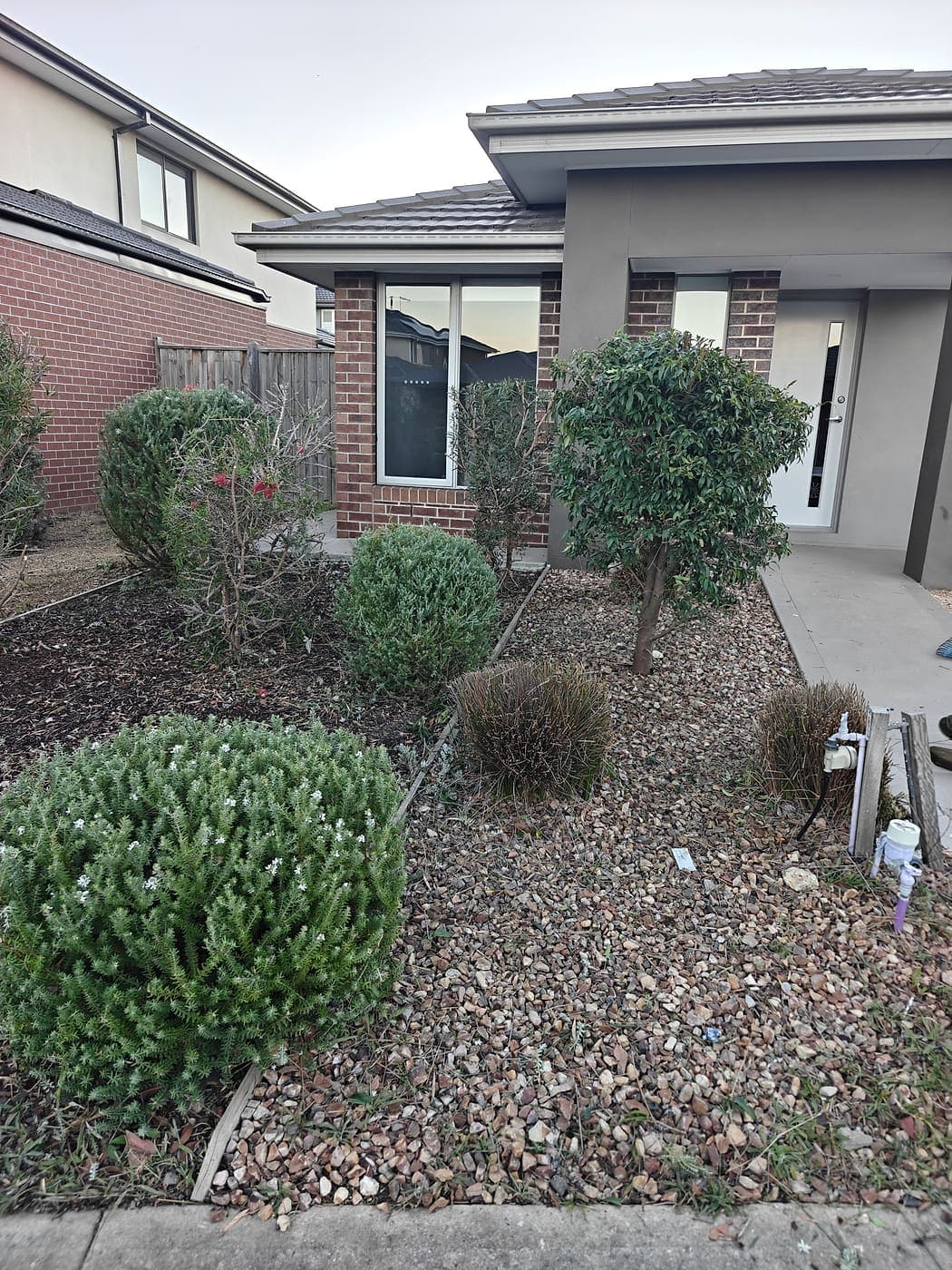
Start with a slow walk around the whole garden before you cut anything. Work out what is there, what is worth keeping and where the paths, taps, edges and boundaries are, because all of that disappears under long growth.
Take photos from each corner. They help you plan, show progress, and are useful if the property is a rental or about to be sold.
As you walk, sort what you find into three groups.
- Keep: healthy trees, established shrubs that will regrow after pruning, and plants that suit the spot. Tie a strip of tape around each one so it is not cut by mistake.
- Cut back: overgrown shrubs, climbers on fences, hedges that have grown out, and lawn that has gone to seed.
- Remove: dead plants, rubbish, weeds, self-sown seedlings of trees in the wrong place, and anything planted too close to the house.
If you cannot identify a plant, keep it for now. Many overgrown gardens have good plants hidden in them, and it is easier to remove something later than to replace it.
What safety checks come before you clear?
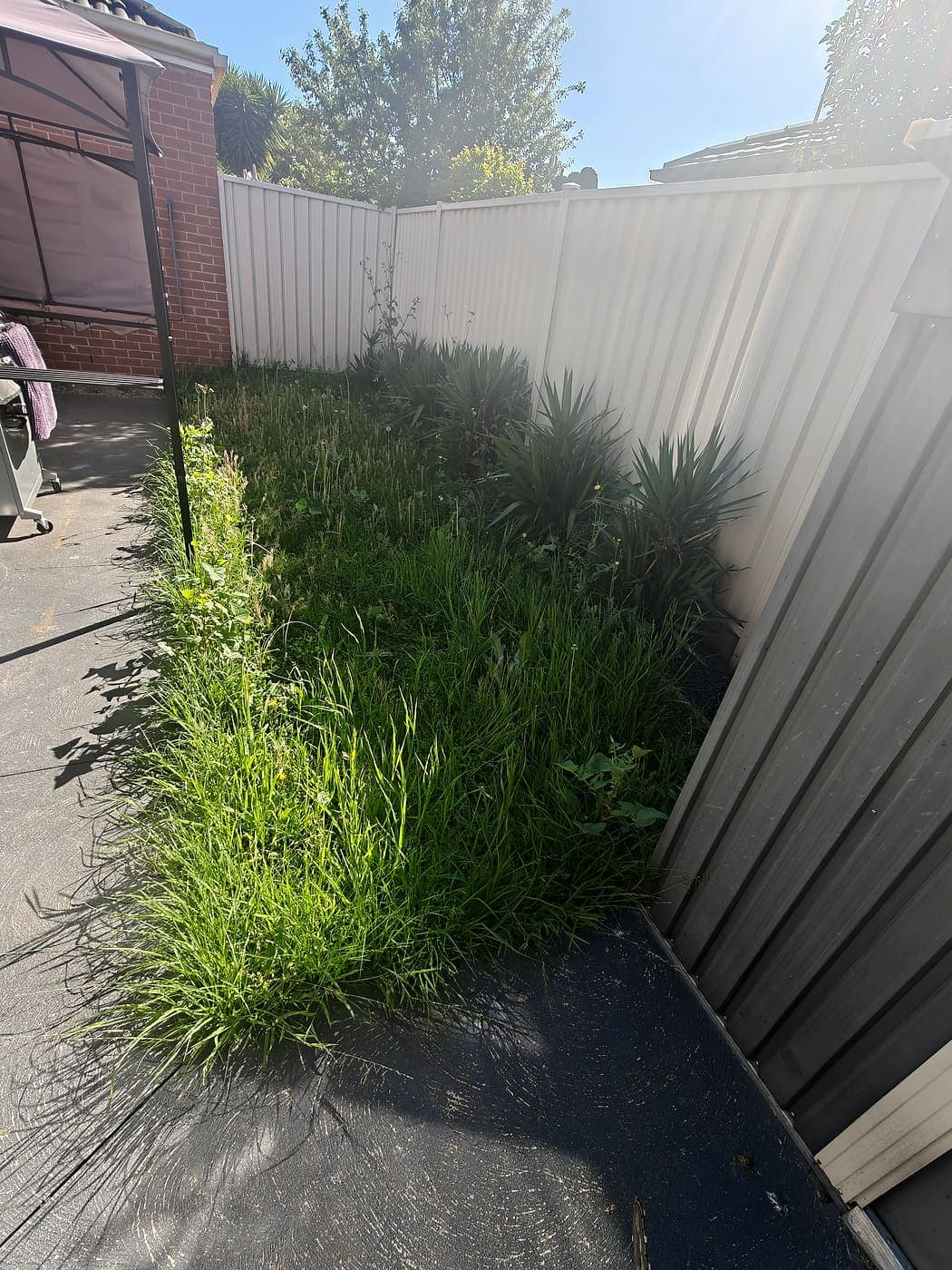
Look before you reach in. Long grass, dense shrubs and piles of rubbish hide hazards that are easy to avoid if you know they are there and painful if you find them by hand.
- Snakes: overgrown gardens give snakes shelter. The Victorian Government (opens in a new tab)'s living with snakes fact sheet advises removing rubbish, wood piles, rock piles and sheets of iron, and keeping grass short. Make noise, wear boots and long trousers, and lift sheeting with a tool, not your hands.
- Sharps and rubbish: look for broken glass, wire, star pickets, old fencing and needles. Thick gloves and boots are the minimum.
- Wasps and bees: check hedges, sheds and wall cavities for nests before you start trimming.
- Old fibro and pipes: sheds, fences and garden beds in older homes can hold asbestos cement sheeting or pipe. Do not break, cut or dig it.
- Power lines and trees: branches tangled in or near power lines, and trees that lean, crack or overhang the house, are not a job for a ladder and a saw.
Stop and get help if you find suspected asbestos (broken fibro sheeting, old pipes or crumbly material in the soil), a snake that stays put, a wasp or bee nest, branches near power lines, or trees that need climbing or a chainsaw. Do not touch or break suspected asbestos: call a licensed asbestos removalist. If a snake stays on the property, contact a licensed snake catcher. Tree work is best done by qualified people; Action Garden's own team does it.
What order should you clear an overgrown garden in?
Work from rubbish to long growth to shrubs to beds to lawn, and from the top down. Each stage makes the next one easier and safer, and you never have to redo an area you have finished.
- Clear rubbish and loose material. Old pots, timber, toys and sheeting come out first so nothing is caught in a trimmer.
- Cut long grass and weeds down in stages. Use a line trimmer or brushcutter. Cut to knee height first, look at the ground, then cut lower.
- Rake off the cut material. Leaving it in place smothers the lawn and hides the ground.
- Prune shrubs and climbers. Dead wood first, then the plants growing over paths, windows and fences.
- Weed the beds properly. Now the beds are visible, lift weeds with their roots.
- Improve and mulch the beds. Fork compost into tired soil, then cover bare soil with mulch.
- Bring the lawn back. Mow high, then lower over several cuts, and re-cut the edges.
A plan view of an overgrown backyard, divided into the five stages of a clear-out. Numbered arrows run in sequence: rubbish lifted from a corner pile, long grass cut down in two height bands, shrubs along the fence cut back, beds weeded and then mulched, and finally the lawn mown in stepped heights. Tape marks the plants kept in place. Green waste moves along a single path to a tarp near the gate, so finished areas are never walked over again.
Cutting long grass without wrecking the mower
Long, dense grass chokes a domestic mower, and hidden rocks, wire and stakes damage blades or get thrown. Use a line trimmer or brushcutter to take it down first, working in strips and checking each strip before you cut lower.
Once it is short enough to see the ground, rake off the cut material and mow on the highest setting. Lower the height a notch over each of the next few mows, so the lawn is not scalped. Expect it to look patchy and yellow at first: it has been growing in shade under the long growth.
How hard can you cut back overgrown shrubs?
It depends on the plant. Many exotic shrubs, such as photinia, abelia and viburnum, regrow from old wood after a hard cut, while many natives and conifers do not, so cutting them back into bare wood can kill them.
| Plant group | How hard to cut | Best time |
|---|---|---|
| Most leafy exotic shrubs (photinia, abelia, viburnum, pittosporum) | Can take a hard cut; leave some leaf where you can | Late winter or early autumn |
| Natives (grevillea, correa, westringia) | Cut within the leafy growth, not into bare wood | After flowering |
| Conifers (cypress, juniper) | Trim the green growth only; bare wood rarely regrows | Spring or early autumn |
| Climbers on fences | Cut back hard to the fence line; remove from gutters and roofs | Late winter |
| Roses | Hard prune and remove dead canes | Winter |
For a badly overgrown shrub, a staged cut is safer: remove about a third of the oldest stems at ground level this year, another third next year, and the rest the year after. The plant keeps enough leaf to recover, and the garden never looks stripped.
Fruit trees in an overgrown garden need their own approach, since they have to keep fruiting wood. Our guide to pruning fruit trees in Melbourne covers when and how to bring one back.
Birds, nests and the timing of a clear-out
Overgrown shrubs and hedges are prime nesting habitat. Check dense growth for active nests before you cut, especially from late winter through spring, and leave that section until the young have left.
Native wildlife in Victoria is protected, so an active nest of a native bird is a reason to wait. Autumn clear-outs avoid most of the nesting season, which is one more reason they are easier.
How do you deal with weeds and invasive plants?
Once the tops are cleared, lift weeds with their roots, bulbs and runners, and treat declared and woody weeds with a proper plan. Cutting weeds down only resets them; the root is what matters.
For most garden weeds, our step-by-step guide on how to weed garden beds and keep them clear covers the method, including oxalis, onion weed and runner grasses. In an overgrown garden, expect a heavy flush of seedlings once light reaches the soil again, so plan to weed again two to four weeks after the first clear-out.
Some plants are declared noxious weeds in Victoria under the Catchment and Land Protection Act 1994, including blackberry, and landowners have responsibilities to control them. Others, such as English ivy, wandering trad and agapanthus, are environmental weeds that spread from gardens into bushland. Check Agriculture Victoria's weeds information (opens in a new tab) if you suspect a declared weed.
- Blackberry: cut canes down with loppers and heavy gloves, then dig out the crowns or follow a control plan from the label of a registered product. Regrowth is certain, so follow up.
- Ivy: cut stems at the base of walls and trees, pull the ground runners and let the upper growth die before removing it.
- Woody seedlings: pull young self-sown trees while they are small; they are far harder to remove once established near fences and foundations.
What do you do with all the green waste?
Plan it before you start, because an overgrown garden produces far more material than people expect. Cut green waste left in piles becomes a home for rats and snakes, a fire risk in summer, and a seed bank for the weeds you just removed.
- Green or FOGO bins: fine for steady amounts over several weeks. The Victorian Government is moving all councils to a standard four-bin system with a lime green lid for food and garden organics.
- Council green waste options: many councils offer extra bins or booked green waste collections; check your council's rules and limits.
- Trailer to a transfer station: workable for large volumes if you have the trailer and the time.
- A removal service: the quickest option for a big clear-out, with everything loaded and taken away in one visit.
CFA (opens in a new tab) advice on preparing your property for the fire season includes removing material that can burn, such as piles of garden waste, which is one more reason not to leave cut material lying around into summer. Check your council's local laws before burning anything: many Melbourne councils do not allow it.
How do you bring the beds and lawn back?
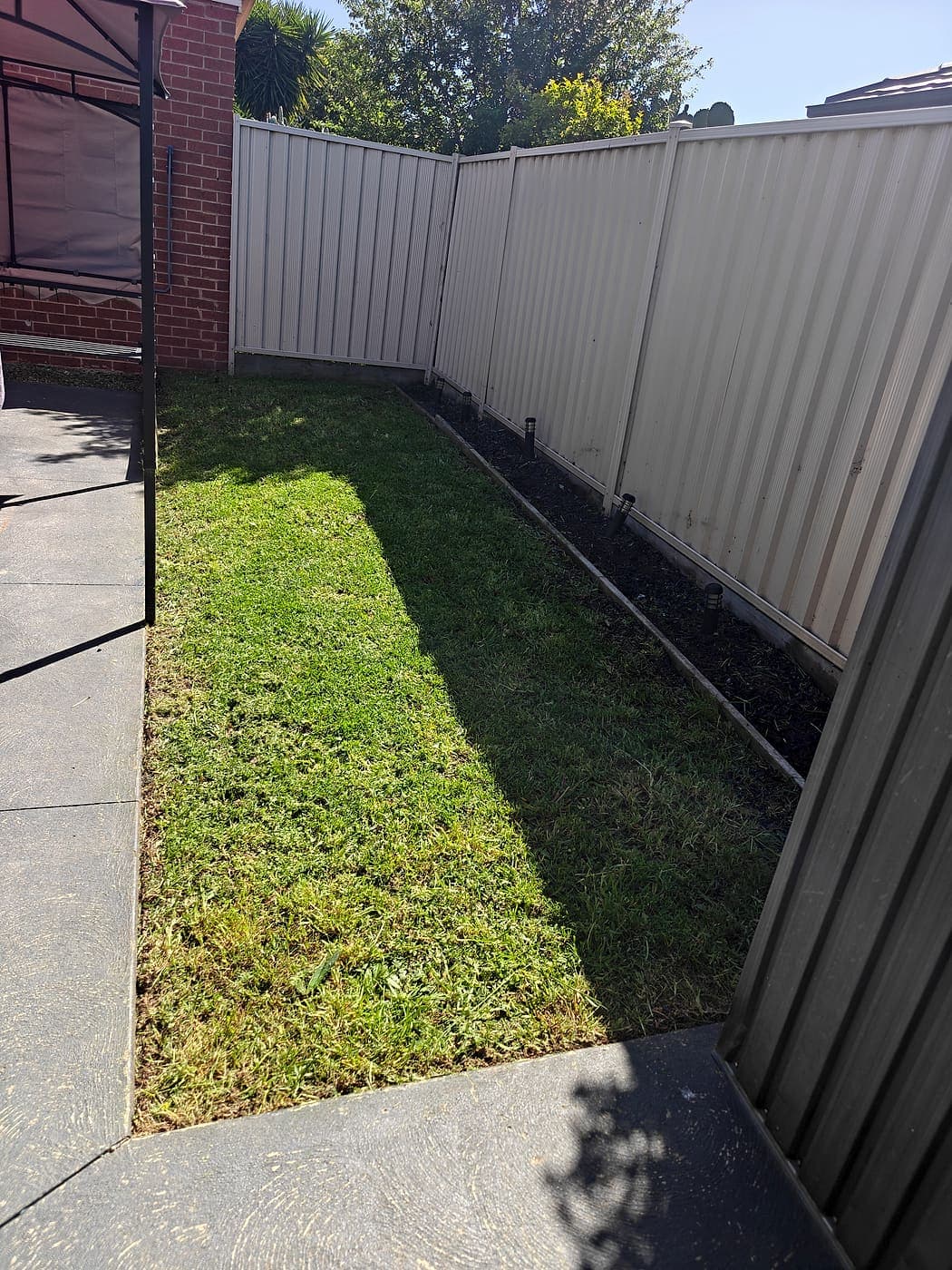
Improve the soil, mulch every bed and bring the lawn down slowly. A cleared garden with bare soil fills with weeds within weeks, so finishing properly is what makes the rescue last.
- Fork compost into tired beds. Years under weeds leave soil compacted and hungry. On clay, wait until it is moist but not sticky.
- Mulch bare soil straight away. A coarse mulch 50 to 75 mm deep blocks light to the next flush of weeds, kept a hand width clear of stems and below the house slab.
- Re-cut every edge. Clean lines between lawn, beds and paths make a garden look cared for immediately.
- Feed and water the lawn. After a few weeks of regular mowing, a light feed in spring or autumn helps it thicken back up.
- Fill the gaps. Replace removed plants with tougher ones that suit the soil and light. Our guide to caring for Australian native plants is a good place to start.
How do you stop the garden getting overgrown again?
Visit little and often, keep everything mulched and edged, and simplify the planting over time. Overgrown gardens rarely happen all at once; they happen after a few missed seasons.
- Spring and summer: a session every two to four weeks to weed, mow and trim.
- Autumn: cut back, clear leaves and top up mulch.
- Winter: prune, check for weeds that germinated after the autumn rain, and plan changes.
If the garden got away because it is too much work, change the garden rather than just the routine. Our guide on how to plan a low-maintenance garden covers the choices, and our ideas for making a small courtyard garden easy to keep suit smaller spaces.
What affects the quote for an overgrown garden rescue?
Every overgrown garden is different, so we quote after seeing it or from good photos. The main factors are the size of the area, how long it has been left, the volume of green waste to remove, and whether trees, hazards or difficult access are involved.
- Size of the garden and how dense the growth is
- Volume of green waste and rubbish to remove
- Access for equipment and trailers, including steps and narrow side paths
- Woody weeds, stumps or trees that need tree work
- Follow-up visits for regrowth, and whether ongoing care is wanted
Overgrown gardens are a regular job for us: we clear, prune, weed and mulch, then set up a plan to keep it that way. Our gardening services cover the full rescue, and our rubbish removal service takes away the green waste and any rubbish uncovered. The complete guide to garden maintenance in Melbourne and the other garden beds, soil and plants guides cover the care that follows.
When you are ready, get a free quote.
Your Garden. Our Promise.
From our jobs
Frequently asked
Is autumn or spring better for clearing an overgrown garden?
What should I do if I find a snake while clearing a garden?
Can I mow straight through long grass and weeds?
Which plants are worth keeping in an overgrown garden?
Do I need council permission to remove overgrown trees?
How do I stop a rescued garden becoming overgrown again?
How much green waste does an overgrown garden produce?
Sources and further reading
- Living with snakes fact sheet (Victorian Government, Wildlife Victoria program)
- Asbestos in Victoria (Victorian Government)
- Weeds (Agriculture Victoria)
- How to prepare your property (CFA)
- Standardising household recycling across Victoria (Victorian Government)
Caring for Melbourne gardens since 2019. Updated 18 November 2026.