


Seasonal
Autumn leaf season: lawns, gutters and paths
By the Action Garden team · Updated · 12 min read
Checked against: CFA, EPA Victoria, Better Health Channel, Victorian Government, Water Victoria
TL;DR
- Melbourne's leaf drop runs from about April to June, with plane trees, oaks and elms often still dropping into early winter.
- Leaves left on a lawn for more than a week or two block light and hold damp, which yellows grass and invites disease.
- Wet leaves on paths, steps and decks are a slip hazard; sweep them up rather than hosing them away.
- Clean gutters after the main drop, and again in late winter or spring if large trees overhang the roof.
- Leaves are a valuable compost and mulch ingredient; keep them out of stormwater drains and bin only what you cannot use.
| Months | Leaf stage | Jobs to do |
|---|---|---|
| March and April | Early colour and first drop | Ornamental pears, claret ash and some maples colour first. Clear gutters before the first big autumn rain if they are already part full. |
| May | Peak drop for many trees | Rake or mow the lawn weekly where leaves land. Sweep paths and steps. Start a leaf pile or bin for compost. |
| June | Late drop from big street trees | Plane trees, oaks and elms are often still dropping. Main gutter clean once most leaves are down. |
| July and August | Clean-up and checks | Check downpipes and stormwater pits after heavy rain. Spread leaf compost or leaf mould on beds before spring. |
When is autumn leaf season in Melbourne?
Melbourne's leaf drop runs from about April to June. Ornamental pears, claret ash and some maples colour and drop first, from late March, while big street trees such as plane trees, English oaks and elms often hold on until late May or June.
Melbourne's older suburbs are lined with these deciduous street trees, so even a garden with no trees of its own can collect a heavy load. Wind decides where it ends up: leaves pile against fences, in corners, in gutters and on any lawn or path in the lee of a building.
The calendar at the top of this page sums up the season by month. The rest of this article covers the three places leaves cause the most trouble: lawns, gutters and paths.
A side view of a single-storey house with a deciduous tree beside it, leaves drifting down across five frames. Frame 1, leaves land on the roof and slide into the gutter. Frame 2, the gutter fills and a downpipe outlet clogs, so rain spills over the gutter's front edge. Frame 3, leaves blanket the lawn and the grass under them turns yellow. Frame 4, wet leaves sit on the front steps, with a small slip icon. Frame 5, leaves wash along the driveway towards a grated stormwater pit, which fills. A final frame shows the fixed picture: clear gutter, raked lawn, swept steps, empty pit and a compost bin full of leaves.
How do autumn leaves damage a lawn?
They block light and hold moisture against the grass at the time of year when the lawn can least afford it. As days shorten and soil cools, grass growth slows, so it has little in reserve to recover from a week or two in the dark.
Under a mat of wet leaves, grass first turns pale, then yellow, then thin. The damp, still layer underneath also suits fungal lawn diseases and slugs. Warm-season lawns such as kikuyu, couch and buffalo are already slowing into winter dormancy, so damage done in May can show as bare patches until spring.
The fix is simple: keep leaves moving off the lawn through the peak drop.
- Clear every week or two in May and June where leaves land thickly.
- Mow them up on a dry day. A mower with a catcher, set one notch higher, chops leaves and collects them with the clippings.
- Rake heavy, wet patches first. Wet leaf mats clog mowers and stick to the deck.
- Leave a light scatter. A few leaves that the mower shreds and drops back into the lawn break down quickly and do no harm.
Leaf blowers, rakes and the noise rules
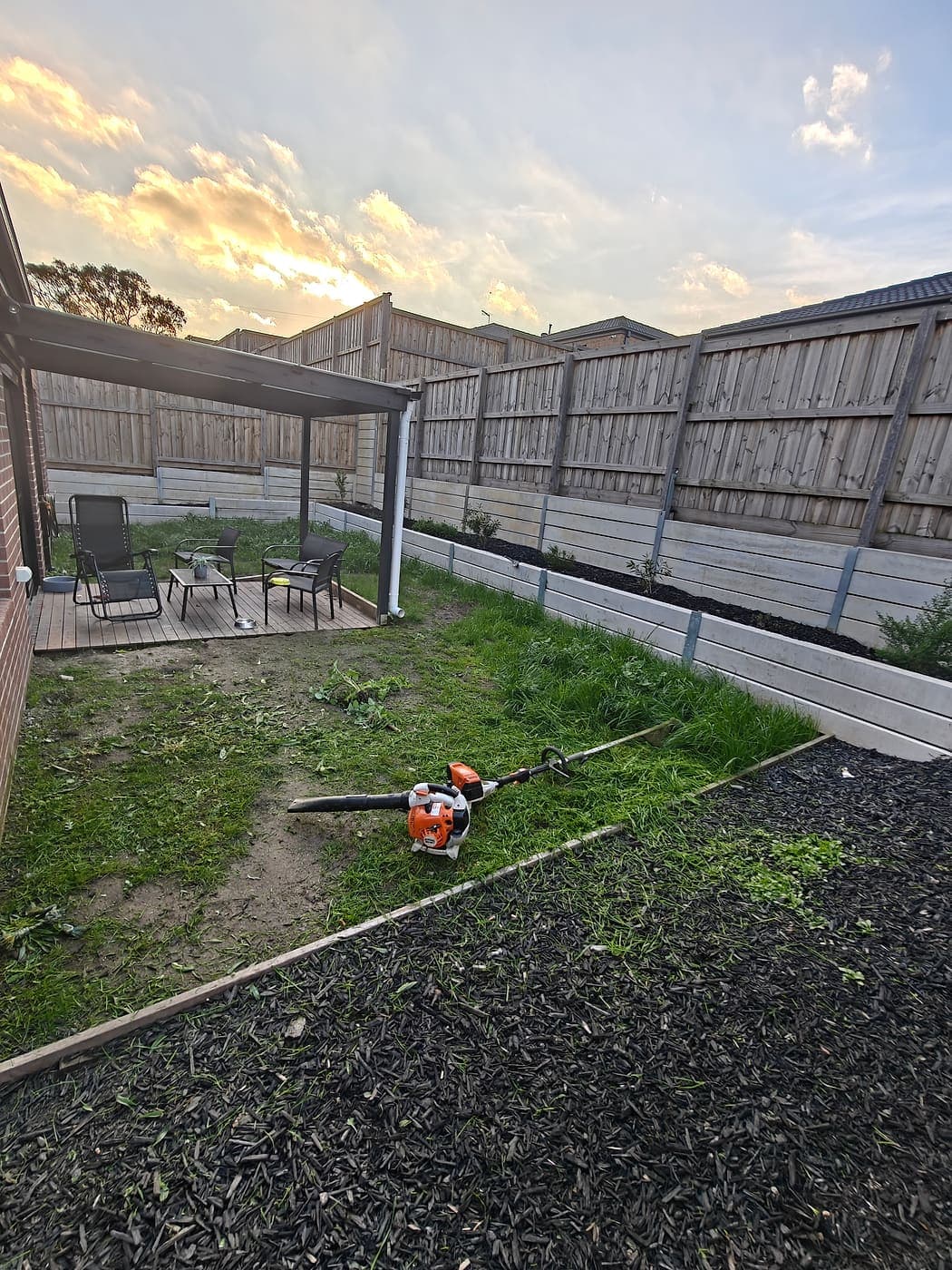
A blower is fast on paths and paving, but a rake does a better job on lawns, where it also lifts some thatch. Victoria's residential noise rules limit when petrol and electric garden tools can run, so check the permitted hours before an early start. EPA Victoria (opens in a new tab)'s residential noise page lists the times for weekdays, weekends and public holidays.
Blowing leaves into the street or onto the nature strip only moves the problem, and in rain they end up in the stormwater pits. Blow them into a pile on your own property, then compost or bin them.
When should gutters be cleaned in autumn?
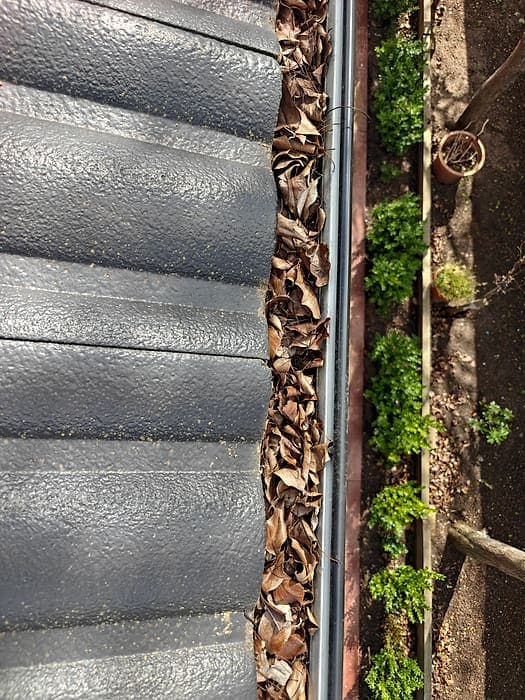
Clean gutters once most of the leaves from overhanging trees are down, which for deciduous trees is usually late May to June. That way one clean catches the season's load before the steady winter rain, rather than cleaning in April and finding them full again a month later.
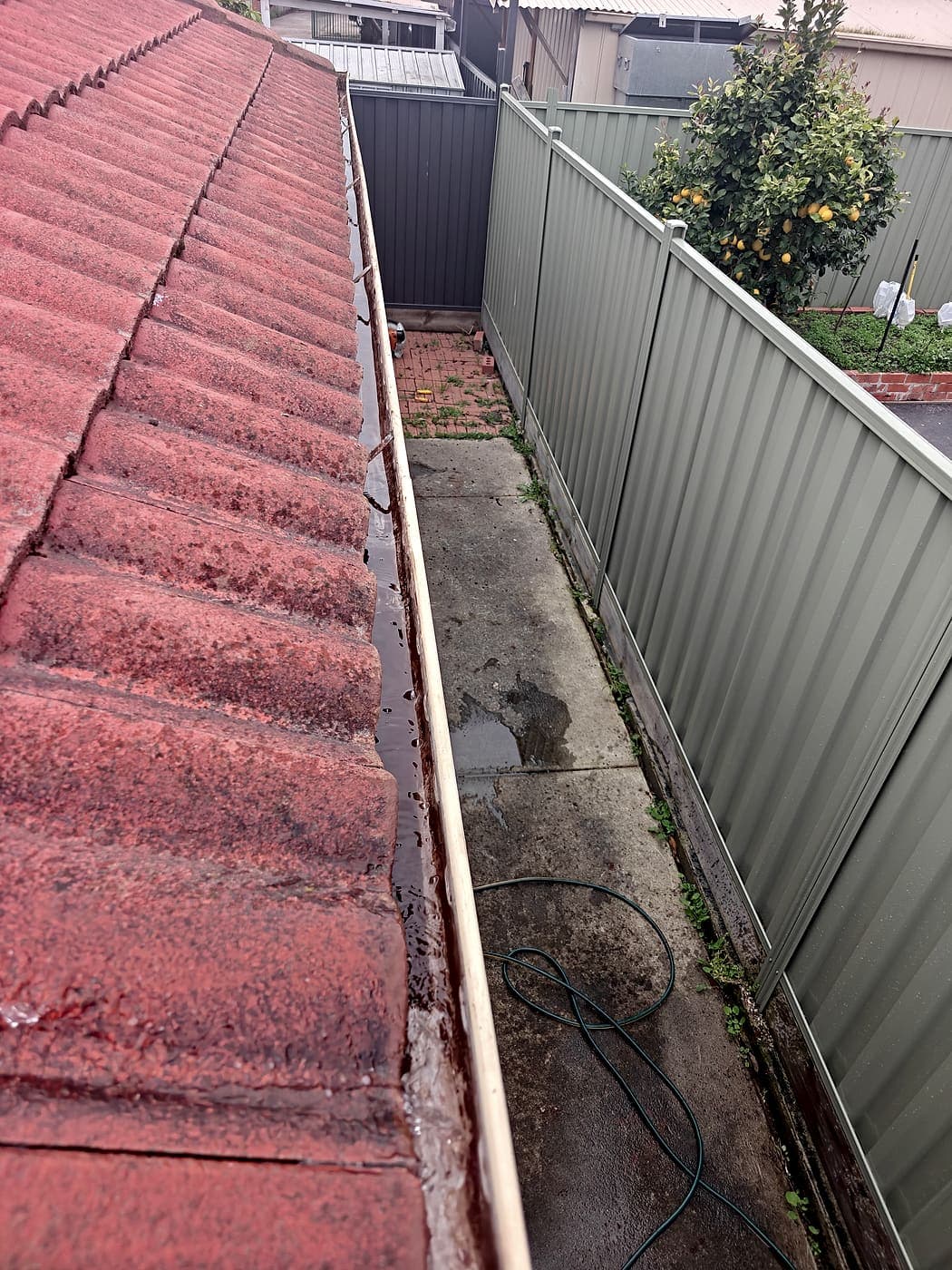
There are two exceptions. If the gutters were already part full in March, an early clean stops the first heavy autumn rain overflowing into the eaves. And if eucalypts overhang the roof, they shed bark and leaves all year, so they follow a different timetable; our article on how often gutters need cleaning near gum trees covers it.
Signs the autumn load has already caused a blockage:
- water spilling over the front of the gutter in moderate rain;
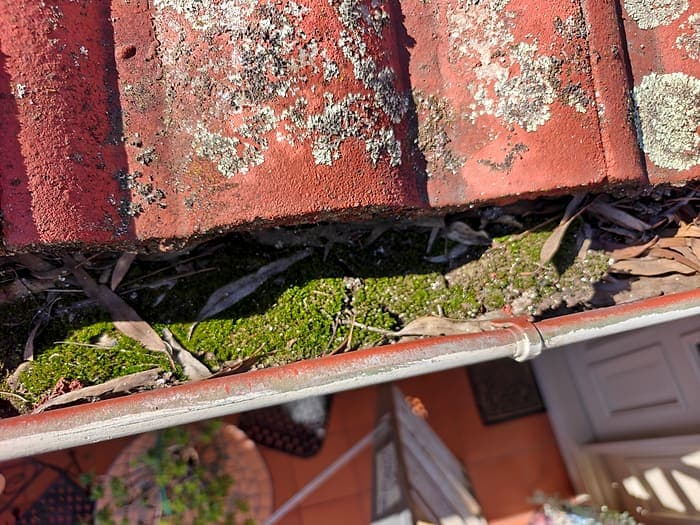
- grass, seedlings or moss growing in the gutter line;
- a downpipe that gurgles or stays silent in rain;
- tide marks or staining on the fascia and eaves;
- water pooling at the base of a wall rather than at the downpipe outlet.
Our guide to the signs and causes of blocked gutters goes through each one.
How do you clean gutters safely after the leaves fall?
Work from a stable ladder on firm, level ground, scoop the leaves into a bucket, then flush each section towards the downpipe to check it flows. Our step-by-step guide on how to clean gutters safely covers the method and the tools.
Autumn adds its own risks. Leaves on the roof and in the gutter are wet and slippery, the light fades early, and cold hands grip less well. Better Health Victoria reports that more than 5,600 Australians were admitted to hospital after ladder falls in 2017 to 2018, with people aged 65 and over admitted most often.
Leave the gutters to a professional if the house is two storeys, the roof is steep, wet or tiled, the ladder would sit on a slope or soft lawn, or powerlines run near the roof edge. Do the same if you cannot keep three points of contact while reaching the gutter, or if you would need to stand above the second step of a step ladder.
A full clean also includes the downpipes. Leaves packed into the top of a downpipe can hide behind a clear-looking gutter, so run water down each one after cleaning. If it backs up, the blockage is further down. Our complete guide to gutter cleaning in Melbourne explains downpipes, leaf guards and how often different homes need a clean.
How do you keep paths, steps and decks safe in leaf season?
Sweep them often, and do it before rain, not after. Dry leaves sweep up easily; wet leaves stick, stain and turn into a slick layer on steps, sloping driveways and timber decks.
Where leaves fall daily, a quick sweep two or three times a week through May and June keeps steps safe. Pay most attention to:
- front and back steps, and any step down from a deck;
- sloping driveways and ramps;
- timber decks, where leaves trap moisture and stain the boards;
- the paving around pools and outdoor taps, which is often wet anyway.
Do not hose leaves off. Victoria's permanent water saving rules (opens in a new tab) do not allow hard surfaces such as paths and driveways to be cleaned with a hose, except in listed cases like a safety hazard, and EPA Victoria asks households to sweep the footpath and bin the waste rather than hosing it into the drain. A broom and a pan do the job without washing leaves into the stormwater system.
Leaf stains on concrete and pavers
Tannins in wet leaves, especially oak, liquidambar and gum leaves, can leave brown shadows on pale concrete and pavers. Sweeping before rain prevents most of it. Light stains usually fade over a summer of sun. Stubborn ones on driveways can be lifted with a proper surface clean once a season, which falls inside the water rules' allowance for surface staining.
Where should autumn leaves go?
On your own property, if you can. Leaves are one of the best free compost ingredients in a garden, and EPA Victoria's advice is to compost leaves and garden clippings so they stay out of drains.
Your options, from best to last resort:
- Compost them. Leaves are high in carbon. Mix roughly two to three parts leaves to one part green material such as grass clippings and kitchen scraps. Our guide to composting garden waste at home explains the mix.
- Make leaf mould. Pile shredded leaves in a wire cage or a bag with a few holes, keep them damp and leave them. They break down slowly into a crumbly soil improver.
- Use them as mulch. Shredded leaves can go straight onto garden beds. Whole leaves tend to mat, so run the mower over them first.
- Use the green bin. Leaves go in the food and garden organics bin, which Victoria is standardising with a lime green lid. Check your council's list for what is accepted.
Never sweep or blow leaves into the gutter at the kerb or the stormwater pit. Stormwater travels through drains into waterways, and rotting leaves add nutrients and silt to creeks and the bay.
What is the autumn leaf checklist for lawns, gutters and paths?
Work through it once in early autumn and again after the main drop:
- Note which trees drop onto the roof, lawn and paths, and when.
- Check gutters in March; clean early if they are already part full.
- Rake or mow leaves off the lawn every week or two from late April.
- Lift mower height one notch for the cooler months.
- Sweep steps, ramps and decks two or three times a week in peak drop.
- Start a compost bay or leaf mould cage for the season's leaves.
- Do the main gutter and downpipe clean once most leaves are down.
- Lift the grate on driveway and yard stormwater pits and clear the leaves.
- Check the gutters again after the first big winter storm.
- Spread finished leaf compost or leaf mould on beds before spring growth.
Leaf season runs straight into winter jobs. When the leaves are down and the canopy is bare, it is a good time to see the structure of deciduous trees and shrubs; our article on late winter pruning jobs picks up from there. If a storm brings down branches with the leaves, see what to do after a Melbourne storm before you start clearing. More seasonal articles are in the seasonal section of the blog.
When is it worth handing leaf season over?
If the roof is high, the trees are big or the leaves simply keep coming, it is worth having someone else take the ladder work. Our gutter cleaning service clears gutters and downpipes and takes the leaves away, and you can get a free quote for a one-off autumn clean or a regular plan.
Your Garden. Our Promise.
From our jobs
Frequently asked
How long can autumn leaves sit on a lawn before the grass suffers?
Can I use the mower to pick up autumn leaves?
When is the best time to clean gutters in a Melbourne autumn?
Are autumn leaves good for the garden or should they go?
Should I worry about leaves blocking the stormwater pit in my driveway?
Do I need to clear leaves my neighbour's tree drops in my yard?
Sources and further reading
- How to prepare your property (CFA)
- Reduce stormwater pollution (EPA Victoria)
- Ladder safety (Better Health Channel)
- Standardising household recycling across Victoria (Victorian Government)
- Trees in Victoria (Victorian Government)
- Permanent water saving rules (Water Victoria)
Caring for Melbourne gardens since 2019. Updated 18 November 2026.