


Seasonal
Late winter pruning: what to cut before spring
By the Action Garden team · Updated · 14 min read
Checked against: Bureau of Meteorology, The Rose Society of Victoria, Australian Plants Society Victoria, Sustainable Gardening Australia, Royal Horticultural Society
TL;DR
- Cut dormant plants before bud burst: roses, pome fruit, peaches, grapevines, wisteria spurs and deciduous shrubs that flower on new wood
- Hold off on camellias, azaleas, spring-flowering natives, apricots and cherries; cutting them now removes flowers or invites disease
- Leave frost-damaged and frost-tender growth on until the frost risk has passed, which is later in the outer east and the fringe
- Deciduous hedges can be renovated while bare; most evergreen hedges respond better once spring growth starts
- Prune on a dry day, with clean, sharp tools, and cut just above a bud or back to a branch collar

| When | What to cut | Why then |
|---|---|---|
| Late July | Roses, pome fruit, grapevines, deciduous shrubs | Coldest stretch of the year; mean minimum 6.0 °C in July (BOM, central Melbourne) |
| Early to mid August | Roses in frosty spots, peaches and nectarines, wisteria spurs, deciduous hedges | Mean minimum 6.7 °C; buds start to swell on early plants |
| Late August | Ornamental grasses, last deciduous shrubs, tidy-up and mulch | Finish before bud burst; new growth wastes energy if cut off |
| September onwards | Frost-tender perennials, spring-flowering shrubs after flowering | Mean minimum 8.0 °C in September, but the record low is still below 0 °C |
What should you prune in late winter in Melbourne?
Prune the plants that are still dormant and will flower or fruit on new growth: roses, apples, pears, peaches, nectarines, most plums, grapevines, wisteria spurs, deciduous shrubs, deciduous hedges and ornamental grasses that die back to straw. The aim is to finish before the buds burst, which in most of Melbourne means by the end of August.
Late winter is the last quiet window of the year. Leaves have fallen, so you can see every branch, and growth is about to start, so cuts begin to close over within weeks instead of sitting open through the wettest months.
Here is the whole job list in one place:
- Prune repeat-flowering roses, then rake up and bin every old leaf
- Prune apples and pears to shape and to open the centre
- Prune peaches and nectarines, and plan the leaf curl spray before bud burst
- Cut grapevine canes back to short spurs while the vine is fully bare
- Shorten wisteria side shoots to two or three buds
- Shape deciduous shrubs that flower on new wood
- Renovate overgrown deciduous hedges while they are leafless
- Cut deciduous ornamental grasses back to a low tuft
- Remove dead, damaged and crossing branches anywhere you can safely reach
- Clean and sharpen tools, and leave frost-tender plants for later
Not everything gets cut. The second half of this post is about what to leave, and that list matters as much as this one.
Why is late winter the right time for some plants and not others?
Late winter suits plants that are dormant now and will make new wood in spring, because pruning just before growth starts gives the plant a clean structure and its cuts heal quickly. It does not suit plants that have already set their flower buds, or plants that are tender to frost.
A deciduous plant stores energy in its roots and stems over winter. Pruning while it is bare removes wood the plant would have spent that energy on, so the spring flush goes into the branches you chose to keep.
Timing within winter matters too. A cut made in June sits open through the coldest, wettest weeks. A cut made in late July or August is only a few weeks from spring growth, and the plant starts to seal it soon after.
How cold does Melbourne get in late winter?
The Bureau of Meteorology (opens in a new tab)'s long record for central Melbourne shows why frost-tender plants should wait. The lowest temperatures on that record fall well below freezing in winter and stay below zero into September.
| Month | Mean minimum (°C) | Lowest recorded (°C) | Mean maximum (°C) |
|---|---|---|---|
| June | 6.9 | -2.2 | 14.1 |
| July | 6.0 | -2.8 | 13.5 |
| August | 6.7 | -2.1 | 15.0 |
| September | 8.0 | -0.5 | 17.3 |
| October | 9.6 | 0.1 | 19.7 |
Source: Bureau of Meteorology, climate statistics for Melbourne Regional Office (086071), 1855 to 2015.
Those are city figures. Outer eastern suburbs, the Yarra Valley edge and low, open sites get far more frosts than the city station, so the "wait for the frost to pass" advice below applies for longer there. If your garden sits in a frost hollow, leave frost-sensitive cuts until your own frosty mornings have stopped, not the city's.
Which roses, fruit trees and vines get cut now?
Roses, apples, pears, peaches, nectarines, most plums and grapevines are the core late winter jobs. Each is dormant, each fruits or flowers on wood the coming season builds, and each benefits from being opened up before spring.
Roses. The Rose Society of Victoria (opens in a new tab)'s monthly calendar has pruning starting in July, and moving into August in cold areas so the new shoots miss the frosts. Remove dead and weak canes, open the centre, then shorten what remains to an outward-facing bud. The society also asks for every leaf to be stripped from the bush and raked up, not composted, to cut down black spot. Our step-by-step rose pruning guide covers how much to take off each type.
Apples and pears. These pome fruits are pruned while bare to keep the tree low and open, and to keep a balance of fruiting spurs and new wood. Remove dead, diseased and crossing branches first, then shape.
Peaches and nectarines. They fruit on the previous summer's wood, so each winter some older wood is removed to make room for new. Sustainable Gardening Australia (opens in a new tab) says the copper spray for peach leaf curl is preventative and has to go on in winter, before bud burst, so time the prune and the spray together, and follow the product label, its safety data sheet and local guidelines.
Plums. Most plums are pruned lightly. Some gardeners prefer to prune them after harvest instead, for the same disease reasons that apply to apricots and cherries below.
Grapevines. Cut last season's canes back to short spurs of one or two buds, or select new canes on a cane-pruned vine. Do it while the vine is fully dormant; a vine pruned as buds swell bleeds sap from the cuts.
The full method for each fruit tree, including which ones are left for summer, is in our guide to pruning fruit trees in Melbourne.
Why apricots and cherries are left until after harvest
Apricots and cherries are prone to diseases that enter through pruning wounds, such as silver leaf and bacterial gummosis. Spores of these diseases spread most in cool, wet weather, which is exactly Melbourne's winter.
Pruning after harvest, on a dry day in late summer or early autumn, means cuts dry and close quickly in warm weather. The trade-off is that you lose the clear view of a bare tree, so make the main structural decisions while you can see it in winter, and mark the branches to remove later.
Which shrubs, climbers and grasses are cut back before spring?
Deciduous shrubs that flower on new season's growth, deciduous climbers such as wisteria, and deciduous ornamental grasses are the other late winter jobs. Pruning them now shapes the plant without costing any flowers, because the flowers have not formed yet.
Plant profiles
Plants to prune in late winter, and plants to leave
Rose (Rosa, bush and repeat-flowering types). Prune now. July in most suburbs, August in frost-prone spots. Strip and bin old leaves.
Crepe myrtle (Lagerstroemia). Prune now if it needs shaping. Flowers on new growth, so a winter cut does not cost the summer flowers. Avoid "knuckle" cuts that leave clubbed stubs.
Wisteria (Wisteria sinensis and W. floribunda). Prune now. Shorten side shoots to two or three buds, keeping the fat flower buds.
Grapevine (Vitis vinifera). Prune now, while fully bare. Late cuts bleed sap.
Ornamental grasses that brown off (Miscanthus, deciduous Pennisetum types). Cut back now, before new shoots appear.
Camellia and azalea (Camellia, Rhododendron). Leave. Flower buds are already set or open. Prune after flowering in spring.
Grevillea, correa and other spring-flowering natives. Leave until after flowering. The Australian Plants Society Victoria (opens in a new tab) advises against pruning while flower buds are forming.
Apricot and cherry (Prunus armeniaca, P. avium). Leave until after harvest, on a dry day.
Salvia, penstemon and other soft perennials. Leave until the frost risk has passed, then cut old stems back to fresh growth at the base.
Citrus (Citrus). Leave until spring, once frosts are over. Prune lightly to shape.
Deciduous shrubs. Shrubs that flower on new wood in summer can be shaped now: take out the oldest stems at the base, then shorten the rest. Shrubs that flower in spring on last year's wood, such as many deciduous spring bloomers, are pruned straight after flowering instead. The spring garden checklist picks those up in October and November.
Hydrangeas. Mophead types are usually tidied in late winter by cutting each finished stem back to a pair of fat buds, keeping enough buds to flower. The detail depends on the type, so check the label or the nursery before cutting hard.
Ornamental grasses. Grasses that turn to straw over winter are cut to a low tuft before new green shoots push through. Evergreen grasses and strappy plants are only combed out and trimmed lightly.
What should you leave alone until spring?
Leave anything that is already flowering or carrying flower buds, anything frost-tender, and any evergreen hedge that needs hard cutting. Pruning these in late winter either costs a season of flowers or exposes soft new growth to frost.
- Spring-flowering shrubs such as camellias, azaleas and spring-flowering natives. Their buds are formed. Prune after flowering.
- Australian natives in general. The Australian Plants Society Victoria advises cutting back by about a third of the new growth and always leaving green leaves, and warns that hard pruning into old wood may kill some plants or cost the next season's flowers.
- Frost-tender plants, such as salvias, citrus, bougainvillea, tender succulents and anything with frost-burnt leaves. Burnt growth shields the buds below from the next frost. Cut it off once the risk has passed and new shoots appear.
- Apricots and cherries. Leave until after harvest.
- Evergreen hedges needing a hard cut. Wait for spring growth, as explained below.
What frost-burnt leaves are doing for the plant
When frost browns the outer leaves of a shrub, those dead leaves become a blanket for the growth below. Strip them in August and the next cold, clear night lands on soft buds that would otherwise have been covered.
Wait until the frost risk for your area has passed and the plant is pushing new shoots, then cut back to just above the healthy growth. In central Melbourne that is often September; in frosty pockets of the outer east and the fringe it can be October.
Is late winter a good time for hedges?
It is a good time for deciduous hedges and a poor time for hard pruning of most evergreen ones. The Royal Horticultural Society (opens in a new tab)'s renovation advice is that deciduous hedges are renovated when dormant and leafless, while evergreen hedges respond better once they are in active growth, from mid spring.
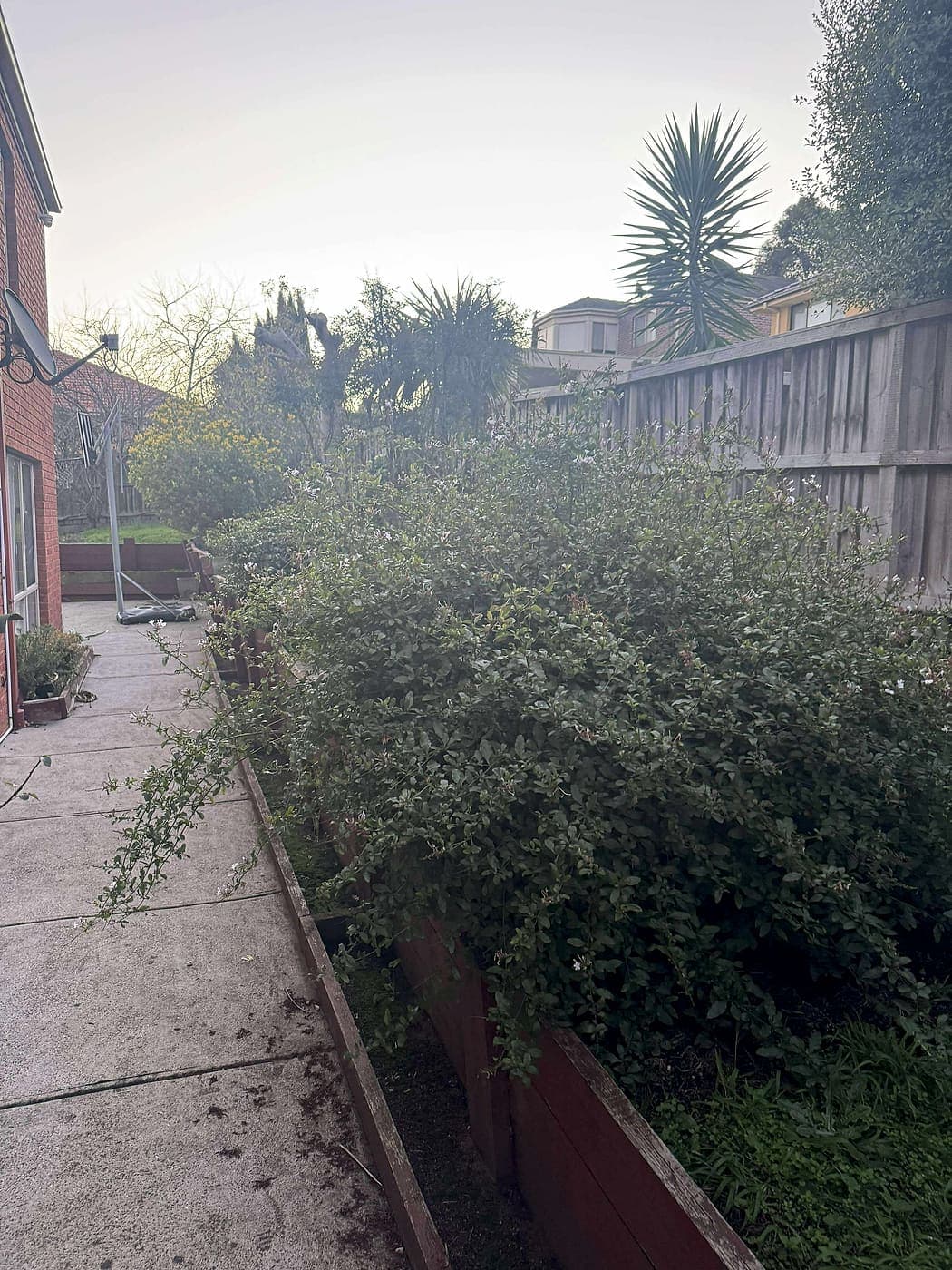
For a light shaping trim, late winter is fine for most hedges; growth is slow, so the trim holds its shape until spring. For the full-season trimming timetable, our guide to hedge trimming in Melbourne sets out the timing for each species.
Three points before cutting:
- Know what you are cutting. The RHS notes that most conifers, including cypress and Leyland cypress, do not regrow from bare older wood. Cut back into brown wood and the gap stays.
- Spread the big reductions. Many hedges tolerate losing up to half their height and width in one cut; heavier reductions are spread over two or three years.
- Shape the batter. Keep the base wider than the top so light reaches the lower leaves. Trimming a hedge straight and level shows how to set the line.
If the hedge is past saving or the wrong plant for the spot, late winter is also a good time to plan a replacement. Our list of hedge plants that suit Melbourne compares growth rate, height and care.
How do you make a clean pruning cut?
Cut about 5 mm above an outward-facing bud, sloping away from it, or cut a branch back to just outside the slightly swollen collar where it joins the trunk. Clean cuts in the right place close over quickly; stubs and tears die back and let rot in.
Two close-up panels. On the left, a rose cane with an outward-facing bud: a sloping cut line sits just above the bud, angled down away from it so water runs off, with a short stub marked "too long" above and a cut through the bud marked "too close". On the right, a side branch meeting a trunk, with the swollen collar shaded: the correct cut line runs just outside the collar, while a cut flush with the trunk and a long stub are both crossed out. A small arrow shows new growth emerging from the bud in the direction it faces.
Good cutting habits:
- Sharp tools. Secateurs for stems up to finger thickness, loppers for thicker stems, and a pruning saw beyond that. Blunt blades crush stems.
- Clean blades. Wipe them between plants, and always after cutting diseased wood.
- Three cuts for heavy branches. An undercut, then a top cut further out to drop the weight, then the final cut at the collar, so the bark does not tear down the trunk.
- No paint or sealant by default. A clean cut in the right place is what heals.
- Clean up. Rake up prunings and leaves, especially under roses and fruit trees, so disease does not overwinter at the base.
Bud direction and the shape you want next year
Every bud points the way its shoot will grow. Cutting above an outward-facing bud sends the new shoot away from the centre, which keeps a rose or fruit tree open to light and air.
On a plant that sprawls, choose an inward or upward bud instead to pull the growth in. Thinking one season ahead like this is the difference between pruning and just shortening.
What are the common late winter pruning mistakes?
The common mistakes are cutting the wrong plants, cutting too late, and cutting too hard. Each looks harmless in August and shows up as a missing flower display, a bleeding vine or a gappy hedge by summer.
- Pruning camellias, azaleas or spring natives now. You remove this spring's flowers.
- Shearing evergreen hedges hard in winter. They sit bare and slow to recover until spring growth arrives.
- Cutting conifer hedges into brown wood. Most will not regrow from it.
- Stripping frost-burnt leaves too early. The next frost hits the buds beneath.
- Leaving it until buds burst. Vines bleed and roses waste their first flush.
- Leaving rose leaves and fruit mummies on the ground. They carry disease into spring.
- Topping trees. Cutting the top off a tree produces weak regrowth and is not pruning.
Call a professional for any branch you cannot reach from the ground or a stable platform, for any cut that needs a chainsaw, and for anything near power lines, which is regulated work for qualified people only. Large trees, branches over a roof and storm-damaged limbs are tree work, which the Action Garden team carries out.
When is it worth getting help with late winter pruning?
It is worth getting help when the list is long and the window is short: a rose bed, a few fruit trees, a deciduous hedge and the grasses all need doing in the same few weeks before bud burst. A team visit can get through the lot in one go and take every cutting away.
Our hedge trimming and pruning service covers selective pruning, formal or natural shaping and seasonal schedules, with a full clean-up after every job. Once pruning is done, the guide to what to plant each season covers the planting window that opens straight after, and you can find more seasonal jobs under seasonal articles.
If the bare branches are telling you it is time, a free quote is the easiest place to start.
Your Garden. Our Promise.
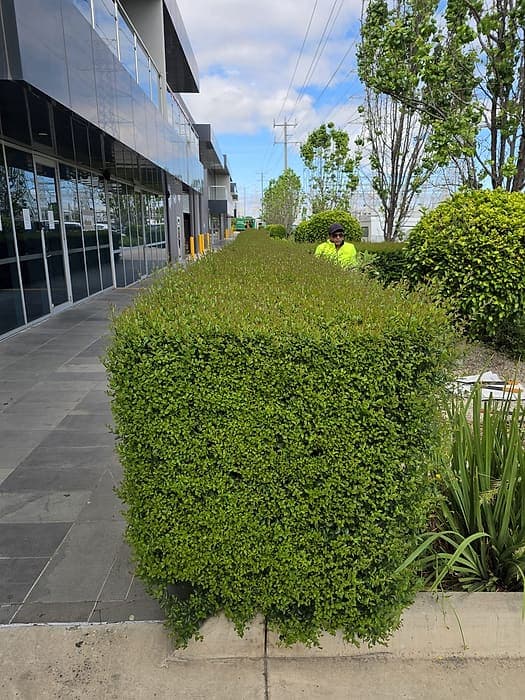
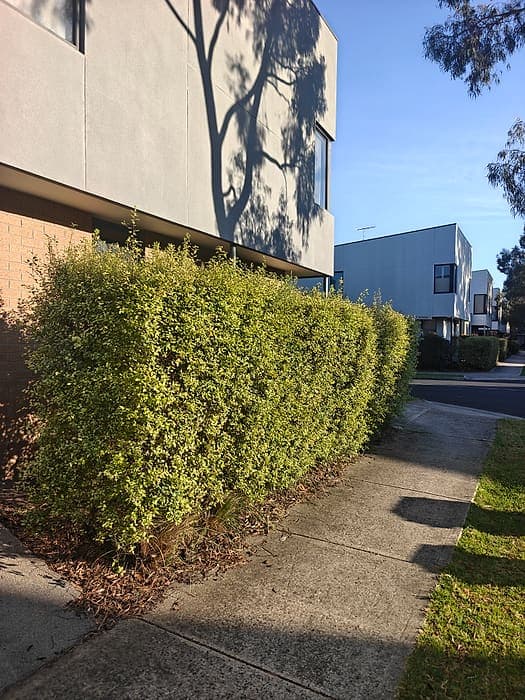
From our jobs

Frequently asked
Is it too late to prune roses in the last week of August?
Should deciduous ornamental grasses be cut back before spring?
When should a wisteria get its winter prune in Melbourne?
Should salvias and other soft perennials be cut back in August?
Why are peaches and nectarines pruned before bud burst?
How can you tell if a deciduous plant is still dormant?
Can late winter prunings go in the council green waste bin?
Is late winter a good time to cut back an overgrown deciduous hedge?
Sources and further reading
- Climate statistics, Melbourne Regional Office 086071 (Bureau of Meteorology)
- Monthly care of roses (The Rose Society of Victoria)
- Pruning Australian native plants (Australian Plants Society Victoria)
- Peach leaf curl (Sustainable Gardening Australia)
- Renovating hedges (Royal Horticultural Society)
Caring for Melbourne gardens since 2019. Updated 18 November 2026.