


Hedges and pruning · Complete guide
Hedge trimming and pruning in Melbourne: the complete guide
By the Action Garden team · Updated · 17 min read
Checked against: Dispute Settlement Centre of Victoria, vic.gov.au, Victoria Legal Aid, Wildlife Victoria, Energy Safe Victoria, Seniors Online Victoria, Australian Plants Society Victoria, Royal Horticultural Society, Victorian Law Reform Commission
TL;DR
- Trim after each flush of growth, usually late spring and again in late summer or early autumn, with flowering hedges cut straight after they flower.
- Shape every hedge with a slight taper, wider at the base, so light reaches the lower leaves and the hedge stays dense to the ground.
- Lilly pilly, photinia, pittosporum and viburnum take a hard cut well; conifers such as Leighton green and many natives do not regrow from bare wood.
- Overhanging hedges, council protection and nesting birds all have rules in Victoria, so check the official sources before a big cut.
- Tall hedges, ladders, power lines and powered trimmers are where DIY gets risky, and that is when a professional crew earns its place.
| Season | What to do | Notes |
|---|---|---|
| Spring (Sep to Nov) | Main shaping trim after the first flush | Check for nests first; spring is breeding season for many native birds |
| Summer (Dec to Feb) | Light tidy only on formal hedges | Avoid trimming on hot days; fresh cuts scorch |
| Autumn (Mar to May) | Second main trim | Last firm cut so regrowth hardens before the cold |
| Winter (Jun to Aug) | Minimal; hard renovation of tolerant species late in the season | Growth is slow, so cuts stay bare for longer |
What does hedge trimming and pruning involve in Melbourne?
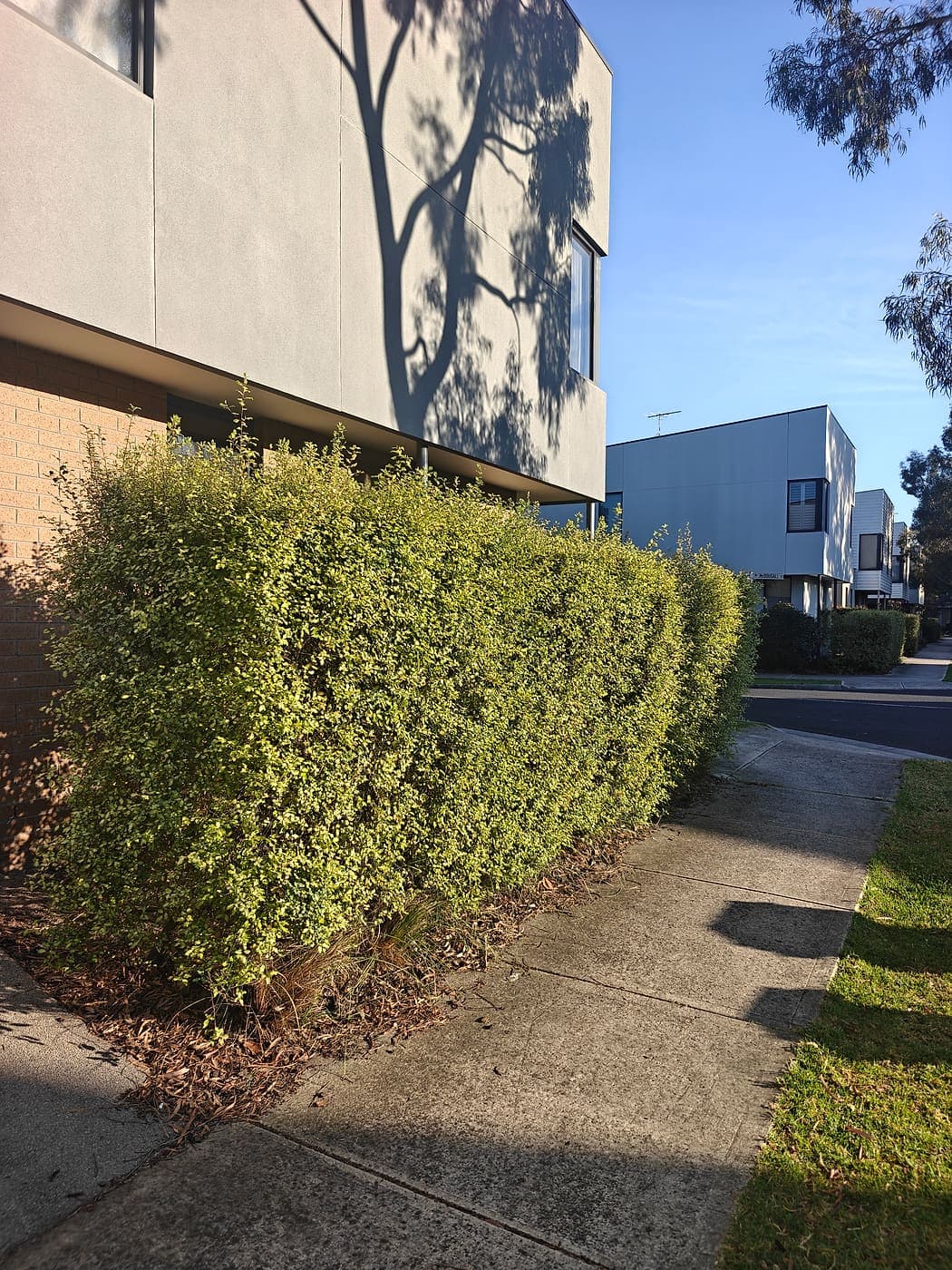
Hedge care in Melbourne means cutting each hedge at the right time for its species, to a shape that keeps it dense, and cleaning up properly afterwards. Most hedges here are evergreen screens such as lilly pilly, photinia, pittosporum, viburnum, murraya and box, and they grow in flushes rather than steadily all year.
Two different jobs sit under the one name. Trimming shears the outer face of the hedge to hold its shape. Pruning reaches inside to take out dead, crossing or overlong branches, or to bring height and width back under control.
A good programme mixes both. Regular trims keep the surface tight and the leaves thick, while an occasional selective prune stops the hedge creeping outwards a few centimetres every year until it swallows the path. Our hedge trimming and pruning service covers precise trimming, selective pruning, formal or natural shaping, and a full clean-up of the cuttings, one-off or on a seasonal schedule.
Melbourne adds its own conditions. Clay soils in the north and west hold water in winter and crack in summer, while the sandier soils of the south-east drain fast and dry out quickly. Both affect how fast a hedge regrows after a cut and how much it sulks in a hot spell.
When should hedges be trimmed in Melbourne?
Trim most hedges just after a flush of new growth has finished, which in Melbourne usually means a main cut in late spring (October to November) and a second in late summer or early autumn (February to April). Flowering hedges are trimmed straight after flowering so you do not remove next season's buds.
The logic is simple. Cutting after a flush removes the soft new shoots once they have done their job, and the plant answers with several shoots from each cut, which is what makes a hedge thick. Cutting before a flush simply means trimming it again a few weeks later.
Avoid three windows:
- Hot days and heatwaves. Freshly exposed inner leaves have not hardened to full sun and can scorch, especially on box and murraya.
- Late autumn into winter for hard cuts. Regrowth is slow, so bare stubs stay bare for months, and frost can damage soft new shoots in colder suburbs.
- Active nesting in spring. Check before you cut (see the section on neighbours, councils and birds below).
Species timing differs more than most people expect. Murraya likes frequent light trims through the warm months, box is happy with two, and conifers want only the green tips taken. The month-by-month detail for each plant sits in our post on when to trim hedges in Melbourne, species by species, so this guide sticks to the principles.
Why the late summer trim matters more than people think
The late summer or early autumn cut is the one that sets how the hedge looks through winter. Melbourne hedges usually push a second flush after summer rain, and if that growth is left it hangs shaggy through the cool months, when nothing regrows fast enough to fill a late cut.
Trimming in February to early April gives the regrowth time to harden before the colder nights of May and June. A cut in late May often leaves raw, browned leaf edges on show until spring.
Which hedge plants grow in Melbourne, and how does each respond to cutting?
The species decides almost everything: how often you trim, how hard you can cut, and whether a mistake grows back. The table below groups the common Melbourne hedges by how they respond to the blade.
| Hedge plant | Growth rate | Takes a hard cut? | Best style | Watch for |
|---|---|---|---|---|
| Lilly pilly (Syzygium, Acmena) | Fast | Yes, reshoots well from older wood | Formal or informal screen | Pimpled new leaves from lilly pilly psyllid on some Syzygium |
| Photinia (Red Robin) | Fast | Yes | Formal screen | Leaf spot in wet, crowded hedges |
| Pittosporum | Medium to fast | Usually, in stages | Formal or natural | Thin bases when the top is wider than the bottom |
| Sweet viburnum (V. odoratissimum) | Fast | Yes | Tall screen | Rapid shagginess after summer rain |
| Viburnum tinus | Medium | Yes | Informal flowering hedge | Trimming off the winter flower buds |
| Murraya (orange jessamine) | Medium | Moderate; prefers light trims | Formal, fragrant | Scorch after cutting in heat; frost in cold pockets |
| English and Japanese box (Buxus) | Slow | Moderate, slow to recover | Low formal edging | Browned cut leaves in heat; fungal leaf problems in humid weather |
| Westringia (native rosemary) | Medium | No, not into bare wood | Low informal or clipped native | Woody, bare centres if never tip pruned |
| Leighton green and other cypress conifers | Fast | No, does not regrow from brown wood | Tall formal screen | Brown patches that never refill |
| Camellia sasanqua | Medium | Yes, after flowering | Informal flowering screen | Cutting off the autumn flower buds |
Two rules come out of that table. Broadleaf evergreens such as lilly pilly, photinia and viburnum are forgiving and can be reshaped, while conifers and many natives must be kept in shape from the start because they will not rebuild from bare stems. The Australian Plants Society Victoria (opens in a new tab) notes that hard pruning into old wood can kill some natives, including leptospermum and melaleuca, and advises keeping some green leaves on the plant.
Is privet or a weedy species worth keeping as a hedge?
Some older Melbourne hedges are made of plants that now spread into bushland, privet being the best known. A hedge of them can still be trimmed, and regular trimming before flowering reduces seed spread.
If you are replacing a hedge anyway, choose a species that suits your soil, height and maintenance appetite. Check your council's environmental weed list before planting anything that sets lots of berries.
How do you trim a hedge so it stays dense from top to bottom?
Shape the hedge with a slight taper, so the base is wider than the top. The Royal Horticultural Society (opens in a new tab) calls this profile a "batter" and recommends formal hedges be slightly tapered on both sides. It lets sunlight reach the lower leaves, which keeps the bottom of the hedge green instead of bare and twiggy.
The most common hedge problem in Melbourne front gardens is the opposite shape. A hedge trimmed straight up and down, or wider at the top, shades its own base, and the lower branches drop their leaves over a few years until the hedge looks like a row of lollipops.
A side view of two hedges. On the left, a hedge cut wider at the top than the base, with sun arrows striking only the top and a shaded, bare lower half. On the right, a hedge tapered so the base is a little wider than the top, with sun arrows reaching both faces from top to ground and full foliage to the base.
A small label shows the taper: a few centimetres narrower at the top for every metre of height.
The basic sequence for a clean result is:
- Check the hedge for nests, hidden wires, irrigation lines and anything leaning against it.
- Lay drop sheets or a tarp along the base to catch the cuttings.
- Set a string line at the finished height on long or formal hedges.
- Trim the sides first, working from the bottom up and keeping the taper.
- Trim the top last, to the line, keeping the blade level.
- Step back often and check the line from the street or the far side of the lawn.
- Clear the cuttings from the top of the hedge, the beds and the lawn.
The full method, including blade angle, tools and how to fix a wavy top, is in our step-by-step guide on how to trim a hedge straight and level.
Take off the new growth only, and stop just short of last trim's cut line. Each trim then adds a few millimetres of dense twig growth. Cutting back into older, leafless wood on every trim is how hedges become thin and patchy.
Formal or informal: which hedge style suits your garden?
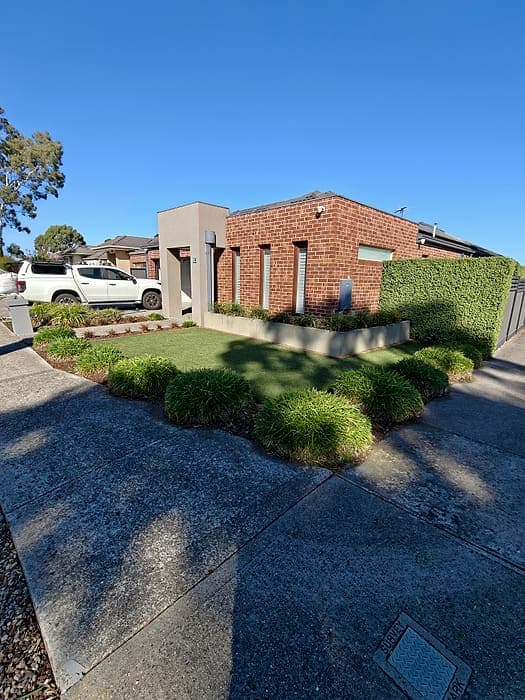
Choose a formal hedge if you want sharp lines and are happy with three trims a year, and an informal hedge if you want flowers, a softer look and fewer visits. Both can give privacy; they differ mainly in how they are cut and how often.
| Formal hedge | Informal hedge | |
|---|---|---|
| Look | Flat faces, square or tapered top, crisp corners | Natural outline, flowers and berries left on |
| Trims a year in Melbourne | Usually 3, sometimes 4 for fast growers | Usually 1 or 2 |
| Typical plants | Lilly pilly, photinia, box, murraya, Leighton green | Viburnum tinus, camellia, westringia, abelia, grevillea |
| Tools | Powered or hand shears, string line | Secateurs, loppers and shears for a light outline |
| Main risk | Bare base if the taper is lost | Woody, leggy plants if never cut at all |
| Best for | Front boundaries, edging, formal gardens | Screening, wildlife and cottage or native gardens |
A formal hedge looks best when it is never allowed to get away. An informal hedge needs fewer visits, but it still needs a yearly cut to stay compact, or it spreads across paths and drops its lower branches.
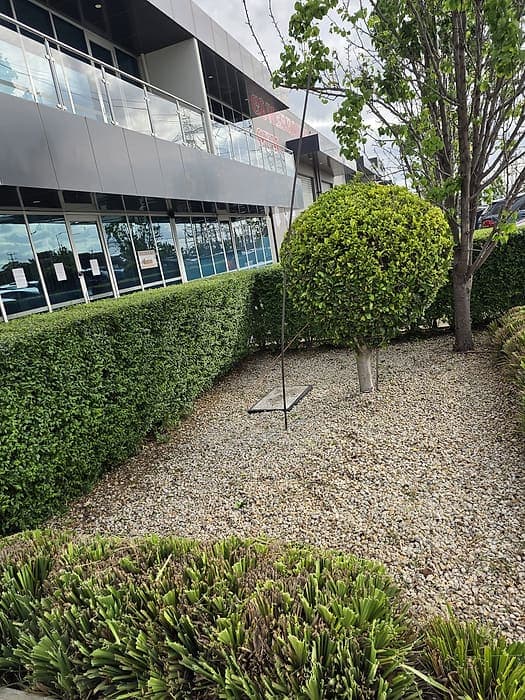
Shaped work such as balls, cones and simple topiary sits between the two. It is slow, precise trimming, and it is one of the add-ons in our hedge trimming and pruning work as decorative hedge sculpting.
Can an overgrown hedge be brought back into shape?
Yes, most broadleaf hedges can be brought back, but it is done in stages over a season or two rather than in a single savage cut. Conifers are the exception: they do not reshoot from brown wood, so an overgrown cypress hedge can usually only be tidied, lowered a little or replaced.
The staged approach for a tolerant species such as lilly pilly, photinia or pittosporum looks like this:
- Late winter or early spring, year one: reduce the height and cut one face back hard, leaving the other face leafy so the plant can keep feeding itself.
- Late spring and summer: lightly trim the regrowth on the cut face to make it branch.
- Late winter or early spring, year two: cut the second face back the same way.
- From then on: return to normal trims, with the taper built in from the start.
The Royal Horticultural Society notes that most hedges can be reduced significantly and will reshoot from old wood, while most conifers will not, and suggests replacement is often better than renovating an overgrown conifer hedge. A healthy, well-watered hedge in spring recovers far faster than a stressed one cut in heat.
What to expect after a hard renovation cut
For a few months the hedge will look raw: bare stems, a few tufts of leaves and an obvious change in size. New shoots appear along the stems within weeks in spring on vigorous species, but filling in completely can take a full growing season.
Water deeply during dry spells, mulch the root zone (see our guide on how to mulch garden beds) and resist the urge to trim the new shoots too early. Let them grow a little, then tip them to make them branch.
When the overgrown hedge is really a row of trees, with trunks thicker than your wrist and heights beyond a ladder, it becomes tree work. The Action Garden team does that, as part of our tree trimming service.
What problems show up in Melbourne hedges?
The problems that come up most often are a bare base, patchy brown sections, pimpled or distorted new leaves, leaf spots and scorched cut faces. Most trace back to shape, timing, water or a specific pest, and most can be fixed once the cause is clear.
| What you see | Likely cause | What helps |
|---|---|---|
| Bare, twiggy lower half | Top wider than the base, shading the bottom | Rebuild the taper; narrow the top first |
| Brown patch in a conifer hedge | Cut into old wood, dry roots or disease | Do not cut further; water; ask for advice if it spreads |
| Pimpled, curled new leaves on lilly pilly | Lilly pilly psyllid on susceptible Syzygium | Trim off affected tips after the flush; dispose of them away from the garden |
| Red or purple spots on photinia leaves | Leaf spot, worse in wet, crowded hedges | Improve airflow; clear fallen leaves; keep water off foliage |
| Browned edges after a trim | Cut in heat, or blunt blades tearing leaves | Trim on cool days with sharp blades |
| Gaps where one plant has died | Waterlogged clay, root damage or drought | Check drainage before replanting the gap |
Soil sits behind a lot of these. Hedges on heavy clay can drown in a wet winter and then struggle when the clay sets hard in January, while hedges on sand in the south-east dry out between waterings. Mulch and deep, less frequent watering help in both cases.
Our hedge work does not include pest control, and on many hedges the first fix is simply better timing and a better shape. For an insect problem that needs spraying, use a licensed pest controller.
What about neighbours, council rules and nesting birds?
Three sets of rules can apply to a hedge in Victoria: boundary rules between neighbours, council protections on some trees and vegetation, and wildlife law around active nests. None of them stop ordinary hedge care, but each matters before a big cut.
Neighbours. The Victorian Government's Trees in Victoria page, published with the Dispute Settlement Centre of Victoria, describes a right to trim branches, leaves or roots that cross your boundary, at your own cost. It also says to check the tree is not protected, not to damage it, and that the cuttings remain your neighbour's property unless you agree otherwise.
Victoria Legal Aid (opens in a new tab) recommends discussing it with your neighbour first and notes that the Dispute Settlement Centre of Victoria offers free, confidential help when neighbours cannot agree. The Victorian Law Reform Commission (opens in a new tab) has reported on neighbourhood tree disputes and recommended changes. We do not give rulings on any dispute; the official pages and those services are the place to start.
Councils. Most garden hedge trimming needs no permit, but councils can protect significant trees and vegetation through local laws and planning overlays. If your "hedge" is a row of tall trees, or the property sits in a heritage or vegetation overlay, check with your council before a major reduction or removal.
Nesting birds. Wildlife Victoria (opens in a new tab) notes that spring is breeding season for many native bird species and that it is illegal under the Wildlife Act to destroy nests or eggs. Dense hedges are prime nesting spots, so look and listen before you cut, and leave an active nest section until the chicks have left.
A neighbour courtesy checklist before a boundary hedge trim
- Tell your neighbour the day and roughly how long the job will take.
- Agree how their side will be trimmed and where cuttings from their side go.
- Ask about pets, pools and anything stored against the fence.
- Keep noisy powered tools within reasonable hours.
- Leave both sides swept, not just yours.
Is hedge trimming safe to do yourself?
Low hedges you can reach from the ground with hand shears or a small powered trimmer are a reasonable DIY job. The risk climbs quickly with height, ladders, powered blades and anything electrical near the hedge.
Ladders are the big one. Seniors Online Victoria (opens in a new tab) describes a man who set up two ladders with a plank between them to trim a hedge more than 3 metres high; the ladders gave way and he fell more than 2 metres. The same page says people aged 65 and over are the most likely to be seriously injured in a ladder fall.
Power lines are the other. Energy Safe Victoria (opens in a new tab) reported a gardener cutting through an insulated low voltage service wire with an extendable pole hedge trimmer while working near the line. Its key lesson is to identify every site hazard and control it before work starts.
- The hedge is taller than you can reach comfortably from the ground or a single, stable platform.
- Any part of the job needs a ladder with a powered trimmer in your hands.
- There are power lines, service wires or a switchboard lead anywhere near the hedge.
- Trunks are thicker than your wrist, or the job is really tree work.
- The hedge is on a slope, a retaining wall or next to a pool fence.
- You are not confident identifying the species or whether it will regrow.
Wear eye and hearing protection and sturdy gloves with any powered trimmer, keep both hands on the tool, and unplug or remove the battery before clearing a jam. Never use the trimmer above shoulder height or while leaning out from a ladder.
When is it worth handing your hedges to a professional?
It is worth bringing in a professional when the hedge is long, tall or formal, when the timing matters for a particular species, or when the clean-up is as big a job as the trim. Hedges up to roughly four metres are routine for our crews, and we time each job to the species.
What affects a hedge quote has nothing to do with a set rate:
- Hedge length, height and access on both sides.
- Formal shaping or a light tidy.
- Species and time of year.
- Whether cuttings are removed or chipped on site.
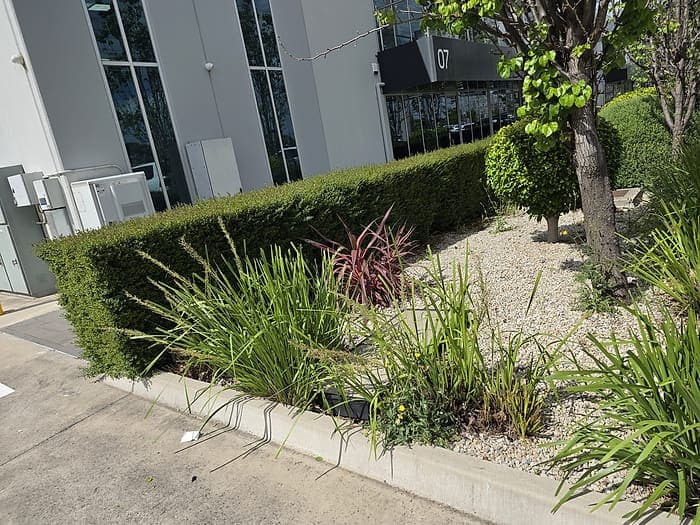
Many owners put their hedges on a seasonal schedule so the cuts land at the right time every year without anyone having to remember. Hedges fit into our regular maintenance plans alongside mowing and garden care, or can be booked one-off. For more reading, browse our hedges and pruning guides.
If you would like a hand with yours, send a couple of photos and the rough size through our free quote form and we will come back with a plan that suits the species and the season.
Your Garden. Our Promise.
From our jobs
Frequently asked
What is the difference between hedge trimming and hedge pruning?
How many times a year does a formal hedge in Melbourne need cutting?
Can a hedge that has got far too big be cut back to half its height?
Am I allowed to cut my neighbour's hedge where it hangs over the fence in Victoria?
Do I need a council permit to cut back a hedge in Melbourne?
Should I look for bird nests before trimming a hedge in spring?
What happens to the cuttings after Action Garden trims a hedge?
What details help when asking for a hedge trimming quote?
Sources and further reading
- Trees in Victoria (Dispute Settlement Centre of Victoria, vic.gov.au)
- Fences and trees (Victoria Legal Aid)
- Top tips to avoid the swoop this spring (Wildlife Victoria)
- Insulated LV electric line cut by hedge trimmer (Energy Safe Victoria)
- Get serious about ladder safety (Seniors Online Victoria)
- Pruning Australian native plants (Australian Plants Society Victoria)
- Pruning hedges (Royal Horticultural Society)
- Neighbourhood tree disputes report (Victorian Law Reform Commission)
Caring for Melbourne gardens since 2019. Updated 17 November 2026.
Related reading