


Hedges and pruning guide
Hedge trimmers, shears and secateurs: which tool for which cut
By the Action Garden team · Updated · 12 min read
Checked against: Royal Horticultural Society, Energy Safe Victoria, EPA Victoria, WorkSafe Victoria
TL;DR
- The thickness of the stem decides the tool first; the size of the leaf decides it second.
- Powered trimmers are fast on long, small-leaved hedges but chew thick wood and slice big leaves.
- Hand shears give the most control on low hedges, box edging and topiary, and need no power at all.
- Secateurs and loppers make clean single cuts on photinia, viburnum, bay and any stem a trimmer cannot handle.
- Sharp, clean blades matter more than the type of tool, and a pole trimmer near power lines is a job for a professional.
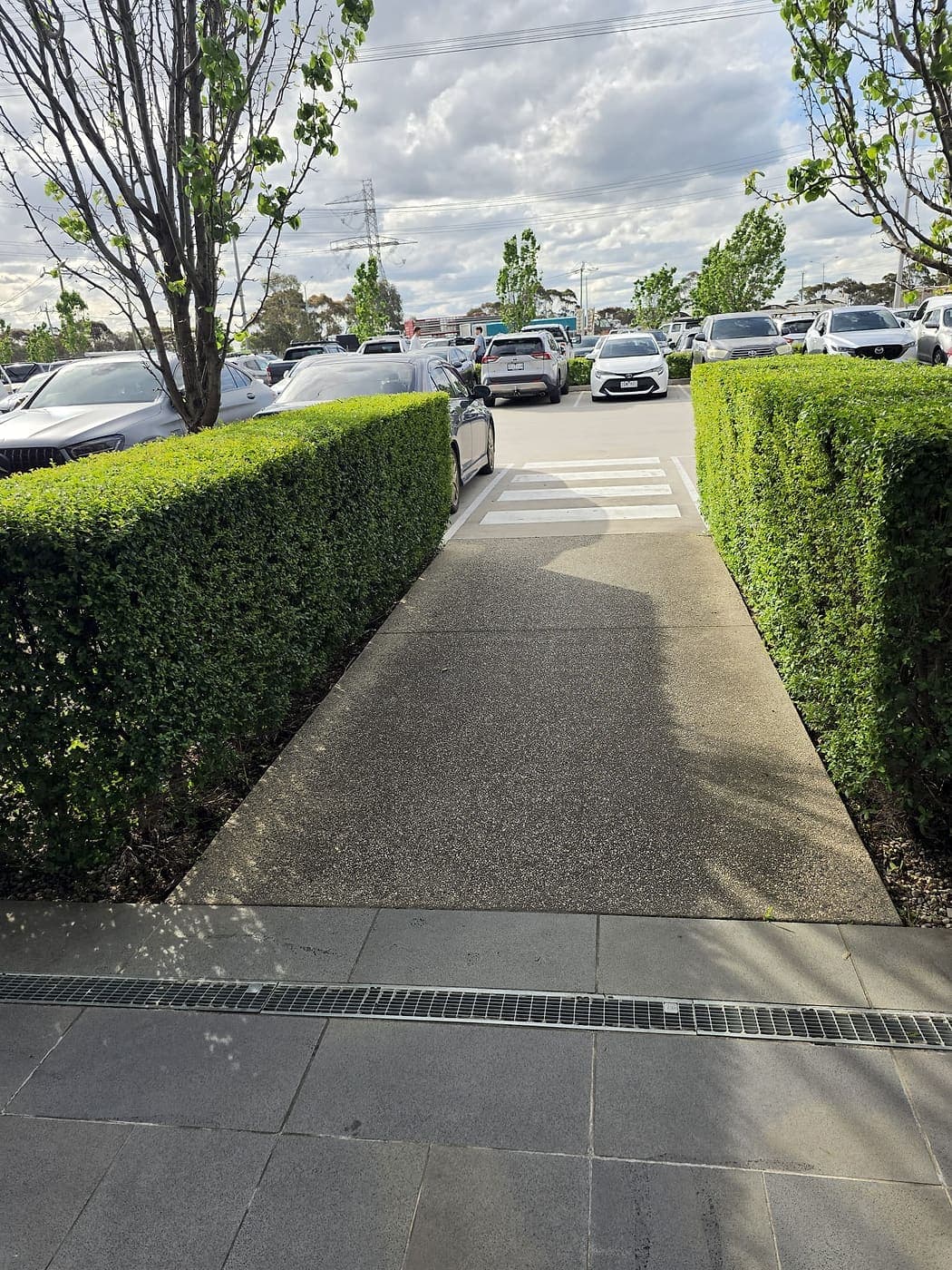
Which hedge tool should you use for which cut?
Choose by the thickness of the stem first and the size of the leaf second. A powered trimmer is for soft growth on small-leaved hedges, shears are for control on small work, and secateurs, loppers and a saw are for single stems as they get thicker.
Side by side
Hedge tools compared
| Powered hedge trimmer | Hand shears | Secateurs | Loppers | Pruning saw | |
|---|---|---|---|---|---|
| Best for | Long runs of small-leaved hedge | Low hedges, edging, topiary | Single stems, large-leaved hedges | Thicker stems, inside the hedge | Old wood and branches |
| Stem size | Soft annual growth, up to the stated capacity | Soft, thin growth | Pencil to about finger thickness | About thumb thickness, up to the stated capacity | Beyond loppers |
| Speed | Fast | Slow to medium | Slow | Slow | Slow |
| Finish on big leaves | Slices leaves | Slices leaves | Clean, whole leaves | Clean, whole leaves | Clean |
| Control on curves | Low to medium | High | High | Medium | Not for shaping |
| Noise and power | Corded, battery or petrol | Silent, no power | Silent | Silent | Silent |
| Main risk | Blade contact, cables, falls | Tired arms and wrists | Pinched fingers | Overreaching, twisting | Slipping blade |
Most hedges need two or three of these on the same day. A typical trim on a lilly pilly hedge uses a trimmer for the faces, secateurs for stray stems and loppers for the odd thick shoot poking out of the top.
The figures above are rules of thumb. Every tool has its own stated cutting capacity in the manual or on the packaging, and that figure wins.
When is a powered hedge trimmer the right tool?
A powered trimmer is right for long or tall runs of small-leaved hedge that are trimmed regularly, where the growth since the last cut is soft and green. On that kind of hedge it is many times faster than shears and gives a flatter face.
The RHS (opens in a new tab) notes that hand shears are fine for smaller hedges, but a powered trimmer is usually easier for large ones. Typical Melbourne candidates are box, small-leaved lilly pilly, murraya, westringia, privet and conifers such as Leighton green when they are trimmed often.
- Corded electric: light and steady, with no battery to run flat, but the lead limits reach and is easy to cut. The RHS advises using electric trimmers with a residual current device (RCD) and not in damp conditions.
- Battery: the most popular choice for home hedges. No lead and no fuel, with quieter running; run time depends on the battery.
- Petrol: the most power for long days and thick growth, at the cost of noise, fumes and engine servicing.
- Long-reach or pole trimmers: an extending shaft with an angled head for tall faces and tops, without a ladder. Heavy and harder to control.
Our article on battery or petrol garden tools compares power sources across mowers and trimmers in detail, so this guide sticks to which cut each tool suits.
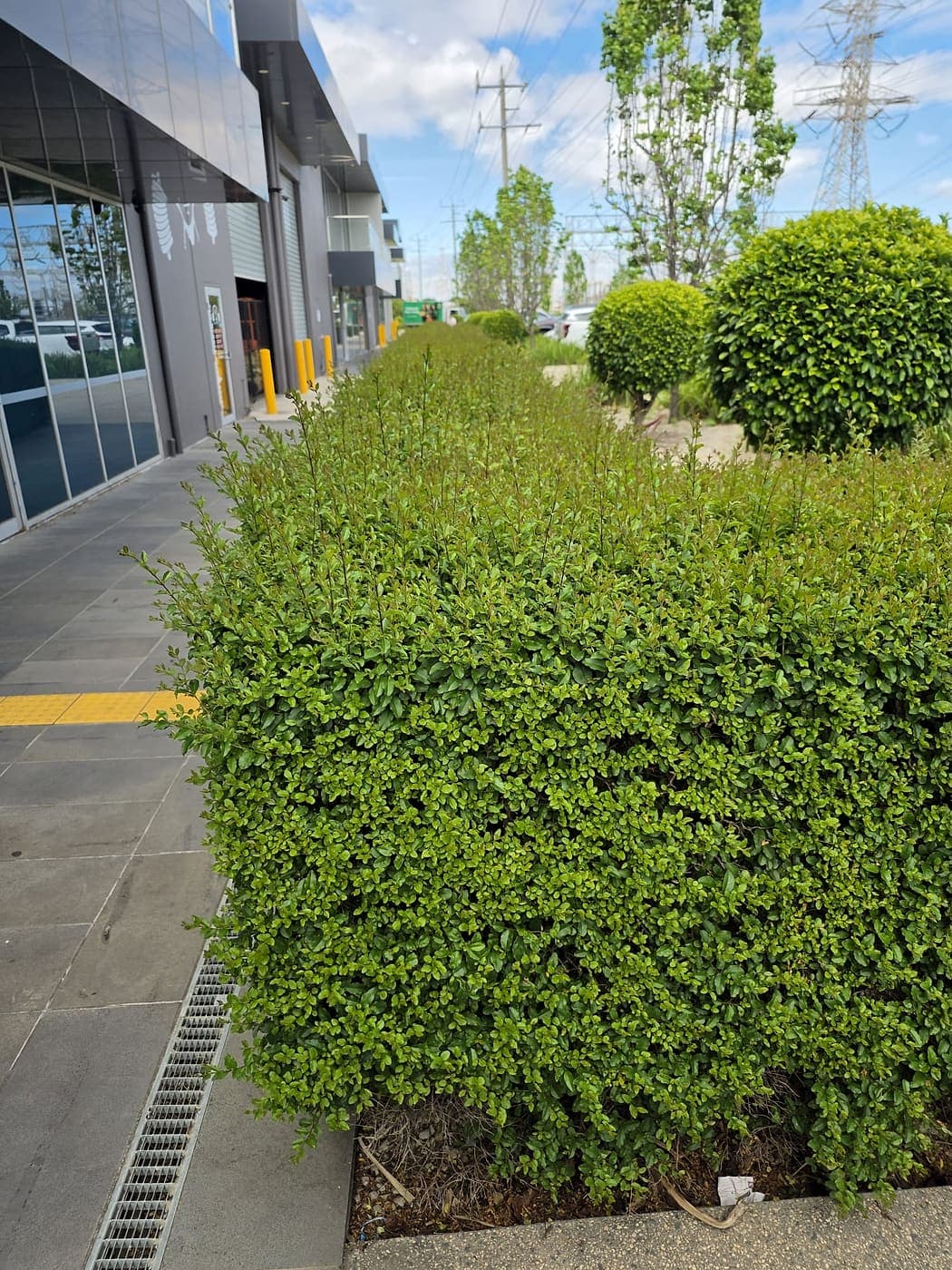
Single-sided or double-sided blades
Double-sided blades cut in both directions, so you can sweep back and forth across the face, which is faster on long, flat sides. Single-sided blades cut one way only but are often lighter and easier to angle along the top.
Blade length matters as much. A longer blade reaches further and levels a top more easily; a shorter one is lighter and easier to control on curves, corners and small hedges.
When are hand shears better than a powered trimmer?
Hand shears are better on low hedges, box edging, topiary and any short run where control matters more than speed. They also cost nothing to run, make no engine noise and never cut through a power lead.
Shears let you follow a line with small, precise bites, which is how crisp edges and smooth curves are made. That is why topiary is shaped mostly by hand; our guide to shaping topiary balls and cones shows the technique.
- Straight-bladed shears suit flat faces and tops.
- Wavy-edged blades grip stems and stop them sliding out of the cut.
- Short single-handed topiary shears suit small potted shapes and detail.
- Long-handled shears add reach on low hedges without bending.
The trade-off is effort. On a long or tall hedge, shears tire the arms and wrists, and the finish suffers as you tire. That is the point where a powered trimmer, or a professional, makes more sense.
When should you use secateurs and loppers on a hedge?
Use secateurs and loppers whenever a single stem needs a clean cut, or when the hedge has large leaves. Both make one cut on one stem, so they leave whole leaves on the surface and a clean wound that heals well.
The RHS recommends pruning large-leaved hedges by individual stems with secateurs or loppers, because shears and trimmers leave cut leaves that look untidy. In Melbourne that applies to photinia, sweet viburnum, bay, large-leaved lilly pillies and pittosporum with bigger leaves.
| Tool | Typical job on a hedge | Tip |
|---|---|---|
| Bypass secateurs | Live stems, shaping large-leaved hedges, tidying cut ends | Cut just above a leaf or bud, blade side towards the plant |
| Anvil secateurs | Dead, dry stems | Crush live stems, so keep for dead wood |
| Loppers | Thicker stems, reaching inside to remove dead or crossing wood | Do not twist to force a cut |
| Pruning saw | Stems past the loppers' capacity, old wood in a renovation | Undercut first on heavier branches so the bark does not tear |
Secateurs and loppers are also the tools for rejuvenation work and the thicker stems that a trimmer cannot handle cleanly. A trimmer pushed into old wood chews and splits it, and the pruning mistakes that ruin hedges and shrubs often start there.
Which tool suits each common Melbourne hedge?
Small-leaved hedges suit trimmers and shears; large-leaved hedges suit secateurs for a clean finish, with a trimmer only for speed on less visible faces. The table below covers the hedges most often seen in Melbourne gardens.
| Hedge | Main tool | Finishing tool | Notes |
|---|---|---|---|
| Box (buxus) | Hand shears or small trimmer | Hand shears | Clean blades between plants because of box blight |
| Small-leaved lilly pilly | Powered trimmer | Secateurs for stray stems | Fast growth; regular light trims |
| Murraya | Powered trimmer | Hand shears | Trim after flowering for a neat finish |
| Westringia | Shears or trimmer | Shears | Light, frequent cuts; avoid bare wood |
| Photinia | Secateurs on visible faces, trimmer for bulk | Secateurs | Large leaves show trimmer cuts |
| Sweet viburnum | Secateurs or loppers | Secateurs | Large leaves; cut stems, not leaves |
| Conifers such as Leighton green | Powered trimmer | Shears | Never cut into brown wood; it will not regrow |
| Bay | Secateurs | Secateurs | Large, aromatic leaves; prune stem by stem |
Not sure which hedge you have, or planning a new one? The best hedge plants for Melbourne guide covers growth rate, leaf size and how each responds to cutting.
A horizontal scale of stem thickness from left to right. At the left, soft green shoots are labelled for hedge trimmer and shears. Next, pencil to finger thick stems are labelled for bypass secateurs. Then thumb thick stems are labelled for loppers. At the right, thick old wood is labelled for a pruning saw. Above the scale, a small leaf and a large leaf sit side by side, with a note that large leaves are better cut stem by stem with secateurs.
How do you keep hedge tools sharp, clean and safe?
Clean the blades after every use, disinfect between hedges where disease is a risk, sharpen them when they start to tear instead of cut, and store them dry and oiled. The RHS advises keeping equipment sharp, well lubricated and in good working order.
- Wipe off sap and leaves after each job, before they harden on the blades.
- Disinfect between plants and gardens on box and photinia. The RHS box blight advice is to clean pruning tools with a garden disinfectant between different areas of the garden, used as its label directs.
- Oil the blades and pivots lightly and store tools somewhere dry.
- Check sharpness. Torn edges and crushed stems mean the blades need attention. Sharpen or have them sharpened following the maker's instructions.
- Check powered tools before use. Inspect leads for cuts, check the battery for damage, and test the RCD on corded tools.
Safety gear is the same for every powered trimmer: safety glasses, gloves and hearing protection. The RHS also advises against using powered tools above shoulder height, which is one reason tall hedges are better handled from a stable platform or by a professional.
Noise and neighbours
EPA Victoria (opens in a new tab)'s residential noise rules group gardening tools with lawnmowers. Powered garden tools should not be used before 7 am or after 8 pm on weekdays, or before 9 am or after 8 pm on weekends and public holidays.
Hand shears and secateurs are silent, so they are a good choice for early tidy-ups, touch-ups on a hedge by a bedroom window, or any small job where a powered trimmer would be more disruption than it is worth.
What are the safety limits for doing it yourself?
The limits are height, power lines and thick wood. Most serious hedge injuries come from falls and contact with electricity, not from the blade.
Energy Safe Victoria (opens in a new tab) reported an incident where a gardener using an extendable pole hedge trimmer cut through an insulated low voltage service wire. Its first lesson was to identify all site hazards and control them before work starts. A long-reach trimmer makes it easy to reach a line you did not notice.
WorkSafe Victoria (opens in a new tab)'s ladder guidance is aimed at workplaces, but the principles apply at home too. A two-handed powered trimmer on a ladder means you cannot keep a firm hold, and the kickback from a stalled blade can push you off balance.
- The hedge is taller than you can trim with the tool below your shoulder height from the ground.
- Power lines, the service wire to the house or outdoor cables run through or near the hedge.
- You would need a ladder or a pole trimmer to reach the top.
- The stems are thicker than the loppers can cut cleanly, or the hedge has grown into a row of trees.
- The hedge is on a retaining wall, a steep bank or against a pool fence.
Tall hedges that have become trees are a different job. Larger trees and branches need tree work, which the Action Garden team does itself.
Which tool should you buy for your garden?
For most Melbourne gardens, a pair of sharp bypass secateurs and good hand shears cover the basics, with a powered trimmer added once you have more hedge than you can comfortably shear. Work through the questions below.
Quick decision guide
Which hedge tool do you need?
- Is the hedge low, short or mostly box edging and topiary? Hand shears, plus secateurs for stray stems.
- Is it a long or chest-high run of small-leaved hedge, trimmed two or three times a year? A powered hedge trimmer, with shears for finishing.
- Is it photinia, viburnum, bay or another large-leaved hedge? Secateurs for the visible faces, with a trimmer only for bulk work.
- Has the hedge been left for years, with thick, woody stems? Loppers and a pruning saw, or a professional rejuvenation.
- Is the top above shoulder height, or near power lines? Hand it over to a professional rather than buying a pole trimmer.
Whatever you choose, the technique matters as much as the tool. The guide to trimming a hedge straight and level covers string lines and blade angles, and the guide to shaping a formal hedge covers the wider base that keeps a hedge dense. For the full seasonal picture, see our complete guide to hedge trimming in Melbourne and the other hedge and pruning guides.
Is it worth handing your hedges over?
If you have long, tall or large-leaved hedges, or you would rather not own, sharpen and store a shed full of tools, it can be worth handing the job over. Our hedge trimming and pruning service brings modern equipment and the right tool for each cut, with a full clean-up afterwards.
When you are ready, get a free quote.
Your Garden. Our Promise.
From our jobs
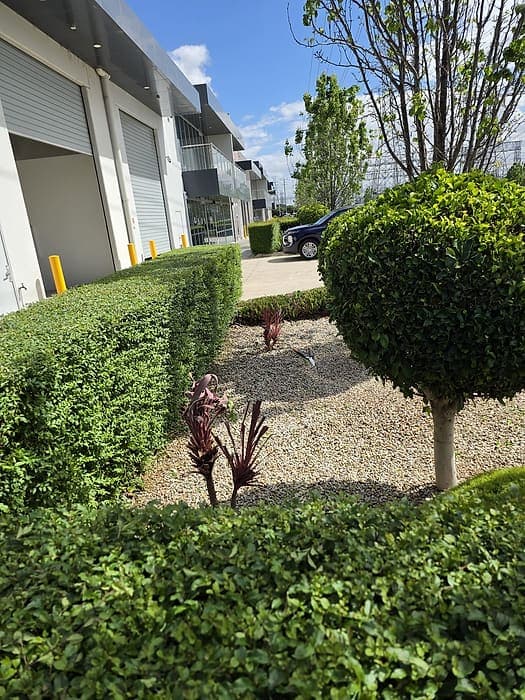
Frequently asked
How thick a branch can a hedge trimmer cut?
Are bypass or anvil secateurs better for hedges?
When are loppers the right tool on a hedge?
Is a long-reach pole hedge trimmer safe for a home gardener?
Should I disinfect hedge tools between different gardens or hedges?
Why does my photinia look shredded after using a hedge trimmer?
Do I need hearing protection for a battery hedge trimmer?
What tool gives the cleanest finish on a box hedge edging?
Sources and further reading
- Pruning hedges (Royal Horticultural Society)
- Box blight (Royal Horticultural Society)
- Insulated LV electric line cut by hedge trimmer (Energy Safe Victoria)
- Residential noise (EPA Victoria)
- Using portable ladders in the workplace (WorkSafe Victoria)
Caring for Melbourne gardens since 2019. Updated 18 November 2026.