


Sustainable gardening
Battery or petrol garden tools: noise, fumes and results
By the Action Garden team · Updated · 14 min read
Checked against: EPA Victoria, Federal Register of Legislation, Office of Impact Analysis, Energy Safe Victoria, Fire Rescue Victoria, Victorian Government
TL;DR
- For a regularly mown suburban lawn, a battery mower, trimmer and blower give a result you cannot tell apart from petrol
- Battery tools have no exhaust at the point of use and are much quieter, which matters to neighbours, operators and anyone near an open window
- Petrol still wins on long, wet winter grass, overgrown blocks, thick hedges and long commercial days away from a charger
- EPA Victoria's residential noise rules give mowers and electrical garden tools the same prohibited times, so a battery tool does not buy an earlier start
- Lithium-ion batteries need care: the right charger, a cool dry store and a drop-off point at the end of life, never a household bin
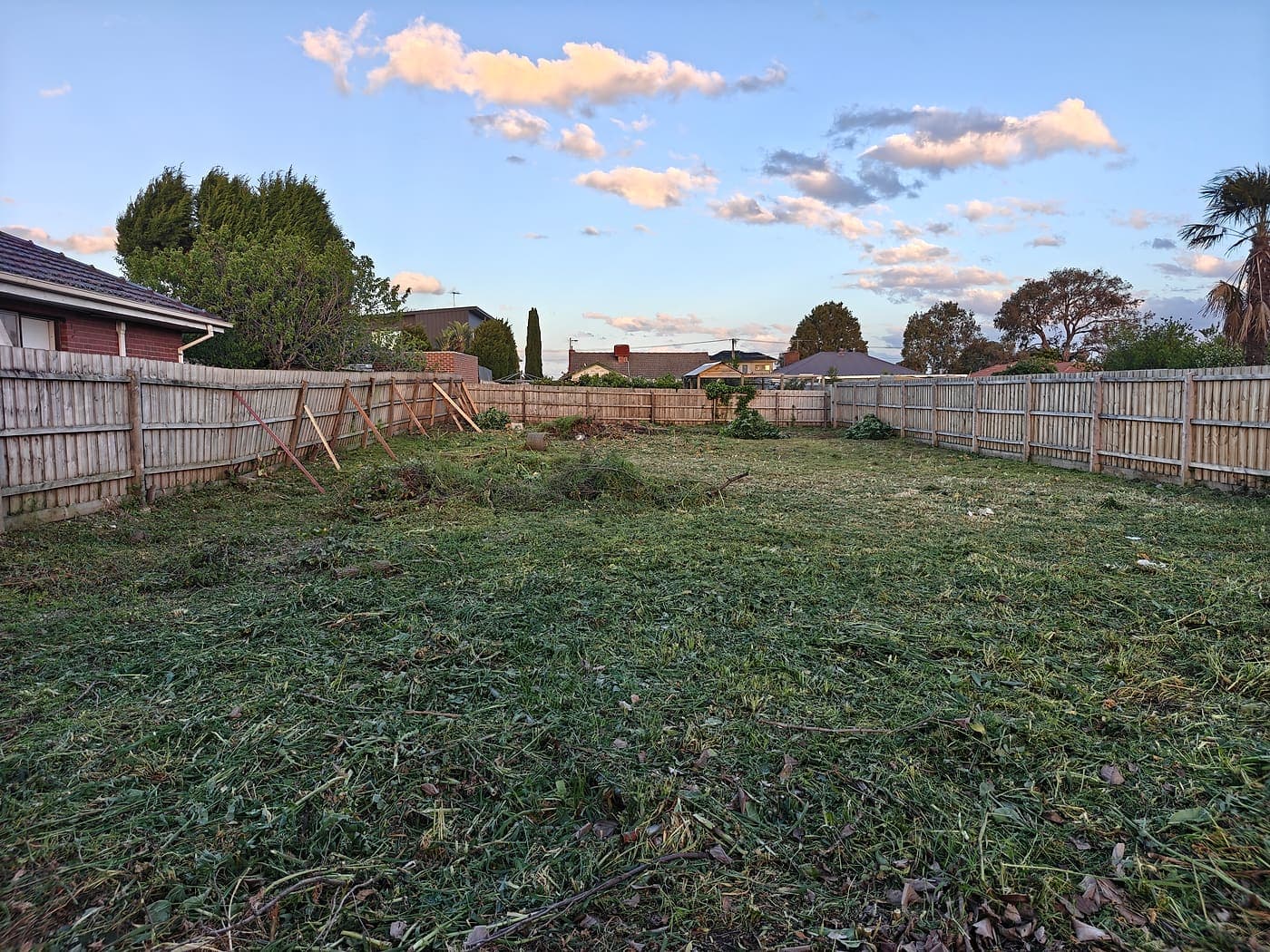
What is the real difference between battery and petrol garden tools?
The real difference is at the point of use: battery tools are quieter, have no exhaust and need far less servicing, while petrol tools carry more stored energy and keep their power on heavy work. For the cut itself, the blade and the operator matter more than the motor.
Ten years ago the choice was easy, because battery tools were weak and short-lived. That has changed for most home garden jobs. Modern lithium-ion mowers, line trimmers, hedge trimmers and blowers now handle a regular suburban programme comfortably, and many share one battery across several tools.
Petrol has not disappeared, and it should not be written off. It still does the heavy, long and wet jobs better, and a well-serviced four-stroke mower is a reliable tool. This article compares the two honestly across noise, fumes, results, running and safety, so you can choose for your own garden or ask the right questions of whoever mows it.
Tools are only one part of greener garden care; green waste, weeds and water matter just as much, and the links further down cover each of them.
How do battery and petrol tools compare side by side?
Battery wins on noise, fumes, servicing and comfort; petrol wins on run time, heavy growth and refuelling in seconds. The table below sets out the trade-offs for typical garden use.
Side by side
Battery and petrol garden tools compared
| Battery tools | Petrol tools | |
|---|---|---|
| Noise at the operator | Noticeably lower; mostly blade and air noise | Engine noise on top of blade noise |
| Exhaust where you work | None | Exhaust fumes and fuel smell, more from two-stroke engines |
| Starting | Push a button | Pull cord or key; can be hard after storage |
| Run time | Limited by battery size; spare batteries extend it | Refuel in a minute and keep going |
| Long, thick or wet grass | Slows and drains fast | Keeps its power |
| Servicing | Blade sharpening, cleaning, battery care | Oil, spark plug, air filter, fuel system, blade |
| Vibration and weight | Usually less vibration; battery adds weight | More vibration, especially two-stroke handhelds |
| Fuel handling | None; charging only | Petrol storage and mixing two-stroke fuel |
| End of life | Battery must go to a drop-off point | Engine oil and fuel must be disposed of properly |
Two points stand out once you use both. First, the gap on noise is bigger for handheld tools such as blowers and line trimmers than for mowers, because a mower's spinning blade makes much of its noise either way. Second, the gap on power only shows up at the extremes: long grass, wet grass and woody hedges.
Are battery tools allowed earlier in the day in Victoria?
No. EPA Victoria (opens in a new tab)'s residential noise rules give lawn mowers, equipment with an internal combustion engine and electrical equipment including gardening tools the same prohibited times at home: before 7am and after 8pm on weekdays, and before 9am and after 8pm on weekends and public holidays.
That surprises many people, because a battery blower can be so much quieter. The rules are written by type of equipment and time of day, not by measured loudness, so quiet does not mean exempt. Councils, not EPA Victoria, investigate residential noise reports.
Hours each day a mower or garden tool may run at home
| Day | Permitted hours (hours) |
|---|---|
| Monday | 13 |
| Tuesday | 13 |
| Wednesday | 13 |
| Thursday | 13 |
| Friday | 13 |
| Saturday | 11 |
| Sunday | 11 |
Source: EPA Victoria, "Residential noise", prohibited times for lawnmowers, equipment with an internal combustion engine and electrical equipment including gardening tools. Public holidays follow the weekend hours. The figures are the same for battery and petrol.
What battery tools do change is how the work feels to the people nearby. A battery blower at 9am on a Saturday is far less likely to start a dispute than a two-stroke one, even though both are allowed. Our article on what time you can mow in Victoria covers the rules in full, including strata sites and what to do about a noisy neighbour.
Which gives off fewer fumes, and does it matter?
Battery tools give off no exhaust where they are used, and that matters most for the operator and anyone close by. Small petrol engines, particularly older two-stroke engines that burn oil mixed with the fuel, have long been recognised as a source of urban air pollution.
Australia responded with national emission standards. The Product Emissions Standards Rules 2017 set limits for new non-road spark ignition engines and equipment, which include mowers, line trimmers, chainsaws and blowers sold in Australia. When environment ministers agreed to the standards in December 2015, the government's impact analysis expected them to affect the availability of two-stroke motors for small equipment.
So a new petrol tool is cleaner than one bought 15 years ago, and a four-stroke mower is cleaner than an old two-stroke one. A battery tool still has no tailpipe at all. Its impact sits elsewhere: in making the battery and in the electricity used to charge it, which is lower when charging runs on solar or a greener supply.
Two-stroke and four-stroke: why the difference matters
A two-stroke engine mixes oil into the petrol to lubricate itself, and burns some of that oil as it runs. It is light and powerful for its size, which is why it suits handheld blowers, trimmers and chainsaws. The trade-off is more smoke, more smell and more unburnt fuel in the exhaust.
A four-stroke engine has a separate oil sump, like a car, and burns cleaner. Most petrol mowers are four-stroke. If you keep petrol tools, a four-stroke mower and careful fuel handling is the lower-impact way to do it; the handheld tools are where switching to battery makes the biggest difference to fumes.
Do battery tools give the same finish on a Melbourne lawn?
Yes, on a lawn that is mown regularly. A clean cut comes from a sharp blade, the right height for the grass type and dry grass; a battery mower that meets those three gives the same finish as petrol.
Melbourne's grasses test that in different ways. Warm-season lawns such as kikuyu, couch and buffalo surge from late spring into summer, and kikuyu in particular builds thick, wiry growth that loads up any mower. Cool-season lawns such as tall fescue and ryegrass grow hard in autumn and spring and stay lush and wet through winter.
Here is how that plays out across the year:
| Season in Melbourne | Lawn conditions | Battery tools | Petrol tools |
|---|---|---|---|
| Spring (Sep to Nov) | Fast growth, frequent mows, damp mornings | Good on a weekly cut; more battery use in the flush | Copes with any gap between mows |
| Summer (Dec to Feb) | Warm-season grass at its peak, dry soil | Good; higher cut height helps run time | Good |
| Autumn (Mar to May) | Second growth surge, leaf fall | Good for mowing; blowers ideal for leaves on paths | Better for heavy, wet leaf loads |
| Winter (Jun to Aug) | Slow growth but wet, heavy grass | Shorter run time in wet grass | Keeps power in wet conditions |
The pattern is clear: the further a lawn gets from a regular schedule, the more petrol earns its place. Keeping a lawn on a steady mowing programme is what makes battery tools practical, and our complete guide to lawn mowing in Melbourne covers heights and frequency by grass type.
When does petrol still make more sense?
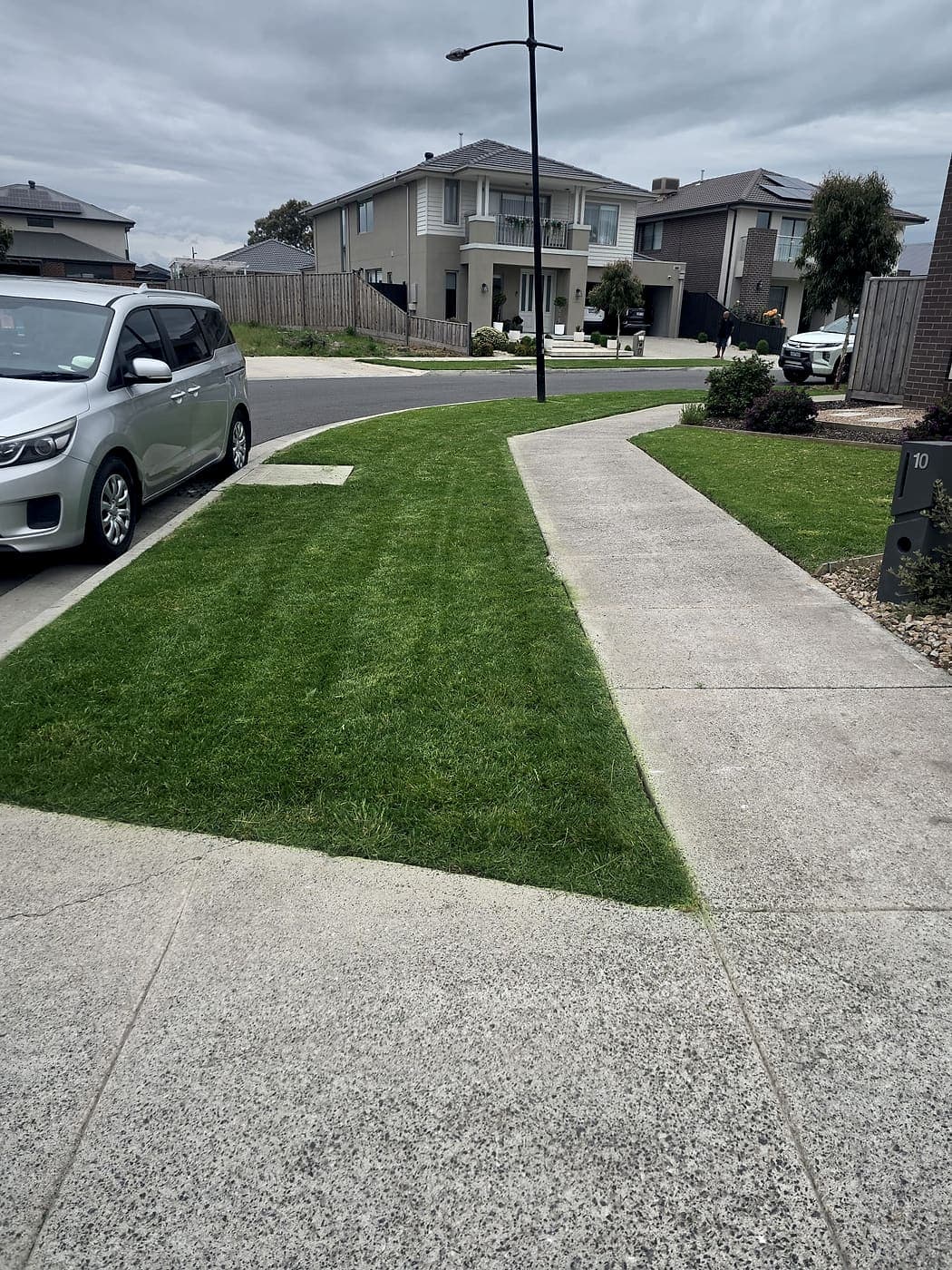
Petrol still makes more sense on long, wet or overgrown grass, on thick woody hedges, and on long days of work away from a power point. These are the jobs where stored energy and steady power decide the result.
- Overgrown blocks and long grass. Slashing a vacant block or a lawn left for months needs torque that a light battery mower does not have.
- Wet winter grass. Heavy, wet grass drains batteries fast and clogs decks; petrol pushes through more steadily.
- Thick, woody hedges. Stems from a hedge left for a long time can stall a light battery trimmer.
- Big commercial sites. Large grounds mown in one long run, without access to charging, still suit petrol, although commercial battery systems are closing that gap.
- Chainsaw and chipping work. Larger tree work needs heavier equipment, not light battery tools.
Mowing wet or very long grass is also where results suffer whatever the motor. Our guides to watering a lawn within Melbourne's water rules and common lawn weeds in Melbourne explain why a steady programme keeps the lawn thicker and easier to cut.
How do you charge, store and dispose of tool batteries safely?
Use the charger made for the battery, charge on a hard, non-flammable surface where you can keep an eye on it, store batteries cool and dry, and take dead or damaged ones to a battery drop-off point. Lithium-ion batteries are safe when they are looked after and dangerous when they are not.
Energy Safe Victoria (opens in a new tab)'s advice includes using the charger supplied or recommended by the manufacturer, charging on a non-flammable surface such as concrete, ceramic or steel, not leaving batteries charging unattended for long periods, letting a battery cool after use before recharging, and storing batteries out of direct sun and away from hot places such as parked cars. Fire Rescue Victoria (opens in a new tab) gives similar advice and recommends a smoke alarm where batteries are charged.
For garden tools, that translates into a few habits:
- Charge in the garage or laundry on a concrete floor or a metal shelf, not on a timber workbench covered in grass and sawdust.
- Let the battery cool for a while after a hot summer mow before you put it on charge.
- Do not leave batteries in the car or ute on a hot day.
- Keep batteries off wet ground and out of rain.
- Check for damage after a drop, and stop using any battery that is swollen, leaking, hot or smells odd.
At the end of its life, a tool battery never goes in a household bin. Batteries crushed in garbage trucks and at sorting facilities start fires, and the Victorian Government (opens in a new tab) has been funding more battery drop-off points across the state. Many councils list their nearest drop-off on their waste pages.
If a battery is smoking, hissing, swelling fast or too hot to touch, leave the area and call 000. Do not throw water on it or try to carry a smoking battery through the house. Fuel spills from petrol tools near ignition sources need the same caution: keep clear and call for help if a fire starts.
What does each choice mean for running and servicing?
Battery tools need much less routine servicing, while petrol tools need regular attention to oil, filters, plugs and fuel. Both need sharp blades and a clean deck.
| Task | Battery tools | Petrol tools |
|---|---|---|
| Blade or line | Sharpen or replace as needed | Sharpen or replace as needed |
| Engine oil | Not needed | Change as the manual says (four-stroke) or mix into fuel (two-stroke) |
| Air filter and spark plug | Not needed | Clean or replace on schedule |
| Fuel | Not needed | Fresh fuel; stale fuel causes hard starts |
| Battery care | Charge correctly, store cool, replace eventually | Starter battery only on some ride-ons |
| Cleaning | Clear clippings from the deck and vents | Clear clippings from the deck and cooling fins |
What affects the quote when a garden is mown with battery or petrol tools
Without giving numbers, the things that change a mowing quote are the lawn area, the grass type, how long it has grown since the last cut, slopes and access, the amount of edging and trimming, whether clippings are caught or mulched back in, and how often the lawn is cut. The type of motor in the mower is rarely a factor in itself. A lawn on a regular programme is less work per visit than one that has been left to grow, whatever tools are used.
Should you choose battery or petrol for your garden?
Choose by the jobs, not the label. Work through the questions below; the first clear answer usually settles it.
Quick decision guide
Battery or petrol for your garden?
- Is the lawn small to medium and mown weekly or fortnightly? Battery. It will cope easily, and you will enjoy the quiet.
- Do you mow very early on weekends, or live close to neighbours or in a townhouse? Battery, for goodwill; the legal hours are the same either way.
- Is the grass often long, wet or overgrown when it gets mown? Petrol, or fix the schedule so battery can cope.
- Is it a large block, a slope or a rural edge with long grass? Petrol, or a heavy-duty battery system with spare batteries.
- Is the hedge thick, woody and trimmed once a year? Petrol for the hedge, or trim more often.
- Is nobody keen on servicing engines or storing fuel? Battery.
For a typical Melbourne suburban garden, the honest answer is battery for most jobs, with petrol kept for the heavy few. Green waste is the other half of the picture: our article on where your green waste goes follows the clippings and prunings after they leave, and weed control with fewer chemicals covers the other big lever. More reading sits in the sustainable gardening articles.
What does Action Garden use on your lawn?
Action Garden uses modern equipment chosen for the job, and clippings are either mulched back into the lawn or removed, depending on the lawn and what you prefer. The team runs commercial equipment, a mix of battery-powered and petrol tools, and picks between them for each job based on what it needs and the site conditions.
If you have a preference, for example battery blowers only, or no work before a set time on a strata site, say so when you ask for a quote and it can become part of the job notes. The support centre explains how quotes, regular plans and first visits work.
When you would rather spend Saturday morning on something other than mowing, handing the lawn to a regular programme is worth considering. The lawn gets cut on time, which is what really decides how good it looks.
Your Garden. Our Promise.
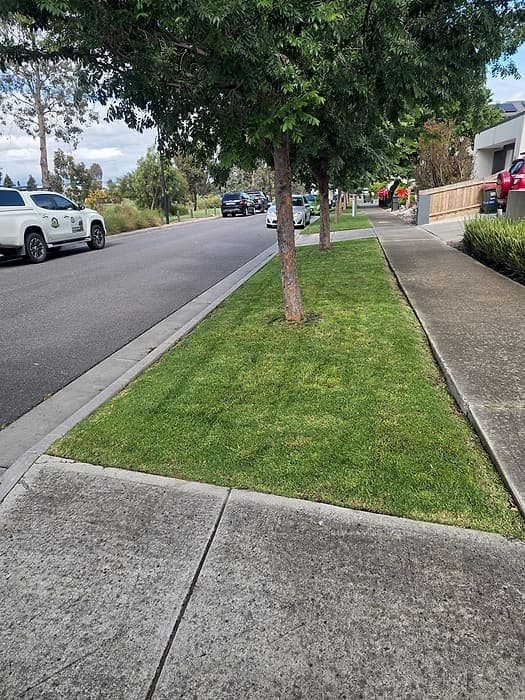
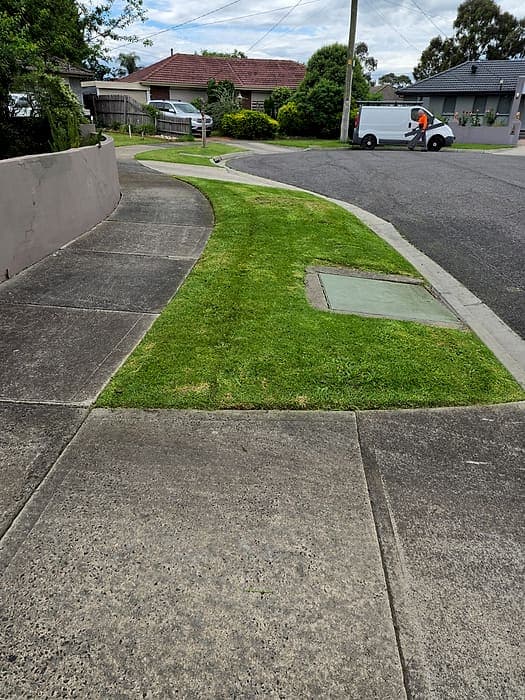
From our jobs
Frequently asked
Does a battery mower cut as cleanly as a petrol mower?
How long does a battery last when mowing a Melbourne backyard?
Are battery tools allowed in places where petrol tools are not?
Is it worth converting an old petrol mower to battery?
Do battery hedge trimmers handle thick, woody growth?
Should I store a petrol mower differently over winter?
What should I do with a swollen or damaged tool battery?
Sources and further reading
- Residential noise (EPA Victoria)
- Product Emissions Standards Rules 2017 (Federal Register of Legislation)
- Reducing emissions from small engines (Office of Impact Analysis)
- Lithium-ion battery safety (Energy Safe Victoria)
- Battery safety (Fire Rescue Victoria)
- How to dispose of batteries and electronic waste in Victoria (Victorian Government)
Caring for Melbourne gardens since 2019. Updated 18 November 2026.