


Sustainable gardening
Lower-impact garden maintenance: what can actually change
By the Action Garden team · Updated · 11 min read
Checked against: Victorian Government, EPA Victoria, ACCC, Sustainable Gardening Australia, Federal Register of Legislation
TL;DR
- The biggest wins are where the green waste goes, how weeds are controlled and what ends up in the stormwater drain
- Mulch-mowing returns clippings to the lawn as food, and composting keeps garden waste out of landfill, where it releases methane
- Battery tools are quieter and have no exhaust at the point of use, but petrol still suits some heavy work; the honest answer is the right tool for the job
- Hand weeding, mulch and spot-spraying by the label cut chemical use far more than any single product swap
- Ask for specifics, not slogans; the ACCC warns businesses against broad, unqualified green claims, and a good gardener can tell you exactly what they do
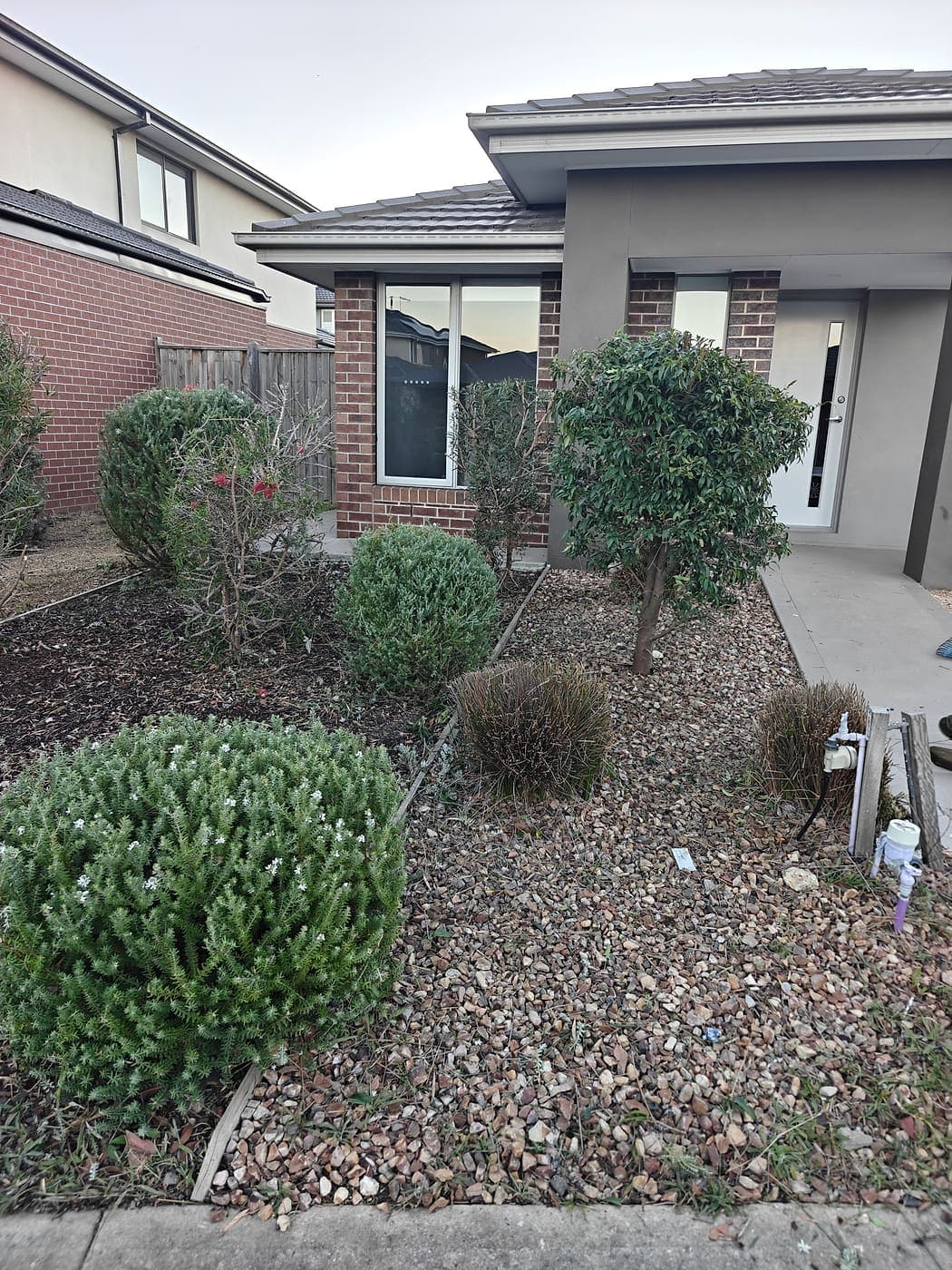
What actually makes garden maintenance lower-impact?
The practices that matter are the ones you can see and check: where the green waste goes, how weeds are handled, what goes down the drain, which tools are used and how much water the garden needs. Labels such as "eco" or "green" on a van tell you very little on their own.
Every visit to a garden produces something: clippings, prunings, leaves, noise, fuel use, perhaps some chemical. A lower-impact approach does not pretend those away. It deals with each one in the least harmful practical way, and is honest about the trade-offs.
The Australian Competition and Consumer Commission's guide to environmental claims, published in December 2023, sets out principles for businesses that include making accurate and truthful claims, having evidence to back them, and avoiding broad, unqualified claims. That is a useful test for any service, including ours. This article sticks to specific practices, and marks clearly where our own details are still being confirmed.
A flow diagram reading left to right. On the left, a garden with a lawn, a bed and a path. Four arrows leave it. The first, labelled "clippings", curves back down into the lawn with the note "mulch-mown". The second, labelled "prunings and weeds", runs to a compost heap and then to a bag of soil product. The third, labelled "leaves and soil on paths", is swept back onto the garden bed, while a crossed-out arrow points to a stormwater drain. The fourth, labelled "noise and exhaust", shrinks as a petrol tool icon changes to a battery tool icon. The arrows draw on one by one as the diagram scrolls into view.
Where should green waste go after a garden visit?
To composting, not landfill. The Victorian Government (opens in a new tab)'s recycling advice explains that garden clippings in the general rubbish bin end up in landfill, where "they break down in a way that releases methane, a potent greenhouse gas". Sorted into their own bin, "they can be composted instead".
Victoria is moving every council to a standard four-stream household recycling system, with a lime green-lidded food and garden organics (FOGO) bin among them. The same advice says that by 2030 all Victorians with council waste services will have a FOGO bin or a communal drop-off point. Councils, and ratepayers, also pay more to send waste to landfill than to a composting facility.
For a garden service the choices are similar, just at a larger scale:
- Mulch-mow clippings back into the lawn where the grass is healthy and mown often, so there is nothing to remove.
- Chip clean prunings for use as mulch on paths and around trees, where the client wants it.
- Take the rest to a green waste or composting facility, kept separate from general rubbish so it can be processed into soil products.
- Keep diseased material and seeding weeds out of home compost, because a cool heap will not kill them.
At Action Garden, green waste goes to the local council tip or transfer station to be disposed of properly and repurposed, never dumped, and lawn clippings are either mulched back in or removed, depending on the lawn and what the client prefers.
Our article on where your green waste goes after it leaves the garden follows a load from the trailer to the finished compost.
Why clippings left on the lawn are not thatch
A common worry is that mulch-mown clippings build up into thatch. Thatch is mostly the tough runners, stems and roots of the grass, not the soft leaf tips a mower cuts off. Fine clippings from a regular mow break down within days in warm weather.
Clippings do become a problem when the lawn is cut too long between mows, so heavy clumps sit on the surface, or when they are wet and mat together. That is when catching makes sense. Mowing on a regular schedule, and only taking off about a third of the leaf at a time, keeps mulch-mowing working.
Are battery tools really better than petrol?
For noise and fumes at the point of use, yes; for every job, not yet. Battery mowers, trimmers and blowers are noticeably quieter and give off no exhaust where they are used, which matters to neighbours, the operator and anyone working near open windows.
Small petrol engines, particularly older two-stroke engines, are a known source of air pollution in Australian cities, and new non-road petrol engines and equipment have had to meet national emission standards since the Product Emissions Standards Rules 2017. Battery tools avoid those exhaust emissions entirely, though they still carry the impact of making the battery and the electricity used to charge it.
The honest picture for a garden service looks like this:
| Job | Battery tools today | Petrol still suits |
|---|---|---|
| Regular mowing of home lawns | Well suited | Very large or long, wet grass |
| Edging and line trimming | Well suited | All-day commercial runs without charging |
| Hedge trimming | Well suited for most hedges | Thick, woody, overgrown hedges |
| Blowing paths and driveways | Well suited, and much quieter | Heavy, wet leaf loads in autumn |
| Chainsaw work and chipping | Light pruning only | Larger tree work, done by our own team |
EPA Victoria (opens in a new tab)'s residential noise rules apply to both. At home, lawn mowers and other petrol equipment, and electrical garden tools, are restricted before 7am and after 8pm on weekdays, and before 9am and after 8pm on weekends and public holidays.
Action Garden uses commercial equipment, a mix of battery-powered and petrol tools, chosen for each job based on the task and the site conditions.
Our article comparing battery and petrol garden tools for noise, fumes and results goes into the detail by tool.
How can weed control use fewer chemicals?
By making herbicide the last step, not the first. Most garden-bed weeds can be kept down by pulling or hoeing them while small, before they set seed, and by covering bare soil with a coarse mulch so new seeds struggle to germinate.
Sustainable Gardening Australia (opens in a new tab)'s mulch advice and water-wise habits help here too: a mulched, well-watered bed with dense planting leaves little room for weeds.
Where a chemical is the sensible option, such as weeds in paving cracks or a persistent perennial weed, the lower-impact way is:
- Spot-treat, never blanket-spray. Treat the weed, not the bed.
- Follow the label exactly. Rate, timing, protective gear and withholding periods are on the label for a reason.
- Check the weather. EPA Victoria advises to "avoid using weedkiller when it's going to rain or be windy", because rain washes it into drains and wind carries it onto plants you want to keep.
- Keep it away from water. Never spray near drains, ponds, creeks or the edge of a gutter.
- Record what was used. On commercial and strata sites, a simple log of product, place and date makes the practice checkable.
Action Garden offers weed spraying as well as hand weeding and mulching, so the method can suit the bed and the weed. The method is agreed with you first: usually weed spray, or hand weeding where you would rather avoid it.
Some weeds and chemicals are not a DIY job. Declared noxious weeds, large infestations, chemicals left behind in an old shed and anything near a waterway need advice first. Do not mix, decant or pour old garden chemicals down the drain: check your council's household chemical collection, and follow the product label and the safety data sheet.
How do you keep garden waste out of stormwater drains?
Sweep or blow it back onto the garden, never into the gutter. Stormwater in Melbourne runs from the street through drains into creeks, rivers and the bay, and EPA Victoria lists "leaves, garden clippings" and "pesticides, herbicides, fertilisers" among the pollutants it carries.
EPA Victoria's advice is to "compost your leaves and garden clippings to stop them going into drains". For a garden visit, that means:
- clippings and leaves blown off paths and driveways back onto the lawn or beds, or bagged, not into the kerb;
- soil from planting and edging kept on the bed, with paths swept, not hosed;
- fertiliser kept off hard surfaces, where the first rain washes it straight into the drain;
- no washing of tools, mowers or chemical gear over the drain.
The water rules support this. Under Victoria's permanent water saving rules, drinking water must not be used to clean hard surfaces such as paths and driveways, apart from listed exceptions, so the broom is the default.
On our pressure cleaning jobs, only biodegradable detergents are used, and only where plain water is not enough.
What a nature strip has to do with stormwater
The nature strip and kerb are where a lot of garden material escapes. Clippings from mowing the strip, leaves blown off the driveway and soil from edging all end up in the gutter if nobody collects them, and the next storm carries them into the side-entry pit.
Mowing the strip with the chute pointed away from the road, edging with a blower that pushes back onto the grass, and a quick sweep of the kerb at the end of a visit are small habits that add up across a street.
Which changes make the most difference, and which are mostly marketing?
The changes with the most effect are the boring, practical ones: waste sorted for composting, clippings returned to the lawn, less herbicide, nothing in the drains and a garden that needs less water. Product swaps on their own rarely add up to much.
| Change | Real effect | Easy to check? |
|---|---|---|
| Green waste composted, not sent to landfill | High | Yes: ask where it goes |
| Clippings mulch-mown where suitable | Medium | Yes: you can see it |
| Herbicide spot-applied by the label | High where spraying was routine | Yes: ask, or ask for a log |
| Paths swept back, nothing in drains | Medium | Yes: look at the kerb after a visit |
| Battery tools for routine jobs | Medium for noise and local fumes | Yes: you can hear it |
| Coarse mulch and better soil | High for water and weeds | Yes |
| A vague "eco-friendly" label | Unknown on its own | No, until it is backed by specifics |
The last row is the point of the ACCC (opens in a new tab) guidance. If a gardener says they are sustainable, the fair follow-up question is "how, exactly?"
How do you set up a lower-impact programme for your property?
Ask for it at the quote, write it into the scope and check it after the first few visits. A home garden needs only a conversation; strata and commercial sites benefit from it being written down.
- Agree what happens to clippings, mulched back or taken away, and when that changes, such as long grass after rain.
- Agree the weed approach, including whether any herbicide is used and where.
- Ask where green waste goes and whether it is kept separate from general waste.
- Agree start times and noisy tools with the neighbours in mind, especially on shared sites.
- Plan the garden to need less: coarse mulch, plants grouped by water need and fewer high-maintenance features.
For owners corporations and businesses, our guide to what a good commercial grounds maintenance programme includes shows how to put these practices into a scope. Landlords can apply the same thinking before a routine inspection: our guide to preparing the garden for a rental inspection shows how to get it tidy with a sweep, a weed and a mulch rather than a skip.
There is more in the sustainable gardening section of our blog, including how gardens for birds and bees can be kept tidy without stripping out the habitat. Our complete guide to garden maintenance in Melbourne sets the seasonal jobs across the year, and our help centre answers questions about visits, plans and waste.
When is it worth handing the job over?
If you would rather the clippings, prunings and weeds were dealt with properly without sorting it all yourself, our gardening services take the green waste away to the local council tip or transfer station, where it is disposed of safely and repurposed. Tell us at the quote how you would like clippings, weeds and noise handled, and ask for a free quote whenever it suits.
Your Garden. Our Promise.
From our jobs
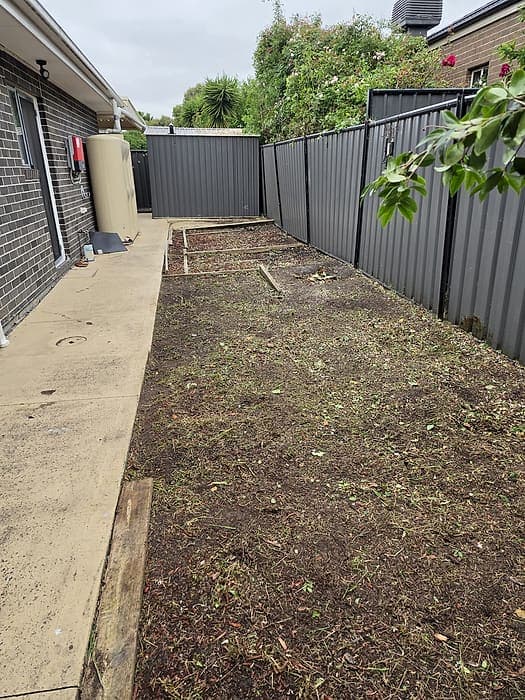
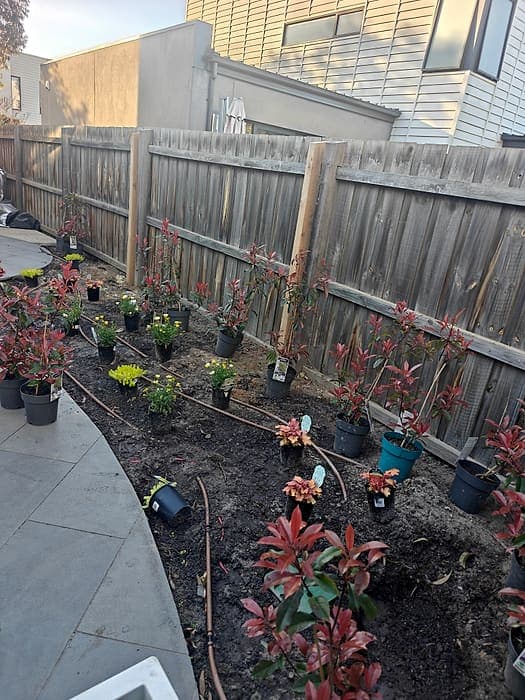
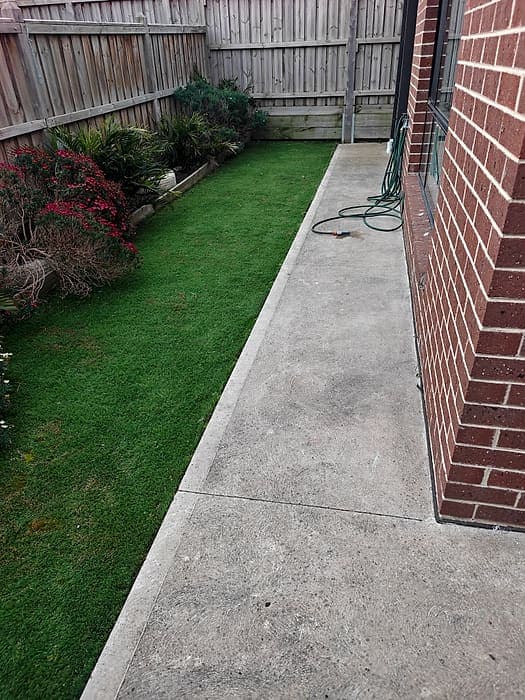
Frequently asked
What should I ask a gardener about their environmental practices?
Is mulch-mowing better for the environment than catching clippings?
Why does it matter if garden waste ends up in landfill?
Are battery leaf blowers allowed at any time of day in Victoria?
Can weeds be controlled without spraying herbicide?
Does a lower-impact approach make garden maintenance take longer?
How can an owners corporation make its grounds care lower-impact?
Sources and further reading
- Recycling food and garden organics in Victoria (Victorian Government)
- Reduce stormwater pollution (EPA Victoria)
- Residential noise (EPA Victoria)
- Making environmental claims: a guide for business (ACCC)
- Choosing mulch for your garden (Sustainable Gardening Australia)
- Product Emissions Standards Rules 2017 (Federal Register of Legislation)
- Standardising household recycling across Victoria (Victorian Government)
Caring for Melbourne gardens since 2019. Updated 18 November 2026.