


Garden beds, soil and plants · Complete guide
Garden maintenance in Melbourne: the complete guide
By the Action Garden team · Updated · 17 min read
Checked against: Bureau of Meteorology, Water Victoria, Sustainable Gardening Australia, CFA, Agriculture Victoria, Victorian Government
TL;DR
- Melbourne gardens need the most attention in spring, when weeds, growth and the first mulch all arrive together.
- Summer is about water and heat, autumn is the best planting window, and winter is for pruning and resetting beds.
- Clay soils in the north and west and sandy soils in the south-east need different watering and soil care.
- Victoria's permanent water saving rules limit sprinklers and watering systems to 6pm to 10am; hand watering with a trigger nozzle is fine any time.
- A regular programme stops small jobs becoming a rescue; ladders, chemicals and large trees are where a professional earns their keep.
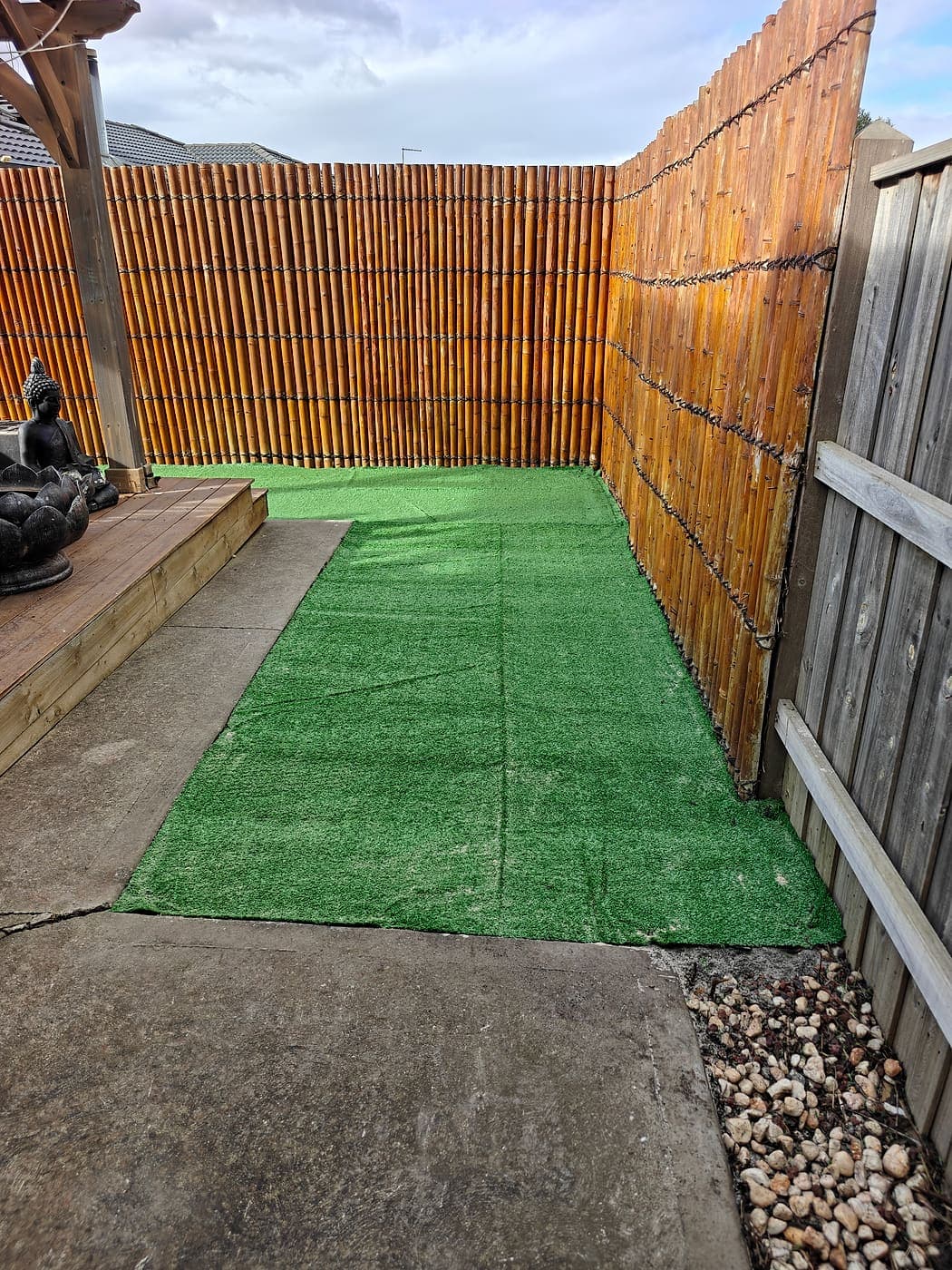
| Season | Typical visit rhythm | Main jobs |
|---|---|---|
| Spring | Fortnightly | Weeding, feeding, first mulch of the year |
| Summer | Fortnightly to monthly | Deadheading, watering checks, heat protection |
| Autumn | Monthly | Cut-backs, leaf clearing, planting |
| Winter | Monthly or one-off | Pruning, bed resets, drainage checks |
What does garden maintenance in Melbourne actually involve?
Garden maintenance is the regular work that keeps beds, shrubs, lawn edges and paths healthy and tidy: weeding, mulching, pruning, feeding, watering checks and removing green waste. In Melbourne the jobs stay the same all year, but how often each one is needed changes sharply with the season.
Think of it as two layers. The first is the routine that never stops, such as weeding and clearing. The second is the seasonal work that only makes sense at certain times, such as mulching in spring, planting in autumn and hard pruning in winter.
| Job | What it covers | When it matters most |
|---|---|---|
| Weeding | Removing weeds by the root before they flower and seed | Spring and early summer, then after autumn rain |
| Mulching | A coarse layer over bare soil to hold water and block weeds | Spring, with a top-up in autumn |
| Pruning and shaping | Removing dead wood, controlling size, shaping hedges and shrubs | Winter for roses and deciduous plants; after flowering for many shrubs |
| Feeding | Fertiliser or compost to support new growth | Spring, sometimes autumn |
| Watering checks | Making sure water reaches the roots within the water rules | Summer and dry spells |
| Clearing and green waste | Leaves, prunings and weeds removed and recycled | Autumn leaf fall and after every big job |
| Planting and transplanting | New plants in, struggling plants moved | Autumn first, spring second |
Our gardening services cover the same list: weeding and bed care, soil preparation and mulching, planting, pruning and shaping, seasonal care and pest checks, with the green waste removed. If you want to go deeper on one task, the garden beds, soil and plants guides break each job down step by step.
Maintenance, a tidy-up or a rescue: which one do you need?
Regular maintenance keeps a garden that is already in good shape from slipping. Visits are shorter and the work is mostly weeding, light pruning and clearing.
A one-off tidy-up catches up on a few months of growth, often before an event, an inspection or a sale. It usually adds a heavier cut-back and a fresh layer of mulch.
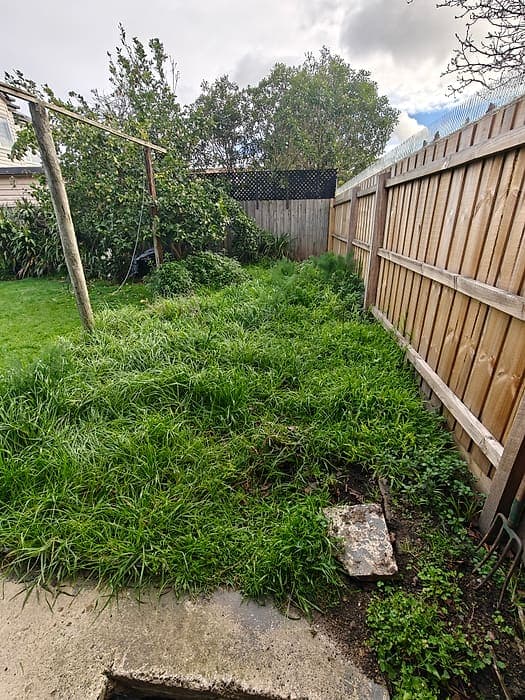
A garden rescue is for beds that have been left for a season or longer: weeds through the mulch, shrubs over paths, and dead plants. It starts with clearing and heavy pruning, then moves to a maintenance rhythm so the work does not need repeating.
How does Melbourne's climate shape the garden year?
Melbourne has warm summers, cool winters and rain spread across the year rather than a single wet season, so garden work never fully stops. The real pressure points are dry, hot spells in summer and the burst of growth in spring.
The Bureau of Meteorology (opens in a new tab)'s averages for the Melbourne (Olympic Park) station, recorded from 2013 to 2026, show the pattern clearly. February is the driest month on average and October the wettest, while January has the highest average maximum.
| Month | Mean max (°C) | Mean min (°C) | Mean rain (mm) |
|---|---|---|---|
| January | 26.8 | 16.5 | 53.3 |
| February | 25.9 | 16.0 | 26.3 |
| March | 24.3 | 14.8 | 36.4 |
| April | 20.9 | 12.2 | 63.0 |
| May | 17.6 | 9.8 | 46.5 |
| June | 14.9 | 7.8 | 42.1 |
| July | 14.5 | 7.6 | 41.0 |
| August | 15.6 | 8.1 | 47.0 |
| September | 18.1 | 9.6 | 41.0 |
| October | 20.6 | 11.0 | 68.0 |
| November | 22.2 | 12.7 | 64.4 |
| December | 24.7 | 14.4 | 50.2 |
Source: Bureau of Meteorology, Melbourne (Olympic Park) station 086338, all years of record. The annual mean rainfall at this station is 577.7 mm.
Two things follow for your garden. Spring rain plus warming soil means weeds and growth take off from September to November, so that is when visits need to be most frequent. Late summer is dry and warm, which is why beds need mulch on before December and roots need deep, occasional watering rather than daily sprinkles.
A circular diagram split into four seasons. A rising green band shows plant growth peaking in spring, a blue band shows rainfall dipping to its low in February and peaking in October, and an orange band shows average maximum temperature peaking in January. Labels mark the main jobs at each point: weed and mulch in spring, water and protect in summer, plant and clear leaves in autumn, prune and reset in winter.
What should you do in the garden each season?
Each season has a short list of jobs that matter most. Do these at the right time and the rest of the year is mostly routine weeding and clearing.
Spring (September to November)
Spring is the busiest season. Weeds germinate with the rain and warmth, and every plant starts growing at once.
- Weed every bed before the weeds flower, so they cannot set seed.
- Feed beds and shrubs as new growth starts, following the label on whatever product you use.
- Lay the first mulch of the year on moist, weeded soil, following our step-by-step guide to mulching garden beds.
- Lightly shape hedges and shrubs once the first flush of growth has hardened.
- Plant frost-tender plants and summer flowers once the risk of frost has passed in your area.
For a full list, use our Melbourne spring garden checklist.
Summer (December to February)
Summer is about keeping water in the soil and plants out of heat stress. Growth slows in the hottest weeks, but weeds still push through any bare patch.
- Check that water reaches the roots: dig a finger into the soil after watering.
- Deadhead flowering plants to keep them blooming.
- Top up mulch where it has thinned, before the hottest stretch.
- Avoid heavy pruning in a heatwave, which exposes inner leaves to sunburn.
- Keep leaf litter cleared from around the house in bushfire season.
Our Melbourne summer garden checklist covers heat days in more detail.
Autumn (March to May)
Autumn is the best planting window for most trees, shrubs and natives, because the soil is still warm and rain usually returns in April.
- Plant and transplant while roots can settle before summer.
- Cut back summer perennials once they finish.
- Clear fallen leaves from beds, paths and gutters, and compost what you can.
- Top up mulch by 20 to 30 mm where it has broken down.
- Divide clumping plants that have outgrown their space.
Winter (June to August)
Winter is for structure. Most plants are slow or dormant, which makes it the time to prune and reset beds.
- Prune roses and deciduous shrubs while they are dormant, using our guide to pruning roses.
- Remove dead plants and plan replacements for autumn or spring.
- Check drainage where water pools on clay soil.
- Keep off very wet clay beds so you do not compact them.
Seasons in Melbourne do not start on the first of the month. Watch the garden: when weeds start appearing after rain, the spring routine has begun, whatever the date says.
How do Melbourne's soils change the way you care for beds?
Soil decides how often you water, how much you dig and which plants thrive. As a rough guide, many suburbs in Melbourne's north and west sit on heavy clay, while much of the south-east and the bayside strip sits on sandy soil.
Clay soils hold water and nutrients well, but drain slowly, crack when dry and turn sticky when wet. Agriculture Victoria (opens in a new tab)'s description of Victoria's cracking clays (vertosols) notes that they shrink and swell, and that working them when wetter than their plastic limit damages their structure.
Sandy soils drain fast and warm quickly in spring, but hold little water or nutrient. They can also become water repellent, so water beads on the surface and runs off instead of soaking in.
| Soil | Watering | Improving it | Common mistake |
|---|---|---|---|
| Heavy clay (common in the north and west) | Less often, slowly, so water can soak in | Compost, organic matter and mulch on top; raised beds for plants that hate wet feet | Digging or walking on it when wet |
| Sandy (common in the south-east and bayside) | More often, deeply, with a soil wetter if water beads | Compost and organic matter every year; mulch to slow drying | Light, frequent sprinkles that never reach the roots |
| Loam and improved garden soil | Moderate | Keep adding organic matter and mulch | Letting it go bare and crust over |
How to test your soil type in five minutes
Take a small handful of moist soil from about 10 cm down and squeeze it. If it forms a firm ball that you can roll into a thin sausage without it breaking, it is mostly clay.
If it falls apart and feels gritty, it is mostly sand. If it holds together loosely and feels a little gritty and a little smooth, it is a loam.
For a closer look, fill a clear jar one third with soil, top it with water, shake and leave it overnight. Sand settles first, then silt, then clay on top, so you can see the rough proportions.
Whatever your soil, organic matter is the fix. Compost dug into planting holes and a coarse mulch on top keep improving clay and sand alike as they break down.
How should you water a Melbourne garden within the water rules?
Water deeply and less often, at the right time of day, and within Victoria's permanent water saving rules (opens in a new tab). These rules apply across the state all year, not only during restrictions.
Water Victoria summarises them like this: "sprinklers and watering systems can only run between 6pm and 10am" and "hand-held hoses must be leak-free and fitted with a trigger nozzle". Hosing down hard surfaces such as driveways and decks as part of general cleaning is not allowed. Check the official rules page (opens in a new tab) for the full wording and exceptions.
- Water early in the morning within the allowed window. Plants take up water before the heat, and leaves dry quickly, which reduces fungal problems.
- Water the soil, not the leaves. Drip lines and soaker hoses under mulch put water exactly where roots are.
- Water deeply. A long soak once or twice a week in summer encourages deep roots; daily sprinkles keep roots shallow and weak.
- Check before you water. Push a finger or trowel into the soil. If it is moist 5 cm down, wait.
- Group plants by thirst so natives do not get too much water beside thirsty annuals.
Mulch is the biggest single water saver in a garden bed. Sustainable Gardening Australia (opens in a new tab) reports trial results where a chunky mulch cut evaporation from the soil far more than a fine one, which is why the type you choose matters. Our comparison of mulch types for Melbourne gardens covers that trial in detail.
Setting up a drip system that works with the rules
Drip and soaker systems count as watering systems, so a timer needs to run them inside the 6pm to 10am window. An early-morning start, finishing well before 10am, suits most gardens.
Lay drip lines on the soil and cover them with mulch, rather than burying them deep. Check emitters each spring for blockages, and adjust run times as the weather changes: a summer programme left running into a wet winter wastes water and can rot roots in clay.
How do you keep weeds, pests and green waste under control?
The rule for all three is the same: little and often beats a big clean-up. Small, regular visits stop weeds seeding, catch pests early and keep green waste from piling up.
Weeds
Pull or dig weeds before they flower. One weed that sets seed can reload a bed for years, which is why spring weeding has the biggest payoff of any job in the garden.
- Remove the whole root on perennial weeds such as dock, dandelion and onion weed, or they regrow.
- Hand weeding is easiest when the soil is moist, a day after rain or watering.
- Mulch over freshly weeded soil to block new seedlings from light.
- Use any herbicide only as the label directs, and never spray on windy days or near water.
Some plants are declared noxious weeds in Victoria under the Catchment and Land Protection Act 1994. If you suspect one on your property, check Agriculture Victoria's weeds information (opens in a new tab) for identification and what to do.
Pests and diseases
Regular checks matter more than any product. Look under leaves and at new growth each visit for aphids, scale, caterpillars, snail damage and leaf spots.
- Many problems are cleared by removing the affected leaves or hosing pests off with a trigger nozzle.
- Healthy, well-watered and well-mulched plants cope with pests far better than stressed ones.
- If a treatment is needed, follow the label exactly, including the withholding period on edible plants.
Green waste
Keep green waste moving so it does not become a weed nursery or a fire risk. Victoria is moving every council area to a standard four-bin system, with lime green lids for food and garden organics (FOGO), according to the Victorian Government (opens in a new tab)'s household recycling page.
- Soft prunings, leaves and spent annuals can go in a compost bin or the FOGO or green bin.
- Weeds that have set seed are better in the green bin than in a home compost that may not get hot enough to kill seed.
- Large branches and big clear-outs usually need a trailer, a council booking or a removal service.
Call in help for anything off a ladder above head height, chemical sprays other than ready-to-use products, chainsaw work, branches near power lines, or trees that lean, crack or overhang the house. Tree work is best done by qualified people; Action Garden's own team does it. If you find fibrous sheeting, old pipes or suspicious fill while clearing an old shed or garden, do not touch or break it: call a licensed asbestos removalist.
When should you prune, and how much?
Prune at the time that suits each plant, and remove no more than you need. The timing depends mostly on when the plant flowers and whether it loses its leaves.
| Plant group | Main prune | Why |
|---|---|---|
| Roses | Winter, while dormant | Sets the framework for spring flowering |
| Deciduous shrubs and fruit trees | Winter, while bare | You can see the structure and cuts heal as growth starts |
| Spring-flowering shrubs | Straight after flowering | Pruning earlier removes this year's flower buds |
| Formal hedges | Spring to autumn, in light, regular trims | Keeps them dense from top to bottom |
| Natives such as grevillea and correa | Light tip prune after flowering | Keeps them bushy without cutting into old, bare wood |
| Summer perennials and grasses | Late autumn or winter | Cleans up spent growth before new shoots appear |
Three rules apply to almost every plant. Use clean, sharp tools so cuts heal well. Cut just above a bud or side branch, never leaving a stub. And on most shrubs, avoid taking off more than about a third of the plant at once.
Hedges are a topic of their own. Our hedge trimming and pruning guide for Melbourne covers species, timing and keeping a hedge straight and level.
Why "a third at a time" is a good default
A plant feeds itself through its leaves. Take off more than about a third and it has to draw on stored reserves to regrow, which can leave it weak, more prone to pests, or throwing out a mass of soft, leggy shoots.
Severely overgrown shrubs can often be brought back over two or three seasons by cutting a third of the oldest stems to the base each year. Some plants, including many natives and conifers, do not regrow from old bare wood at all, so check before you cut hard.
What are the most common garden maintenance mistakes?
Most garden problems in Melbourne trace back to a few habits. Fix these and a garden needs far less rescuing.
- Leaving soil bare. Bare soil dries out, crusts and fills with weeds. A coarse mulch fixes all three.
- Watering little and often. Shallow daily watering builds shallow roots that fail in the first heatwave. Water deeply and less often.
- Weeding too late. Once weeds flower and seed, you are weeding the same bed for years.
- Mulch piled against stems and walls. Mulch against bark invites collar rot, and mulch built up against the house hides the slab edge from termite inspections.
- Pruning at the wrong time. Cutting spring-flowering shrubs in winter removes their flowers.
- Working wet clay. Digging or walking on wet clay compacts it, and the damage lasts.
- Letting green waste pile up. Piles harbour pests, spread weed seed and add fuel near the house in bushfire season.
Should you do it yourself or book a regular programme?
Do it yourself if you enjoy it, have the time each fortnight in spring and the gear to remove green waste. Book a regular programme if the garden keeps getting ahead of you, if access or lifting is hard, or if you want the work done on a schedule without thinking about it.
| Doing it yourself | A regular maintenance programme | |
|---|---|---|
| Timing | When you have a free weekend | Set visits that follow the season |
| Tools and green waste | You buy, store and dispose | Brought, used and taken away |
| Weed control | Easy to fall behind in spring | Weeds removed before they seed |
| Seasonal jobs | Mulch, pruning and feeding need planning | Built into the programme |
| Best for | Small gardens and keen gardeners | Busy households, rentals, body corporates and commercial grounds |
Many people mix the two: they keep up the weekly potter themselves and book help for the heavy seasonal work, such as the spring mulch, a winter prune or a full clear-out. Our regular maintenance plans run weekly, fortnightly or monthly, and one-off jobs are available too.
What affects the quote for garden maintenance?
Every garden is quoted on what it needs, without set prices on the website. The main things that shape a quote are:
- the size of the beds and how overgrown they are;
- whether planting or mulch needs to be supplied;
- a one-off rescue compared with ongoing care;
- the volume of green waste to remove;
- access, such as steep blocks or narrow side paths.
Is it time to hand it over?
If your beds are disappearing under weeds, the shrubs are over the paths, or the spring rush is coming and the weekends are already full, that is a good time to hand it over. Overgrown gardens are a regular job for us: we clear, prune, weed and mulch, then set up a plan to keep it that way.
You can get a free quote with just your name and mobile, and we will take it from there.
Your Garden. Our Promise.
From our jobs
Frequently asked
What does a typical garden maintenance visit include?
Is autumn or spring the better time to plant in Melbourne?
Can I run a garden sprinkler during the day in Victoria?
What can I do with garden waste when my council bin is full?
How often should a professional maintain a Melbourne garden?
Do garden beds need fertilising every year?
Which garden jobs are best left to a professional?
Is it worth improving clay soil before planting?
Sources and further reading
- Melbourne (Olympic Park) climate statistics (Bureau of Meteorology)
- Permanent water saving rules (Water Victoria)
- Save water this summer (Water Victoria)
- Choosing mulch for your garden (Sustainable Gardening Australia)
- How to prepare your property (CFA)
- Victorian Resources Online, soils of Victoria (Agriculture Victoria)
- Weeds (Agriculture Victoria)
- Standardising household recycling across Victoria (Victorian Government)
Caring for Melbourne gardens since 2019. Updated 17 November 2026.
Related reading