


Lawn care
The complete Melbourne lawn care calendar
By the Action Garden team · Updated · 12 min read
Checked against: Bureau of Meteorology, Yarra Valley Water, South East Water, EPA Victoria
TL;DR
- Spring (Sep to Nov): first feed as growth returns, aerate, dethatch, top-dress and repair
- Summer (Dec to Feb): raise the cut, water deeply within the 6pm to 10am system hours, watch for caterpillars
- Autumn (Mar to May): late feed, clear leaves weekly, repair while the soil is warm, sow fescue
- Winter (Jun to Aug): mow only when it grows, keep off wet ground, service the mower, tackle weeds
- Cool-season fescue lawns flip the timing, with their main feed and sowing in autumn
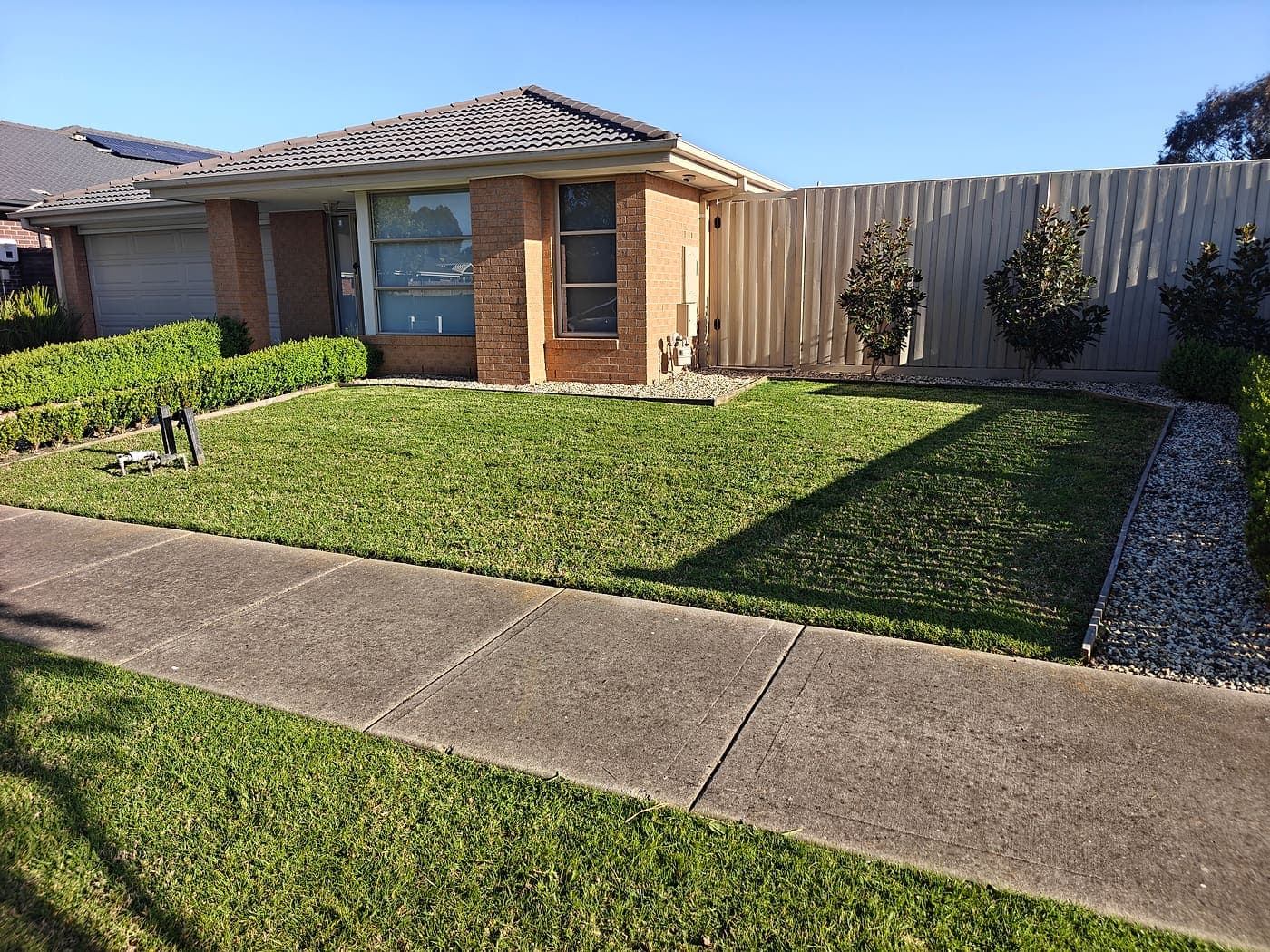
| Season | Main jobs | Notes |
|---|---|---|
| Spring (Sep to Nov) | Feed, aerate, top-dress | The main work season for warm-season lawns |
| Summer (Dec to Feb) | Water and protect | Raise the cut, check for pests |
| Autumn (Mar to May) | Repair and clear | Leaves off weekly, late feed |
| Winter (Jun to Aug) | Rest and plan | Weeds, mower service, stay off wet lawns |
What does the Melbourne lawn care year look like at a glance?
The Melbourne lawn year runs in four phases: spring is for feeding, aerating, top-dressing and repairs; summer is for protecting the lawn from heat and drought; autumn is for a late feed, leaf clearing and a second repair window; and winter is for rest, weed control and planning. The table below sets out each month for a warm-season lawn of kikuyu, buffalo or couch.
| Month | Mowing | Feed and water | Other jobs |
|---|---|---|---|
| September | Every 1 to 2 weeks, lower the height gradually | First feed once growth is under way | Spot weeds before they seed; plan spring work |
| October | Weekly | Feed now if not done in September | Aerate, dethatch, top-dress, repair patches |
| November | Weekly | Water deeply if it turns dry | Check the watering system; crisp edges |
| December | Weekly, raise the height | Deep, infrequent watering within the rules | Mulch-mow short dry clippings |
| January | Weekly to fortnightly | Water before forecast heat days | Mow in the cooler hours; leave the lawn longer |
| February | Weekly to fortnightly | Late summer feed toward month end | Check for caterpillars in brown patches |
| March | Fortnightly | Feed now if not done in February | Repair bare patches; fescue sowing starts |
| April | Fortnightly | Rain usually does the watering | Rake or catch leaves every visit |
| May | Every 2 to 3 weeks | No feed unless still growing | Sharpen blades; last leaf clear-ups |
| June | Every 3 to 4 weeks, only if growing | No feed, no watering | Keep off waterlogged areas |
| July | Only if it grows | No feed, no watering | Service the mower; treat winter weeds |
| August | Every 3 to 4 weeks | No feed yet | Treat bindii and winter grass before they seed |
The mowing column is a summary only. Our guide on how often to mow your lawn in Melbourne explains the interval for each grass and season, and the complete lawn mowing guide covers heights, equipment and edging. This calendar is about everything else that keeps a lawn thick.
Melbourne rainfall and rain days by month
| Month | Mean rainfall (mm) | Mean days with 1 mm or more |
|---|---|---|
| Jan | 53.3 | 5.4 |
| Feb | 26.3 | 3.6 |
| Mar | 36.4 | 5.2 |
| Apr | 63.0 | 7.5 |
| May | 46.5 | 8.5 |
| Jun | 42.1 | 8.6 |
| Jul | 41.0 | 9.0 |
| Aug | 47.0 | 9.3 |
| Sep | 41.0 | 7.9 |
| Oct | 68.0 | 9.1 |
| Nov | 64.4 | 8.0 |
| Dec | 50.2 | 6.3 |
Source: Bureau of Meteorology (opens in a new tab), climate statistics for Melbourne (Olympic Park), station 086338, records from 2013 to 2026.
The rainfall pattern shapes the calendar. February is the driest month at the Olympic Park station, with 26.3 mm and 3.6 rain days on average, which is why late summer is when lawns most need deep watering. October is the wettest at 68.0 mm, which suits aerating and top-dressing because the soil is moist and the grass recovers fast.
Which lawn jobs matter in spring, September to November?
Spring is the main work season: feed once growth returns, aerate compacted lawns, dethatch spongy ones, top-dress hollows and thin areas, and repair bare patches while the lawn is growing strongly. Do the big jobs in October and November rather than September, because a warm-season lawn needs to be actively growing to recover.
September
Growth comes back unevenly as days warm from a mean maximum of 18.1 °C. Wait for the lawn to show steady new growth before the first feed, then water it in. Spot-treat flat weeds and winter grass that are flowering, and mow only as the lawn needs it, lowering the height a notch at a time from its winter setting.
October
October is the month for renovation. Aerate with a garden fork or hollow-tine corer when the soil is moist, dethatch kikuyu or couch if the lawn feels spongy underfoot, then top-dress thin areas and hollows with a light layer of sandy soil, no deeper than the grass can grow through in a week or two.
Repair bare patches now by loosening the soil, levelling it and laying runners, plugs or turf matched to your grass. Keep repairs damp until they root in. Feed now if you did not in September.
November
November is the month to get ready for summer. Run every station on the watering system, fix leaks and broken sprayers, and check that coverage reaches the edges and corners. Keep edges crisp, since warm-season runners move quickly now, and raise the cut toward the summer height by the end of the month.
Aerating, dethatching and top-dressing: which does your lawn need?
Aerating relieves compaction, so it suits lawns where water pools or runs off, ground that is hard to push a fork into, and areas with heavy foot traffic, which is common on Melbourne's clay soils in the north and west. Dethatching removes the mat of old runners and stems that builds up under kikuyu and couch, and suits lawns that feel spongy and dry out quickly. Top-dressing fills hollows and thin areas with a thin layer of soil the grass grows through. Many lawns need only one of the three in a given year, and a healthy, even lawn may need none.
What should you do for your lawn in summer, December to February?
Summer is about keeping the lawn alive and green through heat and dry spells: raise the cut, water deeply and less often within the rules, leave short clippings to shade the soil, and watch for caterpillars. Avoid big renovation jobs in the hottest weeks, because the lawn cannot recover from them while it is heat stressed.
December
Mow weekly at the higher summer height, with kikuyu at 40 to 50 mm, buffalo at 50 to 60 mm and couch at 30 to 40 mm. Leave short, dry clippings on the lawn. Start deep watering if rain has been light, soaking the root zone rather than wetting the surface.
January
Water before forecast heat days rather than after the lawn has already wilted. Mow in the cooler part of the day and within EPA Victoria (opens in a new tab)'s hours for grass-cutting equipment: not before 7 am or after 8 pm on weekdays, and not before 9 am or after 8 pm on weekends and public holidays. If a heatwave is on, skip the mow.
February
February is the driest month on average, so a lawn without watering often browns off and slows. Give warm-season lawns their late summer feed toward the end of the month, ideally just before rain or a deep watering. Check any patches that brown quickly for caterpillars.
What lawn jobs come up in autumn, March to May?
Autumn is the second chance season: feed warm-season lawns if the late summer feed was missed, repair bare patches while the soil is still warm, sow or renovate fescue lawns, and clear leaves off the lawn every week. By May growth is slowing and the jobs wind down.
March
March is a strong month for repairs on warm-season lawns. The soil is still warm from summer, the days are milder, and autumn rain is on the way, so runners and turf establish without the stress of January heat. Feed now if February was missed.
April
April is the start of leaf season under deciduous trees. Rake leaves off the lawn or pick them up with the catcher at every visit, because a mat of wet leaves blocks light and leaves yellow patches within a couple of weeks. April is also, on average, one of the wetter months, with 63.0 mm at the Olympic Park station.
May
Growth slows as mean maximums fall to 17.6 °C. Only feed a warm-season lawn now if it is still actively growing. Raise the cut toward the winter height, and book in a mower service or blade sharpening before winter.
Why fescue lawns are sown in autumn
Cool-season grasses such as tall fescue and perennial rye germinate and establish best in mild temperatures with regular rain, which in Melbourne means autumn first and early spring second. Seed sown in autumn has the cooler, wetter months to build roots before facing its first summer. Seed sown in late spring has to establish in a hurry before the heat, and often thins out over its first summer.
What should you do for your lawn in winter, June to August?
Winter is the quiet season: mow only when the lawn grows, keep off waterlogged ground, do not feed or water a dormant warm-season lawn, service the mower, and deal with winter weeds before they set seed. It is also the time to plan spring work, such as which areas need aerating or repairing.
June
Leave the mowing height at the top of the range and stay off the lawn when it is waterlogged. Melbourne clay soils compact under feet and wheels when wet, and that damage shows in spring as thin, hard patches.
July
July is the coldest month, with a mean maximum of 14.5 °C at the Olympic Park station, and warm-season lawns barely grow. Use the break to service the mower and sharpen or replace the blade. Look at where water lies after rain and where moss appears, since both point to drainage or shade problems to fix in spring.
August
Winter weeds are at their most visible now. Hand-pull or spot-treat bindii, flat weeds and winter grass before they set seed, following any product label exactly. Mow only if the lawn needs it, catching clippings if winter grass is seeding.
How does the calendar change for cool-season fescue lawns?
Cool-season lawns of tall fescue and rye flip the calendar: they grow most in autumn and spring, keep growing slowly through winter and slow down in summer heat. Feed and sow them in autumn and early spring, keep them mown high all year, and give them more water in summer than a warm-season lawn needs.
| Job | Warm-season lawns | Cool-season fescue and rye |
|---|---|---|
| Main feeds | Spring as growth returns, late summer to early autumn | Autumn and early spring |
| Sowing and repairs | October to March, by runners, plugs or turf | Autumn, then early spring, usually by seed |
| Aerating | Spring to early summer | Autumn |
| Winter mowing | Every 3 to 4 weeks, often less | Every 2 to 3 weeks |
| Summer height | Raised to the top of the range | 60 to 70 mm, never scalped |
| Summer watering | Deep and infrequent | More regular, or the lawn thins |
Many Melbourne lawns are mixed, especially older fescue lawns that kikuyu has crept into. In a mixed lawn, follow the calendar for the grass you want to keep, because feeding and watering the other one helps it take over.
Which lawn calendar mistakes cost the most?
The costly mistakes are doing the right job at the wrong time: renovating in summer heat, feeding a dormant lawn, scalping in spring to "get it down", watering lightly every day, leaving autumn leaves on the lawn and walking on waterlogged winter grass. Each one costs weeks of recovery, and most are avoided by following the calendar above.
- Renovating in January: aerating, dethatching or top-dressing during heat stress leaves the lawn open and drying out. Wait for October to November or March.
- Feeding in winter: a dormant warm-season lawn cannot use the fertiliser, and much of it can wash away in winter rain.
- Scalping in spring: cutting deep into stems to start the season low leaves kikuyu yellow for weeks. Lower the height gradually, never below 30 mm for kikuyu.
- Shallow daily watering: keeps roots near the surface where they cook. Water deeply and less often within the rules.
- Ignoring autumn leaves: a week or two under wet leaves leaves yellow patches.
- Treating weeds too late: once bindii and winter grass have set seed, next year's crop is already in the soil.
Call for help when a lawn has large dead areas that do not green up in spring, when you suspect pests but are unsure of the cause, before using any pesticide or herbicide you are not confident applying, or when a lawn sits on a slope, near a pool or above a retaining wall. Always follow product labels exactly.
A calendar only works if the jobs get done on time, and that is where most lawns slip. Action Garden's lawn mowing service changes frequency with the season and offers add-ons such as aeration and dethatching, a fertiliser programme and weed control.
The regular maintenance plans can fold in the rest of the garden, and there are more seasonal reads in our lawn care articles and lawn care guides. If you would like the calendar handled for you, request a free quote.
Your Garden. Our Promise.
From our jobs
Frequently asked
My lawn goes brown every winter. Is it dead?
When does a Melbourne lawn start growing again after winter?
Which months suit a lawn feed in Melbourne?
When should a Melbourne lawn be aerated?
When do bindii and winter grass show up?
When is the best time to repair bare patches in a Melbourne lawn?
When should I check my watering system before summer?
Sources and further reading
- Climate statistics for Melbourne (Olympic Park), Bureau of Meteorology
- Permanent Water Saving Rules, Yarra Valley Water
- Permanent Water Saving Rules, South East Water
- Residential noise, EPA Victoria
Caring for Melbourne gardens since 2019. Updated 17 November 2026.