


Lawn care guide
How often to mow your lawn in Melbourne, season by season
By the Action Garden team · Updated · 12 min read
Checked against: Bureau of Meteorology, Yarra Valley Water, South East Water, EPA Victoria
TL;DR
- Spring (Oct to Dec): about weekly, sometimes every 5 days for kikuyu after rain
- Summer (Jan to Feb): weekly if watered, fortnightly if the lawn slows in the heat
- Autumn: fortnightly, easing to every 2 to 3 weeks by May
- Winter (Jun to Aug): every 3 to 4 weeks for warm-season grass, more often for fescue
- Mow when the grass reaches one and a half times its set height, not by the calendar alone
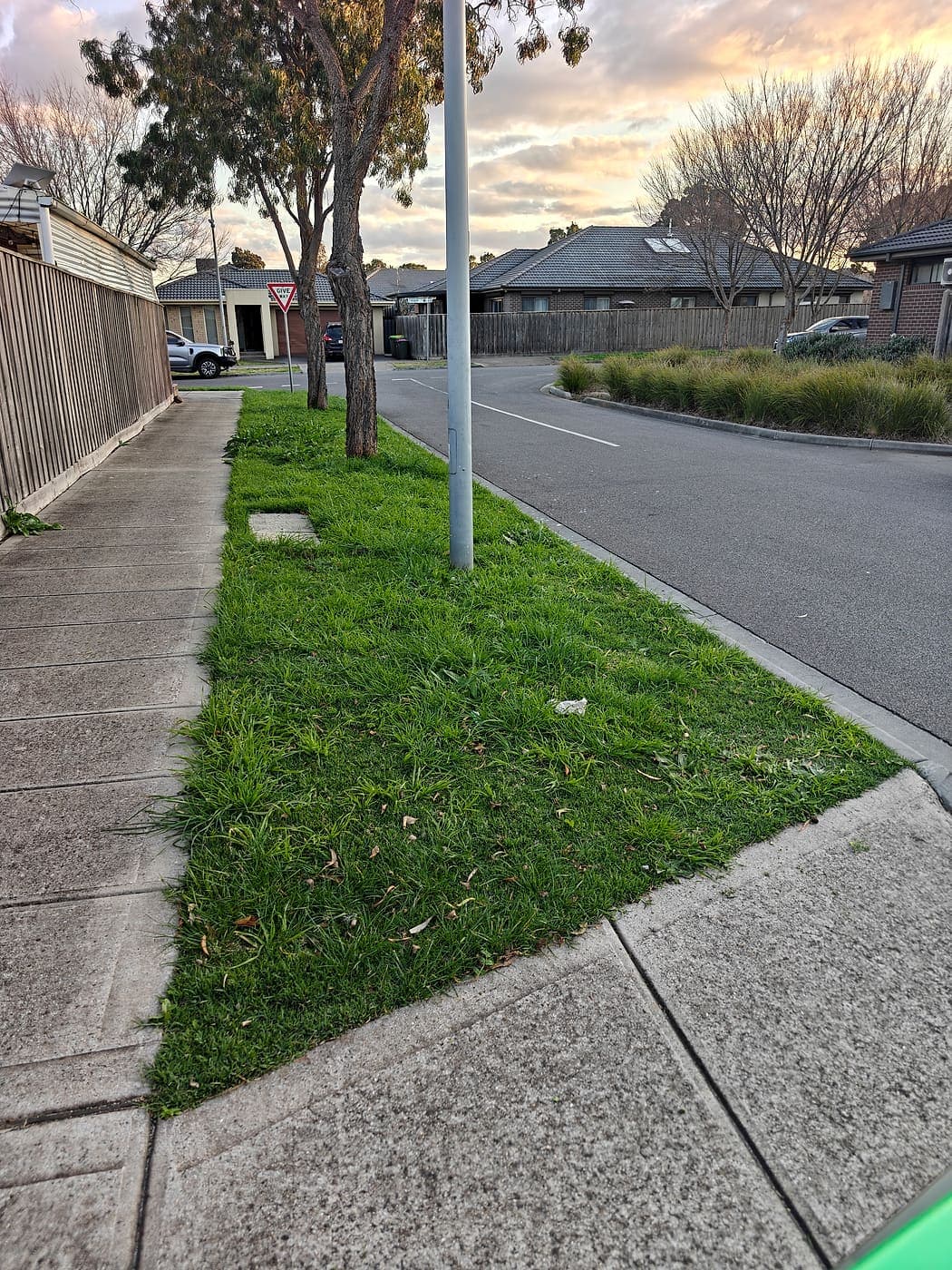
| Season | How often | Notes |
|---|---|---|
| Spring (Sep to Nov) | Weekly | September is patchy; weekly from October |
| Summer (Dec to Feb) | Weekly to fortnightly | Depends on heat and water; raise the height |
| Autumn (Mar to May) | Fortnightly | Every 2 to 3 weeks by May |
| Winter (Jun to Aug) | Every 3 to 4 weeks | Only when it grows; fescue needs more |
How often should you mow your lawn in Melbourne?
Most Melbourne lawns need mowing about weekly in late spring, weekly to fortnightly in summer, fortnightly in autumn and every three to four weeks in winter. That pattern fits the warm-season grasses that cover most suburban lawns here: kikuyu, buffalo and couch. Cool-season fescue lawns need a different rhythm, covered further down.
| Months | Warm-season lawns (kikuyu, buffalo, couch) | Cool-season lawns (fescue, rye) |
|---|---|---|
| September | Every 1 to 2 weeks as growth returns | Weekly |
| October to December | Weekly | Weekly |
| January to February | Weekly to fortnightly | Fortnightly, mown high |
| March to April | Fortnightly | Weekly to fortnightly |
| May | Every 2 to 3 weeks | Fortnightly |
| June to August | Every 3 to 4 weeks, only when it grows | Every 2 to 3 weeks |
These are starting points, not fixed dates. A lawn in full sun on sandy soil in the south-east behaves differently from one under trees on heavy clay in the north or west. The rule that sets the real interval is the one-third rule, which the complete guide to lawn mowing in Melbourne explains alongside heights, equipment and edging.
Why does mowing frequency change through the Melbourne year?
Mowing frequency changes because grass growth follows temperature and moisture, and both swing widely across a Melbourne year. Warm-season grasses grow fastest when days are warm and the soil is moist, and nearly stop when it is cold. Cool-season grasses prefer the mild months and slow in the heat.
Mean temperatures and a mowing interval for warm-season lawns
| Month | Mean max (°C) | Mean min (°C) | Typical interval, warm-season lawn |
|---|---|---|---|
| Jan | 26.8 | 16.5 | 7 to 14 days |
| Feb | 25.9 | 16.0 | 7 to 14 days |
| Mar | 24.3 | 14.8 | 14 days |
| Apr | 20.9 | 12.2 | 14 days |
| May | 17.6 | 9.8 | 14 to 21 days |
| Jun | 14.9 | 7.8 | 21 to 28 days |
| Jul | 14.5 | 7.6 | 21 to 28 days, or none |
| Aug | 15.6 | 8.1 | 21 to 28 days |
| Sep | 18.1 | 9.6 | 7 to 14 days |
| Oct | 20.6 | 11.0 | 7 days |
| Nov | 22.2 | 12.7 | 7 days |
| Dec | 24.7 | 14.4 | 7 days |
Source: temperatures from the Bureau of Meteorology (opens in a new tab), climate statistics for Melbourne (Olympic Park), station 086338, records from 2013 to 2026. Intervals are general guidance for warm-season lawns.
The station data shows the shape of the year. Mean maximums climb from 18.1 °C in September to 22.2 °C in November, and October has the highest mean rainfall of any month at 68.0 mm, so late spring is when lawns surge. July's mean maximum of 14.5 °C is cold for kikuyu and couch, which is why they barely grow then.
Summer is the month-to-month wildcard. February has the lowest mean rainfall at the station, 26.3 mm, so a lawn that is not watered often slows down and stretches the interval, while a lawn on a watering system keeps growing hard. That is why the summer row reads "weekly to fortnightly" rather than a single figure.
How often should you mow in spring?
Mow about weekly from October through November, and every one to two weeks in September while growth is still patchy. Spring is when Melbourne lawns grow fastest, so it is the season where skipping a week costs the most. Kikuyu after a wet spell can need a cut every five or six days.
September is the shoulder month. Some warm days kick growth off, then a cold week stalls it again, so mow when the grass reaches about one and a half times its set height rather than by the calendar. Bring the height down gradually from its winter setting, one notch every mow or two, never in one jump.
By October the lawn is usually racing, and weekly mowing is what keeps each cut inside the one-third rule. If a visit is missed and the lawn is long, raise the mower for one cut, then lower it again at the next one a few days later. The month-by-month jobs that go with spring mowing, such as feeding and aerating, are in the Melbourne lawn care calendar.
The one-third rule turned around is simple to use: mow when the grass reaches one and a half times its set height. A lawn kept at 40 mm needs cutting once it reaches about 60 mm, whatever the date says.
How often should you mow in summer?
Mow weekly in summer if the lawn is watered and growing, and fortnightly if it has slowed in the heat. In Melbourne, December usually behaves like late spring, while January and February depend on rainfall, heat and whether the lawn is on a watering system. Raise the height for summer in either case.
A longer summer cut means the lawn can go a little longer between mows without breaking the one-third rule. It also shades the soil and cuts water loss. Mow in the cooler part of the day, and inside EPA Victoria (opens in a new tab)'s noise hours for grass-cutting equipment: not on weekdays before 7 am or after 8 pm, and not on weekends and public holidays before 9 am or after 8 pm.
Watering sets how fast a summer lawn grows, and it has its own rules. South East Water (opens in a new tab)'s wording is that "Watering systems for home and commercial gardens can only be used between 6pm and 10am", while "You can water gardens at any time using a hand-held hose, watering can or bucket." A lawn on an early morning watering system can need a weekly mow right through February.
Should you stop mowing a lawn that has gone dormant in summer?
Yes, mostly. A warm-season lawn left without water in a long dry spell can slow almost to a stop and turn straw coloured to protect itself. Mowing it then does little except stress the crowns and raise dust, so skip mows until it greens up and grows again after rain. If it needs a tidy, take only the seed heads and the odd tall tuft off at the highest setting.
How often should you mow in autumn and winter?
Mow fortnightly in March and April, every two to three weeks in May, and every three to four weeks from June to August, only when the grass has grown. Autumn growth in Melbourne slows as nights cool, and by winter warm-season lawns are close to dormant. Cutting a lawn that has not grown simply wears it out.
Autumn is when leaves start to land on lawns, especially under deciduous trees, so many autumn mows are as much about clearing leaves as cutting grass. A mower with a catcher picks up leaves and clippings together. Leaves left lying for weeks block light and leave yellow patches.
In winter, leave the height at the top of the range and mow only when the lawn has visibly grown. Stay off the lawn when it is waterlogged: mowing wet clay leaves ruts and compacts the soil for the rest of the year. Winter weeds such as winter grass and bindii often keep growing when the lawn does not, so a winter mow is sometimes about stopping weeds setting seed.
How does grass type change how often you mow?
Grass type changes the interval because each grass grows at its own speed and is kept at its own height. Kikuyu and couch are the fastest in summer and need the most frequent mowing, buffalo is a little slower, and fescue grows most in autumn and spring. Use the heights below, which match the full mowing guide, and mow when the grass reaches one and a half times them.
| Grass | Height range | Spring | Summer | Autumn | Winter |
|---|---|---|---|---|---|
| Kikuyu | 30 to 50 mm, never below 30 mm | Weekly, every 5 to 6 days after rain | Weekly | Fortnightly | Every 3 to 4 weeks |
| Buffalo (soft leaf) | 40 to 60 mm | Weekly to every 10 days | Weekly to every 10 days | Fortnightly | About every 4 weeks |
| Couch | 20 to 40 mm | Weekly | Weekly, more on a low fine lawn | Fortnightly | Rarely, it goes dormant |
| Zoysia | 20 to 40 mm | Every 10 to 14 days | Every 7 to 10 days | Every 2 to 3 weeks | Rarely |
| Tall fescue and rye blends | 50 to 70 mm | Weekly | Fortnightly, mown high | Weekly to fortnightly | Every 2 to 3 weeks |
If you are not sure which grass you have, the lawn care guides and the full mowing guide describe how to tell them apart. Many Melbourne lawns are a mix, often kikuyu creeping into an older fescue or couch lawn. Mow to suit whichever grass makes up most of it.
Why kikuyu needs the shortest interval
Kikuyu grows from thick runners that spread above ground, and in a warm, wet Melbourne spring it can put on leaf faster than any other common lawn grass. Because it should not be cut below 30 mm, there is no option to scalp it low and wait longer between mows: cutting into the runners turns it yellow and lets weeds in. The only way to keep kikuyu looking even through October and November is a short, regular interval.
How do you work out the right interval for your own lawn?
Measure, do not guess: note the height after a mow, check it again a few days later, and mow when it reaches one and a half times the set height. Two or three checks in each season tell you your lawn's real interval far better than any calendar. Sun, shade, soil, water and fertiliser all change the answer.
Here is a worked example. Say a kikuyu lawn is cut to 40 mm, so it is due when it reaches about 60 mm. If you measure it at 52 mm four days after mowing, it is growing about 3 mm a day and will reach 60 mm in roughly a week, so weekly mowing is right; if it measures 58 mm after four days, it needs a cut every five days.
The same lawn can need different intervals in different parts. A sunny front lawn and a shady backyard often grow at different speeds, and a nature strip baked by reflected heat from the road may barely grow in February. It is fine to mow the shady part every second visit, or to only edge and tidy a slow area.
- Mow to your set height and write down the date.
- Three to four days later, stand a ruler in the lawn and note the height.
- Work out the daily growth and the number of days until it reaches one and a half times the set height.
- Repeat once a month, and in any week of unusual heat or rain.
What happens if you mow too often or not often enough?
Mowing too rarely is the more common problem and the more damaging one: each cut then takes off more than a third of the leaf, and the lawn turns yellow, thins and lets weeds in. Mowing too often does little harm on a healthy lawn, but mowing a lawn that has not grown, or mowing it wet, wears it down and compacts the soil.
Signs the interval is too long:
- the lawn looks yellow or straw coloured for a few days after each mow;
- clumps of clippings are left lying in rows;
- weeds and seed heads are standing above the grass;
- the mower bogs down or leaves a ragged cut.
Signs the interval is too short, or the timing is wrong:
- the catcher has almost nothing in it;
- wheel ruts appear on soft ground;
- worn, bare lines show along the usual mowing path.
Call for help if the lawn is so overgrown that it would take several mows to bring back, if it has steep slopes or embankments, or if it sits near pools, retaining walls or drop-offs. Very long grass can hide snakes, glass and other hazards, so treat it with care before mowing.
Keeping the right interval through the year is the part of lawn care that slips first when life gets busy. A regular lawn mowing service changes the frequency with the season for you, and regular maintenance plans can add the rest of the garden. If spring has got ahead of you, get a free quote and the team will set a schedule that suits your grass.
Your Garden. Our Promise.
From our jobs
Frequently asked
How often does kikuyu need mowing in summer?
How often should a buffalo lawn be mowed?
How often should a couch lawn be mowed?
Does a tall fescue lawn need mowing through winter?
Is fortnightly mowing enough in spring?
Can I mow less often by raising the cutting height?
Does a wet spring mean mowing more often?
Sources and further reading
- Climate statistics for Melbourne (Olympic Park), Bureau of Meteorology
- Permanent Water Saving Rules, Yarra Valley Water
- Permanent Water Saving Rules, South East Water
- Residential noise, EPA Victoria
Caring for Melbourne gardens since 2019. Updated 17 November 2026.