


Gardening
Which mulch suits Melbourne gardens? Types compared
By the Action Garden team · Updated · 11 min read
Checked against: Sustainable Gardening Australia, CFA, Bureau of Meteorology, Knox City Council
TL;DR
- Particle size matters more than the material: chunky mulch with most pieces over 5 mm saves the most water.
- Coarse bark and wood chip suit most ornamental and native beds and last the longest.
- Pea straw, lucerne and sugar cane feed vegetable beds but break down within a year.
- Pebbles, gravel and scoria last for years but heat up, and suit dry gardens, succulents and beds near the house.
- Avoid plastic sheeting and thick layers of fine mulch, which stop water and air reaching the soil.
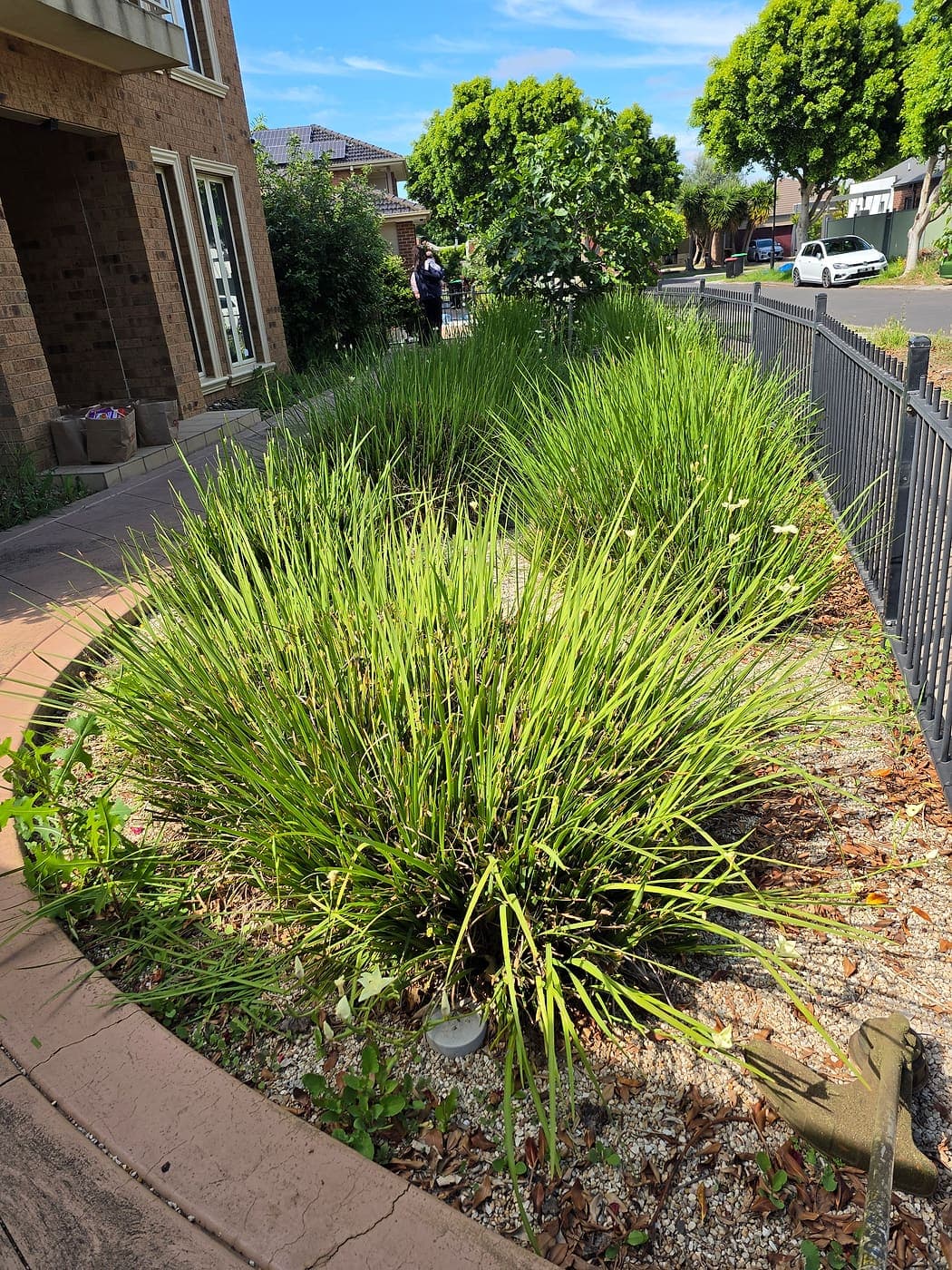
What makes one mulch better than another?
Particle size matters more than the material. A coarse mulch, with most pieces bigger than 5 mm, lets rain through to the soil and slows evaporation, while a fine mulch soaks up water itself and can dry the soil out.
Sustainable Gardening Australia (opens in a new tab) reports a trial by Yates that measured how fast soil lost water under mulches of different textures, with bare soil scored at 100. It also measured how much irrigation water each mulch held on to instead of passing to the soil.
| Mulch texture | Evaporation (bare soil = 100) | Water held in 500 ml of mulch | Rating |
|---|---|---|---|
| Chunky (all pieces over 5 mm) | 40 | 38 ml | Excellent |
| Mostly chunky (65 percent over 5 mm) | 50 | 78 ml | Good |
| Half chunky, half fine | 65 | 112 ml | Fair |
| Mostly fine (65 percent under 2 mm) | 110 | 172 ml | Very poor |
Source: Sustainable Gardening Australia, "Choosing mulch for your garden", reporting a Yates trial.
The mostly fine mulch did worse than bare soil, because it held water near the surface where it evaporated, and drew moisture up from the soil below. That is why "coarse beats fine" is the first rule for Melbourne, where February averages only 26.3 mm of rain at the Bureau of Meteorology (opens in a new tab)'s Olympic Park station and January averages a 26.8°C maximum.
Two side-by-side cross-sections of a garden bed under rain and sun. On the left, chunky mulch with large gaps: raindrops pass through to dark, moist soil, and only a few small evaporation arrows rise. On the right, fine mulch packed into a dense layer: raindrops sit in the top of the mulch, the soil beneath stays pale and dry, and many evaporation arrows rise from the surface.
Three other things separate good mulches from poor ones:
- How long it lasts. Coarse wood lasts longest; straw and compost break down fastest.
- What it does to the soil. Organic mulches add organic matter as they break down; stone adds nothing.
- Nitrogen. Wood chips and shredded bark take nitrogen from the soil surface as they break down, while legume straws such as pea and lucerne add it.
How do the main organic mulches compare?
Organic mulches feed the soil as they break down, which is why they suit almost every planted bed. The trade-off is that they need topping up.
Side by side
Organic mulches compared
| Mulch | Water saving | How long it lasts | Best for | Watch out for |
|---|---|---|---|---|
| Coarse pine or hardwood bark | High | Longest of the organics | Ornamental beds, shrubs, slopes | Draws some nitrogen as it breaks down |
| Wood chip (chipped branches) | High | Long | Natives, large beds, under trees | Fresh chip draws nitrogen; may carry seed |
| Fine or shredded mixes ("forest fines") | Low to fair on their own | Medium | Mixing with coarser mulch | Thick fine layers crust, stay wet and rot |
| Pea straw and lucerne | Fair | Under a year | Vegetable beds, roses, annuals | Needs regular top-ups; can blow around |
| Sugar cane and other straws | Fair | Under a year | Vegetable beds, new plantings | Wheat and barley straw are low in nitrogen |
| Compost | Low as a top layer | Shortest | A soil feed under another mulch | Breaks down fast; weeds can grow in it |
| Leaves | Fair if shredded | Medium | Natives, woodland-style beds | Whole leaves mat and shed water |
| Lawn clippings | Fair | Short | Vegetable beds, in thin layers | Thick fresh layers rot; may carry seed or herbicide |
| Recycled green waste mulch | Varies | Medium | Large, non-edible areas | Can contain glass and other materials |
The water-saving column is a guide based on particle size, following the trial above. A coarse product of any timber will out-perform a fine one.
Hay versus straw
Hay and straw look alike, but they are different. Straw is the dry stalks left after grain is harvested; hay is the whole cut plant, grown as animal feed.
Sustainable Gardening Australia notes that hay has more nutrients than straw but more seed, and possibly pesticides. That makes straw the safer choice for most beds, and hay a gamble unless you know where it came from.
How do inorganic mulches compare?
Inorganic mulches, such as pebbles, gravel, scoria and fabrics, last for years but add nothing to the soil. They suit particular spots rather than whole gardens.
Side by side
Inorganic mulches compared
| Mulch | Lasts | Best for | Watch out for |
|---|---|---|---|
| Pebbles and river stones | Many years | Succulents, dry gardens, beds near the house | Absorb and radiate heat; hard to remove later |
| Gravel and crushed rock | Many years | Paths, dry-country natives, courtyards | Dust collects between stones and weeds grow in it |
| Scoria | Many years | Dry gardens, pots, where weight matters | Lighter than pebbles and lets water through, but can scatter |
| Landscape fabric | Several years, under another mulch | Paths and gravel areas | Clogs over time; roots grow into it |
| Plastic sheeting | Until it breaks up | Not recommended in planted beds | Stops water and air reaching the soil |
Sustainable Gardening Australia does not recommend plastic sheeting under garden beds, and notes that rocks and gravel can absorb enough heat to damage plants. In a hot Melbourne summer, stone suits plants built for it, such as succulents and drought-tolerant natives, far better than thirsty shrubs.
Stone mulch does not stop weeds forever. Dust and leaf litter settle between the stones and weed seeds germinate in it, so a stone bed still needs regular weeding and an occasional blow-out of debris.
Which mulch suits each part of a Melbourne garden?
Match the mulch to the plants and the spot, not the other way round. Many gardens use two or three types: stone near the house, coarse bark in the main beds and straw in the vegetable patch.
| Part of the garden | Best mulch | Why |
|---|---|---|
| Ornamental beds and shrubs | Coarse bark or wood chip | Saves water, lasts, looks tidy |
| Native gardens | Wood chip, shredded bark, leaf litter or gravel | Low nutrient suits many natives |
| Vegetable beds | Pea straw, lucerne or sugar cane | Feeds the soil, easy to move when planting |
| Roses | Pea straw, lucerne or a fine bark over compost | Roses are hungry feeders |
| Slopes and banks | Chunky bark or shredded wood | Knits together and stays put in rain |
| Beds against the house | Pebbles or rocks | CFA (opens in a new tab) advice in bushfire areas; also easier to keep below the slab |
| Succulents and dry gardens | Gravel, pebbles or scoria | Keeps crowns dry, suits the look |
| Pots | Fine bark or pebbles | Small pieces fit, pebbles stop wind loss |
Clay soils in the north and west
Coarse organic mulch is the better choice on heavy clay. As it breaks down it adds organic matter, which slowly improves how the clay drains, and it shields the surface from cracking in summer.
Sandy soils in the south-east
Sand dries fast, so a coarse mulch matters even more here. Add compost under it each year, since sandy soil holds very little organic matter or nutrient on its own.
Is free or recycled mulch worth using?
Free and recycled mulches can be good value for large areas, but check what you are getting. Fresh wood chip from tree work, council green waste mulch and home-made leaf mulch all behave differently.
- Fresh arborist chip is coarse and saves water well, but draws nitrogen while it breaks down. Sprinkle blood and bone under it, as Sustainable Gardening Australia suggests, or let it age for a few months before use.
- Recycled green waste mulch can contain glass and other materials, according to Sustainable Gardening Australia. Use it on large, non-edible areas and wear gloves when spreading it.
- Home-made leaf mulch is excellent once shredded. Run leaves over with a mower or compost them first, because whole leaves mat when wet and stop water getting through.
- Your own prunings, chipped, are ideal for natives and paths. Leave out anything diseased or full of seed.
Does fresh wood chip really "steal" nitrogen?
Yes, but only at the surface. As soil microbes break down fresh wood, they use nitrogen from the top layer of soil, which can leave shallow-rooted plants and seedlings looking pale for a while.
Deeper-rooted shrubs and trees are rarely affected. The fix is simple: a nitrogen fertiliser such as blood and bone under the chip, applied as the label directs, or letting the chip age before you spread it.
Which mulch should you choose? A quick decision guide
Answer these in order and stop at the first "yes". It will point you to the right mulch for most spots in a Melbourne garden.
Quick decision guide
Choose your mulch
- Is the bed within a few metres of the house, in a bushfire-prone area? Use pebbles or rocks.
- Is it a vegetable bed or a rose bed? Use pea straw, lucerne or sugar cane, topped up each season.
- Is it full of succulents or dry-country plants? Use gravel, pebbles or scoria.
- Is it on a slope or an exposed, windy corner? Use chunky bark or shredded wood that knits together.
- Is it a native garden? Use coarse wood chip, shredded bark or shredded leaf litter, and skip rich compost.
- Is it a large area where looks matter less? Aged arborist chip or recycled mulch, kept off edible beds.
- None of the above? Use a coarse pine or hardwood bark, 50 to 75 mm deep.
Once you have chosen, the laying matters as much as the type. Water first, weed first, and keep it off stems: our guide to mulching garden beds properly takes you through each step.
What do people get wrong when choosing mulch?
The most common mistake is buying on looks instead of texture. A fine, dark mulch can look neat on day one and still shed water all summer.
- Choosing fine over coarse. Fine mulch crusts and, in the trial above, lost more water than bare soil.
- Using one mulch everywhere. Vegetable beds, natives and beds near the house all suit different mulches.
- Putting organic mulch against the house. In bushfire-prone areas, use stone near the home.
- Laying plastic under beds. It stops water and air reaching the soil.
- Ignoring nitrogen. Fresh wood chip on a seedling bed can leave plants pale.
- Spreading hay or seedy clippings. You import weeds with them.
Mulch is one part of a bigger seasonal routine. Our complete guide to garden maintenance in Melbourne shows where mulching, weeding and pruning fit across the year, and there are more gardening articles in the gardening section of our blog. For owners corporations planning grounds work, our article on what a good body corporate maintenance schedule looks like covers how mulching fits a yearly programme.
When is it worth handing the job over?
If you have more beds than weekends, or you would rather the right mulch simply arrived and went down properly, it is worth handing over. Our gardening services include soil preparation and mulching, and we can supply and deliver mulch or work with what you have bought. Spring mulching and autumn top-ups fit neatly into our regular maintenance plans, and you can get a free quote any time.
Your Garden. Our Promise.
From our jobs
Frequently asked
Which mulch holds the most water in the soil over a Melbourne summer?
Are pebbles or gravel a good mulch for Melbourne gardens?
Is free arborist wood chip safe to use as mulch?
Which mulch is best around native plants?
Is pea straw or lucerne a good mulch for vegetable beds?
Can I use lawn clippings as garden mulch?
Does mulch choice matter in a bushfire-prone area?
Which mulch suits a body corporate or commercial garden?
Sources and further reading
- Choosing mulch for your garden (Sustainable Gardening Australia)
- How to prepare your property (CFA)
- Melbourne (Olympic Park) climate statistics (Bureau of Meteorology)
- Termites and termite areas (Knox City Council)
Caring for Melbourne gardens since 2019. Updated 17 November 2026.