


Seasonal
Melbourne spring garden checklist
By the Action Garden team · Updated · 11 min read
Checked against: Bureau of Meteorology, CFA, Water Victoria, Sustainable Gardening Australia
TL;DR
- September: weed hard, feed beds, finish winter pruning and plant hardy natives while the soil is moist
- October: Melbourne's wettest month on BOM's long record, so mulch moist soil and plant out most things
- November: prune shrubs that have finished flowering, trim hedges, and test the watering system before summer
- Before the Fire Danger Period: clear gutters, rake up dry litter and move woodpiles away from the house, as CFA advises
- By November evaporation is already about double the rainfall, so get water-wise habits in place early
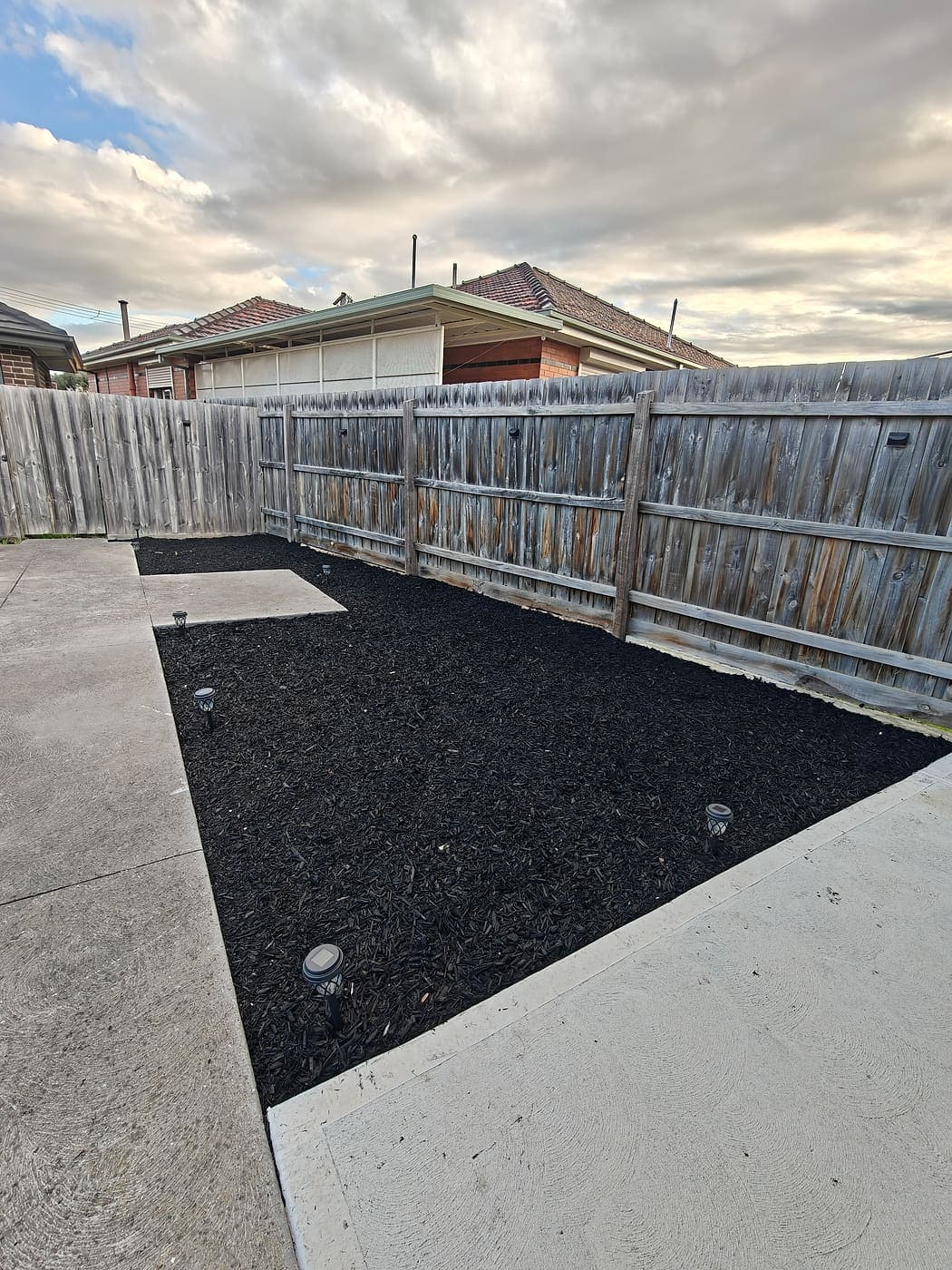
| Month | Main jobs | Weather (BOM long-term means) |
|---|---|---|
| September | Weed, feed, plant hardy natives | Mean max 17.3 °C, mean rainfall 58.0 mm (BOM, Melbourne Regional Office) |
| October | Mulch, plant out, tie in climbers | Mean max 19.7 °C, mean rainfall 66.0 mm, the wettest month of the year on that record |
| November | Prune after flowering, trim hedges, test irrigation | Mean max 22.0 °C, about 3 days of 30 °C or more on average |
What are the most important spring garden jobs in Melbourne?
The most important spring jobs are weeding before weeds seed, feeding as growth returns, mulching moist soil, pruning shrubs after they flower, and getting the garden ready for heat and fire season. Do them in roughly that order across September, October and November and summer becomes far easier.
Spring is when Melbourne gardens decide how the rest of the year goes. Soil warms, rain is still reliable, and every plant (wanted or not) puts on growth. Work done now saves hours of rescue in January.
Here is the whole season on one list. The sections below explain each month.
- Weed every bed before flowering weeds set seed
- Finish any winter pruning in early September
- Feed beds and shrubs once new growth appears
- Plant natives, shrubs and perennials while the soil is moist
- Mulch beds after the October rain, on damp soil
- Tie in climbers and stake tall perennials
- Prune spring-flowering shrubs once flowers fade
- Give fast hedges their first trim of the season
- Clear gutters, dry leaves and loose bark before the Fire Danger Period
- Test the watering system and set it for the permitted hours
- Move pots into groups and check saucers before the first hot day
The lawn has its own timetable for feeding, aerating and repairs. It is set out month by month in the Melbourne lawn care calendar, so this checklist covers beds, shrubs, hedges and the rest of the garden.
What does Melbourne's spring weather mean for the garden?
Melbourne's spring is mild, moist and steadily warming, which makes it the best planting and mulching window of the year. On the Bureau of Meteorology (opens in a new tab)'s long record for central Melbourne, average maximums climb from 17.3 °C in September to 22.0 °C in November, and October is the wettest month of the whole year.
The catch is evaporation. BOM's evaporation figure, measured from an open pan of water, rises from 2.6 mm a day in September to 4.5 mm a day in November. By November that adds up to roughly 135 mm a month against about 60 mm of rain, so soil starts drying well before summer arrives.
Melbourne in spring: temperature, rain and evaporation
| Month | Mean max (°C) | Mean min (°C) | Mean rainfall (mm) | Rain days (1 mm or more) | Mean daily evaporation (mm) | Days of 30 °C or more |
|---|---|---|---|---|---|---|
| September | 17.3 | 8.0 | 58.0 | 10.4 | 2.6 | 0.0 |
| October | 19.7 | 9.6 | 66.0 | 10.2 | 3.6 | 0.8 |
| November | 22.0 | 11.3 | 60.3 | 8.3 | 4.5 | 3.1 |
Source: Bureau of Meteorology, climate statistics for Melbourne Regional Office (086071). Temperature and rainfall means 1855 to 2015; evaporation 1955 to 2015.
The newer Olympic Park station, open since 2013, shows a slightly warmer picture: 18.1 °C in September, 20.6 °C in October and 22.2 °C in November, with nearly 4 days of 30 °C or more in November. That record is short, so treat it as a recent snapshot rather than a long-term average.
What should you do in the garden in September?
September is for clearing the decks: weeding, feeding, finishing winter pruning and planting hardy plants while the soil is cool and damp. Growth is only just starting, so this is the month to get ahead before everything takes off.
- Weed thoroughly. Winter annual weeds are flowering now. Pull them before they drop seed, and weed after rain so the roots come out whole.
- Finish winter pruning. Roses and deciduous fruit trees should be done by early September. If you are late, prune now rather than skip it; the rose pruning guide shows where to cut.
- Feed as growth starts. Once you see fresh leaves, apply a slow-release fertiliser suited to the plants, at the rate on the label, and water it in.
- Plant hardy natives and shrubs. Cool, moist soil lets roots establish before the heat.
- Divide clumping perennials that flowered poorly last year because they are crowded.
- Fix edges and paths. Re-cut bed edges so grass runners cannot creep in as they wake up.
Clay or sand: how your soil changes the spring list
Much of Melbourne's north and west sits on heavy clay, while many south-eastern suburbs are on sand. Clay stays wet and cold for longer in spring, so wait until it crumbles in your hand before digging or planting, or you will compact it. Adding compost and organic matter improves its structure over time.
Sandy soil warms and dries early. It drains freely and holds little water or fertiliser, so it benefits most from compost and from mulching early. Improving the soil with organic matter is one of the top ten water smart tips in Sustainable Gardening Australia (opens in a new tab)'s fact sheet.
What should you do in the garden in October?
October is the planting and mulching month. On BOM's long record it is Melbourne's wettest month, with 66.0 mm on average, so soil is at its most reliably moist while temperatures are still kind to new plants.
- Mulch every bed once the soil is damp and weeded. Mulch locks in the moisture already there; laid on dry soil, it soaks up light showers before they reach the roots. Our guide on how to mulch garden beds covers depth and keeping mulch off stems.
- Plant out perennials, groundcovers and, from mid to late month, most frost-tender plants.
- Tie in climbers and stake tall perennials before spring winds knock them over.
- Deadhead spring bulbs but leave the leaves until they yellow, so the bulb can store energy for next year.
- Watch for pests on soft new growth, especially aphids on roses and citrus. A firm spray of water or squashing them by hand deals with small numbers.
- Keep weeding. A second pass now catches the weeds that germinated after the first.
Coarse organic mulches let rain through better than fine, dusty ones. If you are unsure which suits your beds, our comparison of mulch types for Melbourne gardens sets out the options. Near the house, CFA (opens in a new tab) recommends pebbles or rocks in garden beds rather than flammable mulch.
What should you do in the garden in November?
November is about pruning what has finished flowering and getting ready for summer heat. Average maximums reach 22 °C, there are about 3 days of 30 °C or more on the long record, and evaporation is already well ahead of rainfall.
- Prune spring-flowering shrubs such as azaleas, camellias and other spring bloomers once the flowers fade, so they set next year's buds on new growth.
- Trim fast hedges for the first time this season. Our guide to trimming a hedge straight and level shows the taper that keeps hedges full at the base.
- Test the watering system. Run each zone, clear blocked drippers, fix leaks, and set the timer for the permitted hours.
- Top up mulch where it has thinned, especially on sandy soil.
- Group pots together and check they have saucers or self-watering reservoirs before the first hot spell.
- Plan for time away. If you are going away over the holidays, arrange watering now rather than in the week before Christmas.
Watering systems and the rules, set up before summer
Under Victoria's permanent water saving rules (opens in a new tab), gardens "can only be watered between 6 pm and 10 am, if using watering systems", and "you can water gardens at any time using a hand-held hose, watering can or bucket". Hoses must be leak free with a trigger nozzle. The rules apply to drinking water, not to rainwater, greywater, bore water or recycled water.
A watering system includes any sprinkler, drip hose or weep hose, even a simple sprinkler on a tap. Water Victoria says the most efficient option is sub-surface drip irrigation on a timer, watering overnight. Setting that timer in November means the garden is ready when the first heatwave arrives.
How do you get the garden ready for fire season in spring?
CFA asks households to finish their preparation in early spring, before the Fire Danger Period is declared, and says that in Victoria the Fire Danger Period can start as early as October. Spring garden work and fire preparation are largely the same jobs.
CFA's list for before bushfire season includes:
- clearing gutters of leaves, twigs and rubbish;
- moving woodpiles away from the house;
- pruning shrubs and cutting back tree branches that overhang the home;
- reducing vegetation around the home and safely disposing of garden waste;
- getting rid of dry grass, leaves, twigs and loose bark, or moving green waste away from the house;
- keeping lawns short, because fire intensity near the building is lower when grass is short.
CFA also suggests mulching, chipping or green waste removal as alternatives to burning off, and notes that if you do want to burn off, it has to be done before the Fire Danger Period starts. If gutters are on your list, our guide to cleaning gutters safely covers the ladder rules first.
Call a professional for gutters on a double-storey home or a steep roof, for branches over the house or near power lines, and for any tree that looks unstable after spring winds. A fall from a ladder or roof edge can cause serious injury. Tree work near power lines is regulated and must be left to qualified people.
Which spring garden mistakes cost you later?
The costly spring mistakes are mostly about timing. Each one looks small in October and becomes a big job in January.
- Letting weeds flower. One missed fortnight of weeding can mean a whole year of seedlings.
- Mulching dry soil. The mulch then sheds water instead of holding it.
- Planting frost-tender plants too early. A cold September night can undo the effort.
- Feeding with too much fertiliser. Lush soft growth in late spring wilts and scorches in the first heatwave. Follow the label.
- Pruning spring-flowering shrubs in winter. Cut azaleas or camellias before they bloom and you remove the flowers.
- Leaving the watering system untested. A blocked dripper found in a January heatwave is often found too late.
- Piling green waste against the house. CFA asks for it to be removed or moved away from the building.
Why October rain is not enough on its own
October averages 66 mm of rain, but rain arrives in bursts. Around ten rain days a month means long dry gaps between them, and BOM's evaporation figures show the air pulling moisture out of the soil every day in between.
That is why mulching on moist soil, and watering deeply rather than often when it does dry, matter even in the wettest month. Sustainable Gardening Australia's advice is to water to the root zone, less often but more thoroughly.
When is it worth getting help with spring garden jobs?
Spring is when a garden either stays under control or gets away, so it is the season when help pays off most. If the weeds are winning, the beds need a full clean-out before mulching, or the hedges and gutters need doing at the same time, a team visit can reset the garden in a day.
Our gardening services cover weeding, feeding, planting, pruning and seasonal mulching, and the garden maintenance guide explains how a regular programme keeps on top of it. Once spring is done, the summer garden checklist picks up from December.
If spring has crept up on you, a free quote is the easiest place to start.
Your Garden. Our Promise.
From our jobs
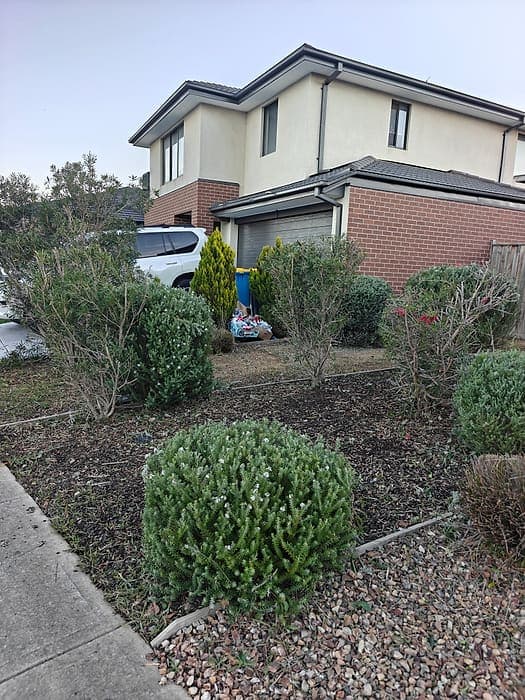
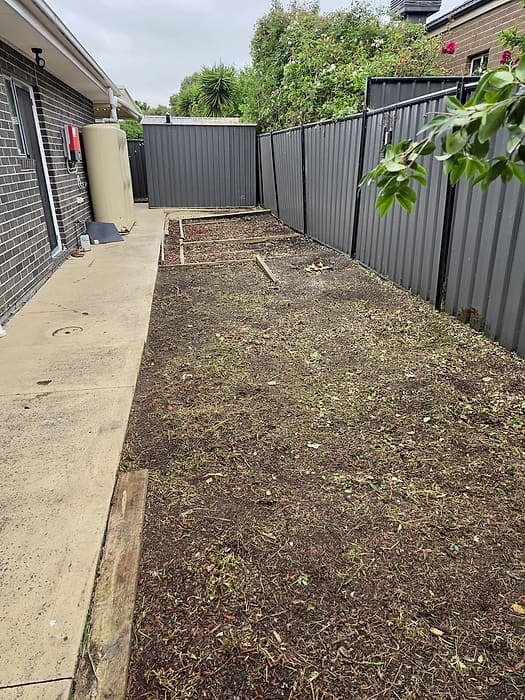
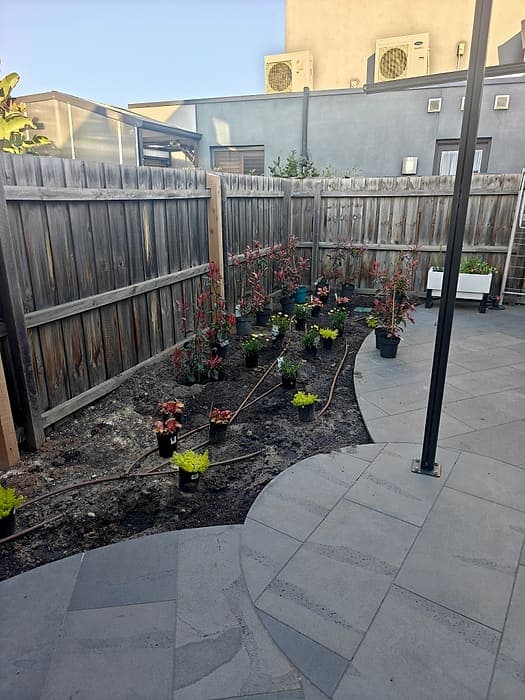
Frequently asked
When is it safe to plant frost-tender plants in Melbourne?
Should I mulch before or after the spring rain?
Which weeds should I pull first in spring?
When should I turn the watering system back on in spring?
Can the Fire Danger Period start in spring?
Which spring jobs can wait until summer?
Should I fertilise garden beds in spring?
Sources and further reading
- Climate statistics, Melbourne Regional Office 086071 (Bureau of Meteorology)
- Climate statistics, Melbourne (Olympic Park) 086338 (Bureau of Meteorology)
- Preparing for bushfire season (CFA)
- Permanent water saving rules (Water Victoria)
- Water Smart Gardening fact sheet (Sustainable Gardening Australia)
Caring for Melbourne gardens since 2019. Updated 17 November 2026.