


Hedges and trees
When to trim hedges in Melbourne, species by species
By the Action Garden team · Updated · 12 min read
Checked against: Bureau of Meteorology, Wildlife Victoria, Australian Plants Society Victoria, Royal Horticultural Society
TL;DR
- Lilly pilly, photinia, pittosporum and box share the same rhythm, a main trim in late spring and a second in late summer or early autumn.
- Murraya and sweet viburnum grow in repeated flushes, so they suit light trims every six to eight weeks from November to March.
- Flowering hedges are trimmed straight after flowering; for camellia sasanqua and correa that means late winter or early spring.
- Conifers such as Leighton green get only their green tips trimmed, in spring and late summer, and never into brown wood.
- Skip heatwaves, frosty spells and active nests, and avoid hard cuts after mid autumn, when regrowth stalls until spring.
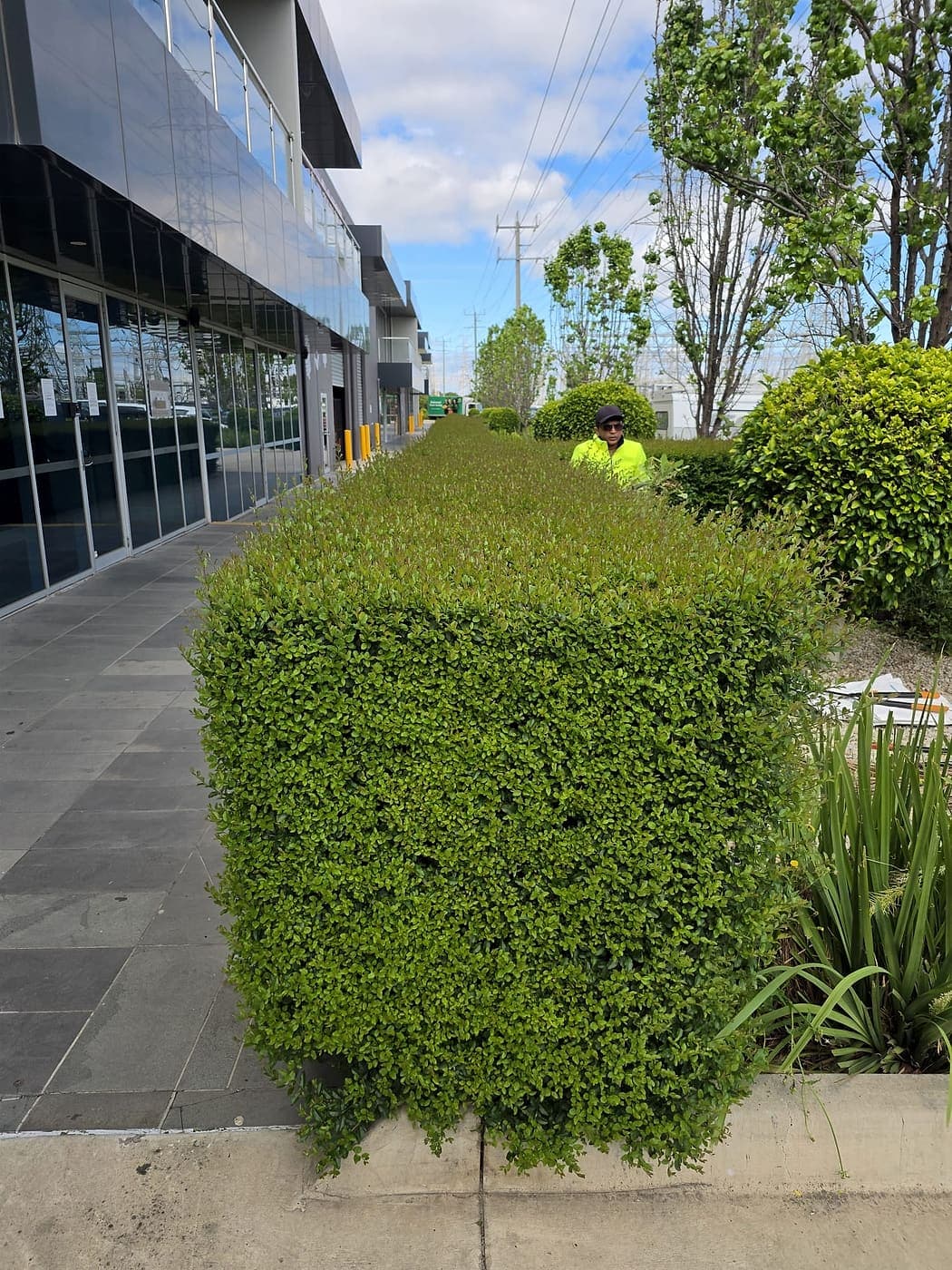
| When | What to trim | Why |
|---|---|---|
| Late spring (Oct to Nov) | Main trim for most hedges | After the first flush; check for nests first |
| Summer (Dec to Jan) | Light tidies on fast growers | Trim early in the day; skip hot days |
| Late summer to early autumn (Feb to Apr) | Second main trim | Gives regrowth time to harden before winter |
| Winter (Jun to Aug) | Flowering hedges after bloom; hard renovations late in the season | Slow regrowth, so keep routine trims light |
When is the best time to trim hedges in Melbourne?
The best time to trim most Melbourne hedges is late spring, in October and November, once the first big flush of new growth has finished, with a second trim in late summer or early autumn. The exact timing shifts by species, and flowering hedges follow their flowers rather than the calendar.
Hedges grow in bursts. A flush of soft new shoots comes in spring as the soil warms, a quieter period follows in the heat of summer, and many species push a second flush after summer or early autumn rain. Trimming just after each flush, rather than in the middle of one, gives the densest hedge for the fewest cuts.
That is the general rule. The rest of this post goes plant by plant, because a box edge, a murraya screen and a Leighton green windbreak each want something different. For the technique itself, our guide on how to trim a hedge straight and level covers tools, the string line and the taper.
The Melbourne hedge calendar at a glance
| Hedge | Main trim | Second trim | Light tidies | Avoid |
|---|---|---|---|---|
| Lilly pilly | November | March | January | Hard cuts after April |
| Photinia | October to November | February to March | As needed in summer | Wet, humid spells |
| Pittosporum | October to November | February to March | Rarely needed | Deep cuts in heat |
| Box (Buxus) | Late October to November | February to March | Light summer touch-up | Hot, sunny days |
| Murraya | November | January | Every 6 to 8 weeks to March | Winter and frosty weeks |
| Sweet viburnum | November | February | January and April | Hard cuts in late autumn |
| Viburnum tinus | Straight after spring flowering | Light shape by February | None | Autumn, when buds are set |
| Westringia | After spring flowering | Light tip in late summer | None | Cutting into bare wood |
| Camellia sasanqua | Late winter to early spring, after flowering | None | Light shape by December | Midsummer onwards, when buds form |
| Conifers (Leighton green, cypress) | October to November | February | None | Any cut into brown wood |
How does Melbourne's weather shape the hedge calendar?
Melbourne's long, mild growing season and cool but rarely freezing winters are why most hedges here need cutting two or three times a year. Growth starts as the days warm in September, slows in the hottest weeks, picks up again after late summer rain and stalls through the cool months from May.
Bureau of Meteorology (opens in a new tab) averages for Melbourne (Olympic Park), 2013 to 2026, show the pattern clearly:
Melbourne monthly temperature, Olympic Park
| Month | Mean max (°C) | Mean min (°C) | Mean rain (mm) |
|---|---|---|---|
| January | 26.8 | 16.5 | 53.3 |
| February | 25.9 | 16.0 | 26.3 |
| March | 24.3 | 14.8 | 36.4 |
| April | 20.9 | 12.2 | 63.0 |
| May | 17.6 | 9.8 | 46.5 |
| June | 14.9 | 7.8 | 42.1 |
| July | 14.5 | 7.6 | 41.0 |
| August | 15.6 | 8.1 | 47.0 |
| September | 18.1 | 9.6 | 41.0 |
| October | 20.6 | 11.0 | 68.0 |
| November | 22.2 | 12.7 | 64.4 |
| December | 24.7 | 14.4 | 50.2 |
Source: Bureau of Meteorology, climate statistics for Melbourne (Olympic Park), station 086338.
Two things stand out. October and November are the wettest months of the year on these averages, which is exactly when the spring flush is at its strongest, and the cool months of June to August average maximums around 15°C, when most hedges barely grow.
Those averages are for the city. Outer suburbs in the north, west and east are colder on winter nights and more prone to frost, while bayside suburbs stay milder. In a cold pocket, push spring trims a couple of weeks later and keep autumn cuts earlier.
A circular year wheel divided into twelve months, starting with September at the top. A thick green band swells through September to November (the spring flush), narrows through December and January, swells again more modestly from February to April (the autumn flush), and thins to a hairline from May to August.
Scissor icons sit just after each swelling: one at November and one at March, marking the two main trims. A small snowflake marks June to August and a sun icon marks the hottest weeks of January and February.
When should you trim a lilly pilly hedge?
Trim lilly pilly in November, once the spring flush of coppery or pink new leaves has firmed up, and again in March after the late summer flush. A formal lilly pilly hedge often wants a light tidy in January too, because it is one of the fastest hedges in Melbourne gardens.
Lilly pilly is forgiving. It reshoots from older wood, so an overgrown screen can be reduced hard, ideally in late winter or early spring when the plant has a full season of growth ahead. Our hedge trimming guide for Melbourne explains how to do that in stages.
Watch the new growth on Syzygium lilly pillies for pimpled, curled leaves, a common sign of lilly pilly psyllid. Trimming off the affected soft tips once the flush has finished removes the damaged leaves, and the cuttings are best kept out of the home compost.
Why lilly pilly timing matters more than most hedges
Because lilly pilly flushes so strongly, a trim in the middle of a flush is undone within weeks. Trim in early October and you will often be trimming again in December.
Waiting until the coloured new leaves have hardened and turned green means the trim holds for longer, and the hedge answers with dense branching rather than another long, soft push.
When should you trim photinia and pittosporum hedges?
Trim photinia and pittosporum in October or November after the spring flush, and again in February or March. Both are vigorous, tolerate clipping well, and respond to a hard cut in early spring if they need reshaping.
Photinia. Each trim brings a new flush of red leaves, so more frequent trims keep the hedge redder. Photinia also carries clusters of small white flowers in spring; trimming before they open removes them, which some owners prefer. Leaf spot is common in wet, crowded hedges, so avoid trimming in damp, humid spells and clear fallen leaves from underneath.
Pittosporum. Popular cultivars such as the silver and variegated forms grow into dense, fine-leaved hedges. They need less frequent trimming than photinia, and often one main trim in late spring and a light second in late summer is enough.
Both lose density at the base if the top is allowed to get wider than the bottom, so keep the taper as you trim.
When should you trim murraya and box hedges?
Trim murraya lightly and often through the warm months, roughly every six to eight weeks from November to March, just after each round of flowers fades. Trim box (Buxus) once in late October or November and again in February or March, on a mild or overcast day.
Murraya. Murraya (orange jessamine) flowers in repeat flushes, usually after warm weather and rain, and its perfume is a big part of its appeal. Light, frequent trims keep it tight and flowering. It does not like hard cuts, and it is frost-tender, so in Melbourne's colder suburbs leave winter alone and keep autumn cuts light.
Box. English box and Japanese box are slow, so a hedge that misses a trim takes a long time to recover a crisp line. Box cut in hot sun can brown, because the trim exposes inner leaves that have been shaded. Clean tools between plants and avoid trimming wet box, both of which help limit the spread of leaf diseases.
In summer, trim box and murraya in the cool of the morning and give them a deep water the evening before if the soil is dry. A hedge that goes into a trim well watered recovers faster and scorches less.
When should you trim viburnum, westringia and other flowering hedges?
Trim flowering hedges straight after they finish flowering, so you do not cut off next season's buds. That rule moves the trim to very different months depending on when each plant blooms.
| Flowering hedge | Main flowering in Melbourne | When to trim |
|---|---|---|
| Viburnum tinus | Late winter to spring | Straight after flowering; light shape by February |
| Sweet viburnum (V. odoratissimum) | Late spring | After flowering, then light trims through summer |
| Westringia | Mostly spring, sporadic year round | Light trim after the main spring flowering; tip in late summer |
| Camellia sasanqua | Autumn to winter | Late winter to early spring, once flowering ends |
| Correa | Autumn to winter | As new shoots appear in spring, after the main flowering |
| Callistemon (bottlebrush) | Spring to summer | Straight after flowering |
| Rosemary | Winter to spring | Light trim after flowering; not into bare wood |
The Australian Plants Society Victoria (opens in a new tab) advises pruning correa immediately after the main flowering as the new shoots come in spring, and notes that callistemons can generally be heavily pruned after flowering, except Callistemon viminalis and its cultivars, which can be damaged by pruning. It also warns that hard pruning into old wood can kill some natives, such as leptospermum and melaleuca.
Westringia follows the same caution. Tip it lightly and often from a young age, keep some green leaves below every cut, and do not try to reduce an old, woody westringia by cutting into bare stems.
Flowering hedges you would rather keep compact than flowering
Some owners care more about a tight shape than the flowers. A flowering hedge can be trimmed on the same rhythm as a non-flowering one, with the trade-off of fewer flowers.
If you want both, trim right after flowering and once more lightly before the plant sets its next buds. For camellia sasanqua that means finishing by about December; for viburnum tinus, by about February.
When should you trim conifer hedges like Leighton green?
Trim conifer hedges in spring, around October to November, and again in late summer, around February, taking only the soft green growth. Never cut back into brown, leafless wood. The Royal Horticultural Society (opens in a new tab) notes that most conifers will not reshoot from old wood, so a cut that goes too deep leaves a hole that never fills.
Leighton green and other cypress screens grow fast, which is why they were planted along so many Melbourne boundaries. Missing a year of trims lets them get too wide, and then there is no safe way back except a light tidy.
A conifer screen that has grown into tall trees is tree work, not hedge work. The Action Garden team handles that through our tree shaping and pruning service.
When should you avoid trimming a hedge?
Avoid trimming during heatwaves, in frosty weeks, when birds are nesting in the hedge, in wet and humid spells for disease-prone species, and late in autumn for anything more than a light tidy.
- Heatwaves. Fresh cuts expose inner leaves to full sun, and they scorch. Trim early in the morning or wait for a cooler change.
- Frost. Soft new shoots from a recent cut can be damaged by frost in colder suburbs, especially on murraya.
- Nesting birds. Wildlife Victoria (opens in a new tab) notes that spring is breeding season for many native birds and that it is illegal under the Wildlife Act to destroy nests or eggs. Look and listen before you start.
- Wet, humid spells. Trimming wet box and photinia can spread leaf diseases between plants.
- Late autumn. From about late April, regrowth slows sharply, so deep cuts stay bare and brown until spring.
What does a year of hedge trimming look like in Melbourne?
A typical Melbourne year for a mixed garden runs like this, starting from the spring flush:
- September: Finish hard renovations of tolerant species before the flush; trim correa and camellia sasanqua after flowering.
- October: Check for nests; trim photinia, pittosporum and viburnum tinus after flowering; start on box late in the month.
- November: Main trim for lilly pilly, box, murraya, sweet viburnum and conifers.
- December: Light tidies on fast formal hedges; finish shaping camellia sasanqua.
- January: Light trims on murraya and lilly pilly in the cool of the morning; skip hot days.
- February: Second trim for photinia, pittosporum, sweet viburnum, conifers and box; last light shape on viburnum tinus.
- March: Second trim for lilly pilly; last murraya trim.
- April: Final light tidies; no hard cuts from late in the month.
- May to August: Rest period; trim winter-flowering hedges after they finish and plan any renovation for late winter.
Many owners prefer not to keep this calendar in their heads. Putting the hedges on a regular maintenance plan means each trim lands at the right time for the species, and our hedge trimming and pruning team times each job to the plant, removes the cuttings and sweeps up before leaving. More reading is in our hedges and trees articles, and you can ask for a quote whenever it suits.
Your Garden. Our Promise.
From our jobs
Frequently asked
What month should I trim a lilly pilly hedge in Melbourne?
When should a murraya hedge be trimmed?
Is autumn too late to trim a hedge in Melbourne?
Can I trim a buxus hedge in summer heat?
When do you trim a conifer hedge like Leighton green?
Why does a photinia hedge turn red after trimming?
Is it a bad idea to trim hedges in a Melbourne winter?
Sources and further reading
- Climate statistics, Melbourne (Olympic Park) station 086338 (Bureau of Meteorology)
- Top tips to avoid the swoop this spring (Wildlife Victoria)
- Pruning Australian native plants (Australian Plants Society Victoria)
- Pruning hedges (Royal Horticultural Society)
Caring for Melbourne gardens since 2019. Updated 17 November 2026.