


Garden beds, soil and plants guide
Caring for Australian native plants in Melbourne gardens
By the Action Garden team · Updated · 12 min read
Checked against: Australian Plants Society Victoria, Kingston City Council, Sustainable Gardening Australia, Water Victoria
TL;DR
- Plant natives from April to August so winter rain settles the roots before the first Melbourne summer.
- Water deeply and infrequently for the first one to two summers, then only in long dry spells and heatwaves.
- Drainage matters more than feeding; on heavy clay, plant on a low mound and choose clay-tolerant species.
- Tip prune little and often after flowering, take no more than about a third, and know which plants will not regrow from bare wood.
- Feed rarely, and only with a low-phosphorus native fertiliser; many natives need nothing at all.
| Season | Main jobs | Watch for |
|---|---|---|
| Autumn (March to May) | Plant, mulch, light tidy of summer-flowering plants | The best planting window opens with the first good rain |
| Winter (June to August) | Finish planting; prune winter flowerers like correa once they finish | Waterlogging on clay and frost in low-lying outer suburbs |
| Spring (September to November) | Tip prune after spring flowering, weed, top up mulch | Weeds and aphids on soft new growth |
| Summer (December to February) | Deep water new plantings, deadhead kangaroo paw | Heat stress, scale and two-spotted mite on dry plants |
What do Australian natives need to thrive in Melbourne?
They need good drainage, the right plant for the spot, a coarse mulch and patience through the first two summers. Natives are often sold as "no care" plants, but most failures come from a few avoidable problems: wet roots in winter, heavy feeding, and pruning at the wrong time or into bare wood.
"Australian native" covers plants from rainforests, alpine slopes, sandy heaths and desert ranges. A Western Australian kangaroo paw and a Gippsland correa want very different conditions, so the first job is knowing where your plants come from. Locally indigenous plants, the species that grew in your suburb before it was built, are usually the easiest of all because they already suit the soil and rainfall.
Melbourne adds two challenges. Rain falls through the cooler months, so winter waterlogging hurts plants from dry regions, and summer heatwaves stress plants that have not rooted deeply yet. Most good native care is about managing those two seasons.
Plant profiles
Plant profiles: natives common in Melbourne gardens
Grevillea. Long flowering, loved by honeyeaters. Tip prune after each flush; many respond to a harder cut in spring. Phosphorus-sensitive, so no ordinary fertiliser.
Correa (native fuchsia). Small, dense shrubs with bell flowers through the cooler months. Prune straight after the main flowering, then tip prune regularly.
Westringia (coastal rosemary). Tough in sun, wind and dry spells. Takes frequent light trims, so it suits low hedges.
Kangaroo paw (Anigozanthos). Strap leaves and tall flower stems. Cut spent stems to the base; prone to ink disease in wet, crowded clumps. Needs full sun and drainage.
Banksia. Woody shrubs and small trees with cone-like flower spikes. Never cut below the green leaves unless the plant has a lignotuber.
Bottlebrush (Callistemon). Hardy, tolerates heavier soils. Cut just behind spent flowers to keep it bushy and flowering.
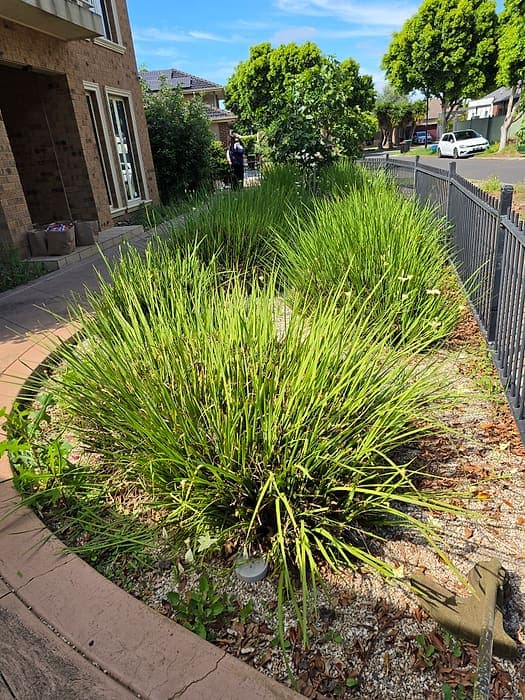
Lomandra and dianella. Clumping strap-leaved plants for mass planting and borders. Remove dead leaves; many cultivars accept a cut back in late winter.
Eremophila (emu bush). Dry-country shrubs that need sharp drainage and full sun; struggle in wet clay.
When is the best time to plant natives in Melbourne?
Autumn to winter, from about April to August. Kingston City Council (opens in a new tab) puts it simply: "The optimal time for planting your garden is April to August." Planting into cool, moist soil lets roots spread through winter, before the plant has to face its first summer.
Spring planting works, but it means far more watering. A plant set out in November has only weeks before the January heat, and its roots are still in the original potting mix.
Small tube stock often outgrows larger pot plants within a year or two. It is easier to plant, roots out faster and settles with less transplant shock.
- Water the pot first. Soak the plant in its container until the bubbles stop.
- Dig a hole twice as wide as the pot and no deeper. Loosen the sides on clay so roots can get out.
- Tease circling roots gently, then set the plant at the same level it sat in the pot.
- Backfill with the soil you dug out. Natives rarely need rich potting mix in the hole.
- Form a shallow dish around the plant, water deeply, then mulch, keeping the mulch clear of the stem.
How should you water native plants?
Deeply and infrequently while they establish, then only in long dry spells and heat. Deep watering pushes roots down to cooler, moister soil, which is what lets natives cope with Melbourne summers later.
For the first summer, give each new plant a deep soak about once a week when there has been no good rain, and more often in a heatwave. Kingston City Council advises that if heavy rain has not fallen by mid-summer, new plants need watering every one to two weeks, and that "deep, occasional watering helps the plant establish deeper roots." In the second summer, stretch the gap. After that, most natives in the ground need water only in long dry runs.
Victoria's permanent water saving rules (opens in a new tab) apply to native gardens too. Watering systems such as drippers and sprinklers can run only between 6pm and 10am, while a hand-held hose with a trigger nozzle can be used at any time. A drip line on a timer set for early morning is the easiest way to water a large native bed within the rules.
Overwatering is as common as underwatering. If leaves yellow and wilt while the soil is wet, the roots are drowning, not thirsty. Check the soil with a finger or trowel before you water.
Signs of too much water versus too little
Too little: leaves droop in the afternoon and recover overnight, new growth is small, and the soil is dry several centimetres down.
Too much: leaves yellow from the base, stems blacken at soil level, the plant wilts even though the soil is wet, and roots smell sour when you dig near them. In heavy clay, this is the more common problem.
Heat scorch: brown, crisp patches on the sunny side of the plant after a hot, windy day. Water the plant deeply and leave the damage until autumn, when you can trim it off.
Do native plants need fertiliser?
Most need little or none. Many Australian plants evolved in low-nutrient soils, and some, especially the Proteaceae family (grevilleas, banksias, hakeas and waratahs), are sensitive to phosphorus. Kingston City Council warns that "native plants don't need fertiliser and it often just encourages weeds."
If a plant does need a boost, Sustainable Gardening Australia (opens in a new tab)'s advice is to choose "a fertiliser produced specifically for Aussie natives" for plants with low phosphorus tolerance, or to use an organic fertiliser at half the recommended rate. Apply it in spring, at the rate on the label, and water it in.
Healthy soil does more than fertiliser. A coarse organic mulch breaks down slowly and feeds soil life, which is often all a native bed needs. Avoid manures and rich composts around phosphorus-sensitive plants.
How do you prune native plants without killing them?
Prune lightly and often, straight after flowering, and know which plants will not regrow from bare wood. The Australian Plants Society Victoria (opens in a new tab)'s general rule is to cut shrubs back by about a third of their new growth, keeping some green leaves on every stem.
Tip pruning is the core skill. Pinch or snip the soft growing tips, which makes the plant branch further back. Start when plants are young and repeat after each flowering. It keeps grevilleas, correas, westringias and boronias dense and full of flowers instead of leggy and open.
Timing follows flowering. Prune spring flowerers in late spring, winter flowerers such as correas in early spring, and summer flowerers in autumn. The APS advises never pruning "when there is the likelihood of damage to new shoots from extremely cold, hot or wet weather conditions."
Bare wood is where natives differ from many exotic shrubs. Banksias without a lignotuber "must not be pruned below the lowest green foliage," and hard pruning into old wood can kill or stop flowering in some tea trees (leptospermum), paperbarks (melaleuca) and hakeas.
Two side-by-side shrubs. On the left, a correa with scissors snipping only the soft green tips, and arrows showing new branches forming just below each cut, so the shrub grows denser. On the right, a banksia with a dotted line drawn below the lowest leaves, crossed out in red, showing that a cut into bare wood leaves a dead stub. A small inset at the bottom shows a lignotuber, a woody swelling at the base of some plants, with new shoots rising from it after a hard cut.
Plants with lignotubers and how they recover
A lignotuber is a woody swelling at or just below the soil that holds dormant buds. It lets plants recover from fire or grazing. Plants that have one, including some banksias, many eucalypts and some grevilleas, can be cut back to near ground level, just above the swelling, to rejuvenate a tired, woody plant.
The APS notes that straggly grevilleas such as 'Robyn Gordon' respond well to a cut near ground level in spring. If you cannot see a swelling at the base, assume the plant does not have one and prune lightly.
How do you mulch and weed a native garden?
Use a coarse, low-nutrient mulch, keep it off the stems, and weed before you mulch. Kingston City Council suggests 3 to 5 cm of eucalyptus or pine bark for native beds, kept a small distance from stems and topped up about once a year.
Avoid rich composts and manure-based mulches around phosphorus-sensitive plants. Fine mulches that crust can shed water, especially on sandy soils. Gravel suits dry-country plants such as eremophilas and some grevilleas that dislike damp mulch around their stems.
Weed by hand while weeds are small, especially around young plants, which compete badly. Many of the worst weeds in native gardens are escaped garden plants; our article on environmental weeds in Victoria helps you spot them.
What problems are common in Melbourne native gardens?
Most problems trace back to drainage, water or the wrong plant in the wrong spot. Pests matter less than people expect on healthy natives.
| Problem | Likely cause | What to do |
|---|---|---|
| Sudden collapse of a healthy plant in winter or spring | Waterlogged roots, root rot | Check drainage; replant on a mound with a clay-tolerant species |
| Yellow leaves with green veins | Too much phosphorus, alkaline soil or wet roots | Stop general fertilisers, check drainage and soil pH |
| Leggy, open shrubs with flowers only at the ends | No tip pruning | Tip prune after flowering; for lignotuber plants, a hard spring cut |
| Sticky leaves and black mould | Scale or psyllids feeding on sap | See our guide to common garden pests |
| Blackened kangaroo paw leaves | Ink disease in wet, crowded clumps | Cut out marked leaves, thin clumps, improve airflow |
| An older wattle dying back for no clear reason | Many acacias are naturally short-lived | Plan replacements; not a care failure |
In heatwaves, new plantings suffer most. Our heatwave garden care guide covers watering before, during and after a run of hot days.
Call for help with large eucalypts, wattles or banksias that lean, drop limbs or overhang a house, since that is tree work for trained people; Action Garden's own team does it. Many Melbourne councils also protect native trees and vegetation through local laws or planning overlays, so check with your council before removing or heavily pruning large native trees.
How do natives fit into a lower-maintenance garden?
Chosen well, they make a garden easier to keep, but only once they are established and when the right plant is in the right place. A grevillea pruned twice a year is far less work than a lawn mowed fortnightly. A native that is too large for its spot needs constant cutting; the APS suggests such plants may be better replaced with smaller ones.
If you are rethinking the whole garden, our guide on how to plan a low-maintenance garden shows how to group plants by water needs and cut down regular jobs. Natives also sit within the wider seasonal routine in our complete guide to garden maintenance in Melbourne, and the garden beds, soil and plants guides cover mulching, weeding and soil in more depth. If your garden also has citrus, our citrus care article covers the very different feeding those trees need.
Is it worth handing native garden care over?
If your native beds have become leggy, weedy or crowded, or you are planting a new native garden and want it established properly, it can be worth handing over. Our gardening services cover planting, mulching, weeding and seasonal pruning on the schedule each plant needs, with a full clean-up after every visit.
When you are ready, get a free quote.
Your Garden. Our Promise.
From our jobs
Frequently asked
How often should new native plants be watered in a Melbourne summer?
Why are my grevillea leaves turning yellow?
Can you cut a banksia back hard?
Should kangaroo paw flower stems be cut off after flowering?
Do native plants need watering once they are established?
Why do my native plants keep dying on clay soil?
Is it too late to plant natives in late spring?
Sources and further reading
- Pruning Australian native plants (Australian Plants Society Victoria)
- How to plant and maintain your garden (Kingston City Council)
- Feeding your plants (Sustainable Gardening Australia)
- Permanent water saving rules (Water Victoria)
Caring for Melbourne gardens since 2019. Updated 18 November 2026.