


Gutters and exterior
Rainwater tanks and gutters: keeping the water clean
By the Action Garden team · Updated · 11 min read
Checked against: Victorian Department of Health, Better Health Channel, Water Victoria, CFA
TL;DR
- A tank is only as clean as the roof and gutters that feed it: leaves, droppings and dust all wash in with the first rain.
- Fit three filters in a row: gutter mesh or a clean gutter, a leaf diverter or rain head on the downpipe, and a first flush device that dumps the dirtiest water.
- The Victorian Department of Health advises clean, secure inlet and overflow screens, cleaning first flush devices after rain, and a sludge check every 2 to 3 years.
- A sealed tank with screened inlets and overflow keeps mosquitoes out, which Better Health lists as a must for every tank.
- Clean gutters feeding a tank more often than other gutters, and always before the autumn and winter rains that do most of the filling in Melbourne.
| Part | When to check | Why |
|---|---|---|
| Gutters on the tank roof | Late autumn and late spring, more under trees | Leaves and sludge are the main source of tank dirt. |
| Leaf diverter or rain head | Monthly in leaf season, after storms | Clear the screen so water reaches the tank, not the ground. |
| First flush device | After rainfall | Open, empty and clean it so it resets for the next rain. |
| Inlet and overflow screens | Regularly, and after leaf fall | Secure, intact and clean; replace torn mesh. |
| Tank floor sludge | Every 2 to 3 years | Check the depth; have it pumped out if it builds up. |
Why do gutters decide how clean your tank water is?
Gutters decide how clean tank water is because everything on the roof washes through them into the tank. Leaves, bark, bird droppings, dead insects, dust and pollen all sit on the roof and in the gutters between showers. When rain comes, the first flow carries most of it straight down the downpipe.
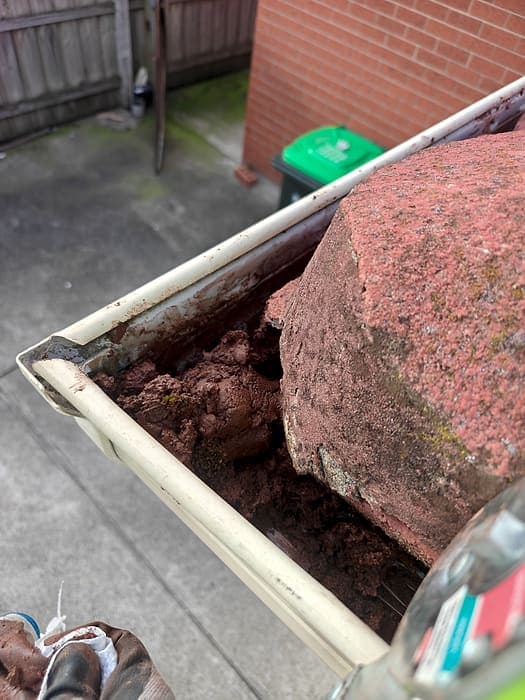
Inside the tank, that debris settles to the floor as sludge and breaks down. It can stain and taint the water, feed bacteria and clog pumps and taps. A well-kept roof and gutter system stops most of it before it gets that far.
The Victorian Department of Health (opens in a new tab) puts it simply: rainwater is generally safe and reliable, and a well-maintained system helps protect its quality. Its maintenance advice starts with the roof: keep it clear of large tree branches.
A cut-away side view of a house with a rainwater tank beside it. An animated stream of rain carrying small leaves and specks of dust runs off the roof into the gutter. A mesh guard over the gutter stops the largest leaves. The water drops into a rain head on the downpipe, where an angled screen flicks more leaves off to the ground. Next it reaches a vertical first flush chamber, which fills with the dirtiest water first, shown in brown; once it is full a ball seals the top and clean blue water flows on into the tank through a screened inlet. Inside the tank a thin layer of sludge sits on the floor, and a screened overflow pipe at the top leads to the stormwater drain. Mosquitoes are shown bouncing off the screens.
How does water travel from the roof into the tank?
Water travels from the roof into the gutter, down the downpipe, through any leaf diverter and first flush device, and into the tank through a screened inlet. Overflow leaves through a screened outlet to the stormwater system. Each step can be a filter or a weak point.
| Part | Its job | What goes wrong |
|---|---|---|
| Roof | Catches the rain | Overhanging branches, moss, droppings, peeling paint |
| Gutters | Carry water to the downpipes | Leaves and sludge rot in the water and wash in |
| Gutter guard | Keeps big leaves out | Fine debris sits on top; poorly fitted guards lift |
| Leaf diverter or rain head | Sheds leaves off the downpipe | Screen clogs and water spills to the ground |
| First flush device | Diverts the dirtiest first water | Chamber not emptied, so it stops diverting |
| Inlet screen | Stops debris and mosquitoes | Tears, blocks or comes loose |
| Overflow screen | Stops mosquitoes and vermin getting in | Missing or torn, letting insects breed |
| Tank floor | Holds settled sludge | Builds up over years and stirs into the water |
Many tanks are fed by a "wet" system, where downpipes run underground and rise into the tank, so water sits in the pipes between rains. Others are "dry" systems with downpipes running directly into the tank top. Wet systems need a way to drain the pipes, and their first flush devices and screens are even more important because stale water sits in them.
What is a first flush device, and does it need cleaning?
A first flush device is a chamber on the downpipe that catches the first part of each rain, which carries most of the roof dirt, and holds it back from the tank. It needs cleaning after rain: the Victorian Department of Health advises opening and cleaning first flush devices after rainfall.
Most work the same way. A vertical pipe below the downpipe fills first; a floating ball or valve then seals it, and the rest of the rain flows on to the tank. A small drip outlet at the bottom slowly empties the chamber so it is ready for the next rain.
The chamber is sized to the roof area it serves, so follow the maker's guidance for your roof. If the drip outlet blocks, the chamber stays full and stops diverting anything. If it is never opened, sludge builds up in the bottom and the device becomes another source of dirty water.
Cleaning a first flush device, step by step
- Wait for a dry spell so the chamber is not refilling as you work.
- Unscrew the cap at the bottom of the chamber over a bucket and let the held water drain.
- Remove the drip outlet or filter and rinse it clean.
- Flush the chamber with a hose until the water runs clear, and check the ball or float moves freely.
- Refit the cap and outlet firmly so it does not leak.
The waste water can usually go onto garden beds. Avoid pouring sludgy water into the stormwater drain.
How often should gutters feeding a tank be cleaned?
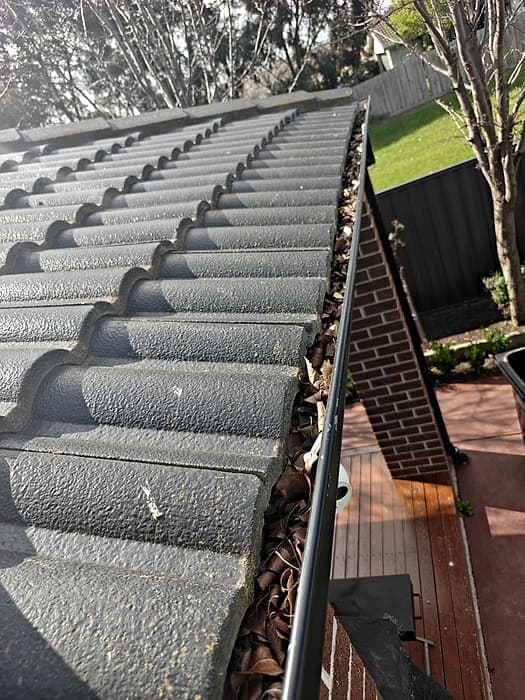
Clean gutters feeding a tank at least twice a year, in late autumn and late spring, and more often if trees hang over the roof. Time one clean just before the autumn rains begin, because those rains do much of the filling in Melbourne and you want them landing on a clean roof.
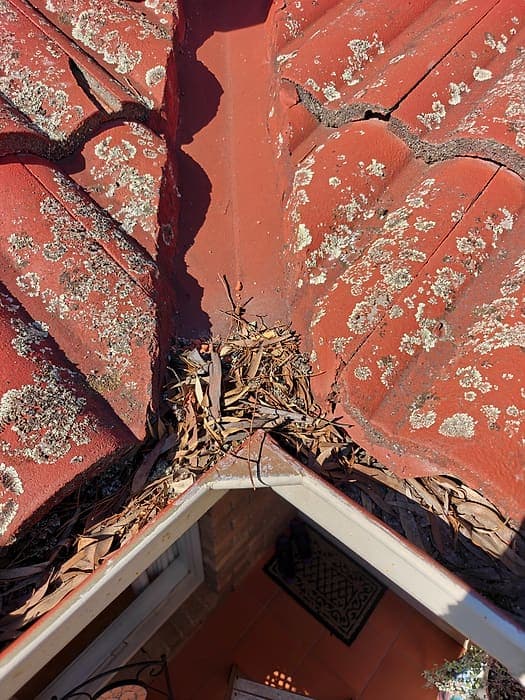
Gum trees shed leaves, bark and nuts all year, so roofs under them need checking more often; our post on how often gutters need cleaning near gum trees gives the schedule. Deciduous trees drop most of their leaves from April into May, so a clean after leaf fall catches them before winter.
Watch for the signs between cleans: water spilling over the gutter edge, a leaf diverter that sheds water instead of leaves, or a tank that fills more slowly than it should. Our guide on the signs of blocked or overflowing gutters explains each one, and if the problem is lower down, how to clear a blocked downpipe covers the next step.
Does gutter guard help keep tank water clean?
Gutter guard helps by keeping large leaves out of the gutter, where they would otherwise rot and wash into the tank. It does not stop fine dust, pollen, small seeds or droppings, so a leaf diverter and first flush device are still needed, and the guard itself needs clearing.
Fine mesh guards made of metal tend to suit tank roofs best, because they stop smaller debris and last in the sun. Our guide on whether gutter guard is worth it compares the types and where each suits.
How do you keep mosquitoes out of a rainwater tank?
Keep the tank sealed and every opening screened. Better Health's mosquito checklist says water tanks must be completely sealed, lids, covers and inlet pipes should be checked for gaps, and removable screen mesh should be fitted to the outlet end of the overflow and to all inlet pipes. It also advises regularly cleaning gutters and drains so water runs freely.
Gutters themselves can breed mosquitoes when sagging sections or blocked outlets hold water for more than a few days. A gutter that drains fully after rain removes that breeding site as well as protecting the tank.
The tank screen checklist
- Inlet screen in place, intact and clean.
- Overflow outlet fitted with mesh, with no gaps around it.
- Lid and access hatch closed firmly with no gaps.
- No cracks or holes in the tank wall or around pipe entries.
- No pooled water in sagging gutters feeding the tank.
- No open containers or pots holding water around the tank base.
Animals, droppings and the tank roof
Birds and possums on the roof leave droppings that wash into the gutters with the next rain. Nests in gutters add nesting material and can block the outlet that feeds the tank.
Keeping branches back from the roof, clearing nests once they are empty and closing the gaps animals use all protect the water as well as the house. Our post on birds, possums and wasps in gutters explains what can legally be removed and how.
What else on the roof affects tank water?
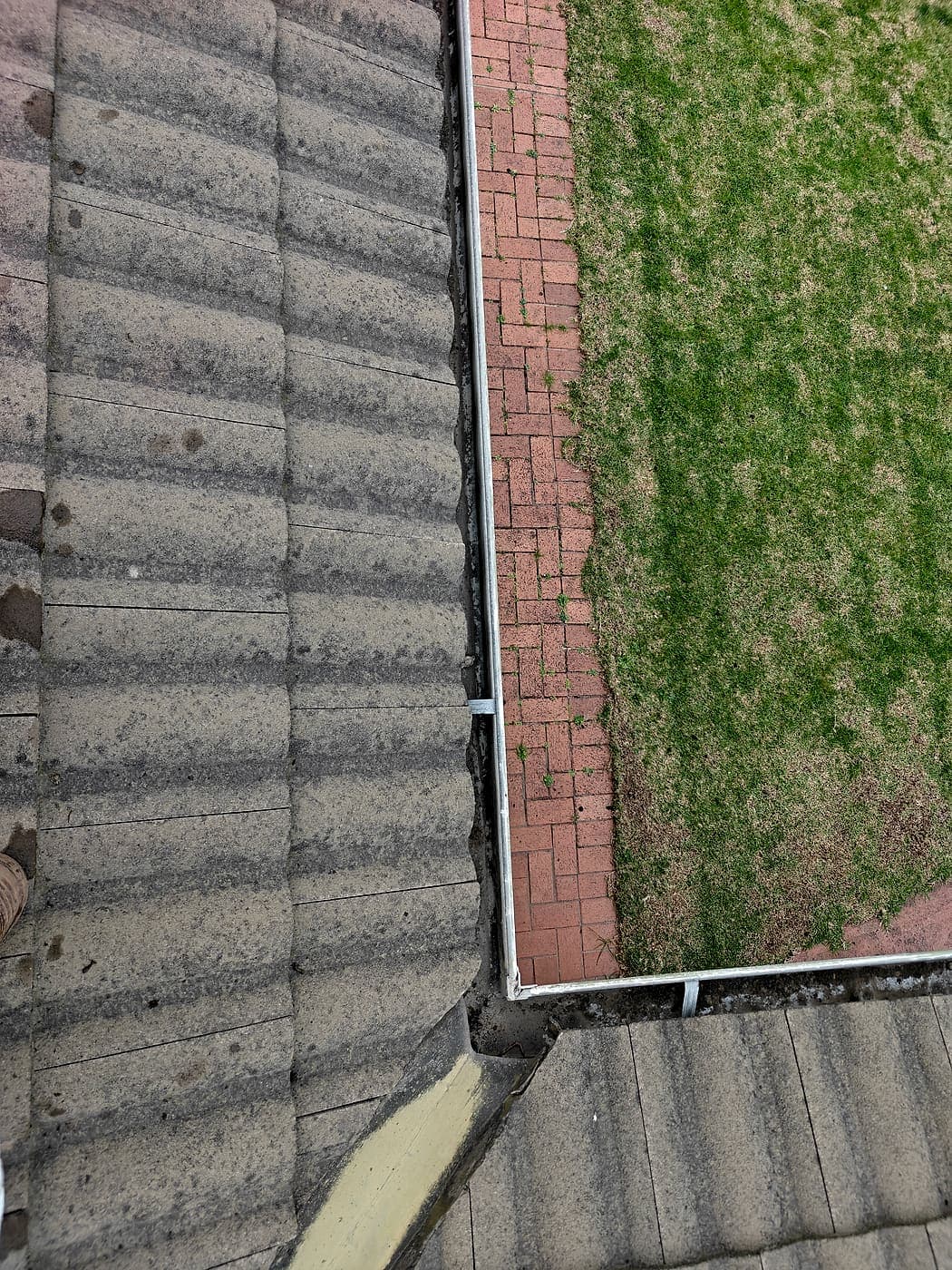
The roof surface, anything mounted on it and what is growing over it all affect tank water. Branches, moss and lichen add organic matter; peeling paint and old flashings can shed material into the water.
- Overhanging trees. The Victorian Department of Health advises keeping the roof clear of large tree branches.
- Moss and lichen on tiles. They hold dirt and grit that wash into the gutters.
- Flues and vents. Soot and residue from heater flues can land on the roof catchment near them.
- Peeling roof paint and old flashings. Older roofs may have paints or flashings that can contaminate water; get advice before relying on such a roof for drinking water.
- Solar panels and antennas. They trap leaves where they meet the roof and need checking during gutter cleans.
Our roof line checklist covers each part of the roof edge in order, including valleys and downpipes that feed a tank.
What are the common mistakes with tanks and gutters?
The common mistakes are relying on one filter, cleaning at the wrong time, and forgetting the parts between the gutter and the tank.
- Cleaning gutters after the first autumn rain, so the summer's dirt is already in the tank.
- Never opening the first flush device, so it stays full and stops working.
- Leaving the leaf diverter screen clogged, so rain spills to the ground and the tank stays low.
- Pressure washing the roof with the tank connected, which sends grit and moss into the water. Disconnect or divert the downpipes first.
- Removing the overflow screen because it blocked, which opens the tank to mosquitoes.
- Climbing onto the tank to reach the gutter. Tank lids are not built to stand on.
Connecting a tank to toilets or a laundry, adding a mains top-up or fixing underground pipes is plumbing work for a licensed plumber.
Call a professional for gutters above a single storey, roofs that are steep, tiled or wet, and any work near the power line to the house. Better Health Channel (opens in a new tab) ladder advice includes three points of contact and avoiding wet, windy or hot conditions. Tank sludge removal, tank repairs and any plumbing connected to the house need a tank cleaning professional or a licensed plumber.
When is it worth handing the job over?
It is worth handing over when the gutters feeding the tank are high, under heavy tree cover, or need clearing more often than you can manage. Action Garden's gutter cleaning service clears gutters and downpipes, bags and removes the debris, flushes the downpipes and includes a visual check with a photo report, as a one-off deep clean or a regular plan. Gutter guard installation is available as an add-on.
For the bigger picture, see the complete gutter cleaning guide for Melbourne and more posts in our gutters and exterior articles. If you want the tank roof cleared before the autumn rains, a free quote is the place to start.
Your Garden. Our Promise.
From our jobs
Frequently asked
How often should gutters that feed a rainwater tank be cleaned?
What does a first flush device do?
Why is my tank overflowing while the gutters are dry?
Is gutter guard enough to keep leaves out of a rainwater tank?
Do I need to empty my tank after cleaning the gutters?
Do Victoria's water saving rules apply to rainwater tank water?
Should I disconnect the tank after bushfire smoke or ash falls on the roof?
Sources and further reading
- Rainwater (Victorian Department of Health)
- Mosquitoes, protect your home checklist (Better Health Channel)
- Permanent water saving rules (Water Victoria)
- Ladder safety (Better Health Channel)
- How to prepare your property (CFA)
Caring for Melbourne gardens since 2019. Updated 18 November 2026.