


Gutters and roof line guide
How to clear a blocked downpipe
By the Action Garden team · Updated · 14 min read
Checked against: Building and Plumbing Commission, Nillumbik Shire Council, EPA Victoria, Water Victoria, Better Health Channel, Asbestos in Victoria, Rental Dispute Resolution Victoria
TL;DR
- Most downpipe blockages sit at the outlet, in the swan neck bends under the eaves or at the bottom bend where the pipe meets the drain.
- Always clear the gutter outlet first; a pipe flushed under a full gutter blocks again in the next rain.
- Flush from the top with a trigger nozzle hose, then tap the pipe to find any plug the water cannot shift.
- If clearing it means unscrewing, cutting or refitting the downpipe, that is roofing plumbing work for a registered or licensed plumber.
- Water rising out of the base with a clear downpipe points to the underground stormwater pipe, which is the owner's to fix up to the legal point of discharge.
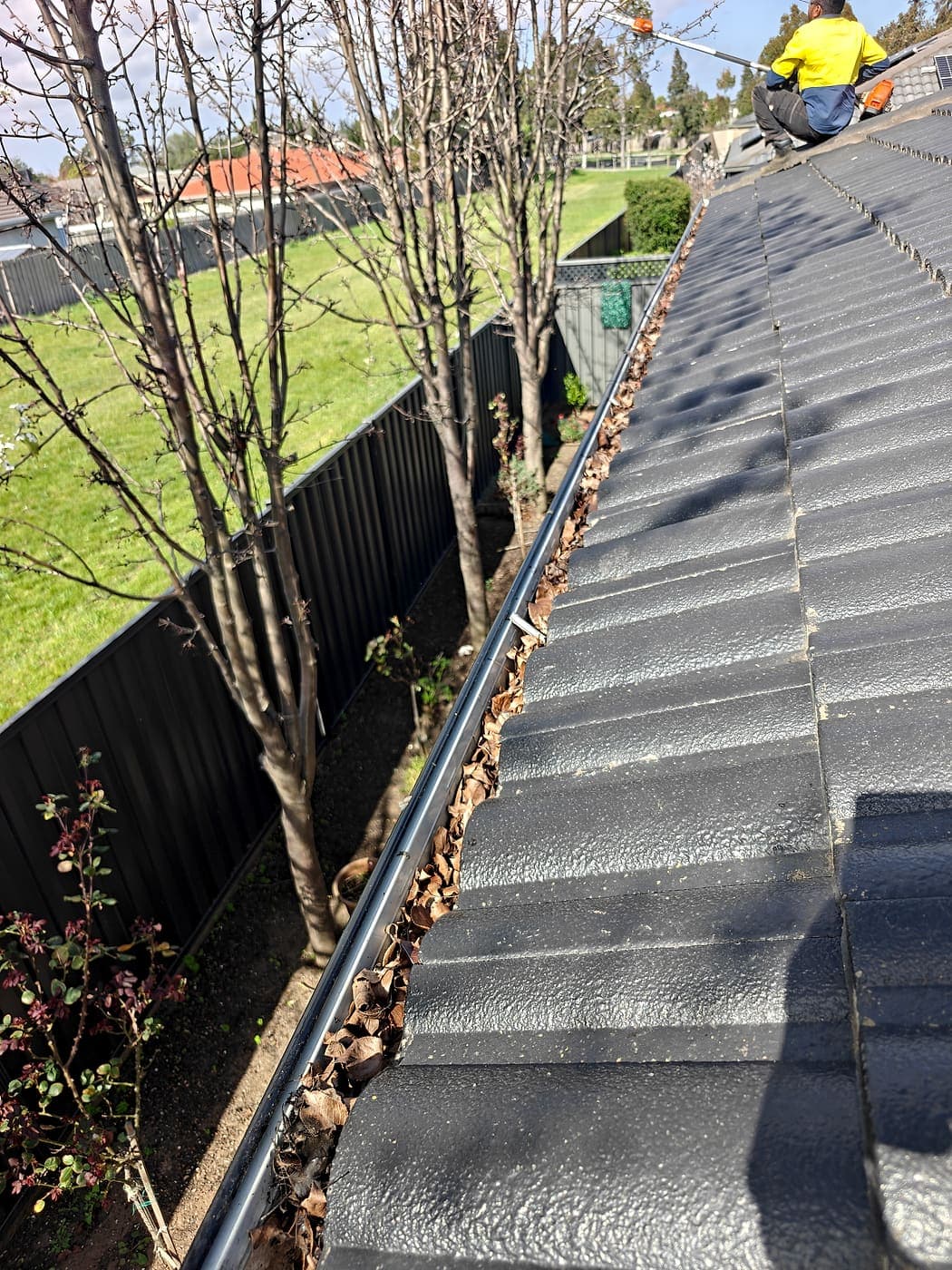
| Where it blocks | Typical cause | How to reach it |
|---|---|---|
| Gutter outlet | Leaves and sludge packed over the hole | By hand from the ladder |
| Swan neck under the eaves | Twigs, gum nuts and bark caught in the bends | Hose or hand snake from the top |
| Straight run of downpipe | A plug of compacted leaves and grit | Tap to find it, then flush from the top |
| Bottom bend or rainhead | Silt and leaf mush settling where the flow turns | Inspection opening, rainhead lid or a plumber |
| Underground stormwater pipe | Silt, roots or a broken pipe | A plumber with drain equipment |
How do you know it is the downpipe that is blocked?
The giveaway is a gutter that fills and spills during rain while the downpipe below it stays quiet or only trickles. If the gutter is clear and still overflows near one outlet, the blockage is in the outlet or the pipe, not in the gutter run. Before you climb anything, watch the roof line during steady rain for a few minutes.
Each symptom points to a different place:
| What you see | Most likely spot |
|---|---|
| Gutter full and spilling, downpipe silent | The outlet hole or the swan neck just below it |
| Water spurting from a downpipe joint | A part blockage somewhere below that joint |
| Downpipe running, but slowly, in light rain | A plug that lets a little water past, often at a bend |
| Water rising or bubbling out at the base | The underground stormwater pipe |
| Water pouring off one corner only | A blocked outlet on that run, or a gutter fault |
If you are not sure whether the problem is the gutter, the pipe or the gutter itself, our guide to the signs of blocked or overflowing gutters walks through the whole roof line. This guide picks up once you know the downpipe is the problem.
Where do downpipes usually block?
Downpipes block where the water changes direction. A straight vertical pipe rarely catches anything; the trouble is at the outlet, the bends and the bottom.
- The gutter outlet. Leaves settle over the hole and pack down into a mat. This is the most common blockage and the easiest to clear.
- The swan neck. Most Melbourne homes have eaves, so the pipe leaves the gutter, doglegs back under the eaves and then drops down the wall. Those two bends catch twigs, gum nuts and strips of bark.
- Joints and offsets. Where a downpipe steps around a window or the switchboard, the extra bends collect grit washed off the roof.
- The bottom bend. Where the pipe turns into the stormwater connection, silt and leaf mush settle and set firm.
- Rainheads and leaf diverters. These are meant to catch debris, so their screens and boxes fill up and need emptying.
- The stormwater pipe. Below ground, silt, roots and broken joints can stop the flow even when everything above ground is clear.
A side view of a single-storey roof edge. Rain runs down the roof into the eaves gutter, along the gutter to the outlet, then through a swan neck that doglegs back under the eaves and drops down the wall. Small markers glow at the outlet, at each bend of the swan neck and at the bottom bend where the downpipe meets the underground stormwater pipe, showing the five places debris collects. In the second frame a plug of leaves fills the swan neck: water backs up in the gutter and spills over the front edge while the downpipe below stays empty.
Why the swan neck catches so much
A swan neck is two tight bends close together. Water slows as it turns, so anything heavier than water, such as gum nuts, seed pods, twigs and roof grit, drops out and lodges in the bend. Once one stick catches across the pipe, leaves build up behind it within a single storm.
That is why a downpipe can block even when the gutter looks fairly clean: a small amount of the wrong debris is enough. Homes under eucalypts, she-oaks and plane trees see this most, because their debris is stiff and does not break down quickly in water.
What do you need before you start?
You need a safe way to reach the gutter outlet, a hose with a trigger nozzle and a little patience. Most blockages clear with water and hands; tools only come out when water alone will not shift the plug.
The ladder is the risky part, not the pipe. The Better Health Channel (opens in a new tab)'s ladder safety advice is to place the ladder on dry, firm and level ground, have someone hold it, and keep three points of contact. Use a stand-off so the ladder does not rest on the gutter, which can bend it and slide sideways.
Check two things before you climb:
- The height. A single-storey outlet that you can reach from a footed ladder is a reasonable DIY job. Two-storey outlets and anything that needs roof walking are not; our guide to gutters on two-storey homes explains the access options.
- The material. The Asbestos in Victoria (opens in a new tab) website lists guttering, downpipes and eaves among the places asbestos can be found in homes built or renovated before 1990. If the pipe or eaves look like grey fibre cement, do not cut, drill, snake or scrape them.
How do you clear a downpipe from the top?
Clear the gutter outlet, then flush the pipe with a hose from the top and watch the bottom. This clears most blockages, and it is the right order because flushing a pipe under a gutter full of leaves only pulls the next plug straight in.
- Clear the outlet by hand. Scoop leaves and sludge away from the hole and into a bucket. Pull out anything wedged in the outlet itself; a torch helps you see down into the swan neck.
- Feed the hose in. Push the hose a short way into the outlet and turn the water on steadily with the trigger nozzle. A helper at the bottom should tell you when water appears.
- Watch the flow. If water runs freely out of the bottom within a few seconds, the pipe is clear. Run it for another minute to flush the bends.
- If the water backs up, turn it off before the gutter fills. The plug is somewhere below the reach of your hand.
- Push the hose further. Feed the hose down through the swan neck as far as it will go. Often the extra pressure at close range breaks up a soft plug of leaves.
- Flush again until water runs clear at the bottom.
Under Victoria's permanent water saving rules (opens in a new tab), a hand-held hose with a trigger nozzle can be used at any time, so you do not need to wait for an evening to test a downpipe. Keep the volume modest: the aim is to move the plug, not to pour water down the wall.
What if the blockage will not shift from the top?
Find exactly where it is, then work on it from the nearest open end. Tap your way down the pipe with a knuckle or the handle of a screwdriver: clear pipe rings hollow, while a section packed with wet debris gives a dull thud.
Once you know where the plug is, you have three options that do not involve taking the pipe apart:
- A hand drain snake from the top. Feed it through the outlet and swan neck, turning it gently as it meets resistance, then pull it back with the debris it catches. Flush with the hose afterwards. Stop if it binds hard; forcing it can split a joint or punch through a rusted bend.
- Water from the bottom, where the bottom is already open. Some downpipes discharge above ground or have an inspection opening near the base. Feeding the hose up from there can push a plug back up and out of the outlet. Stand to one side and wear safety glasses, because the sludge comes back fast.
- Through the rainhead. If the downpipe has a rainhead box, lift the lid or screen and clear it, then work down from there.
What you should not do is unscrew, cut or pull the downpipe apart. The Building and Plumbing Commission (opens in a new tab)'s guide to roofing (stormwater) work says the regulated work covers the construction, installation, replacement, repair, alteration, maintenance and testing of the roof drainage system, which it describes as including eaves gutters, rainheads and downpipes. Clearing that means removing or refitting part of the pipe belongs with a registered or licensed plumber, and you can check one on the Commission's online register before you book.
Rainheads, leaf diverters and first flush devices
A rainhead is a box near the top of the downpipe with an overflow and often a mesh screen. A leaf diverter is an angled screen fitted into the pipe itself. Both are designed to stop leaves going further down, which means they fill up instead and need emptying every time the gutters are cleaned.
If the downpipe feeds a rainwater tank, there may also be a first flush device that sends the first dirty water of each storm to waste. Clear the screens first, flush with only a little water so the sludge does not reach the tank, then check the tank inlet strainer. Our box gutters, valleys and leaf traps guide explains how these fittings work.
How do you tell if the stormwater drain is blocked instead?
If the downpipe is clear but water rises out of the base, bubbles up at a grated pit or seeps out of the lawn near the pipe, the blockage is underground. Run the hose down a clear downpipe for a minute: if water backs up from the bottom, stop, because more water will not fix it.
Common causes below ground are silt washed in over years, tree roots entering through old joints and pipes crushed by driveways or heavy vehicles. Clearing them takes drain equipment, and finding them often takes a camera.
Who fixes it depends on where it is. Nillumbik Shire Council (opens in a new tab), like other Melbourne councils, says property owners are responsible for stormwater drainage within their property up to the legal point of discharge, where the private pipe joins the council drain. For a blocked or leaking private drain its advice is simply to contact a plumber. A blocked council pit, kerb or channel outside the property is reported to the council.
Renting or in a body corporate?
In a Victorian rental, clearing gutters is the rental provider's job, not the renter's. Rental Dispute Resolution Victoria (opens in a new tab) lists clearing gutters of leaves and debris, and fixing or replacing broken guttering or downpipes, among the rental provider's tasks, and asks renters to report blockages and overflowing water. A renter should report a blocked downpipe rather than climb a ladder to fix it.
In apartments and townhouses, roof drainage is often common property managed by the owners corporation. Check with the manager before booking anyone, so the job is recorded against the right property.
How do you stop downpipes blocking again?
Keep the gutters clear, deal with the trees that feed them, and check the downpipes as part of every gutter clean. A downpipe almost never blocks on its own; it blocks because the gutter above it sent it debris.
- Clean on a schedule. Most Melbourne homes need the gutters and downpipes cleared at least once in autumn and again in late spring, more often under gums or big deciduous trees. Our complete guide to gutter cleaning in Melbourne sets out a full year.
- Check after storms. Strong winds strip leaves and twigs in hours. A quick look at the outlets after a big blow saves an overflow in the next rain.
- Fit screens where they help. Outlet strainers, leaf diverters and rainheads catch debris where you can reach it, as long as someone empties them.
- Prune overhanging branches. Less canopy over the roof means less debris in the system, and branches touching the roof also drop bark straight into the gutter.
- Keep sludge out of the drain. EPA Victoria (opens in a new tab) reminds households that stormwater drains carry water straight to creeks and the bay without treatment. Bag the debris for green waste rather than washing it down the pipe.
If an outlet keeps blocking even with clean gutters, the fault may be the gutter itself, such as a run with no fall, a sag or an undersized outlet. Our guide to rusty, sagging or leaking gutters explains when that is a cleaning job and when it is a plumber's.
What mistakes make a blocked downpipe worse?
Most of the damage done to downpipes comes from impatience. Avoid these and the job stays a simple clear-out.
- Flushing before clearing the gutter. The hose pulls the next mat of leaves straight into the outlet.
- Pushing debris down the pipe. It compacts into a harder plug lower down, often at the bottom bend where it is hardest to reach.
- Forcing a snake or a rod. Thin downpipes split, and rusted bends tear.
- Using a pressure cleaner up the pipe. High pressure blows joints apart and sprays sludge across walls and windows.
- Disconnecting the pipe at the base. That is plumbing work, and a poorly refitted joint leaks into the ground next to the slab.
- Ignoring water at the base. Rising water means the drain is blocked; flushing harder only floods the area around the pipe.
- Washing sludge into the stormwater pit. It ends up in local waterways and can block the pit too.
Call for help if the outlet is on a second storey, over a steep drop or a glass roof, or anywhere you would need to stand on the roof. Leave it alone if the pipe or eaves could be asbestos cement, if the plug will not move without taking the pipe apart, or if water backs up from the stormwater drain. Gutter and downpipe clearing is a gutter cleaning job; repairs, replacements and blocked underground pipes are for a registered or licensed plumber.
Is it worth handing the downpipes over?
If the outlets are high, the blockage keeps coming back or you would simply rather stay off the ladder, it is worth handing it over. Every Action Garden gutter clean clears the gutters, flushes the downpipes, bags and removes the debris, and includes a visual check with a photo report, so you can see what was found without going up yourself. The gutters and roof line guides cover the rest of the roof edge, and the step-by-step gutter cleaning guide covers the gutters themselves.
When you are ready, get a free quote with a photo or two of the overflowing spot.
Your Garden. Our Promise.
From our jobs
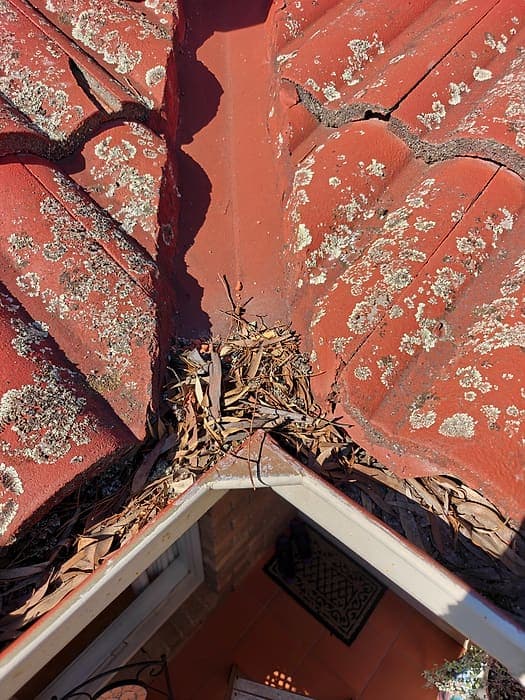
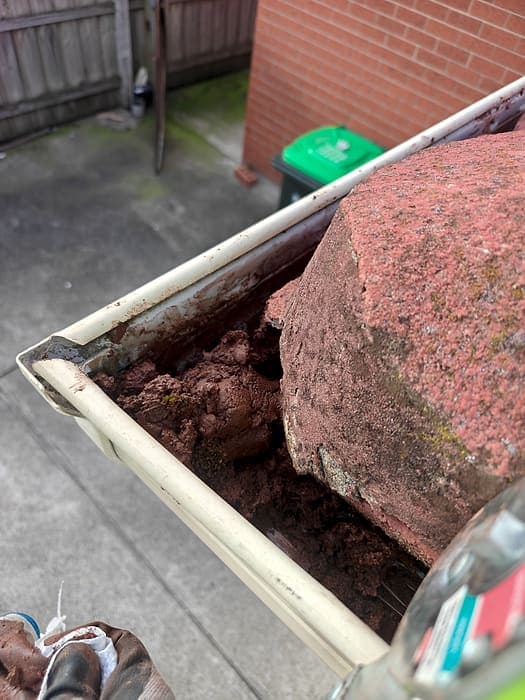
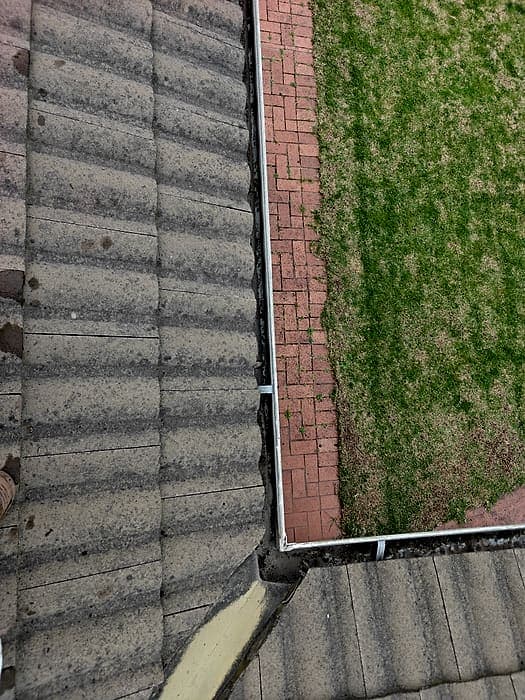
Frequently asked
Can I use a plumber's snake on a downpipe myself?
Should I pull a downpipe apart to get a blockage out?
Is it safe to push a hose up from the bottom of a downpipe?
Why does water spray out of a downpipe joint in heavy rain?
How do I clear a downpipe that feeds a rainwater tank?
Is the council responsible for a blocked stormwater pipe on my property?
How often should downpipes be flushed?
Can a blocked downpipe cause damage near the house slab?
Sources and further reading
- Plumbing industry guide, scope of roofing (stormwater) work (Building and Plumbing Commission)
- Find and check a practitioner (Building and Plumbing Commission)
- Drainage and stormwater (Nillumbik Shire Council)
- Stormwater (EPA Victoria)
- Permanent water saving rules (Water Victoria)
- Ladder safety (Better Health Channel)
- Where is asbestos? (Asbestos in Victoria)
- Who maintains gutters, gardens and pools in a rental (Rental Dispute Resolution Victoria)
Caring for Melbourne gardens since 2019. Updated 18 November 2026.