


Gutters and roof line guide
Is gutter guard worth it? Types compared
By the Action Garden team · Updated · 13 min read
Checked against: Victorian Government, planning, CFA, CSIRO, Building and Plumbing Commission
TL;DR
- Guard reduces cleaning rather than ending it; plan on at least one check a year, and more under gums and pines.
- Metal mesh (aluminium or steel) lasts longest and is the type to look at in a bushfire prone area, where guards must be non-combustible on new homes.
- Plastic mesh, brush and foam inserts are easy to fit but can sag, clog or break down in the sun.
- The leaves matter more than the product; broad deciduous leaves are stopped well, while gum bark strips, she-oak and pine needles still cause trouble.
- If only one or two trees cause the problem, pruning overhanging branches or fitting outlet strainers can be a better first step.
| Guard type | Best at | Watch for |
|---|---|---|
| Aluminium mesh | Broad leaves, most roofs | Fine debris on top; fixing quality matters |
| Steel mesh | Durability, high bushfire settings | Choose a corrosion-resistant finish |
| Plastic mesh | Low-cost DIY retrofits | Not for bushfire prone areas; sun damage |
| Brush inserts | Quick fit, light leaf fall | Holds leaves; must be lifted to clean |
| Foam inserts | Short-term fixes | Clogs with fine sludge; combustible |
Is gutter guard worth it?
Gutter guard is worth it when a lot of large leaves land on the roof and the gutters are hard, risky or expensive in time to reach. In that situation, a good metal mesh can turn three or four cleans a year into one or two checks. It is less worth it on a roof with few trees, where the gutters only need an occasional clean anyway.
The honest answer is that guard changes the job rather than removing it. Instead of scooping leaves out of the gutter, someone clears debris off the top of the mesh, lifts sections to check underneath and flushes the downpipes. That is still maintenance, just less often.
| Your situation | Is guard likely to be worth it? |
|---|---|
| Big deciduous trees over the roof, heavy autumn leaf drop | Usually yes, with metal mesh |
| Two-storey home with gutters that are hard to reach | Often yes, because each clean is a bigger job |
| Eucalypts, she-oaks or pines over the roof | Sometimes; fine needles and bark strips still cause trouble |
| Bushfire prone area | Possibly, but only non-combustible metal mesh, and keep checking |
| Roof feeding a rainwater tank | Often yes, as one layer of protection with the inlet screen |
| Few or no trees within reach of the roof | Rarely; occasional cleans are simpler |
| Old gutters with rust or sagging runs | Not yet; repair or replace the gutters first |
If you are still working out how often your gutters need attention without guard, start with our complete guide to gutter cleaning in Melbourne, which sets out schedules by tree cover.
What types of gutter guard are there?
There are five common types: aluminium mesh, steel mesh, plastic mesh, brush inserts and foam inserts. Mesh sits over the gutter and is fixed to the roof edge and the gutter lip. Brush and foam inserts sit inside the gutter and let water pass through or around them.
| Type | How it works | Strengths | Weaknesses | Bushfire prone area |
|---|---|---|---|---|
| Aluminium mesh | Metal mesh fixed from the roof edge over the gutter | Light, long-lasting, does not rust | Fine debris sits on top; needs good fixing to stay put in wind | Non-combustible; check suitability for the site's BAL |
| Steel mesh | Heavier metal mesh, often with a coated or stainless finish | Strong, holds its shape, durable | Heavier, and the finish must suit the setting to avoid corrosion | Non-combustible; often chosen for higher BAL settings |
| Plastic mesh | Polymer mesh clipped or fixed over the gutter | Easy to handle and fit | Can sag, crack and break down in UV over time | Not suitable where a non-combustible guard is needed |
| Brush inserts | A long bristle brush laid in the gutter | Quick to fit, no fixing to the roof | Leaves catch in the bristles; brushes must be lifted out to clean | Bristles are combustible |
| Foam inserts | A porous foam block that fills the gutter | Simple to fit | Fine sludge clogs the foam; it can hold moisture and seedlings | Foam is combustible |
Mesh aperture: why hole size matters
A mesh with large holes stops broad leaves but lets gum leaves, needles and small seeds slip through and settle in the gutter. A very fine mesh keeps more out and also stops embers in a bushfire, but fine material sits on top more easily and has to be brushed off. The right aperture is a trade-off between the debris your trees drop and your bushfire setting, so ask what aperture a product has and why it suits your roof.
What about solid covers and leaf-shedding hoods?
Solid covers that curve water into the gutter and shed leaves over the edge are common in some countries but less so in Melbourne. They rely on a smooth, clean surface and can overflow in very heavy rain. If you are offered one, ask how it performs in summer storms and how it is cleaned.
Which gutter guard suits which trees?
The trees around the roof matter more than the brand of guard. Broad leaves are the easy case: almost any mesh stops them. Fine needles, long bark strips and small seed pods are where guards struggle, and Melbourne has plenty of all three.
| Tree type | What it drops | How guard copes |
|---|---|---|
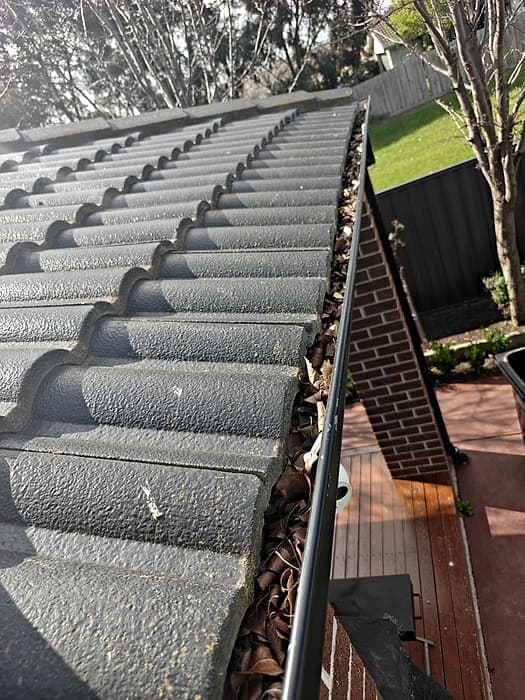
| Plane trees, elms, oaks, maples | Large, flat leaves in autumn | Mesh stops them well; leaves dry and blow off the top |
| Fruit trees | Leaves, fruit and some twigs | Mesh copes; fallen fruit can sit on top and rot |
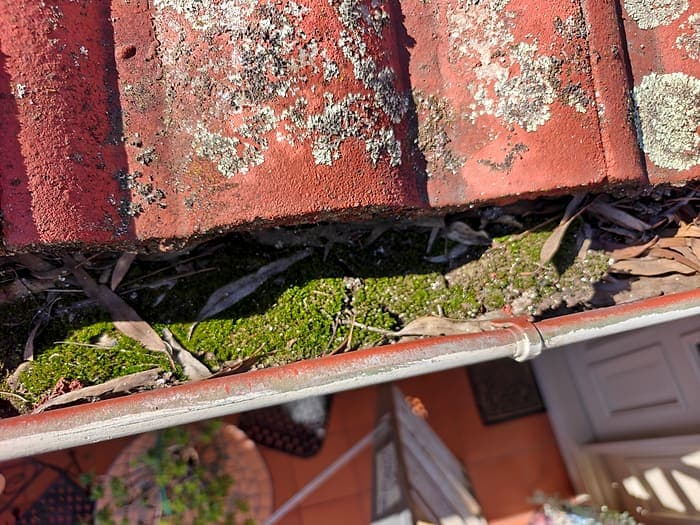
| Eucalypts | Narrow leaves, bark ribbons, gum nuts | Mixed; bark strips lie flat on mesh and leaves slip through larger holes |
| She-oaks | Very fine needle-like branchlets | Hard on any guard; they mat on top and pass through coarse mesh |
| Pines | Needles and cones | Fine mesh needed; needles knit into a mat on top |
| Palms | Fronds, flowers and seeds | Large fronds sit on the guard; seeds pass through coarse mesh |
| Wattles and jacarandas | Small leaves, flowers and seed pods | Fine mesh helps; flowers form a wet mat on top |
Eucalypts are a special case in Melbourne because they shed most heavily in the warmer months rather than in autumn. Our post on gutters near gum trees looks at how guard performs under gums and how often guarded gutters there still need attention.
Does gutter guard suit your roof?
Guard suits most metal and tiled roofs with standard eaves gutters, but the fixing method has to match the roof. A guard that is not fixed properly lifts in wind, lets debris under the edge and can damage tiles or roof sheets when it moves.
- Metal roofs. Mesh is usually fixed to the roof sheet ribs and the gutter lip with screws or saddles that follow the sheet profile.
- Tiled roofs. Mesh is usually clipped to the gutter and tucked under or fixed to the bottom row of tiles. Old, brittle tiles can crack if they are lifted.
- Low-pitch roofs. Debris sits on low-pitch roofs and on the mesh for longer, so expect more debris on top.
- Box gutters. These sit within the roof and drain to sumps or rainheads; outlet guards and leaf traps are more common than full mesh.
- Valleys. Valley mesh is available, but valleys collect debris heavily and still need checking.
Before any guard goes on, the gutters should drain properly. Guard fitted over rust holes, failed joints or sagging runs hides those faults. Repairs or replacement of gutters and downpipes are roofing (stormwater) plumbing work, and the Building and Plumbing Commission (opens in a new tab)'s online register lets you check a plumber's registration or licence.
A cross-section of a roof edge. The roof sheet or tile runs down to the gutter. A metal mesh runs from under the edge of the roof covering, across the top of the gutter, to the gutter's front lip, where it is fixed. Rain passes through the mesh into the gutter and runs to the downpipe. Broad leaves sit on top of the mesh and dry out. A second view shows the same gutter under a gum tree: bark strips lie flat along the mesh, and fine sludge has built up in the bottom of the gutter beneath it.
What does gutter guard mean in a bushfire prone area?
In a bushfire prone area, gutter guard can help keep leaves out of gutters, but only a non-combustible metal guard makes sense, and the CFA (opens in a new tab)'s advice to keep gutters clear still applies. Embers are the reason. The CFA's ember attack key points say embers can land on debris in gutters and set fire to the house, and that ember attack is the most common way houses catch fire in bushfires.
What the building rules cover
Bushfire prone areas are mapped in Victoria, and you can check whether your property is in one using VicPlan. In those areas, new homes are built to the national bushfire construction standard, AS 3959, at a bushfire attack level (BAL) set for the site. Under that standard, a gutter guard fitted to a new home must be non-combustible.
| Point to check | Why it matters |
|---|---|
| Is the property in a designated bushfire prone area? | Check VicPlan; it decides whether bushfire construction rules apply to new work |
| What is the site's BAL, if known? | Higher BAL settings call for more robust materials and finer protection |
| Is the guard metal and non-combustible, including its fixings? | Plastic, foam and brush guards burn |
| Does the mesh close the gap at the roof edge? | Gaps let embers and leaves under the guard |
| Who will check and clear the mesh before summer? | Leaves sitting on the guard are still fuel on the roof |
The construction standard is written for new buildings and some building work. For an existing home, ask a building surveyor whether it applies to your situation, and treat its non-combustible rule as the sensible minimum either way before you buy a product sold as bushfire compliant. Our guide to gutters and bushfire season covers the CFA's timing for gutter work in fire season.
Guard is not a reason to skip the spring check
Leaves and bark that lie on top of a guard dry out in summer and sit right where embers land. The CFA's advice is to clear gutters in early spring, regularly through the season and again before bad fire days. With guard fitted, that means brushing the mesh clear and checking the gutter beneath, not assuming the guard has done the job.
How much maintenance does a guarded gutter still need?
Most guarded gutters need checking at least once a year, and two or more times under eucalypts, she-oaks or pines. The work is different from a standard clean, and in some ways more fiddly.
- Clear the top of the mesh. Leaves, bark strips and needles that have not blown off are brushed or lifted away.
- Lift sections at the outlets. Fine sludge builds up under the mesh, and it builds up fastest at the downpipe outlets.
- Flush the downpipes. Fine material that passes through the mesh still ends up in the downpipe.
- Check the fixings. Loose sections lift in wind and let debris under the edge.
- Look at the gutter condition. Mesh makes it harder to see rust and sagging, so check while sections are lifted.
A guard also makes a standard clean more involved, because the mesh has to come off and go back on. That is one reason guard is not worth it on a roof that only needs an occasional clean.
What are the alternatives to full gutter guard?
If one or two trees cause most of the debris, deal with the trees or the outlets first. These options cost less effort than guarding a whole roof and often solve the problem.
- Prune overhanging branches. Fewer branches over the roof means less debris in the first place. The Action Garden team does tree trimming too, and the gutters can be cleared after the pruning.
- Fit outlet strainers. A domed strainer over each downpipe outlet stops leaves entering the downpipe, where blockages are hardest to clear.
- Fit leaf-shedding rainheads. A rainhead with a mesh screen at the top of the downpipe sheds leaves before they enter the pipe.
- Add a first flush device on tank downpipes. It diverts the first, dirtiest water away from the tank.
- Set a cleaning programme. A regular clean at the right times of year can be simpler than guard on a roof that is easy to reach.
Our article on rainwater tanks and gutters covers inlet screens and first flush devices in more detail.
How do you decide whether gutter guard is right for your home?
Work through the questions below in order. If you answer no to the first two, guard is unlikely to be worth it; if you answer yes to the first three, it probably is.
- Do large trees drop leaves on the roof in volume? If not, occasional cleans are simpler.
- Are the gutters hard or risky to reach? Two-storey homes and steep roofs make each clean a bigger job, which favours guard.
- Are the gutters in good condition? If not, repair them first, then decide.
- What do the trees drop? Broad leaves favour guard; needles and bark strips call for fine metal mesh and realistic expectations.
- Is the home in a bushfire prone area? If so, only non-combustible metal mesh, and keep the spring check.
- Who will check the mesh, and when? A guard nobody checks is a guard full of leaves.
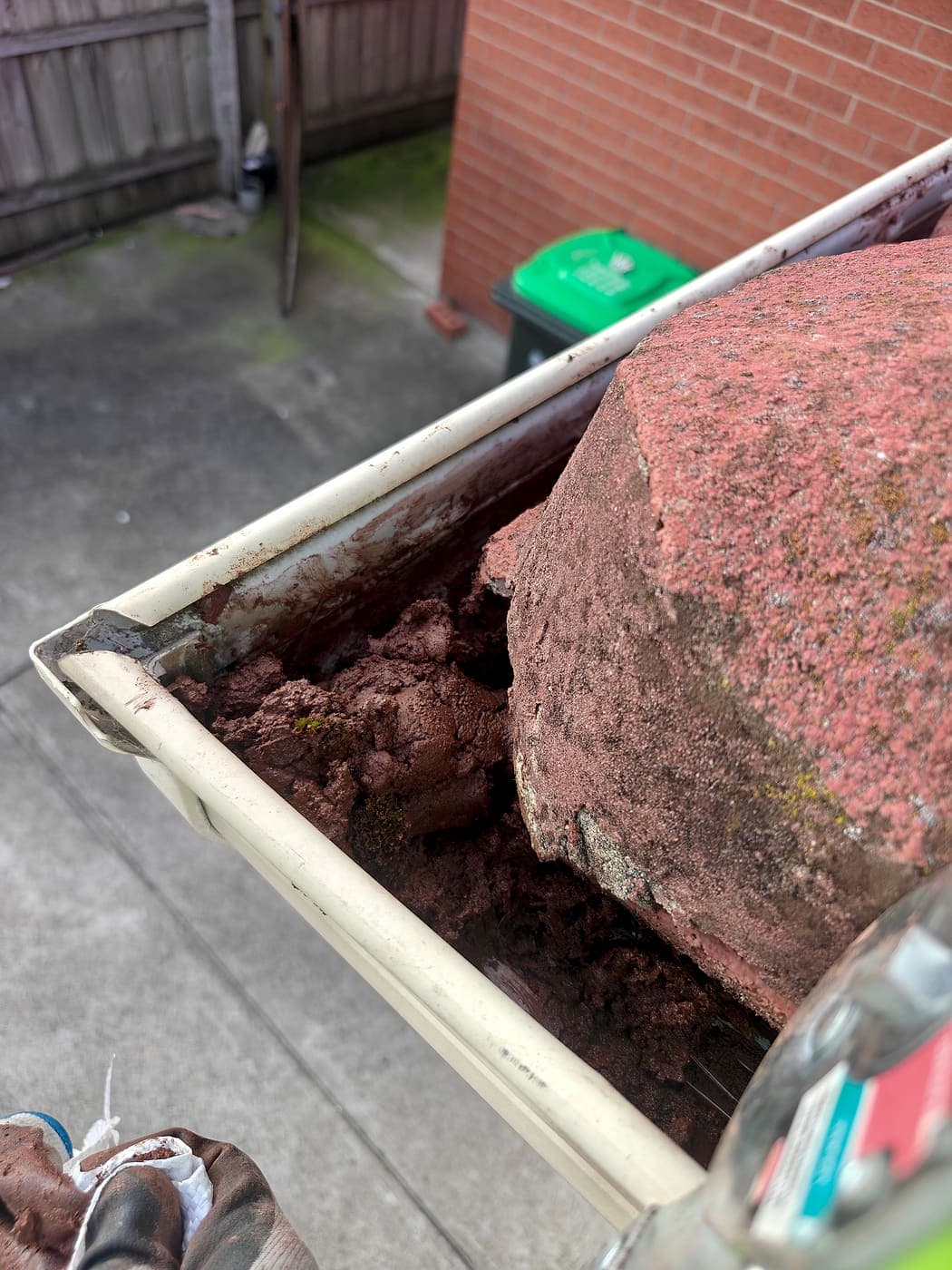
Fitting gutter guard means working along the full roof edge, often off a ladder and sometimes on the roof itself. Call a professional if the home is two storeys, the roof is steep or tiled with brittle tiles, power lines or the service line run near the roof edge, or the roof may contain asbestos cement (homes built or renovated before 1990 may contain asbestos). Our guide on when not to clean your own gutters covers the same thresholds.
What affects the quote
Gutter guard installation is quoted after we have seen the roof. The main factors are the length of gutter to be covered, the roof type and number of storeys, the guard material, how the mesh will be fixed and whether the gutters need a clean before the guard goes on. We do not recommend a particular brand; the right choice depends on the roof, the trees and the bushfire setting.
Action Garden offers gutter guard installation as an add-on to our gutter cleaning service, so the gutters are cleared, flushed and checked before the mesh goes on. The gutters and roof line guides cover the rest of the roof line. If you would like an opinion on whether guard suits your roof, send a few photos with a quote request.
Your Garden. Our Promise.
From our jobs
Frequently asked
Will gutter guard make my gutters overflow in heavy rain?
Does plastic gutter guard last in the Melbourne sun?
Can gutter guard be fitted to a tiled roof without lifting the tiles?
Should gutters be cleaned or repaired before guard is fitted?
Is it worth fitting gutter guard to only part of the roof?
Does gutter guard help keep rainwater tank water cleaner?
Can gutter guard be fitted to box gutters?
Sources and further reading
- Building in designated bushfire prone areas (Victorian Government, planning)
- Preparing for bushfire season (CFA)
- Ember attack, key points (CFA)
- Bushfire building regulations in Victoria (CSIRO)
- Find and check a practitioner (Building and Plumbing Commission)
Caring for Melbourne gardens since 2019. Updated 18 November 2026.