


Gutters and roof line guide
When not to clean your own gutters: ladder and roof safety
By the Action Garden team · Updated · 13 min read
Checked against: Better Health Channel, Premier of Victoria, WorkSafe Victoria, Energy Safe Victoria, Asbestos in Victoria
TL;DR
- Ladder falls are a serious and growing injury problem in Victoria, and most people hurt are men over 50.
- Two storeys, steep or brittle roofs, box gutters and anything that means walking on the roof rule out DIY.
- Power lines and the service line to the house are a hard stop; Energy Safe Victoria says get a professional.
- Homes built or renovated before 1990 may have asbestos in roofs, gutters and eaves; do not disturb it.
- Wet, windy or hot weather, working alone, dizziness or medicines that affect balance are all reasons to leave it.
| Situation | Risk | Safer choice |
|---|---|---|
| Single storey, firm level ground, helper present | Lower, with a correct ladder setup | Reasonable DIY for a confident, well person |
| Two storeys or split level | High; a fall can be fatal | Professional with the right ladders and height safety gear |
| Walking on the roof needed | High; roof work, not ladder work | Professional |
| Power lines or service line near the gutter | Electrocution | Professional; ask your distributor if unsure |
| Possible asbestos cement roof, gutters or eaves | Health risk if disturbed | Do not touch; get it assessed |
| Wet, windy or hot day | Slips, ladder movement, dizziness | Wait for a cool, calm, dry day |
When should you not clean your own gutters?
Do not clean your own gutters when the height, the roof, the hazards nearby or your own condition on the day make a fall or an electric shock likely. Any one of the warning signs below is enough to hand the job over. Gutter cleaning looks simple, but it combines ladder work, reaching sideways and handling heavy, wet debris, which is exactly the mix that leads to falls.
- The home is two storeys or split level, or the gutters are above a lower roof.
- You would need to walk on the roof to reach a gutter, a valley or a box gutter.
- Power lines or the service line to the house run near the gutters.
- The roof, gutters or eaves may contain asbestos cement.
- The ground under the ladder is soft, sloping, uneven, a garden bed, a deck edge or near a pool.
- The roof is steep, wet or fragile, with brittle tiles, skylights or plastic roof sheets.
- You would be working alone, or nobody would know if you fell.
- You are unwell, dizzy or on medicines that affect your balance.
- The weather is wet, windy or hot.
If none of those apply, a single-storey clean can be a reasonable DIY job, and our step-by-step guide to cleaning gutters safely covers the method. This guide is about the cases where the safest step is not to climb.
How dangerous are ladder falls in Victoria?
Ladder falls are one of the more common causes of serious injury at home, and the numbers are rising. The Better Health Channel (opens in a new tab) reports that in 2017 to 2018, more than 5,600 Australians were admitted to hospital with injuries from falls from ladders. It also reports that 36 people in Australia died from falls from ladders in 2020, 11 of them Victorians.
The trend in Victoria is up. A Victorian Government release in December 2024, citing Victorian Injury Surveillance Unit data, said hospital admissions for ladder falls at home over the past decade had increased by 49 per cent among Victorians aged 55 and over. It said most people presenting to hospital after ladder falls were male, and the large majority were aged 50 to 79.
Which homes and roofs rule out DIY gutter cleaning?
Two-storey homes, steep or fragile roofs, box gutters and valleys rule out DIY for most people. The common thread is that a slip either means a long fall or means you were already on the roof, which is roof work rather than ladder work.
| Roof or home feature | Why it rules out DIY |
|---|---|
| Two storeys or split level | A fall from that height can be fatal, and the ladder is long, heavy and hard to secure |
| Gutters above a lower roof | The ladder may have to stand on the lower roof, or you must cross it |
| Steep pitch | Hard to stand on and easy to slide off; any slip runs straight to the edge |
| Old terracotta or concrete tiles | Brittle tiles crack underfoot and can drop you or slide away |
| Metal roof sheets | Slippery when damp with dew, and hot enough to burn in summer |
| Skylights or plastic roof sheets | Will not take a person's weight |
| Box gutters and valleys | Usually reached only by working on the roof itself |
| Gutter guard to lift | Means longer at height, both hands busy and more reaching |
Two-storey gutters need longer ladders, tie-off points or other height safety equipment, and people who use them every week. Our planned guide on gutters on two-storey homes looks at the access options in more detail.
Why walking on the roof is a different job
Cleaning from a ladder keeps you at the edge, with the ladder as your support. Walking on the roof puts you on a sloping surface with nothing between you and the edge, on materials that may not take your weight. Tiles break, metal sheets are slippery when damp and plastic sheets and skylights give way. That is why roof work in workplaces is planned with edge protection or harness systems, and why a gutter job that needs roof access is a job for a professional.
What does a safe ladder setup look like?
A safe setup means the right ladder, on firm and level ground, at the right angle, secured, with you staying in the middle and keeping three points of contact. WorkSafe Victoria (opens in a new tab)'s guidance on portable ladders is written for workplaces, but its rules are a sound benchmark at home, and it notes that anyone on a ladder is at risk of falling, even at heights below 2 metres.
| Rule | WorkSafe and Better Health guidance |
|---|---|
| Angle | Set straight and extension ladders on a height-to-width ratio of 4:1 |
| Extension above the gutter | At least 1 metre above the surface the ladder rests against |
| Securing | Secure straight and extension ladders at the top and bottom |
| Top rungs | Do not stand on a rung less than 1 metre from the top of an extension ladder; on a step ladder, not on or above the second step from the top |
| Three points of contact | Two feet and one hand on the ladder at all times, including while working |
| Reach | Keep the work within arm's reach; climb down and move the ladder rather than lean |
| Ground | Dry, firm and level, away from doors and windows that open outward |
| Condition | No loose, missing or damaged rungs; non-slip feet and working locks |
| Standard | The Better Health Channel advises a ladder that meets AS/NZS 1892 |
Gutter cleaning breaks several of these rules by its nature. Scooping sludge uses a hand, a bucket on the ladder shifts your balance, and the temptation is always to lean for the last bit rather than climb down. The Better Health Channel specifically warns to be careful when pulling items from gutters and roofs, because the pull can throw you off balance.
A side view of an extension ladder leaning against the gutter line of a single-storey house. The ladder's height to the gutter is marked as 4 units and the distance from the wall to the ladder feet as 1 unit. The top of the ladder extends 1 metre above the gutter and is tied off. The feet sit on firm, level paving with non-slip feet. A person stands centred on the ladder below the top metre, with both feet and one hand on the ladder and a scoop in the other hand. A second person stands at the base holding the ladder.
What about power lines and the service line?
Treat any power line or the service line to the house as a reason to stop and call a professional. Energy Safe Victoria (opens in a new tab)'s advice to householders is to watch out for the home service line and stay well clear of power lines, and that when a tree is too close to an electrical line, you should not take the risk but get a professional. It also says to contact your local electricity distributor if you are unsure or need advice on safe clearances.
- Check before the ladder goes up. Look along the whole gutter run for overhead lines and where the service line meets the house.
- Remember what you carry. A ladder, a pole or a long-handled tool can reach a line even when you cannot.
- Aluminium conducts. WorkSafe's ladder guidance says to use non-conductive ladders, such as fibreglass, where electrical hazards may exist.
- Damaged lines or fittings. If the service line or its fittings look damaged, keep away and contact your electricity distributor.
Stop and call a professional if any part of the gutter job is near a power line or the service line, if the home is two storeys or more, if you would need to walk on the roof, if the roof may contain asbestos cement, or if the ground under the ladder is not firm and level. If you uncover suspected asbestos, damaged electrical fittings or a wasp nest while working, climb down, leave it alone and get the right professional.
Could your roof, gutters or eaves contain asbestos?
They could if the home was built or renovated before 1990. Victoria's asbestos information site says that if your home was built or renovated before 1990, it likely contains asbestos, and it lists corrugated roof sheets, ridge capping, guttering, downpipes and eaves among the places it is found.
You cannot tell by looking. The same site notes that only laboratory testing of a sample can confirm asbestos. So the safe approach on an older home is to assume fibre cement roofing, eaves linings or old gutters could contain it until you know otherwise.
- Do not walk on old fibre cement roof sheets. They are brittle as well as a possible asbestos risk.
- Do not scrape, drill, break or water blast suspect materials.
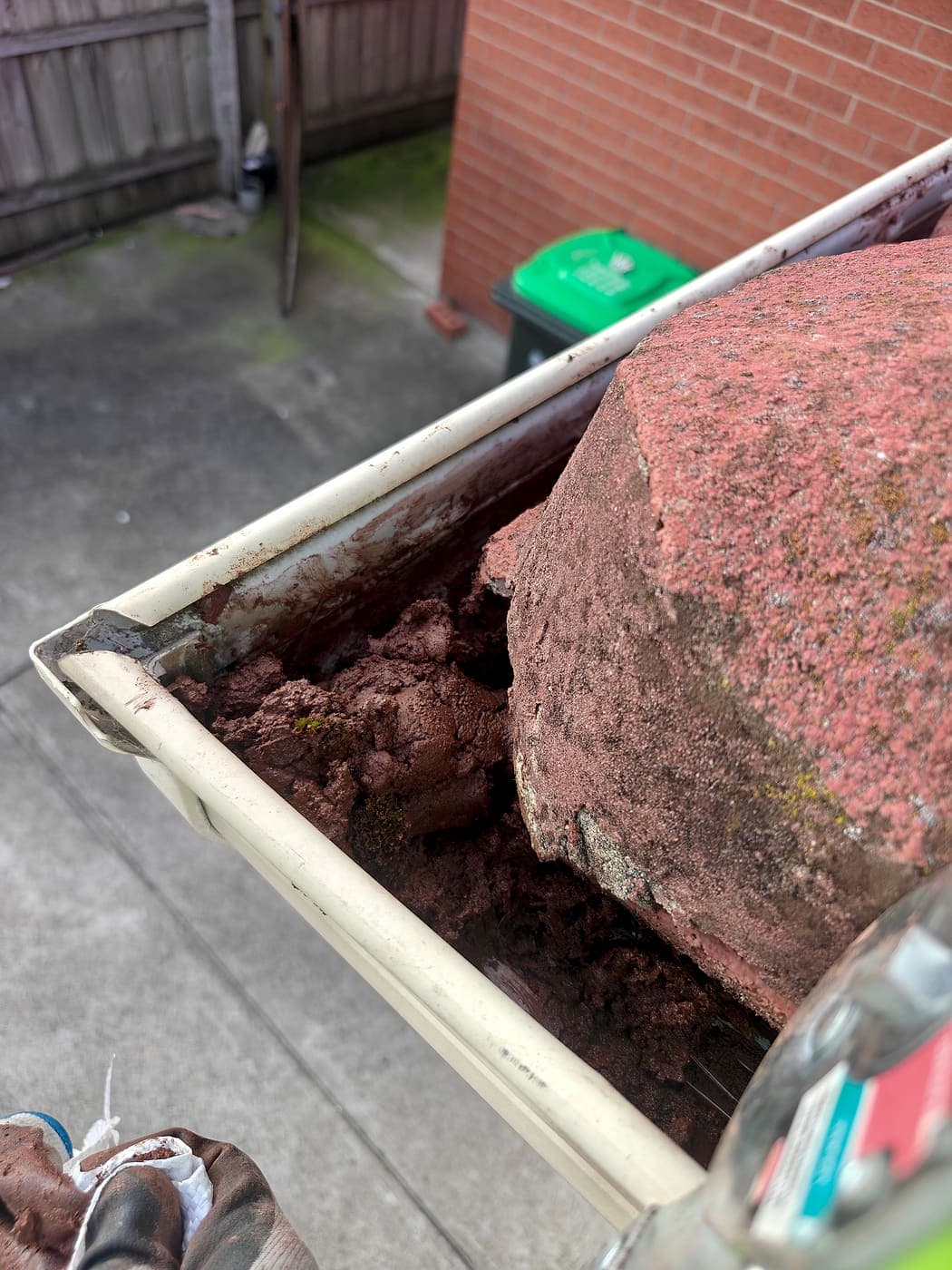
- Do not scoop debris from old cement gutters hard enough to abrade them.
- Get it assessed before any work that could disturb it, and use a licensed asbestos removalist if removal is needed.
Which conditions on the day should stop you?
Wet, windy or hot weather, and how you feel on the day, are reasons to put the job off. The Better Health Channel advises against working in wet, windy or hot conditions, because heat can cause dizziness and wind or rain can make you or the ladder slip.
Weather
- Wet or dewy: roof surfaces, rungs and the ground at the ladder feet are slippery. Wait until everything is dry.
- Windy: wind pushes the ladder, catches loose mesh and blows debris into your face.
- Hot: metal roofs and gutters burn bare skin, and heat brings on dizziness. Work in the cool of the morning.
You
- Working alone. The Better Health Channel advises having someone home while you are on a ladder, and ideally someone to hold it.
- Dizziness, low vision, poor balance or weakness. The Better Health Channel advises not using a ladder at all in these cases.
- Medicines. Check whether any medicines you take cause dizziness or drowsiness.
- Tiredness or rushing. Leave the job for another day rather than squeezing it in.
Tools that let you stay on the ground
Telescopic gutter scoops, hooks and hose attachments let you clear light, dry leaves from single-storey gutters from the ground. They are handy for a quick check between cleans. They are poor at wet sludge and blocked outlets, they do not let you see the condition of the gutter, and a long metal pole is dangerous anywhere near power lines. Use them as a stop-gap, not as a replacement for a proper clean.
What should you check before hiring someone to clean the gutters?
Check how they will reach the gutters safely, whether they are insured and what you will get at the end. A professional clean should not swap your risk for someone else's careless one.
- Access method. Ask how they will reach your gutters, especially on a two-storey home or a roof with box gutters.
- Equipment. Ladders suited to the height, and height safety equipment where it is needed.
- Insurance. Ask whether they are insured.
- Power lines and fragile roofs. Ask how they deal with the service line, brittle tiles and possible asbestos.
- Debris. Ask where the debris goes; it should be bagged and removed, not washed into the drain.
- Evidence. Ask whether you will receive photos of the gutters and anything they found.
Action Garden is insured and cleans single-storey gutters only; two-storey homes and roofs that are too steep are passed on to a specialist gutter cleaning company. Every gutter cleaning visit includes downpipes flushed, a visual roof and gutter check, a photo report and a clean-up below. Our complete guide to gutter cleaning in Melbourne covers how often your gutters are likely to need it.
If you are not sure your gutters are blocked yet, our guide to the signs of blocked or overflowing gutters shows what to look for from the ground. If your home is near bush, the gutters and bushfire season guide explains when the CFA says gutters should be cleared, and the post on birds, possums and wasps in gutters covers one more hazard that turns up at the roof edge. The rest of the gutters and roof line guides cover gutter guard and the other jobs along the roof edge.
When any of the warning signs in this guide apply, it is worth handing the gutters to Action Garden: we do the climbing, clear and test the gutters and downpipes, and send you photos so you never have to go up. You can request a free quote with a few photos of the roof line.
Your Garden. Our Promise.
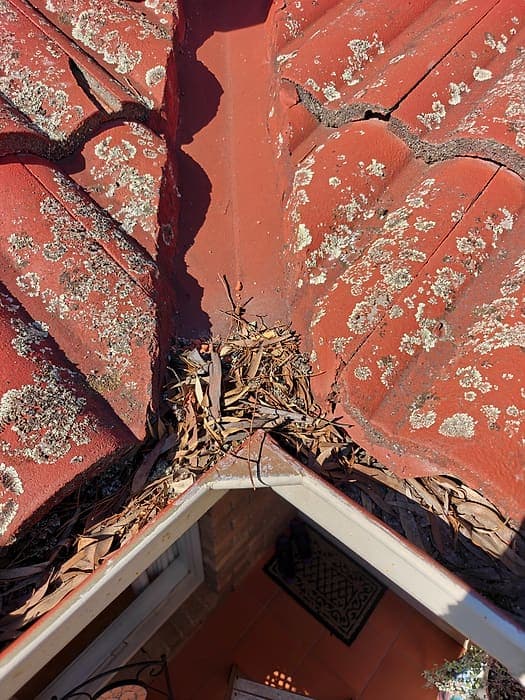
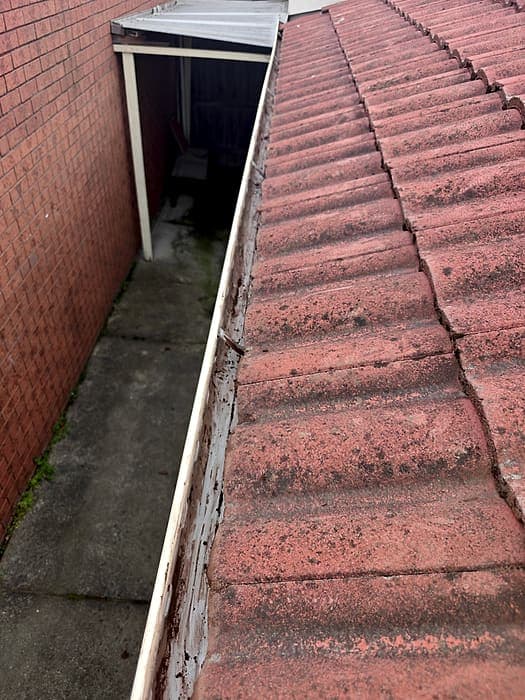
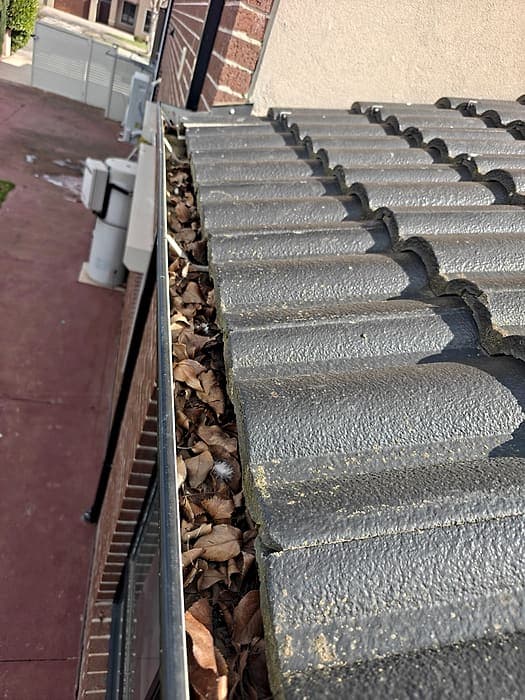
From our jobs
Frequently asked
Is a single-storey roof always safe to do yourself?
Should someone hold the ladder while I clean the gutters?
Is it safe to clean gutters in the morning while the roof is still damp?
Can I use an aluminium extension pole near power lines?
Are gutter cleaning tools that work from the ground worth using?
Where can older homeowners get help with gutters?
What should I ask a gutter cleaner about safety before booking?
Sources and further reading
- Ladder safety (Better Health Channel)
- Fall-proof advice to stay safe on ladders this summer (Premier of Victoria)
- Using portable ladders in the workplace (WorkSafe Victoria)
- Don't let spring garden growth become summer danger (Energy Safe Victoria)
- No Go Zones, working around powerlines (Energy Safe Victoria)
- Where is asbestos? (Asbestos in Victoria)
Caring for Melbourne gardens since 2019. Updated 18 November 2026.