


Gutters and roof line guide
Gutters and bushfire season: what the CFA recommends
By the Action Garden team · Updated · 12 min read
Checked against: CFA, Bureau of Meteorology, CSIRO, Victorian Government, planning, Better Health Channel
TL;DR
- Clear gutters in early spring, before the Fire Danger Period, which in Victoria can start as early as October.
- Keep clearing them through summer, and do a final check before bad fire days; the CFA calls this critical.
- Ember attack is the most common way houses catch fire in bushfires, and embers can land on debris in gutters.
- Gutters are one item on a short list with overhanging branches, short grass, woodpiles and leaves in corners and doorways.
- Never climb onto a roof on a hot, windy day or with a fire nearby; if your plan is to leave, leave early.
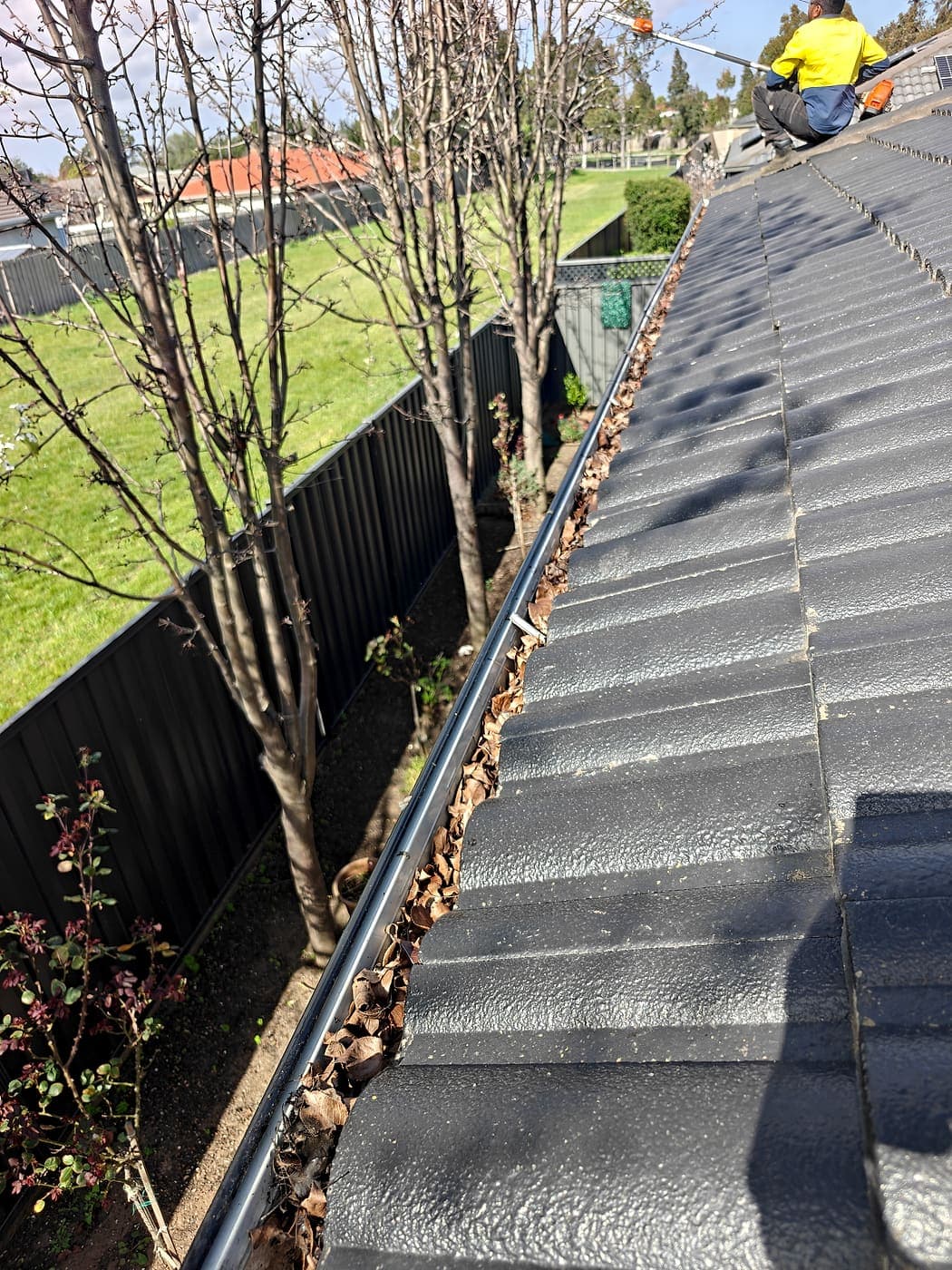
| When | Gutter job | CFA reason |
|---|---|---|
| Late winter | Review your bushfire plan | The CFA suggests reviewing the plan as winter ends |
| Early spring | Full gutter clean | Before bushfire season starts and the Fire Danger Period is declared |
| October onwards | Check after windy days | The Fire Danger Period can start as early as October in Victoria |
| Summer | Clear regularly | The CFA says regularly clear gutters through the season |
| Before Extreme or Catastrophic days | Final check for leaves | Gutters, corners, doorways and around the home |
| Autumn | Main leaf-drop clean | Ready for winter rain and next season |
What does the CFA recommend for gutters?
The CFA (opens in a new tab) recommends clearing gutters of leaves, twigs and rubbish in early spring, before bushfire season starts and the Fire Danger Period is declared. Through the season, its advice is to regularly clear gutters of leaves, twigs and rubbish. Before Extreme or Catastrophic days, it says to make sure gutters are clear.
Put together, that is three layers of gutter work rather than one clean a year:
| Stage | CFA advice for gutters | What it means in practice |
|---|---|---|
| Early spring | "Clear your gutters by removing leaves, twigs and rubbish" | A full clean, with downpipes flushed and the roof edge checked |
| During bushfire season | "Regularly clear your gutters of leaves, twigs and rubbish" | Checks after windy days and through summer, more often under gums |
| Before bad fire days | "Make sure your gutters are clear of leaves, twigs and rubbish" | A final look, days ahead, not on the day |
The CFA's bad fire day guidance is blunter: "periodically clearing leaves from your gutters is absolutely critical." It also notes that wind blows leaves into the same spots around a house, and the same winds carry embers there in a fire.
This guide covers the bushfire side of gutter care. For year-round schedules and what a thorough clean involves, see our complete guide to gutter cleaning in Melbourne.
Why do gutters matter in a bushfire?
Gutters matter because embers, not the fire front, start most house fires in bushfires, and a gutter full of dry leaves is a ready-made fuel bed on the roof. The CFA's ember attack key points say embers can land on top of debris in your gutters and set fire to your house. They also say ember attack is the most common way houses catch fire during bushfires.
CSIRO (opens in a new tab)'s bushfire research says much the same: in a bushfire, most house fires start because of wind-driven embers rather than direct flame contact. Embers are burning twigs, leaves and bark carried by the wind, and they land on or around the house.
Ember attack is not a single moment
The CFA notes that ember attack can happen before, during and after a bushfire. Its Fire Ready Kit adds that in certain conditions embers can travel many kilometres in front of a fire. That is why a house that never sees flames can still be at risk, and why the gutters are worth clearing even well back from the bush.
A side view of a house roof line on a hot, windy day. Wind carries small glowing embers from the left across the garden. In the first panel, the gutter is full of dry leaves and bark: an ember lands in it, smoulders and lights the leaves at the roof edge, with the flame touching the fascia and roof covering. In the second panel, the gutter is clear and the embers land on bare metal, glow briefly and go out.
When should Melbourne gutters be cleared for fire season?
Clear them in early spring, then keep them clear until autumn. The CFA advises completing preparation in early spring, before bushfire season starts and the Fire Danger Period is declared, and notes that in Victoria the Fire Danger Period can start as early as October.
The Fire Danger Period is declared by the CFA council area by council area, depending on local conditions, so the start date changes from year to year and from one council area to the next. Check the CFA website each spring for your area rather than working from last year's date.
| Month | Gutter job | Why then |
|---|---|---|
| August | Review your bushfire plan and book the spring clean | The CFA suggests reviewing the plan as winter ends |
| September to early October | Full gutter clean, downpipes flushed, overhanging branches cut back | Done before the Fire Danger Period starts |
| November to December | Check after strong winds, especially under gums | Eucalypts shed through the warm months |
| January to February | Regular checks, plus a final look before forecast bad fire days | Peak fire season |
| March to April | Keep checking until the Fire Danger Period ends | The season can run well into autumn |
| May to June | Main autumn leaf clean | Deciduous leaf drop, ready for winter rain |
Spring is also when Melbourne's gutters work hardest in rain, so the spring clean does two jobs at once: ready for the late spring storms and ready for fire season. Under eucalypts the timing shifts, because gums drop most of their leaves and bark in the warm months; our post on gutters near gum trees sets out a programme for that case.
Why late spring storms add to the case
On Bureau of Meteorology (opens in a new tab) figures for Melbourne (Olympic Park), October and November have the highest average monthly rainfall. A gutter cleared in September or early October is ready for both the storms and the start of fire season. Leaving the clean until December means working on a ladder in the heat, with the season already under way.
Which other roof-line jobs belong on the bushfire list?
Gutters are one item on a short list the CFA asks households to complete before the season. Most of the others are within a few metres of the gutters, so they are easy to do in the same weekend or the same visit.
| CFA advice | What it means for the roof line |
|---|---|
| "Cut back branches that overhang the house." | Fewer leaves and twigs land in the gutters in the first place |
| "No branches within 10m of buildings." | Branches near the roof are a path for fire and a source of debris |
| "Keep grass trimmed to a height between 5cm and 10cm" | Less fuel under the eaves and along the walls |
| "Keep woodpiles away from the house." | The CFA says a woodpile in summer is an ember trap |
| "Remove fallen leaves from where they gather around your home." | Corners, doorways and the base of downpipes collect the same leaves as the gutters |
| "Seal all gaps, vents and roof spaces" | Embers that get into the roof space are hard to see and stop |
Our fire season property checklist takes the whole list room by room and yard by yard. Overhanging branches are the one job that usually needs tree work, and the Action Garden team does tree trimming too, and the gutters can be cleared after the pruning so the job is done once.
The CFA points out that leaves gather where the wind drops them, and embers follow the same path. When the gutters are cleared, sweep the corners of the verandah, the doorways and the base of each downpipe as well. It takes minutes and removes fuel from the places embers are most likely to land.
What should you do with gutters before a bad fire day?
Check them days ahead, not on the day. The CFA's advice is to clean gutters before and during bushfire season but check them again before bad fire days, and not to leave things until the last minute.
- Watch the forecast. When a hot, dry, windy day is forecast, start preparing early, as the CFA advises.
- Do a final check of the gutters. Look for leaves blown in since the last clean, especially under gums.
- Clear leaves from corners and doorways. These are where embers are likely to be blown.
- Bring doormats inside. The CFA notes houses have caught fire from embers landing on doormats.
- If your plan is to leave, block the downpipes and partly fill the gutters. The CFA lists blocking downpipes with gutter plugs and partially filling gutters with water as a step for the day before you plan to leave, if you have time.
- Leave early. The CFA's advice is to leave by 10 am or the night before when the fire danger rating is Extreme or Catastrophic.
Gutter plugs: what they are and how to use them
Gutter plugs are stoppers that fit the downpipe outlet, so the gutter holds water instead of draining. They are sold to suit common outlet sizes, so check yours before you buy. Fit them only as part of your written bushfire plan, from a safe ladder position in calm conditions, and remember to remove them afterwards, because a plugged gutter will overflow in the next rain.
No gutter job is worth being on a roof or ladder when a fire is nearby. If a fire is already in the area, follow your plan and the advice from emergency services, not your maintenance list.
Does gutter guard help in fire season?
Gutter guard can reduce the leaves that collect in gutters, but it does not replace the CFA's advice to keep them clear. Leaves and bark that sit on top of the mesh dry out in summer and are still fuel on the roof, so guarded gutters still need a spring check and checks through the season.
If you are considering guard in a bushfire prone area, choose non-combustible metal mesh with metal fixings, and close the gap at the roof edge. New homes in designated bushfire prone areas are built to the national bushfire construction standard, AS 3959, at a bushfire attack level set for the site, and you can check whether your property is in one of those areas on VicPlan. Our comparison of gutter guard types explains which materials suit a bushfire setting and which do not.
Are there rules about gutters and fire hazards?
There is no single statewide rule that tells households how often to clean gutters, but councils can act on fire hazards on private land. Under Victoria's fire prevention laws, councils can issue fire prevention notices requiring owners to reduce hazards such as long grass or built-up vegetation. What counts as a hazard, and what a notice requires, depends on the council and the property.
- Owners and occupiers. Read any notice carefully, note the deadline and contact the council if anything is unclear.
- Renters. Rental Dispute Resolution Victoria says gutter maintenance usually sits with the rental provider, and renters should report blockages or overflow.
- Owners corporations. Gutters on common property are usually managed by the owners corporation, so raise them with the manager before the season.
For anything legal, rely on the notice itself and the council's own guidance rather than general advice. The other gutters and roof line guides cover the practical side of keeping the roof line clear.
When should you leave fire-season gutter work to a professional?
Leave it to a professional when the roof is high, steep or fragile, when power lines run near the gutters, or when the timing means working in summer heat. Fire-season gutter work tends to fall in exactly the weather in which ladder work is most dangerous.
Call a professional if the home is two storeys or more, if you would need to walk on the roof, if power lines or the service line run near the gutters, if the roof may contain asbestos cement (homes built or renovated before 1990 may contain asbestos), or if the only time you can do it is a hot or windy day. Victoria's Better Health Channel (opens in a new tab) advises against using a ladder in wet, windy or hot conditions. Our guide on when not to clean your own gutters explains each of these warning signs.
Booking the spring clean early is the simplest way to stay ahead of the season. Our gutter cleaning service includes gutters and downpipes cleared, debris bagged and removed, downpipes flushed, a visual roof and gutter check and a photo report. Spring and summer checks can be set up as part of a regular maintenance plan with the lawn and garden work that the CFA list also calls for.
If your home is near bush or grassland and the gutters are a job you would rather not do in the heat, it is worth handing them to Action Garden before the Fire Danger Period starts. You can request a free quote with a few photos of the roof line.
Your Garden. Our Promise.
From our jobs
Frequently asked
When does the Fire Danger Period start in Melbourne's outer suburbs?
Should I fill my gutters with water before a bushfire?
Do I need to clear my gutters for fire season if I do not live near bush?
How often should gutters be checked during the Fire Danger Period?
Is it safe to clear gutters on a hot, windy day?
How do I find out if my home is in a bushfire prone area?
Can a council make me clear my gutters before summer?
Sources and further reading
- Preparing for bushfire season (CFA)
- Preparing for bad fire days (CFA)
- Ember attack, key points (CFA)
- Fire Ready Kit (CFA)
- Climate statistics for Melbourne (Olympic Park), monthly rainfall (Bureau of Meteorology)
- How do bushfires spread? (CSIRO)
- Building in designated bushfire prone areas (Victorian Government, planning)
- Ladder safety (Better Health Channel)
Caring for Melbourne gardens since 2019. Updated 18 November 2026.