


Gutters and exterior
Birds, possums and wasps in gutters: what to do
By the Action Garden team · Updated · 11 min read
Checked against: Victorian Government, Better Health Channel, Sustainable Gardening Australia, DEECA Wildlife, CFA, Victorian Department of Health
TL;DR
- All native birds and possums are protected under Victoria's Wildlife Act 1975, so an active native nest or a possum in the roof needs the legal approach, not a quick fix.
- Introduced birds such as common mynas, house sparrows and starlings are not protected and their nests can be removed, ideally before eggs are laid.
- Possums are moved out with a one-way flap and kept out by trimming branches 1.5 metres back from the roof; trapped possums must be released within 50 metres on the same property.
- European wasp nests in gutters, eaves and roof spaces are a job for a licensed pest controller; Better Health advises against treating them yourself.
- Once the animals are gone, clear the gutter, flush the downpipes and close the gaps so the problem does not return next season.
| Animal | Status | What to do |
|---|---|---|
| Native birds | Protected | Wait until the nest is empty; seek advice before moving an active nest. |
| Introduced birds (mynas, sparrows, starlings) | Not protected | Remove nesting material early, then block the gap. |
| Possums | Protected | One-way flap, trim branches, release within 50 metres if trapped. |
| European wasps | Pest | Licensed pest controller; do not disturb the nest. |
| Honey bee swarms | Spring | Call a beekeeper while the swarm is still outside. |
Why do birds, possums and wasps end up in gutters?
Gutters and the gaps around them offer what these animals want: shelter from rain and wind, height away from predators, and a ready supply of nesting material. A gutter full of leaves is a ready-made nest site, and the space behind a gutter or under a loose eaves sheet leads straight into a dry roof.
The animals themselves are rarely the root problem. They move in where gutters are full, branches touch the roof and gaps have opened up. Clearing them out without fixing those conditions usually means the same visitors, or new ones, are back next season.
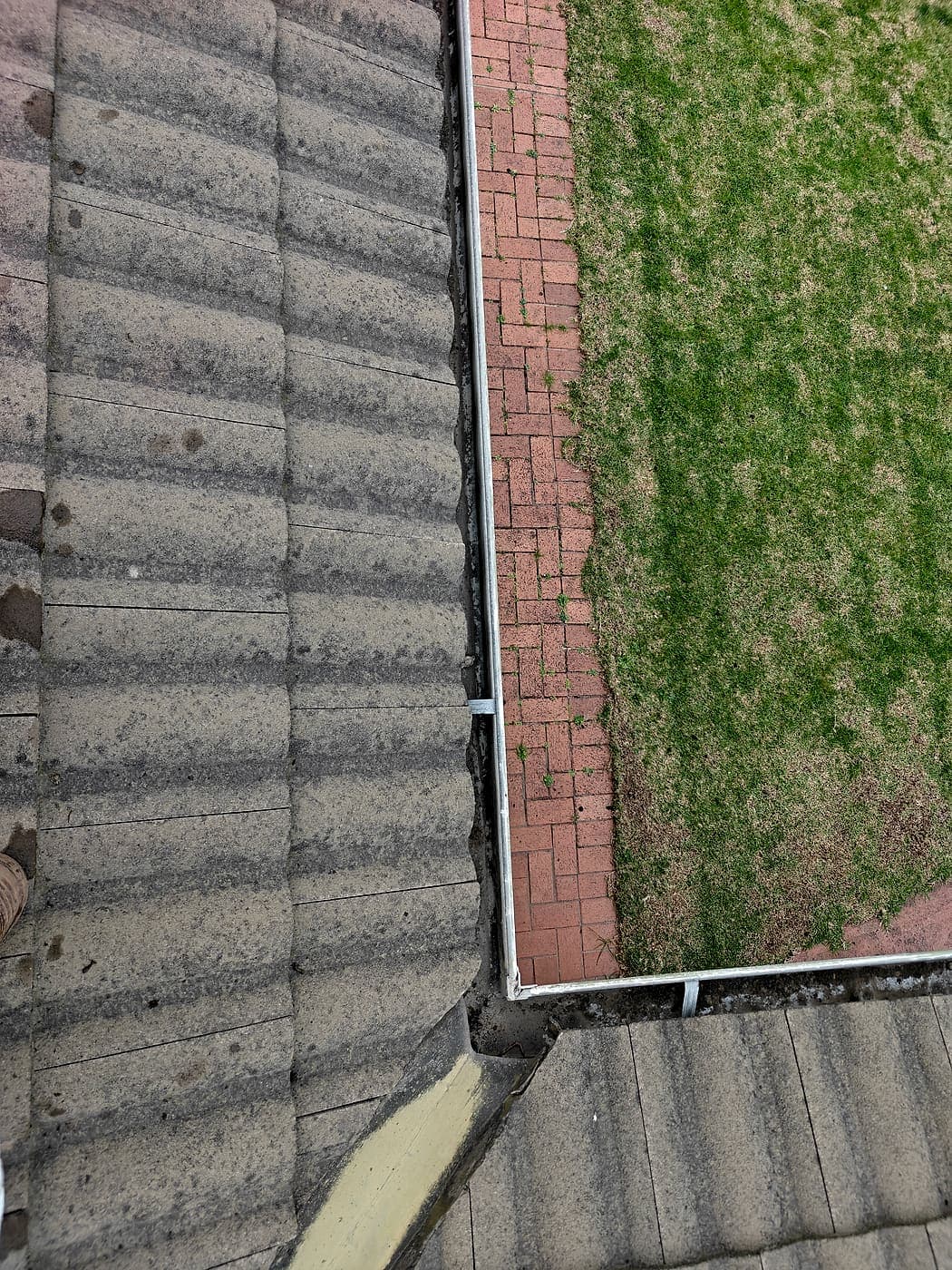
A close view of a house's roof edge, with five entry points highlighted in turn as small animated arrows: a gutter packed with leaves where a bird is building a nest, a gap behind the gutter where it has pulled away from the fascia, a broken eaves sheet with a possum's tail showing, a tree branch touching the roof, and a hole in the eaves with wasps flying in and out. A second frame shows the fixed version: clear gutter with mesh guard, gutter fixed back to the fascia, eaves sheet replaced, branch cut back 1.5 metres, and the hole sealed.
Which animal is it, and what are the rules?
Identify the animal first, because Victorian law treats them differently. All native birds and mammals, including possums, are protected under the Wildlife Act 1975. Introduced birds are not. European wasps are a pest that a licensed pest controller should treat.
Quick decision guide
What is living in my gutter?
- Is it a bird with a nest and eggs or chicks? Identify the species before doing anything. A native bird's active nest stays until the young have left.
- Is it a common myna, house sparrow or starling? These are introduced and not protected. Remove the nest and block the gap, ideally before eggs are laid.
- Are you hearing thumping, hissing or scratching at night in the roof? It is probably a possum. Use the one-way flap approach below. Fast scurrying and gnawing is more likely rats.
- Are yellow and black insects flying in and out of one spot? Treat it as a European wasp nest. Keep away and call a licensed pest controller.
- Is a dense cluster of bees hanging from the gutter or eaves? It is likely a honey bee swarm. Call a local beekeeper while it is still outside.
- Is it a mud cup stuck under the eaves? It is likely a welcome swallow nest, a native bird. Leave it until the young have flown.
What should you do about birds nesting in gutters?
For native birds, wait. For introduced birds, act early. Either way, once the nest is empty, clean the gutter and close the gap or fit a guard so the site is no longer attractive.
Native birds
Native birds that use gutters, eaves and roof edges in Melbourne include welcome swallows, which build mud cups under eaves, and a range of small birds that tuck nests into gaps. The Wildlife Act protects them and their active nests. If an active native nest is causing a real problem, such as blocking a downpipe before heavy rain, contact DEECA for advice rather than moving it yourself.
Introduced birds
Common mynas, house sparrows and common starlings are introduced species and are not protected in Victoria. They nest in gutters, under roof tiles and in eaves gaps, often returning to the same site every year. Remove nesting material as soon as building starts, then block the gap so they cannot rebuild.
The common myna is often confused with the native noisy miner, so check before acting. Mynas are brown with a black head; noisy miners are grey.
Steps once the nest is empty
- Wear gloves and a P2 mask. Old nests and droppings carry dust, mites and germs; do not dry sweep them.
- Lift the nest out by hand into a bag, rather than blowing it apart.
- Clear the rest of the gutter and the outlet, then flush the downpipe with water.
- Check for damage behind the nest: rust, a loose bracket, or a gap between gutter and fascia.
- Close the entry point with a guard, a bird spike strip or a repair, depending on where the gap is.
Our guide on how to clean gutters safely covers the ladder setup and tools for this part.
Why mynas and starlings come back to the same gutter
Introduced birds that nest in cavities, such as common mynas and starlings breed over a long season from spring into summer and often raise more than one brood. A sheltered gutter corner or a gap under the bottom row of roof tiles is a sought-after site, so once a pair finds it, they return.
Removing the nest without blocking the site simply resets the cycle. Gutter guard over the run, a fitted bird stop under the tiles, or a gutter fixed back tight against the fascia all take the site away for good.
What should you do about possums in the roof?
Move the possum out, then keep it out. Victorian Government (opens in a new tab) guidance is to find the entry points, fit a one-way flap so the possum can leave but not return, prune branches leading to the roof to leave a gap of at least 1.5 metres, and offer a nest box in the garden.
Steps to move a possum on
- Confirm it is a possum. Possums thump and hiss; rats scamper and gnaw.
- Find the entry points. Look for loose tiles or roof sheeting, broken eaves, gaps behind gutters and holes in timber or brickwork. Watch at dusk to see where the possum comes out.
- Trim the access. Cut branches back so there is at least 1.5 metres between them and the roof.
- Fit a one-way flap over the main exit, hinged at the top, made of metal or perspex, with the edges lined in metal so claws cannot grip.
- Seal the other gaps once you are sure the possum is out, usually after a few nights of no noise.
- Put up a nest box in a tree in the garden. A resident possum in a box will keep others away.
If a possum is trapped, the rules are strict: it must be released on the same property, within 50 metres of where it was caught. Relocated possums are often attacked by other possums and may die, which is why moving them further is prohibited. Research quoted by the Victorian Government shows repellents and ultrasonic devices do little.
What should you do about wasps and bees?
Stay away from the nest and call a professional. Better Health strongly recommends a licensed pest control operator to destroy European wasp nests, especially for anyone with a history of allergic reaction or who is unsure of their allergy status.
European wasps
European wasps are about the size of a bee, bright yellow with black triangle markings, and can sting repeatedly. Sustainable Gardening Australia (opens in a new tab) notes that up to 20 percent of wasp nests in Australia are in roof spaces and wall cavities, and that nests grow through summer and autumn. A nest in a gutter, eaves gap or wall cavity may be far bigger than the opening suggests.
- Do not block the entrance; the wasps will find another way out, sometimes into the house.
- Do not spray into the hole or poke the nest.
- Keep children and pets away and note the location for the pest controller.
- Call triple zero (000) for a severe allergic reaction to a sting.
Native paper wasps
Native paper wasps build small, open, umbrella-shaped nests under eaves and gutters. They are less aggressive than European wasps but will sting if the nest is knocked, which often happens during gutter cleaning. Have a small nest removed before any ladder work nearby.
Honey bee swarms
A swarm is a dense cluster of bees resting on a branch, gutter or eaves while scouts look for a new home, most often in spring. While it is still outside, a local beekeeper may be able to collect it. Once bees move into a wall or roof cavity, removal becomes a much bigger job.
Call a licensed pest controller for any European wasp nest, and for any nest near a doorway, window or ladder work. Use a wildlife controller if you are not confident fitting a one-way flap or need a possum trapped. Any work on a second-storey roof line, a steep or tiled roof, or near the power line to the house is a professional job, whatever the animal.
How do you clean up after the animals have gone?
Clean up thoroughly, then fix whatever let them in. Nests, droppings and possum urine leave the gutter blocked, smelly and a magnet for the next visitor.
- Clear every gutter run on that side of the house, not just the nest site.
- Flush the downpipes and check the outlets, where nesting material often lodges.
- Check box gutters and valleys if birds or possums have been on the roof; our guide to box gutters, valleys and leaf traps explains what to look for.
- Fix back gutters that have pulled away from the fascia.
- Repair eaves gaps and broken sheets. Flat sheets on older homes may contain asbestos, so have them checked before cutting.
- Check the rainwater tank if the roof feeds one; our post on rainwater tanks and gutters covers screens and first flush devices.
Our roof line checklist is a good way to find every gap at once, rather than fixing them one visitor at a time.
Does gutter guard stop birds and possums?
Gutter guard stops birds nesting inside the gutter itself and keeps out the leaves they build with. A firmly fixed metal mesh also discourages possums running along the gutter. It does not close gaps under roof tiles or broken eaves, so those still need repair.
Plastic and loosely fitted guards can be pulled up by birds, possums and wind, which can make things worse. Our guide on whether gutter guard is worth it compares the types and where each suits.
How do you stop them coming back?
Take away the shelter, the access and the nesting material. A gutter that is clean, tight to the fascia and covered, on a roof with no overhanging branches and no gaps, holds little appeal.
- Clean the gutters before nesting season starts in early spring, and again after autumn leaf fall.
- Keep branches at least 1.5 metres from the roof.
- Fix gaps behind gutters and in eaves as soon as they appear.
- Do not leave food, pet food or fallen fruit out; Better Health lists these as wasp attractants.
- Keep outdoor eating areas clean in late summer; our post on getting the deck and patio ready for summer covers the outdoor living side.
When is it worth handing the job over?
It is worth handing over once the animals have gone and the gutters need clearing, fixing back or guarding, especially on two-storey homes. Action Garden's gutter cleaning service clears gutters and downpipes, bags and removes debris and old nesting material, flushes the downpipes and includes a visual check with a photo report. Gutter guard installation is available as an add-on. The team cleans gutters but does not repair them; repairs are a job for a licensed plumber.
If the team finds a snake, an active nest, a possum or wasps during a job, they pause work in that area, tell you, and contact the local authority or a licensed professional to deal with it. Work continues once it is safe.
For more on the topic, see the complete gutter cleaning guide for Melbourne and our gutters and exterior articles. When the gutters are ready to be cleared and closed up, a free quote is the place to start.
Your Garden. Our Promise.
From our jobs
Frequently asked
Can I remove a bird's nest from my gutter in Victoria?
How do I tell a common myna from a native noisy miner?
Is it legal to trap a possum living in my roof?
Why do possums keep getting back into the roof after I block the hole?
What should I do if wasps are flying in and out of my gutter?
When are European wasp nests at their biggest in Melbourne?
Do bird nests in gutters cause fires?
Can bird droppings in gutters affect rainwater tank water?
Sources and further reading
- Brushtail possum wildlife management methods (Victorian Government)
- European wasp (Better Health Channel)
- European and English wasps (Sustainable Gardening Australia)
- Managing possums (DEECA Wildlife)
- How to prepare your property (CFA)
- Rainwater (Victorian Department of Health)
Caring for Melbourne gardens since 2019. Updated 18 November 2026.