


Gutters and exterior
Getting the outside of your home ready for winter rain
By the Action Garden team · Updated · 11 min read
Checked against: Bureau of Meteorology, VICSES, Building and Plumbing Commission, EPA Victoria, Victorian Department of Health, Better Health Channel, Energy Safe Victoria
TL;DR
- Follow the water path in order, roof to gutter to downpipe to pit to street, because one blockage anywhere sends water somewhere it should not go.
- Do the big job in late autumn, once deciduous leaves are down, because Melbourne's rain days climb from about 6 a month in March to 10 in August (BOM).
- Keep garden beds and mulch below weep holes and subfloor vents, and fix leaks quickly; the Building and Plumbing Commission notes termites are drawn to damp conditions.
- Trim branches back from the roof and secure loose outdoor items, as VICSES advises before storms.
- Ladder and roof work in cold, wet, windy weather is where most of the risk sits, so leave high or steep work to a professional.
| Area | When | What to do |
|---|---|---|
| Gutters and downpipe outlets | Late autumn, then a check mid winter | Clear after the leaves are down, test each downpipe with water. |
| Stormwater pits and grates | Late autumn and after big storms | Lift the grate, scoop out silt and leaves, check water runs away. |
| Garden beds against the house | Once, before winter | Pull soil and mulch down below weep holes and subfloor vents. |
| Trees and shrubs near the roof | Autumn | Cut back branches touching the roof or hanging over gutters. |
| Paths, steps and decks | Late autumn | Clear moss and algae before the damp, cloudy months. |
What does a rain-ready home exterior look like?
A rain-ready home moves every drop from the roof to the street without spilling, pooling or soaking into the walls. Gutters are clear, downpipes run freely, pits drain, soil sits below the weep holes and nothing overhangs the roof. Getting there is a checklist job, done once in late autumn and checked again mid winter.
The easiest way to work through it is to follow the water. Rain lands on the roof, runs into the gutter, drops through the downpipe into an underground pipe, and leaves the property at the point your council has set for it. Every step on the checklist below sits somewhere on that path.
A cut-away side view of a single-storey house. Rain falls on the roof and an animated line of water runs down the roof into the gutter, along the gutter to the downpipe outlet, down the downpipe into an underground stormwater pipe, through a grated pit in the driveway and out to the kerb. Five numbered markers show where it most often fails: leaves in the gutter, a plug at the downpipe outlet, a cracked or blocked underground pipe, silt in the pit, and soil heaped against the wall below a weep hole. At each marker the water line breaks and spills to show the result: overflow at the fascia, water against the wall, and a puddle on the paving.
In Victoria, the stormwater from your property must be connected to the legal point of discharge your council nominates, usually the kerb or a drain in an easement. The pipes on your side of that point are yours to look after, so this checklist covers everything from the roof to the boundary.
Why does Melbourne's winter test the outside of a house?
Melbourne's winter is not especially heavy in rain, but it is wet often and dries out slowly. The Bureau of Meteorology (opens in a new tab)'s long-term record for the Melbourne Regional Office shows mean rainfall of about 50 mm a month in June, July and August, no more than in summer. What changes is how often it rains and how little it dries.
| Month | Mean rainfall (mm) | Rain days (1 mm or more) | Cloudy days | 9am humidity (%) | Mean max (°C) |
|---|---|---|---|---|---|
| March | 50.1 | 6.1 | 13.3 | 68 | 23.9 |
| April | 57.3 | 7.9 | 14.8 | 71 | 20.3 |
| May | 55.7 | 9.7 | 18.1 | 77 | 16.7 |
| June | 49.5 | 9.4 | 16.9 | 80 | 14.1 |
| July | 47.5 | 9.7 | 17.3 | 79 | 13.5 |
| August | 50.0 | 10.4 | 16.7 | 73 | 15.0 |
| September | 58.0 | 10.4 | 15.9 | 67 | 17.3 |
Source: Bureau of Meteorology, climate statistics for Melbourne Regional Office (086071), rainfall and rain days 1855 to 2015, cloud and humidity 1955 to 2010.
Read across the table and the pattern is clear. Rain days climb from about six in March to about ten a month from May, the sky is cloudy more than half the days, morning humidity sits near 80 percent and the days are cool. Water that escapes the gutter has little chance to dry before the next shower arrives.
Which gutter and downpipe jobs come first?
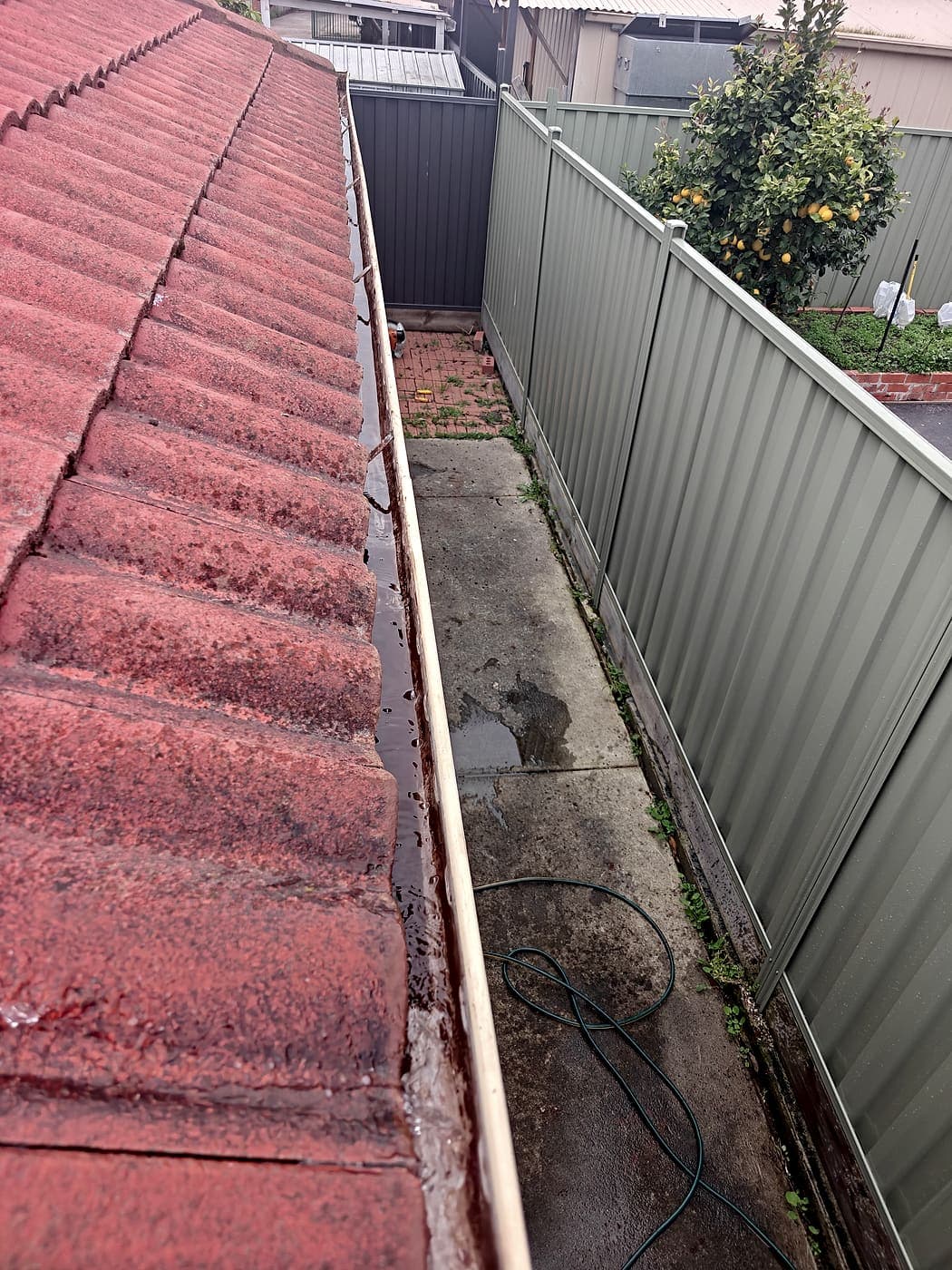
The gutters and downpipe outlets come first, because every other part of the system depends on them. Clear them once the autumn leaves are down, then test each downpipe with a bucket or hose before winter. A gutter with a blocked outlet overflows even when it looks almost empty.
The gutter and downpipe checklist
- Scoop leaves, twigs and sludge out of every gutter run, starting at the outlet and working away from it.
- Clear each downpipe outlet by hand and remove anything wedged at the first bend.
- Run water into the gutter at the far end from each downpipe and watch that it flows to the outlet and away.
- Look for low spots where water still sits after the test, which often means a bracket has dropped.
- Check that downpipe joints are sealed and that any downpipe discharging at ground level has a splash pad or pipe taking water away from the wall.
- Note rust holes, split joints and leaking corners for a plumber; cleaning does not fix them.
If a downpipe stays blocked after the outlet is cleared, our step-by-step guide on how to clear a blocked downpipe covers the next steps. For the whole topic, from how often to clean to gutter guard and two-storey homes, see the complete gutter cleaning guide for Melbourne.
The eaves, fascias, valleys and box gutters deserve their own close look. Our roof line checklist goes through each of those parts in detail, so this post stays with the whole house.
Why late autumn beats early autumn for the main clean
A clean in March or early April catches the summer debris, but most deciduous trees in Melbourne gardens and streets drop their leaves later, from April into May. Clean too early and the gutters fill again just as the rain days build.
Under evergreen trees such as gums, which shed all year, an early autumn clean plus a late autumn check works better. Under deciduous trees, wait until the leaves are down and do one thorough clean, then check the outlets mid winter.
What about the drains and pits at ground level?
The ground-level drains matter as much as the gutters, because a clear downpipe that feeds a blocked pipe still floods. Lift each grated pit in the yard and driveway, scoop out the leaves and silt, and pour a bucket of water in to see that it drains away.
The ground drainage checklist
- Lift and clean every grated pit and strip drain across driveways and garage doors.
- Clear leaves and mulch away from drain grates at the base of downpipes.
- Look for wet patches, sunken soil or lush strips of grass along the line of an underground pipe, which can point to a break.
- Watch where surface water goes in the first heavy rain and note any that flows towards the house.
- Sweep leaves on paths and driveways into a bin or compost, not the street drain.
EPA Victoria (opens in a new tab) lists leaves and garden clippings among the everyday materials that pollute stormwater, and advises sweeping and binning rather than hosing. Leaves washed into the street drain also add to the blockages at your own kerb outlet.
Call a licensed plumber if a pit stays full after cleaning, water bubbles up from the ground, the underground pipe is cracked or crushed, or a downpipe is not connected to a drain at all. Drainage work below ground is plumbing work in Victoria, and a blocked or broken stormwater pipe needs the right equipment to locate and repair.
How do garden beds and soil affect the house in winter?
Garden beds built up against the house are one of the most common winter problems, because they hold water against the walls. Keep soil and mulch below weep holes and subfloor vents, keep the edge of the slab visible, and slope beds so water runs away from the house rather than towards it.
The Building and Plumbing Commission (opens in a new tab)'s termite guide gives three pieces of advice that line up with winter preparation. It says to address plumbing leaks, drainage problems and roof leaks promptly, because termites are attracted to damp conditions. It says not to build up garden beds and mulch against walls, and that sub-floor areas should be well ventilated.
The house edge checklist
- Pull soil and mulch back so weep holes in brick walls are open and visible.
- Clear plants, leaves and stored items away from subfloor vents.
- Check the soil slopes away from the house for at least the first metre or so.
- Move firewood, timber and stored materials off the ground against the walls.
- Prune shrubs back from walls so air moves and the brickwork can dry between showers.
- Check that sprinkler and dripper lines do not wet the walls, and turn irrigation down or off for winter.
A wall that stays damp through winter often shows it as black or green growth on render, brick and paling fences. Our post on black mould on exterior walls and fences explains the causes and the fixes once the damp source has been dealt with.
How to reshape a bed that sits too high
Start by finding the weep holes or the top of the slab. Dig the soil back by hand to below that line, leaving a strip of exposed slab edge or a gravel strip between the bed and the wall.
Spread the removed soil elsewhere in the garden or take it away with the green waste. Replant anything disturbed a little further from the wall, then re-mulch at the lower level. If the bed is retained by a low wall against the house, it may need rebuilding rather than trimming; take advice before removing anything structural.
Which trees and outdoor items need attention before storms?
Branches touching the roof and loose items in the yard need attention before the winter storms. VICSES (opens in a new tab) advises trimming back trees and branches away from your home, keeping gutters, downpipes and drains clear of debris, and securing outdoor furniture and trampolines.
The storm checklist
- Cut back branches that touch the roof, hang over the gutters or rub against walls.
- Look up at large trees near the house for dead limbs, splits or a new lean after strong wind.
- Secure or store outdoor furniture, umbrellas, trampolines, bins and loose sheets of material.
- Check side gates, fence palings and shade sails, which catch the wind.
- Park cars under cover or away from trees on high wind days, as VICSES suggests.
Small pruning is a normal garden job. Large limbs over the roof, cracked trunks and anything near power lines are not, and Energy Safe Victoria (opens in a new tab)'s outdoor safety guidance is clear that people, ladders and tools must stay well away from overhead lines.
How do you keep paths, steps and decks safe in the wet?
Paths, steps and decks get slippery in winter because algae, moss and mould grow on surfaces that stay damp and shaded. Clean them in late autumn, while they can dry, then fix the water source that keeps them wet, such as an overflowing gutter or a downpipe discharging across the path.
The paths and surfaces checklist
- Sweep leaves off paths, steps and decks regularly; a leaf layer holds moisture and turns slimy.
- Clean green or black growth off paving, steps and timber before the damp months.
- Check that downpipes and garden beds do not drain across paths.
- Look for lifted or sunken pavers that collect puddles and trip people in the dark.
- Clear moss from the shady side of the house, where surfaces rarely dry between June and August.
Our guide to moss, mould and slippery paths explains how to clean each surface and stop the growth returning. Timber decks and soft stone need gentler treatment than concrete, which that guide also covers.
What else on the checklist is easy to forget?
A few parts of the outside of the house are easy to overlook until they fail in the first big storm. The rainwater tank, the lawn and the outdoor taps are the usual ones.
The easily forgotten checklist
- Rainwater tank. The Victorian Department of Health (opens in a new tab) advises keeping the roof clear of large tree branches, checking that inlet and overflow screens are secure, in good condition and clean, opening and cleaning first-flush devices after rainfall, and checking the tank for sludge every 2 to 3 years.
- Tank overflow. Make sure it runs to a drain, not against the house or onto a neighbour's land.
- Lawn. Rake fallen leaves off the lawn so the grass gets light, and avoid walking on or mowing waterlogged grass on clay.
- Irrigation. Turn the controller down or off for winter so it does not water on top of the rain.
- Outdoor power points and lights. Check covers are closed and fittings are not filling with water; anything damaged is a job for an electrician.
What to look for during the first heavy rain
The first big downpour of the season is the best inspection you will get. With a coat on, walk around the house while it is raining or just after.
Watch for water spilling over the front of a gutter, a downpipe that is silent while its gutter is full, water fanning out across paving, puddles against walls and pits that are full to the grate. Note each spot on a quick sketch of the house and fix them in order once it is dry, starting with the gutters and outlets.
When is it worth handing the job to a professional?
It is worth handing it over when the work is high, the roof is steep or the weather is wet. Melbourne's winter combines short days, cold hands and damp surfaces, which are the conditions the Better Health Channel (opens in a new tab) says to avoid for ladder work. Its advice is to keep three points of contact and make sure someone is home while you are on the ladder.
Signs the job needs a professional
- Two-storey gutters, steep or tiled roofs, or box gutters you cannot reach safely from a ladder.
- Gutters that overflow again soon after cleaning, which can point to a blocked downpipe or underground pipe.
- Large branches over the roof or anything near power lines.
- Rust, sagging gutters or leaks into the eaves, which need a plumber.
- Mould or moss across large paved or rendered areas.
Our guide on when not to clean your own gutters sets out the ladder and roof safety thresholds in more detail.
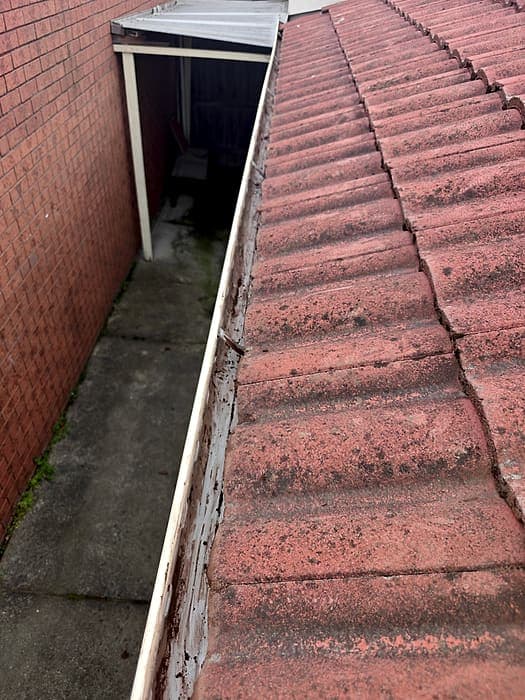
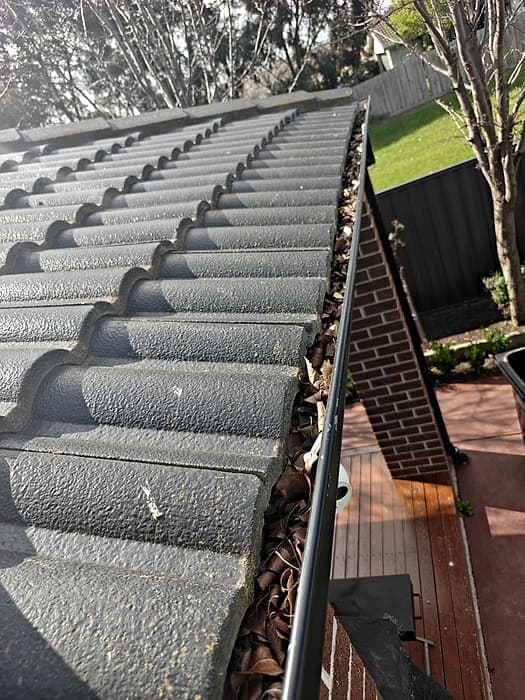
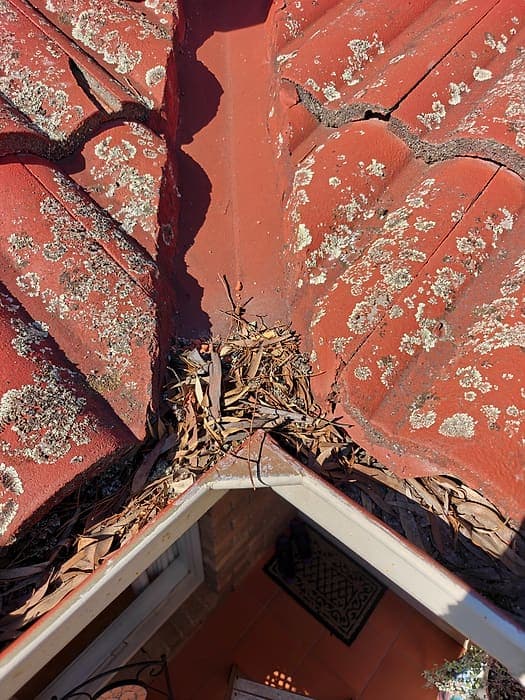
Action Garden's gutter cleaning service clears leaves, debris and blockages, includes an inspection to catch problems early, and can be a one-off deep clean before winter or a regular plan. The same visit can be paired with pressure washing for slippery paths. More on the topic sits in our gutters and exterior articles.
If the gutters and paths are more than you want to tackle before the wet sets in, a free quote is the simplest place to start.
Your Garden. Our Promise.
From our jobs
Frequently asked
When should a Melbourne home be prepared for the winter rain?
Should garden beds be built up against the walls of the house?
Can I hose leaves off the driveway into the street drain?
What should I check after the first big storm of winter?
What is a stormwater pit, and does it need clearing?
Is it safe to clear gutters in cold, wet winter weather?
How do I stop the side path turning into a mud track every winter?
Sources and further reading
- Climate statistics for Melbourne Regional Office, 1855 to 2015 (Bureau of Meteorology)
- StormSafe, getting ready for storms (VICSES)
- Termites, consumer guide (Building and Plumbing Commission)
- Reduce stormwater pollution (EPA Victoria)
- Rainwater (Victorian Department of Health)
- Ladder safety (Better Health Channel)
- Electrical safety outdoors (Energy Safe Victoria)
Caring for Melbourne gardens since 2019. Updated 18 November 2026.