


Real estate
Landlords: why a garden maintenance programme protects your rental
By the Action Garden team · Updated · 14 min read
Checked against: Consumer Affairs Victoria, Rental Dispute Resolution Victoria, Australian Taxation Office, Water Victoria
TL;DR
- In Victoria, gutters, major pruning, tree removal, fences and drainage are the rental provider's jobs, so a programme should cover them on a schedule.
- Renters usually handle mowing, weeding and light pruning, but the rental agreement can move that work to you if a service is included.
- Routine inspections are limited to once every 6 months, so a garden can drift a long way between visits without a programme.
- Dated photos from each visit give you a record to set against the condition report when a lease ends.
- A simple, well-mulched garden with a written scope takes far less effort to keep right than a high-care garden left to chance.
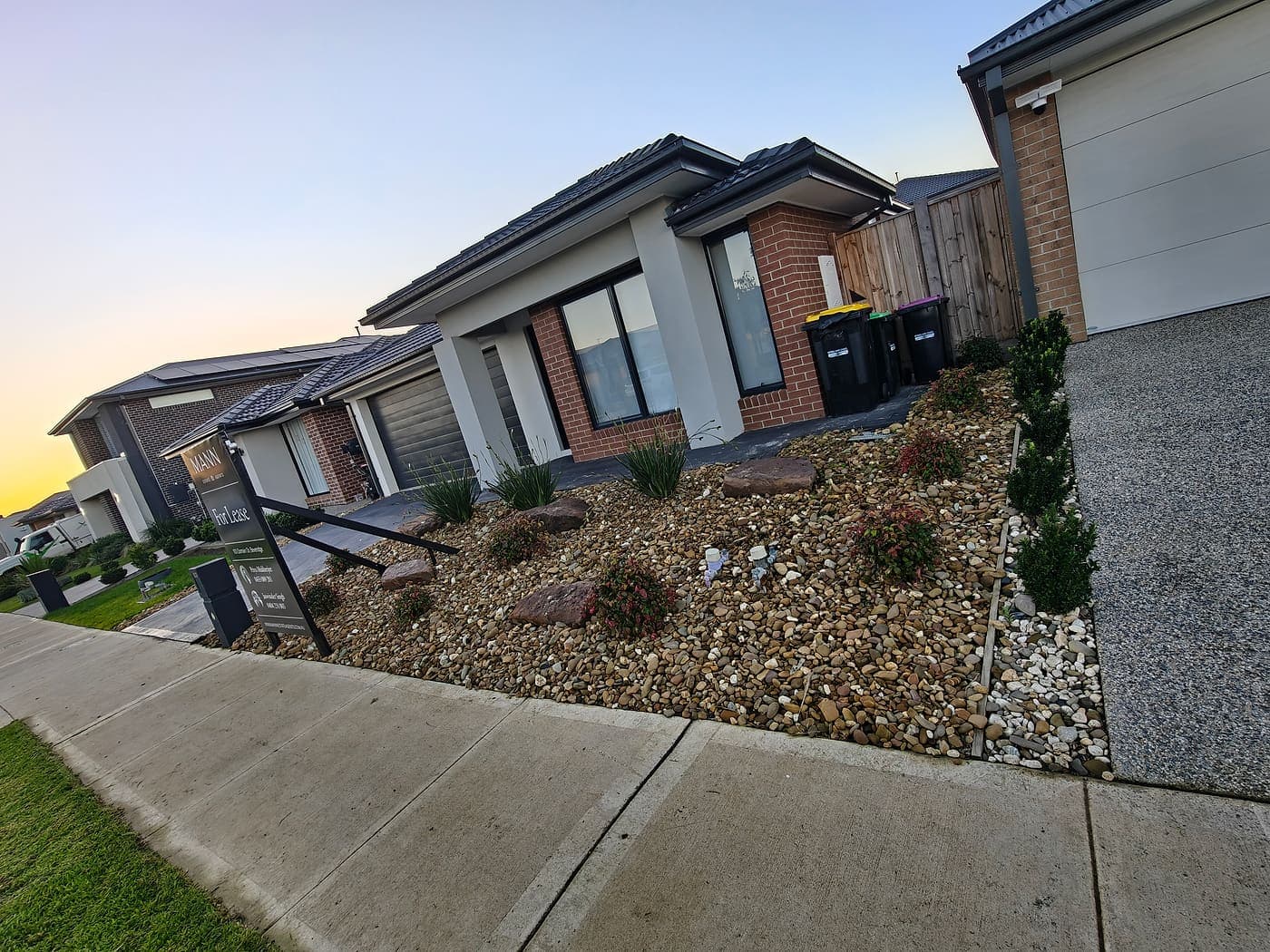
| Garden job | Usually handled by | How often in a programme |
|---|---|---|
| Gutters and downpipes | Rental provider | At least once a year, before winter rain, more often under trees |
| Major pruning and branches over the roof | Rental provider | Once or twice a year, after a check |
| Hedges taller than easy reach | Rental provider, unless agreed otherwise | Twice a year for most Melbourne hedges |
| Mowing, edging, weeding | Renter, unless the agreement says otherwise | Weekly to monthly by season if included |
| Vacate and re-letting tidy-up | Rental provider | Between tenancies, before listing photos |
What does a garden maintenance programme protect in a rental?
It protects the house, the garden you paid for, and your relationship with the renter. A programme puts the jobs that belong to you, the rental provider, on a calendar, so they happen before they become repairs, complaints or bond disputes.
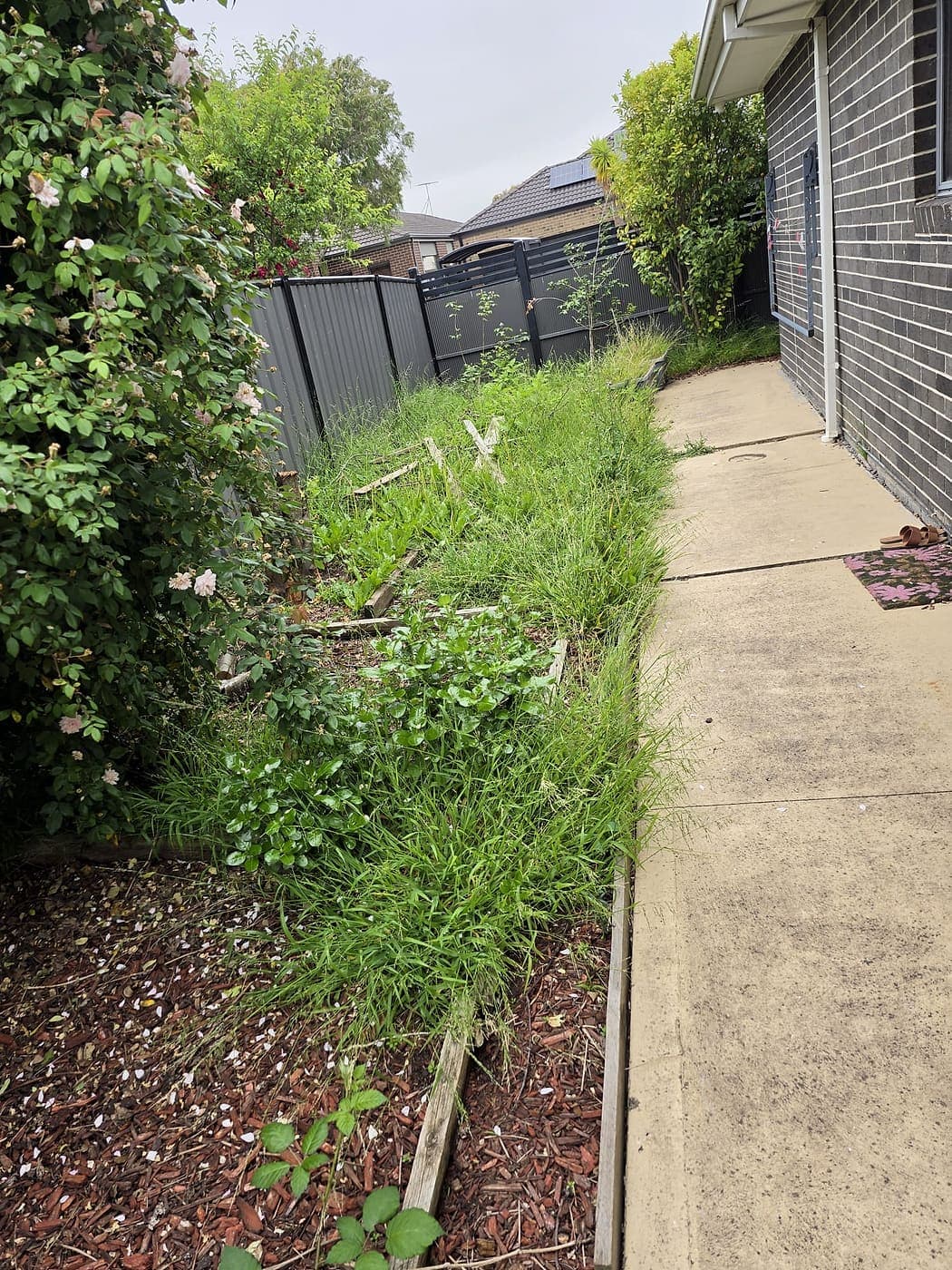
Most garden problems in a rental are slow. A hedge creeps over a path, leaves build up in a gutter, a gum drops limbs onto the roof, or weeds seed through a gravel side path. None of it looks urgent on the day, and all of it is easier to stop early than to fix late.
A programme is simply a written scope plus a schedule: what gets done, how often, and who does it. It can be as light as a twice-yearly visit for gutters and hedges, or as full as fortnightly lawn and garden care written into the rental agreement.
Isn't the garden the renter's job anyway?
Partly. Under the Consumer Affairs Victoria (opens in a new tab) maintenance guideline, renters handle regular gardening, with weeding, pruning and lawn mowing as the examples, while rental providers handle major pruning, removing trees, shrubs and plants, clearing gutters, fences and water tanks.
Rental Dispute Resolution Victoria (opens in a new tab) (RDRV) puts the line simply: if the job needs a cherry picker, a ladder or special tools, it is the rental provider's responsibility. It also places retaining walls, garden edging and drainage problems on the rental provider's side.
So even when the renter does every weekend job well, there is a list of work that only you can arrange. Our guide to who does what in a Victorian rental garden sets out the split in detail. This article is about what happens when nobody puts that list on a schedule.
A side view of a single-storey house and garden. The ground-level zone, shaded in sage, is labelled "renter": the lawn being mown, beds being weeded and a small shrub being trimmed by hand. Everything above head height and everything structural is outlined in forest green and labelled "rental provider": the gutters and downpipes, a tree with branches over the roof, a tall hedge, the fence, a retaining wall and a drain. A dotted arrow from the renter zone to the rental provider zone reads "report it in writing".
What can go wrong when nobody owns the garden?
Gaps between the two lists are where damage starts. The renter assumes the big jobs are covered, the rental provider assumes the renter will say something, and the garden slips between inspections that can happen at most once every 6 months.
These are the common ways a rental garden turns into a repair:
- Blocked gutters. RDRV lists the warning signs a renter should report: blockages, overflowing water, water stains on walls, and sagging or rusty gutters. Overflow runs down walls and pools at the slab.
- Branches over the roof. Trimming them is a rental provider job. Left alone, they drop leaves into gutters and can scrape the roof in wind.
- Hedges out of reach. Once a hedge is taller than a renter can trim from the ground, it often stops being trimmed at all. A year or two later it needs a hard cut back instead of a light trim.
- Gravel with no weed matting. RDRV notes that expecting a renter to weed constantly where no matting or preparation was done is unreasonable. Those weeds become yours.
- Dead or failing plants. Removing trees, shrubs and plants sits with the rental provider, so a dead shrub stays until you arrange it.
How does a programme help at the end of a lease?
It gives you evidence and a clean benchmark. Disagreements about the garden at the end of a lease turn on its condition at the start, and on whether the renter did their share in between.
The Consumer Affairs Victoria condition report is the starting record, and RDRV notes that if the backyard was overgrown when the renter moved in, they should not be expected to clean it up to get their bond back. A garden that was tidied, photographed and dated just before the lease began gives you a far stronger starting point.
Regular visits add more dated records through the lease. If the programme covered your jobs and the photos show the gutters cleared and the hedges trimmed, the conversation at the end is only about the renter's share. Action Garden takes photos at every visit as standard, and they can always be supplied to the rental provider or agent on request.
What to photograph for a rental garden record
- The whole front garden from the street and from the front door.
- The whole backyard from each corner, so every bed appears at least once.
- Each hedge from the side and along the top edge, so height and width are clear.
- Gutters and downpipes from the ground, including any overflow staining.
- Close-ups of any existing problem: bare lawn, dead plants, damaged edging, a leaning tree.
- Any irrigation controller, with its settings visible.
Keep the photos with the condition report. A date in the file name, or a photo sent by message, makes the record easy to find later.
What should a rental garden programme include through the year?
It should follow Melbourne's seasons, not a flat monthly routine. Growth, leaf fall and fire risk change through the year, and the visits should change with them.
| Season | Rental provider jobs | Jobs if the agreement includes everyday care |
|---|---|---|
| Spring (Sep to Nov) | Hedge trim after the first flush, check irrigation, re-mulch thin beds | Weekly or fortnightly mowing and edging, weeding before weeds seed |
| Summer (Dec to Feb) | Check trees near the house after hot winds, clear dry debris from around the house | Mowing a little higher, watering within the rules, beds kept weeded |
| Autumn (Mar to May) | Gutter clean after leaf fall, prune branches over the roof, second hedge trim | Fortnightly mowing, raking leaves off lawns and paths |
| Winter (Jun to Aug) | Structural pruning of deciduous plants, check fences, edging and drainage after heavy rain | Monthly mowing as growth slows, keeping paths clear and safe |
Summer watering needs a word of its own. Under Victoria's permanent water saving rules (opens in a new tab), watering systems can only run between 6pm and 10am, and a hand-held hose needs a trigger nozzle. If you include a watering system it becomes yours to maintain, and plan it before the first hot spell, not during it.
Our complete guide to garden maintenance in Melbourne has the full seasonal calendar if you want to see where each job falls in more detail.
Which programme model suits your rental?
There are three common models, and the right one depends on the size of the garden, the kind of renter you want to attract, and how much control you want.
Side by side
Three ways to run a rental garden
| Model | What you arrange | What the renter does | Suits |
|---|---|---|---|
| Rental provider jobs only | Gutters, hedges out of reach, trees, structural repairs, once or twice a year | All mowing, weeding and light pruning | Small, simple gardens; units with a courtyard |
| Full service in the agreement | Regular lawn and garden visits plus all rental provider jobs | Keeps the garden free of rubbish and damage | Large blocks, established gardens, executive rentals |
| Between-tenancy tidy-up only | A one-off reset before each new lease, plus urgent work | Everything during the lease | Short leases, or properties being prepared for sale |
The first model is the minimum that keeps you on top of your side of the split. The second gives you the most control over presentation and the fewest grey areas, because the renter's garden duties shrink to almost nothing.
The third model is common but leaves the longest gap without anyone trained looking at the garden. If you choose it, pair it with at least a yearly gutter clean.
Writing the garden into the rental agreement
If a service is included, the agreement should say:
- Which areas the service covers: front, back, nature strip, courtyard, hedges, gutters.
- How often it visits, and whether that changes with the season.
- What the renter still does between visits, such as clearing leaves from paths.
- How the renter is told about visits, and whether they need to be home.
- Who the renter contacts if a visit is missed or something looks wrong.
Vague wording such as "garden maintained by rental provider" invites argument. Specific wording rarely does. Consumer Affairs Victoria is the place to check any clause you are unsure about.
How do programme visits fit with entry rules and inspections?
They sit alongside them, and the rules are worth knowing. Consumer Affairs Victoria lists 24 hours' written notice for entry to carry out repairs or other legal duties, and 7 days for a general inspection, which can happen only after the first 3 months and at most once every 6 months.
Entry is allowed between 8am and 6pm on any day except a public holiday, unless the renter agrees otherwise. Every notice must be in writing and give the reason for entry.
For a regular service included in the agreement, the simplest approach is to agree the visit pattern in writing at the start, so the renter knows the gardener comes on a set rhythm. For one-off rental provider jobs, give notice as you would for any other repair, and ask the renter about pets and gates.
Timing a programme visit a few days before a routine inspection is a useful habit. The inspection photos then show the garden at its best, and anything the gardener noticed can be raised at the same time.
Gutters, roof lines, large trees and tall hedges need ladders, platforms or power tools. They are rental provider jobs, and they are not jobs to hand to a renter or to squeeze into a weekend visit yourself.
If a tree is leaning, cracked or dropping large limbs, or branches are near power lines, have it assessed before anyone works on it. Action Garden's own team does tree work, quoted after a site visit.
How can you make a rental garden easier to keep right?
Design it for the way rentals are used. A low-care garden with a clear structure is easier for a renter to keep neat, easier for a programme to maintain, and less likely to cause a dispute.
- Mulch every bed with a coarse bark or wood chip, which suppresses weeds and holds moisture through Melbourne summers.
- Lay weed matting under gravel paths and side passages before the lease starts.
- Choose tough plants. Many Australian natives cope with Melbourne's clay in the north and west and sand in the south-east; our guide to caring for Australian native plants covers the ones that need least attention.
- Reduce edges. Fewer separate lawn shapes means faster mowing and fewer edges to trim.
- Keep hedges to a height that can be trimmed from the ground, or accept that they are a programme job.
- Move or remove problem plants, such as trees too close to gutters or species that seed through the garden.
If you are starting from scratch, our guide to planning a low-maintenance garden walks through the design steps. If you have just bought an investment property, your first month of garden jobs in a new home shows how to size up what you have taken on.
Short-stay and holiday rentals are different
A short-stay rental has no renter doing the everyday garden work, and guests judge the garden on every arrival. That usually means the full service model, with visits timed around bookings rather than inspections. Our article on keeping a short-stay rental garden guest-ready covers scheduling around changeovers.
What do landlords get wrong about rental gardens?
The most common mistakes are about timing and assumptions, not effort.
- Waiting for the renter to report everything. Renters must report problems, but many do not notice a gutter until it overflows.
- Leaving the garden out of the condition report. A two-line note is not enough; photos of every area are.
- Handing over an overgrown garden. If it was overgrown at the start, you are unlikely to be able to ask for it to be cleaned up at the end.
- Assuming a lease clause covers everything. The agreement can move the routine work, but structural and safety jobs still need arranging.
- Doing one big clean-up a year. One hard cut back a year is harder on hedges and lawns than small, regular visits.
- Forgetting the vacate window. The days between tenancies are the best time for heavy work, because no renter needs notice and the garden can be photographed for the next listing.
When is it worth handing the garden to a team?
It is worth handing over when you own more than one rental, when you live far from the property, or when the garden has hedges, trees and gutters that need regular attention. A team that visits on a schedule, works to a written scope and sends photos when it is finished takes the guesswork out of the rental provider side.
Our gardening services cover regular maintenance, pruning, mulching and overgrown garden revivals, and plans run weekly, fortnightly or monthly with no lock-in. If your rentals are managed through an agency, our article on setting up garden care across a rental portfolio shows how property managers organise it, and there is more for owners and agents in the real estate section of the blog.
When you are ready, send the address and what you want covered, and we will prepare a free quote for the property.
Your Garden. Our Promise.
From our jobs
Frequently asked
Is it worth putting a gardener in the rental agreement?
Can a landlord claim garden maintenance on tax?
Does the renter still mow if the landlord pays for a gardener?
How much notice does a landlord give before a gardener visits?
What garden features make a rental hard to look after?
Should a rental garden have an automatic watering system?
How often should someone check a rental garden if the renter does the work?
Sources and further reading
- Guideline 1: Maintenance, Director's Guidelines under the Residential Tenancies Act 1997 (Consumer Affairs Victoria)
- Who maintains gutters, gardens and pools in a rental (Rental Dispute Resolution Victoria)
- Rental providers' entry rights and responsibilities (Consumer Affairs Victoria)
- Condition reports (Consumer Affairs Victoria)
- Rental expenses you can claim (Australian Taxation Office)
- Permanent water saving rules (Water Victoria)
Caring for Melbourne gardens since 2019. Updated 18 November 2026.