


Real estate
Just bought? Your first month of garden jobs
By the Action Garden team · Updated · 11 min read
Checked against: Consumer Affairs Victoria, Victorian Government planning maps, Before You Dig Australia, Building and Plumbing Commission, Water Victoria
TL;DR
- Treat the first month as a survey, not a renovation; many plants, bulbs and problems only show themselves over a full year.
- Week one is safety and admin, week two is mapping, week three is the first tidy-up and week four is planning.
- Check the pool barrier, trees near the house, sheds and fences, and the council bin and green waste days before anything else.
- Before removing a tree or digging deep, check council tree rules, planning overlays and buried services.
- Keep notes and dated photos from day one; they become your garden calendar and help any gardener you bring in.
| Week | Focus | Main jobs |
|---|---|---|
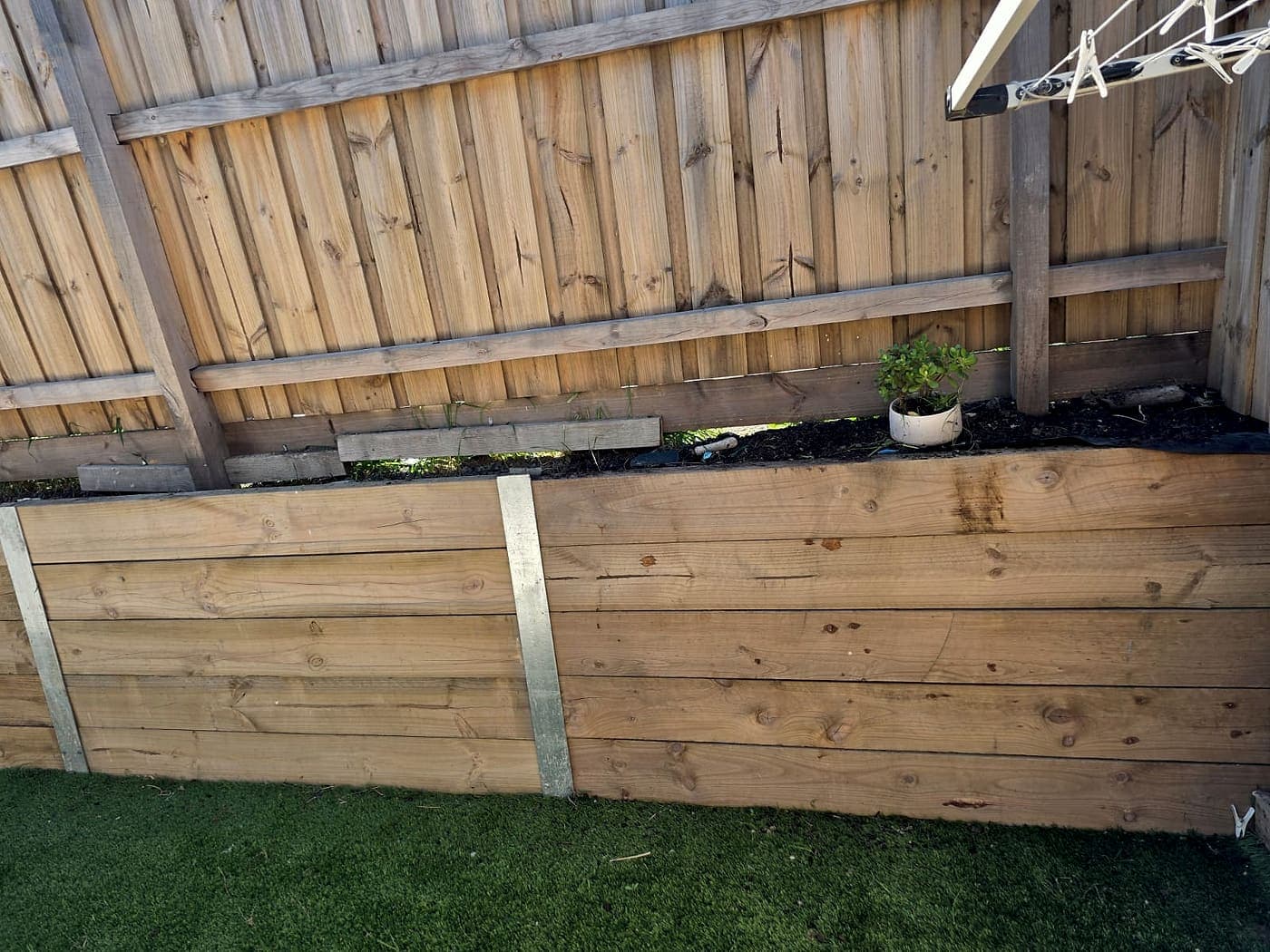
| Week 1 | Safety, access and admin | Gates and locks, pool barrier, trees near the house, sheds and fences, bins and collection days, taps and timers. |
| Week 2 | Map what you have | Lawn grass type, plants worth keeping, weeds, irrigation, drainage, soil type, shade and sun through the day. |
| Week 3 | First tidy-up | Mow and edge, weed beds and paths, cut out dead wood, clear green waste and rubbish left behind. |
| Week 4 | Plan the year | Seasonal jobs, what to keep, change or remove, and whether to do it yourself or book regular help. |
Why treat the first month as a survey, not a makeover?
Because you do not yet know what the garden does over a year. A bed that looks bare in late spring might be full of bulbs in winter, and a dull shrub might flower for three months.
The garden you bought was also probably presented for sale. A pre-sale tidy-up can hide problems for a few weeks: fresh mulch over weeds, a lawn mown short over bare patches, and pots moved in to fill gaps. Our guide to getting a garden ready for sale shows exactly what sellers tend to do, which is a handy list of what to look underneath.
So the first month has a simple plan: make it safe, learn what is there, do the first tidy-up, and then decide what to change.
A horizontal strip divided into four weekly panels. Week 1 shows a padlock, a pool gate and a branch over a roof, each with a tick. Week 2 shows a clipboard over a simple garden plan with taps, beds and a tree marked. Week 3 shows a mower, an edger and a green bin. Week 4 shows a calendar with the four seasons marked around a garden outline.
What should you check in week one?
Week one is safety, access and admin. Nothing here needs a spade, but each one can save you trouble later.
Safety and access checklist
- Change or check the locks on side gates, sheds and any garden storage.
- Check the pool or spa gate closes and latches on its own from any open position, and nothing near the barrier can be climbed.
- Look up at trees near the house, driveway and fences for dead branches or splits.
- Walk the paths and steps for loose pavers, lifted edging and trip hazards.
- Note any old sheds, fences or garden structures made of fibro sheeting, and leave them alone.
- Check the fences for broken palings, leaning posts and gaps a pet could get through.
Admin checklist
- Find out your council's bin collection days and whether you have a food and garden organics bin.
- Find the garden taps, any rainwater tank and any watering timer, and check the timer settings.
- Check whether the pool or spa is registered with the council.
- Read the planning overlays and easements in your section 32 vendor statement.
Some week-one finds are not DIY jobs. Dead or split limbs over the house, trees near power lines, and storm-damaged trees need a qualified tree professional. Fibro sheeting in sheds and fences on older homes may contain asbestos, so do not cut, drill, break or pressure clean it; have it assessed by a licensed asbestos professional. Pool barrier inspections are done by a registered building surveyor or building inspector.
In Victoria, pools and spas must be registered with the local council, and the barrier must be inspected and certified every four years, as the Building and Plumbing Commission (opens in a new tab) explains. As the new owner, that responsibility is now yours.
What should you map in week two?
Week two is about learning what you have. A simple sketch and a list will tell you more than a month of guessing.
Mapping checklist
- Sun and shade. Note which parts get morning sun, afternoon sun and full shade, at a few times of day.
- Lawn type. Look for runners: buffalo, kikuyu and couch spread by runners, while fescue and rye grow in clumps.
- Plants worth keeping. Mark healthy shrubs, hedges, fruit trees and anything that looks established and deliberate.
- Weeds. Note anything spreading fast, climbing over fences or growing in paving joints.
- Water. Find taps, drippers, sprinklers and the tank, and where water pools after rain.
- Soil. Dig a small hole in a bed. Sticky, grey or orange clay is common in the north and west of Melbourne, while sandy soil is common in the south-east.
- Services. Note the water and gas supply points, sewer inspection points and anything marked on the plans.
Reading the lawn you inherited
Most Melbourne lawns are one of a handful of grasses. Buffalo has broad, flat leaves and thick runners, kikuyu is a bright, fast spreader with hairy leaves, and couch is fine-leaved with wiry runners that creep into beds.
Cool-season grasses such as tall fescue and rye grow in clumps and stay greener in winter, but struggle in a dry summer. Knowing which you have sets the mowing height, how often to mow and when to repair it, so it is worth working out before you change anything.
What are the first garden jobs in week three?
Week three is the first proper tidy-up. The aim is a neat, safe garden that you can live with while you plan, not a finished design.
First tidy-up checklist
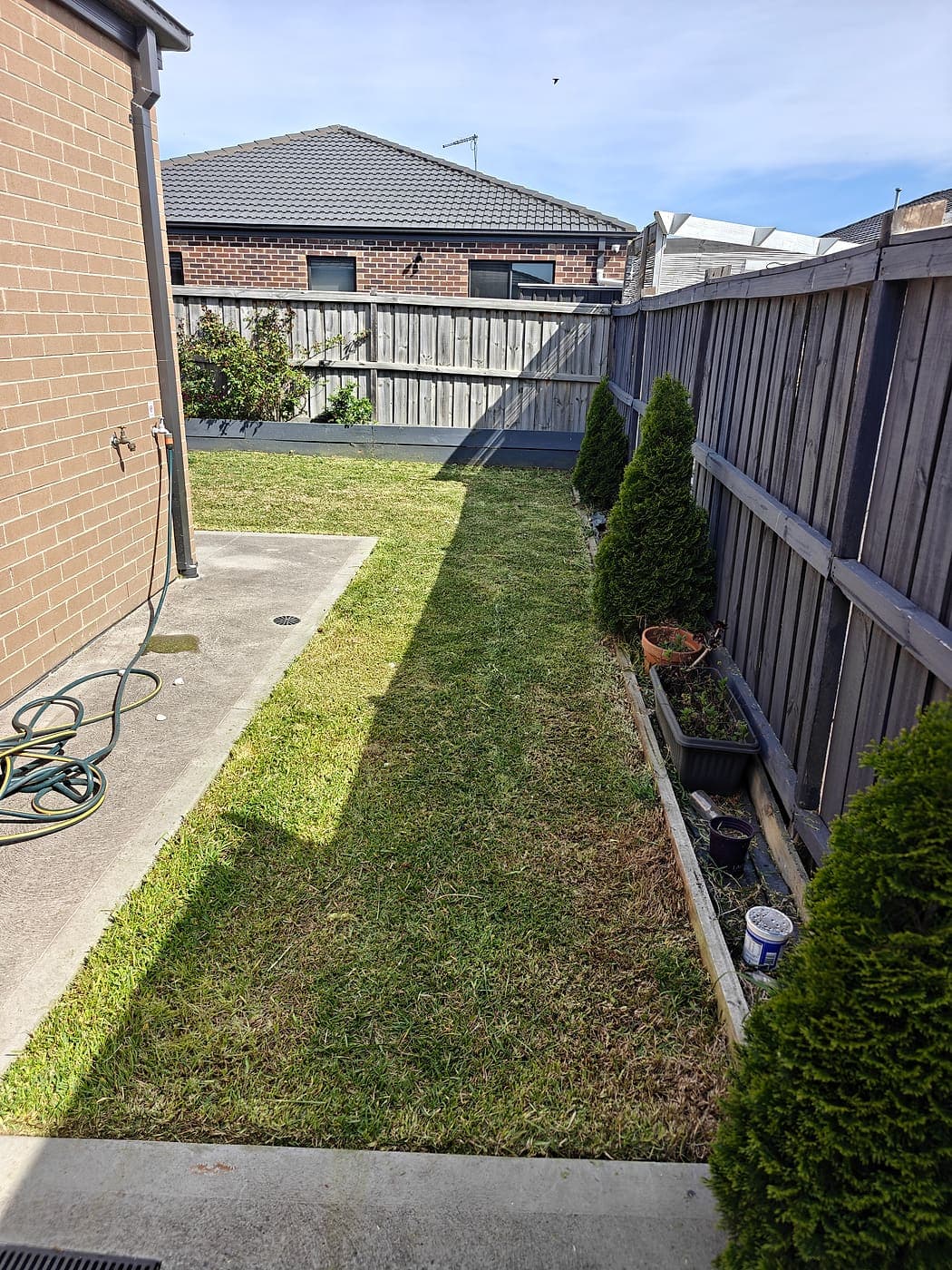
- Mow, but do not scalp. If the lawn grew long during settlement, bring it down over two or three cuts, taking no more than a third of the leaf each time.
- Edge every lawn border. Clean edges along paths and beds make the whole garden look looked after.
- Weed the beds and paving joints, pulling weeds before they set seed.
- Cut out dead wood from shrubs and hedges, and nothing more yet.
- Clear the rubbish left behind: old pots, timber, broken furniture and piles of prunings.
- Clear green waste using your green bin over a few weeks, or have it taken away in one go.
- Rake mulch level over bare patches in beds, and top up only where the soil is exposed.
If the garden beds have no edges, or the edging has rotted, plan to fix that in the coming months. Our comparison of garden bed edging options covers timber, steel, brick and stone.
How do you plan the year in week four?
Week four turns your notes into a plan. Decide what to keep, what to change, what to remove, and when each job suits Melbourne's seasons.
| Season | Good time for | Avoid |
|---|---|---|
| Autumn (March to May) | Planting, lawn repair, dividing perennials, mulch top-up | Hard pruning of spring-flowering shrubs |
| Winter (June to August) | Pruning roses and deciduous fruit trees, planting bare-root plants, planning | Working waterlogged clay soil |
| Spring (September to November) | Fertilising lawns, regular mowing, hedge trimming, mulching | Leaving weeds to set seed |
| Summer (December to February) | Watering within the rules, light trims, mulch checks | Major planting and lawn renovation |
Our complete guide to garden maintenance in Melbourne breaks those seasons down month by month.
Your plan also needs a decision on who does what. Some new owners keep the whole garden themselves, others book regular mowing and do the beds, and some hand over everything while they settle into the house.
What should you hold off on in the first month?
Hold off on anything that cannot be undone. Most first-year regrets come from removing something in the first few weeks.
- Removing established trees. Many councils protect trees above a certain size through local laws, and planning overlays can protect vegetation on particular properties. Check the property in VicPlan (opens in a new tab) and your council's tree rules first.
- Ripping out hedges. A hedge can take years to grow back. Some dividing hedges also count as a fence, so talk to the neighbour before removing one on a boundary.
- Pulling out "dead" plants in winter. Deciduous shrubs, perennials and bulbs may simply be dormant.
- Heavy spraying. Identify weeds first, and follow the product label exactly if you use a herbicide.
- Big planting jobs in summer. New plants need daily water in Melbourne's heat, and Victoria's permanent water saving rules (opens in a new tab) only allow watering systems between 6pm and 10am.
If the house will sit empty while you renovate
Many buyers renovate before moving in, which leaves the garden without anyone around for weeks or months. Lawns grow, letterboxes fill and the property starts to look unoccupied.
A simple mowing and tidy-up cycle keeps it presentable and less of a target. Our article on keeping a vacant house looking cared for has a full checklist for that period.
Bought to rent it out, or moving on from a bigger garden?
Two common situations change the first month. If you bought an investment property, the garden's condition at the start of the first lease matters as much as its looks.
Before the first renters move in, have the garden in the condition you want it kept, then photograph it thoroughly. Our article on photographing the garden for a condition report covers what to capture.
If you have downsized from a big family garden, the new garden may be smaller but no less work per square metre, with courtyards, pots and tight beds. Our article on preparing a big garden for sale when downsizing covers the other end of that move.
What are the common first-month garden mistakes?
Most first-month mistakes come from doing too much, too soon. A few come from doing nothing until spring growth gets ahead.
- Removing plants before seeing a full season, then losing bulbs, perennials or a good shrub.
- Scalping a long lawn in one cut, leaving it brown and patchy for weeks.
- Digging without checking for services, especially near the water and gas supply, the house and the driveway.
- Disturbing old fibro sheds or fences while clearing.
- Ignoring the pool barrier because it looked fine at inspection.
- Letting green waste pile up behind the shed, where it becomes a fire and pest problem.
- No photos or notes, so you cannot remember what the garden looked like last season.
When is it worth bringing in help?
When the garden is bigger than your weekends, the first tidy-up is more than a green bin can handle, or you would rather spend the first month on the house. A professional first visit can also leave you with a clear picture of what the garden needs.
Action Garden's gardening services cover first tidy-ups, regular maintenance, pruning, planting and soil preparation, and our regular maintenance plans run weekly, fortnightly or monthly. You can read more property articles in the real estate section of our blog, and ask for a free quote with a few photos of your new garden.
Your Garden. Our Promise.
From our jobs
Frequently asked
Should I remove plants I do not like straight away in a new home?
Do I need council permission to remove a tree at my new house?
What should I look for in the garden during the first week?
How do I find out what kind of lawn I have bought?
Should I mow the lawn as soon as I move in?
When is the best time of year to start changing a garden I have just bought?
What records should I keep about a new garden?
Sources and further reading
- Due diligence checklist for home buyers (Consumer Affairs Victoria)
- VicPlan (Victorian Government planning maps)
- Before You Dig Australia
- Pool and spa registration requirements (Building and Plumbing Commission)
- Permanent water saving rules (Water Victoria)
Caring for Melbourne gardens since 2019. Updated 18 November 2026.