


Real estate
Keeping a vacant house looking cared for
By the Action Garden team · Updated · 11 min read
Checked against: State Revenue Office Victoria, CFA, Hume City Council, EPA Victoria, Water Victoria
TL;DR
- Long grass, leaf-covered paths and bins left on the street are the clearest signs that nobody is living in a house.
- Mow and edge the front lawn and nature strip on a fixed cycle, weekly to fortnightly in spring and monthly in winter.
- Each visit is also a check of gates, fences, dumped rubbish, storm damage and anything that looks disturbed.
- Council local laws, fire prevention rules, insurance conditions and Victoria's vacant residential land tax can all apply to an empty home.
- A photo after every visit lets an owner, executor or agent keep an eye on the property without driving past.
Why does a vacant house need its garden kept?
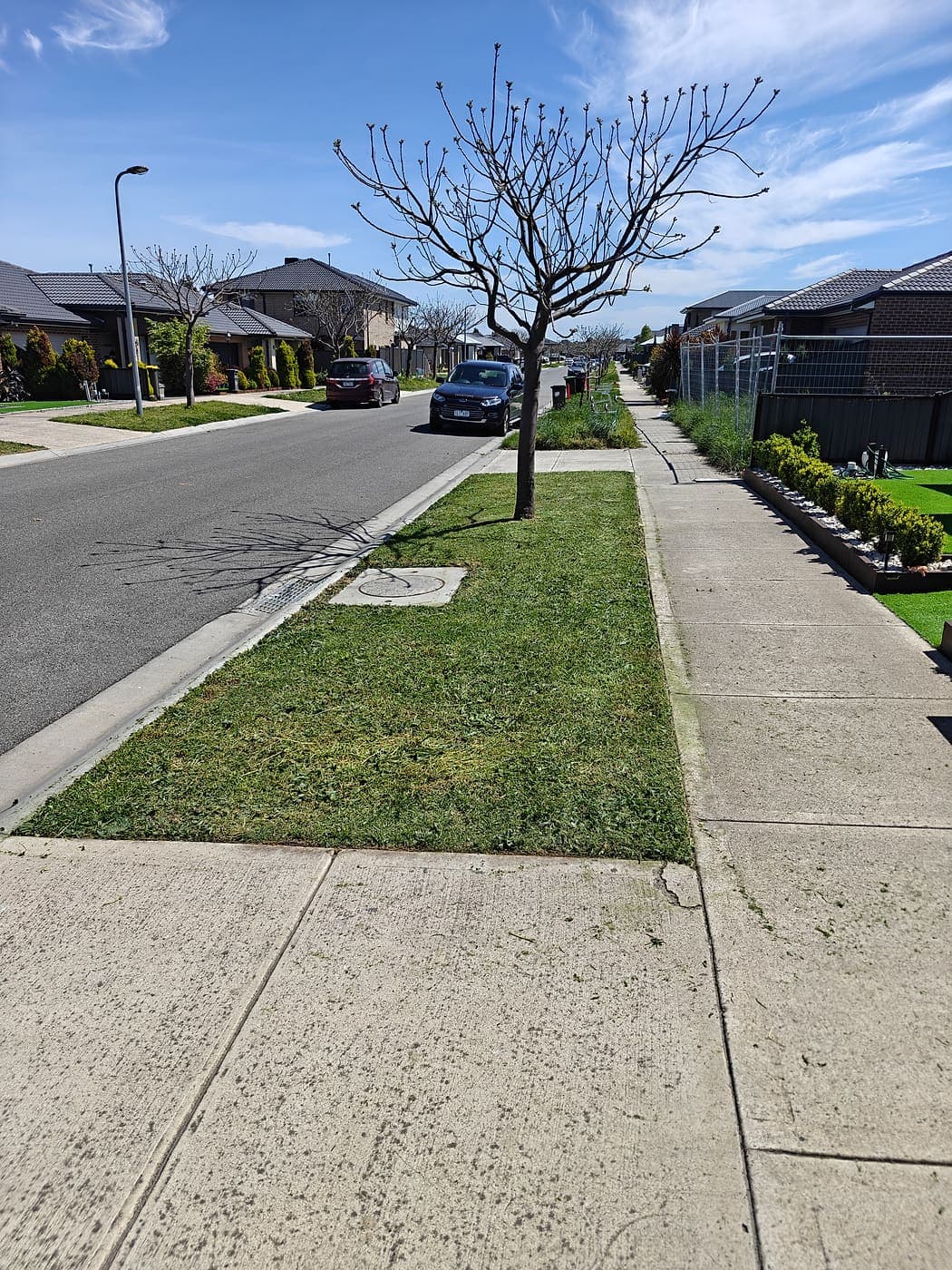
Because the garden is the first thing that tells the street a house is empty. Long grass, leaves drifting across the path and bins left on the nature strip all say that nobody is checking.
Houses sit empty for many reasons: between tenants, during a sale, while an estate is settled, during a renovation, or while an owner is overseas or in care. In each case, the garden keeps growing, and in a Melbourne spring a lawn can go from neat to shaggy in two or three weeks.
An unkept garden also creates practical problems. It can breach council local laws, become a fire hazard in summer, attract dumped rubbish, hide damage, and make a house harder to sell or lease when the time comes.
Two versions of the same house front, side by side. On the left, labelled "Lived in": a mown lawn and nature strip, clean edges, a clear path, bins out of sight and an empty letterbox. On the right, labelled "Empty": long grass running over the path and kerb, leaves piled at the door, a letterbox stuffed with junk mail, bins on the nature strip and a gate left ajar. Arrows from the right-hand features point to small labels: fire fuel, dumped rubbish risk, council notice, buyer first impression.
What should be done on every visit?
Every visit has two jobs: keep the front looking lived in, and check that nothing has changed. The checklist below covers a typical suburban house.
Front of house checklist
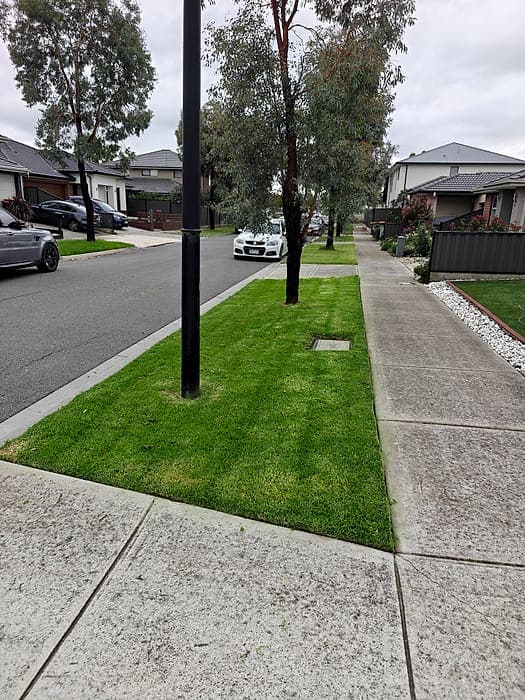
- Mow and edge the front lawn and the nature strip, and blow clippings off the footpath and driveway.
- Clear leaves and litter from the front path, porch and doormat.
- Check the letterbox is not overflowing, and note junk mail for the owner or agent.
- Make sure bins are off the street and not overflowing.
- Trim anything growing over the footpath, the driveway or the letterbox.
Back and sides checklist
- Mow the back lawn and keep grass down along fences and sheds.
- Pull or cut any weeds that are about to seed.
- Check gates and side doors are shut and locked.
- Look for broken fence palings, fallen branches and storm damage.
- Check for dumped rubbish, especially at the front and in laneways.
- Note any water leaks, such as a burst tap or a pooling dripper line.
How often should the garden be done?
The visit cycle should follow the growing season. Melbourne lawns grow fastest from October to December, slow down in summer heat, pick up again in autumn and almost stop in winter.
| Season | Mowing and edging | Other jobs |
|---|---|---|
| Spring (September to November) | Weekly to fortnightly | Weeds before they seed, hedge and shrub trims, first fire fuel check |
| Summer (December to February) | Fortnightly | Keep grass short in fire-prone areas, check watering timers, clear dry leaves |
| Autumn (March to May) | Fortnightly | Leaf clearing from paths and gutters, shrub trims |
| Winter (June to August) | Monthly or as needed | Storm damage checks, keep paths clear of moss and leaves |
A large block, a property on the urban fringe or a house being marketed for sale may need more. A small courtyard unit may need less.
Our complete guide to lawn mowing in Melbourne explains how cutting height and frequency change through the year for each common grass.
How do you keep the lawn healthy with nobody living there?
Mow at the right height and on time, and keep an eye out for problems nobody else will notice. A lawn at an empty house suffers mainly from neglect followed by a hard catch-up cut.
- Keep the height up. Cutting no more than a third of the leaf each time keeps the lawn green. A lawn left for six weeks and then scalped turns brown and patchy.
- Edge every visit. Sharp edges on the nature strip and path do more for a "lived in" look than anything else.
- Water within the rules. A timer can keep a lawn alive through summer, but Victoria's permanent water saving rules (opens in a new tab) only allow watering systems between 6pm and 10am.
- Watch for pests. Lawn armyworm and curl grubs can brown a lawn quickly in late summer and autumn, and nobody will see it happening. Our guide to curl grubs and lawn armyworm explains how to spot them.
- Deal with thatch later. If a kikuyu or couch lawn has grown long and spongy, our guide on how to dethatch a kikuyu or couch lawn covers when it is worth doing before a sale or new lease.
What about fire season and dumped rubbish?
These are the two biggest risks an empty garden creates. Both get worse the longer nobody is checking.
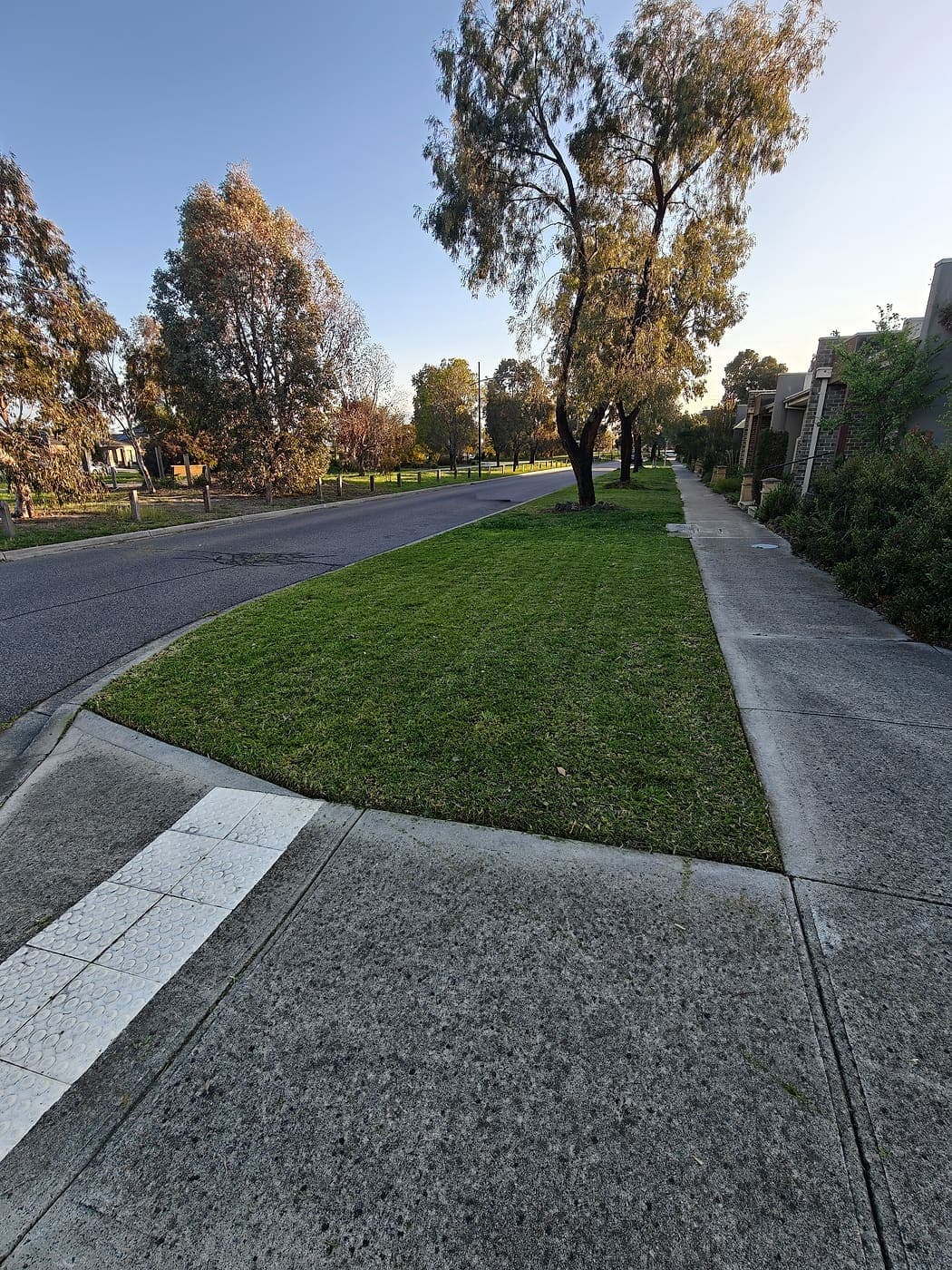
Fire fuel. In summer, long dry grass, fallen leaves and piles of prunings are fuel. In fire-prone parts of Melbourne, councils issue fire prevention notices that require grass and fuel to be cut back by a set date, and the CFA (opens in a new tab)'s rules restrict burning off during the Fire Danger Period. Mowing and taking green waste away is the safe approach.
Dumped rubbish. An empty-looking house attracts it, especially on the nature strip and down side laneways. EPA Victoria (opens in a new tab) treats illegal dumping as an offence, and councils can require it to be cleared, so remove it quickly and report repeated dumping to your council.
Some problems at a vacant house are beyond a mowing visit. Fallen or split branches over the house or a neighbour's property, trees near power lines and storm-damaged trees need a qualified tree professional. Do not move dumped items that could be hazardous, such as broken fibro sheeting, drums or syringes: report them to your council or EPA Victoria. Gutters above a single storey are a ladder job for a professional.
Fire prevention notices
In fire-prone municipalities on Melbourne's fringe, councils inspect private land before and during the fire season. If grass or other fuel is a hazard, they can issue a fire prevention notice with a deadline to clear it.
If the work is not done, the council can arrange it and charge the owner, and fines can apply. Hume City Council (opens in a new tab), for example, explains its fire management inspections on its website. If a vacant property is in an area like this, book the summer mowing early.
What rules and conditions apply to an empty home?
Several sets of rules can apply, and none of them are gardening rules as such. This article does not give legal, tax or insurance advice; check each source for your property.
- Council local laws. Most councils have local laws about overgrown, unsightly or dangerous land, and about bins left on the nature strip.
- Fire prevention. In fire-prone areas, councils can issue fire prevention notices, and the CFA sets what you can and cannot do during the Fire Danger Period.
- Insurance. Many home insurance policies have conditions when a home is unoccupied for a set time. Read yours.
- Vacant residential land tax. Victoria's vacant residential land tax can apply to residential land that was vacant in the previous year. The State Revenue Office (opens in a new tab) sets out the tests, exemptions and the 15 February notification date.
- Owners corporations. In a unit or townhouse complex, common garden areas belong to the owners corporation; your job is your own lot.
What changes when the house is vacant for a sale or between leases?
The standard rises. A house being marketed or re-leased has to look good for buyers and renters, not just for the street.
During a sale campaign, the garden needs to look fresh for every open inspection, which usually means a mow and edge in the days before each one. Our article on how agents can brief a gardener for a fast turnaround covers how to set that up. If the house is empty because you are downsizing, our article on preparing a big garden for sale goes through the bigger jobs.
Between leases, the garden should be returned to the condition the next renters will sign off on. Before they move in, photograph it from the same spots as last time, as our article on photographing the garden for a condition report explains.
Deceased estates and long absences
When a house is empty because the owner has died or moved into care, the family or executor is often managing it from a distance while dealing with much more. A simple, fixed garden cycle takes one job off the list.
Agree who the gardener reports to, who approves extra work such as a big clean-up or rubbish removal, and how invoices are sent. Photos after each visit help everyone involved see the same thing.
How do you manage the garden from a distance?
Set it up once so it runs without you: access, scope, timing and reporting. The less depends on someone remembering, the better it works.
- Access: a side gate code or a lockbox, and a note of any rooms, sheds or areas that are off limits.
- Scope: a short written list of what happens every visit, and what needs approval first.
- Timing: a fixed day on a weekly, fortnightly or monthly cycle, stepped up in spring.
- Green waste: clippings taken away, so the green bin is not left overflowing on the street.
- Reporting: a photo after each visit and a message if anything looks wrong.
Action Garden's clients do not need to be home for a visit as long as the garden is accessible, and we send a photo when we are done. Clippings and cuttings leave with us unless you ask us to use your green bin, and property managers can be invoiced with the property address and photos attached.
What are the common mistakes with a vacant property garden?
Most of them come from waiting until the garden looks bad before acting.
- Waiting for a problem instead of booking a fixed cycle, then paying for a heavy catch-up cut.
- Forgetting the nature strip, which is the most visible strip of grass on the property.
- Leaving bins on the street for days after collection.
- Letting green waste pile up behind the shed, where it becomes fire fuel and a home for pests.
- Ignoring the watering timer until a summer heatwave has already browned the lawn.
- Missing a council notice because nobody is collecting the mail.
When is it worth handing it over?
When you cannot get there often enough, the property is a long way from home, or you are managing it for someone else. A regular mowing cycle with a photo after each visit keeps the house looking occupied and gives you a record.
Our lawn mowing service covers scheduled mowing, edging and clipping removal for houses with nobody at home. You can read more property articles in the real estate section of our blog, and ask for a free quote with the address and a photo of the front.
Your Garden. Our Promise.
From our jobs
Frequently asked
How often should the lawn be mown at a vacant house?
Does an empty house affect home insurance?
Can the council make me clean up a vacant property?
Is there a tax on vacant homes in Victoria?
Should I turn off the watering system at a vacant house?
What should I do with the mail and bins at an empty house?
How do I check on a vacant house garden from interstate?
Sources and further reading
- Vacant residential land tax (State Revenue Office Victoria)
- Fire Danger Period and Total Fire Ban restrictions, can I or can't I (CFA)
- Fire management (Hume City Council)
- Dumped waste (EPA Victoria)
- Permanent water saving rules (Water Victoria)
Caring for Melbourne gardens since 2019. Updated 18 November 2026.