


Lawn care guide
Curl grubs and lawn armyworm: how to spot them and your options
By the Action Garden team · Updated · 11 min read
Checked against: Sustainable Gardening Australia, Agriculture Victoria, Butterfly House, Australian Lepidoptera, EPA Victoria
TL;DR
- Curl grubs are C-shaped, creamy white larvae that eat roots; damaged turf lifts easily, like a loose carpet.
- Armyworms are caterpillars that eat leaves at night and hide by day, so damage can spread in days.
- Confirm the pest before acting, with a soapy water drench for caterpillars and a turf lift test for grubs.
- A healthy, well-watered lawn tolerates a few pests; birds, deep watering and feeding often do the rest.
- If you use an insecticide, it must be registered for the pest and for lawns, and the label is the rule.
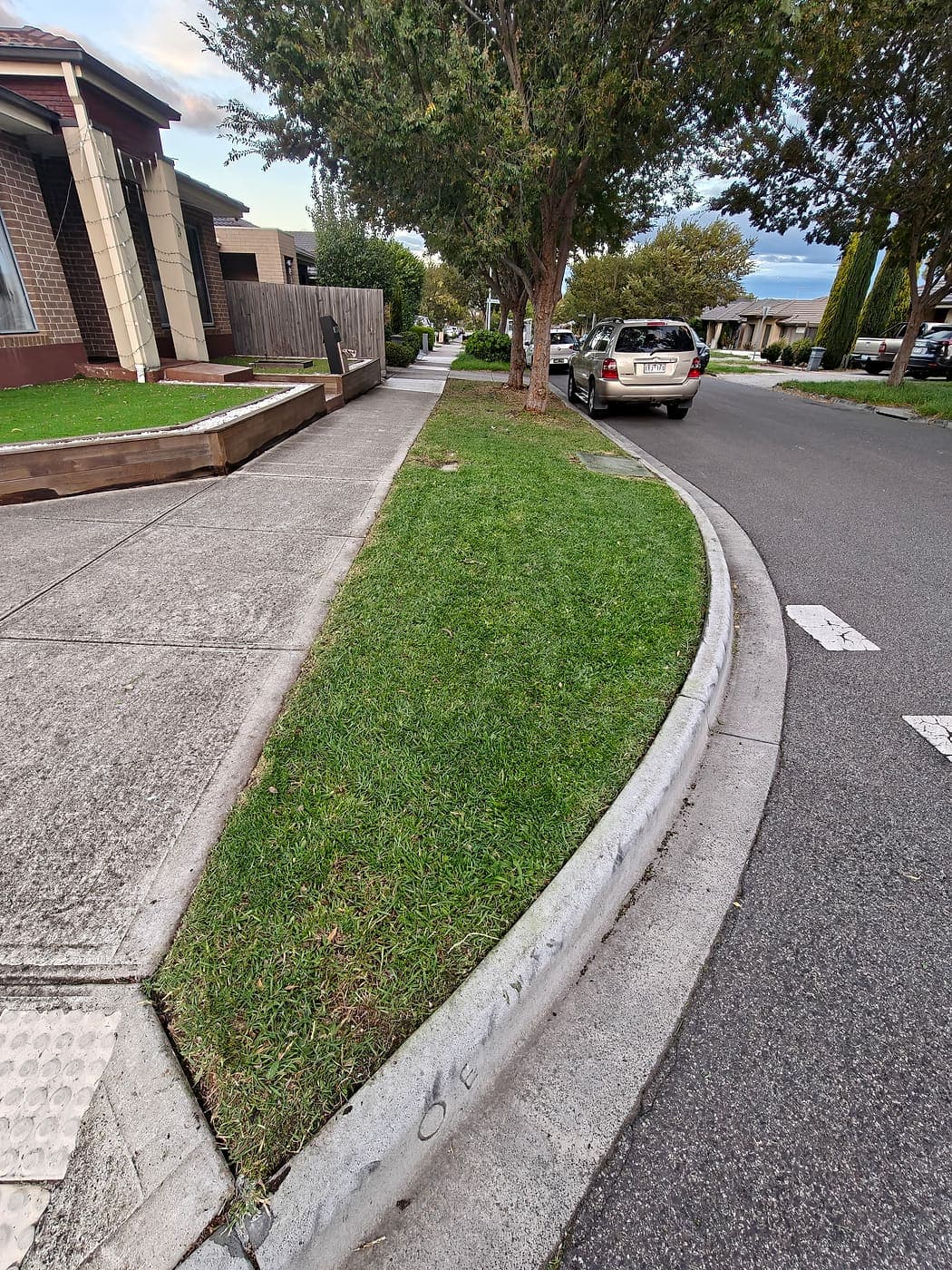
How do you know if lawn pests are causing the brown patches?
Pest damage looks different from drought. Grass over curl grubs lifts easily because its roots are gone, and grass eaten by armyworms has chewed, ragged leaves and spreads fast. A dry patch, by contrast, stays anchored and greens up after a deep watering.
Many brown patches in Melbourne lawns are not pests at all. Heat, dog urine, compaction, shade and uneven watering cause most of them. That is why the first job is to rule pests in or out before you spend anything on treatment.
Clues that point to pests:
- Birds digging. Magpies, ravens and ibis working the same patch day after day, leaving small cone-shaped holes.
- Turf that rolls back. Sustainable Gardening Australia (opens in a new tab) describes curl grub damage this way: "the grass can be easily pulled out of the ground or rolled back like a carpet."
- Patches that grow over days. A brown front that moves across the lawn, often with greener grass ahead of it, is typical of armyworms.
- Chewed leaf tips and small green or brown droppings in the thatch.
- Moths around outdoor lights at night in late summer, followed a couple of weeks later by damage.
- Watering makes no difference. Dry patches respond to a deep soak; pest damage does not.
What do curl grubs look like?
Curl grubs are soft, creamy white larvae that lie curled in a C shape, with a brown head and three pairs of legs near the head. Sustainable Gardening Australia describes them growing to about 25 to 30 mm. They are the larvae of scarab beetles, including African black beetle and the beetles often called cockchafers in southern states.
They live in the top few centimetres of soil, just under the roots. Younger grubs feed on decaying organic matter; older ones move on to grass roots, which is when the damage shows.
| Stage | Season in Melbourne | What happens |
|---|---|---|
| Adult beetles | Spring | Mate and lay eggs in the lawn |
| Young grubs | Early summer | Hatch and feed near the surface |
| Older grubs | Late summer to autumn | Feed hard on roots; damage shows |
| Pupae | Autumn to winter | Rest in the soil |
That pattern, set out by Sustainable Gardening Australia, explains why the damage often appears in a dry spell in late summer or early autumn. A lawn with half its roots eaten can cope while the soil is moist, then collapses in the first heat.
Which beetle is it?
For most home lawns, the exact species matters less than the stage and the numbers. African black beetle adults are shiny black and around 12 to 15 mm long, and they are sometimes seen wandering on paths in spring. Cockchafer grubs are similar to look at and also feed on roots. If you need the species, for example because a lawn keeps failing year after year, collect a few grubs in a jar of methylated spirits and take them to a garden centre or a turf specialist to identify.
Official pages on lawn grubs are thin, because most government research focuses on pasture and crops. This guide uses Sustainable Gardening Australia and other horticultural sources, and we have said so where it matters.
What do armyworms look like, and why is the damage so fast?
Armyworms are moth caterpillars that eat grass leaves at night and hide in the thatch or soil by day. The Butterfly House account of lawn armyworm describes young caterpillars as green with lengthwise lines, later turning brown with rows of dark markings, growing to about 3 cm, and curling into a spiral when disturbed.
Because they move together and feed every night, a lawn can go from green to brown and chewed in a few days. Damage often starts at one side and spreads as a front.
The species varies across Australia. Lawn armyworm, *Spodoptera mauritia*, is recorded mainly in the warmer states, and the Butterfly House list does not include Victoria. In Melbourne, caterpillar damage to lawns can involve other armyworm species: Agriculture Victoria (opens in a new tab) notes that southern and inland armyworm caterpillars "can be found in autumn and winter, often in relatively high densities" in south-eastern Australia. For a home lawn, the test and the response are the same whichever species it is.
How do you test a lawn for curl grubs and armyworms?
Use a soapy water drench for caterpillars and a turf lift test for grubs. Both take about 15 minutes and cost almost nothing, and they stop you treating a pest that is not there.
The soap test for armyworms
- Mix a squirt of dishwashing detergent into a full bucket of water.
- Pour it slowly over a square metre at the edge of a brown patch, where the green and brown grass meet.
- Watch for 10 minutes. Caterpillars irritated by the soap wriggle to the surface.
- Count them. One or two is normal. A dozen or more in a square metre, with fresh damage, is an outbreak.
Do the test late in the day, when caterpillars are close to the surface. Sustainable Gardening Australia also suggests a biodegradable detergent drench to bring curl grubs up for the birds.
The lift test for curl grubs
- Cut three sides of a square about 30 by 30 cm with a spade or knife, at the edge of a damaged patch.
- Fold the turf back like a flap.
- Count the grubs in the roots and the top 50 mm of soil.
- Repeat in two or three places, including a healthy area for comparison, then press the flaps back and water them in.
There is no official threshold for home lawns. As a rule of thumb used in turf guides, a few grubs in a square are normal in a healthy lawn, while counts that run into the high single figures or more, with turf lifting and patches spreading, are worth acting on.
Quick decision guide
Is it pests, and what next?
- Turf lifts like carpet, grubs in the lift test: curl grubs. Water deeply, feed, let the birds work, and consider treatment if counts are high.
- Chewed leaves, caterpillars in the soap test: armyworms. Act quickly if the front is moving, then water and feed for regrowth.
- Grass anchored, no pests found, greens after watering: not pests. Look at watering, heat, compaction or dog urine.
- Soft, green, low growth in shade: moss rather than pest damage. See our guide to moss in lawns.
- Nothing found, damage keeps spreading: test again at dusk and in a different spot, or get the lawn checked.
What are your options for treating curl grubs and armyworms?
Start with the lawn's own recovery and natural controls, and use an insecticide only when testing shows high numbers and the lawn is losing ground. A well-watered, well-fed kikuyu or couch lawn can outgrow a moderate infestation.
Non-chemical options
- Water deeply. Sustainable Gardening Australia advises keeping the lawn "well irrigated, especially over spring and summer (restrictions permitting)", noting that adults avoid laying in wet areas and that the grubs cannot pupate in wet soil.
- Let the birds work. Magpies and other birds remove a lot of grubs. The holes are cosmetic and grow over.
- Trap the beetles. Sustainable Gardening Australia suggests laying wet carpet or a hessian bag on affected areas overnight in spring, then collecting the beetles sheltering under it in the morning.
- Beneficial nematodes. Products containing nematodes that attack curl grubs are sold for lawns. They need moist soil and mild weather to work.
- Feed and raise the mowing height. A lawn with more leaf and more root replaces what pests take.
Chemical options
If you decide to use an insecticide, the label is the law. Choose a product whose label lists both the pest (curl grubs or armyworm) and use on lawns or turf, and follow its rate, timing, watering-in and re-entry directions exactly. We do not recommend particular brands.
- Time it right. Curl grub treatments work best on young grubs in early to mid summer; armyworm treatments work best in the late afternoon, when caterpillars are about to feed.
- Mow flowering weeds first. Clover and other flowering weeds in the lawn attract bees, so mow the flowers off before applying anything.
- Keep it off hard surfaces and out of drains. EPA Victoria (opens in a new tab) warns that anything washed into a stormwater drain flows untreated to creeks and the bay. Sweep granules off paths back onto the lawn, and do not apply before heavy rain.
A cross-section of a lawn at night. Above the soil, green grass blades with ragged, chewed tips; a small brown caterpillar sits on a leaf, and a moth flies near a porch light in the corner. In the thatch, a second caterpillar curls into a spiral. Below the surface, in the top 50 mm of soil, white C-shaped curl grubs sit among short, chewed roots, while a healthy patch beside them shows long roots reaching deeper. A small inset shows the turf folded back like a flap for the lift test.
How do you help a damaged lawn recover?
Water deeply, feed once the pest is under control, raise the mowing height, and give the lawn three to four weeks of warm weather before deciding what to patch. Lawns with runners usually recover far better than they look in the first week.
- Water deeply within Victoria's permanent water saving rules, so the remaining roots can take up enough moisture. Grub-damaged turf has few roots, so it dries out fast.
- Feed at the label rate once testing shows numbers are down. New growth replaces what was eaten.
- Raise the mowing height a notch for the next few cuts, so the lawn keeps as much leaf as possible.
- Keep traffic off lifted turf. Press loose turf back down and water it in so new roots can grow into the soil.
- Wait and assess. After three to four weeks of warm weather, patch only the areas where runners have not come back. Our guide to repairing bare patches in a lawn covers seed, runners and turf.
Kikuyu is especially good at bouncing back from leaf damage, which is one reason so many Melbourne homes keep it; our article on kikuyu lawns in Melbourne looks at its strengths and its downsides. If a shaded patch stays soft, green and low rather than brown, it is more likely moss than pest damage, and our guide to moss in lawns explains the causes.
Laying new turf over a pest problem
If an area has to be re-turfed, check the soil underneath before the new rolls go down. Dig over the bed and look for grubs; birds will clear many of them if the soil is left open for a day. New turf has short roots for its first few weeks, which makes it easy for grubs to damage, so keep it well watered and do a lift test in late summer of its first year. Our guide to new turf care covers watering and the first mows.
How do you make a lawn less attractive to these pests?
A dense, deep-rooted, evenly watered lawn is the best defence. It tolerates more grubs before showing damage and recovers faster from caterpillar attacks.
- Water deeply and less often through spring and summer, inside the permitted hours, so roots go down and the soil stays moist enough to discourage egg-laying.
- Keep thatch under control. A thick, spongy thatch layer gives caterpillars shelter; dethatching kikuyu and couch in spring helps.
- Mow at the right height for your grass and never scalp in summer.
- Feed in the growing season, not in excess, so the lawn keeps up with wear.
- Check in late summer. A quick soap test in February and March, when damage is most likely, finds an outbreak early.
Some common beliefs about lawn pests do not hold up, such as the idea that birds digging means they are damaging a healthy lawn. Our article on lawn care myths we hear every week covers several of them.
Insecticides carry real risks to children, pets, bees and waterways, and the label instructions are strict. If you are not confident reading and following a label, if you have a fish pond, a dam or a creek nearby, or if damage keeps spreading after you have tested and watered, get the lawn checked by someone experienced. Never mix products, never use a product that is not registered for use on home lawns, and never pour leftovers down a drain.
Is it worth having the lawn checked?
If brown patches are spreading and you are not sure what is causing them, a quick look on the next mowing visit is often enough to tell pests from heat or watering problems. Our lawn mowing service can include add-ons such as fertiliser and weed control, and the team can point out what they notice on the day. For the wider picture of keeping a lawn healthy through the year, read our complete guide to lawn mowing in Melbourne and the rest of our lawn care guides.
When you are ready, get a free quote.
Your Garden. Our Promise.
From our jobs
Frequently asked
Why are birds digging up my lawn at dawn?
How can I tell curl grub damage from a dry patch?
What time of year do curl grubs damage Melbourne lawns?
Do armyworms come back every year?
Is it safe for dogs and kids to use the lawn after an insecticide?
Will a lawn eaten by armyworm grow back?
Can beneficial nematodes control curl grubs?
Sources and further reading
- White curl grub (Sustainable Gardening Australia)
- Armyworms (Agriculture Victoria)
- Lawn armyworm, Spodoptera mauritia (Butterfly House, Australian Lepidoptera)
- Reduce stormwater pollution (EPA Victoria)
Caring for Melbourne gardens since 2019. Updated 18 November 2026.