


Lawn care guide
Moss in the lawn: why it grows and how to get rid of it
By the Action Garden team · Updated · 13 min read
Checked against: Royal Horticultural Society, University of Wisconsin Extension, Queensland Government, Bureau of Meteorology, Yarra Valley Water
TL;DR
- Moss is a symptom, not the disease. It fills gaps left by grass struggling with shade, wet soil, compaction or low mowing
- In Melbourne it peaks from June to September, when kikuyu, couch and buffalo are dormant and the ground stays damp
- Rake or scarify the moss out once the grass is growing strongly in spring, then repair the bare ground left behind
- Moss killers only clear what is there; follow the label, keep iron products off paving, and rake out the dead moss
- Lasting control means more light, better drainage, less compaction and a higher cut, or a groundcover where grass will never thrive
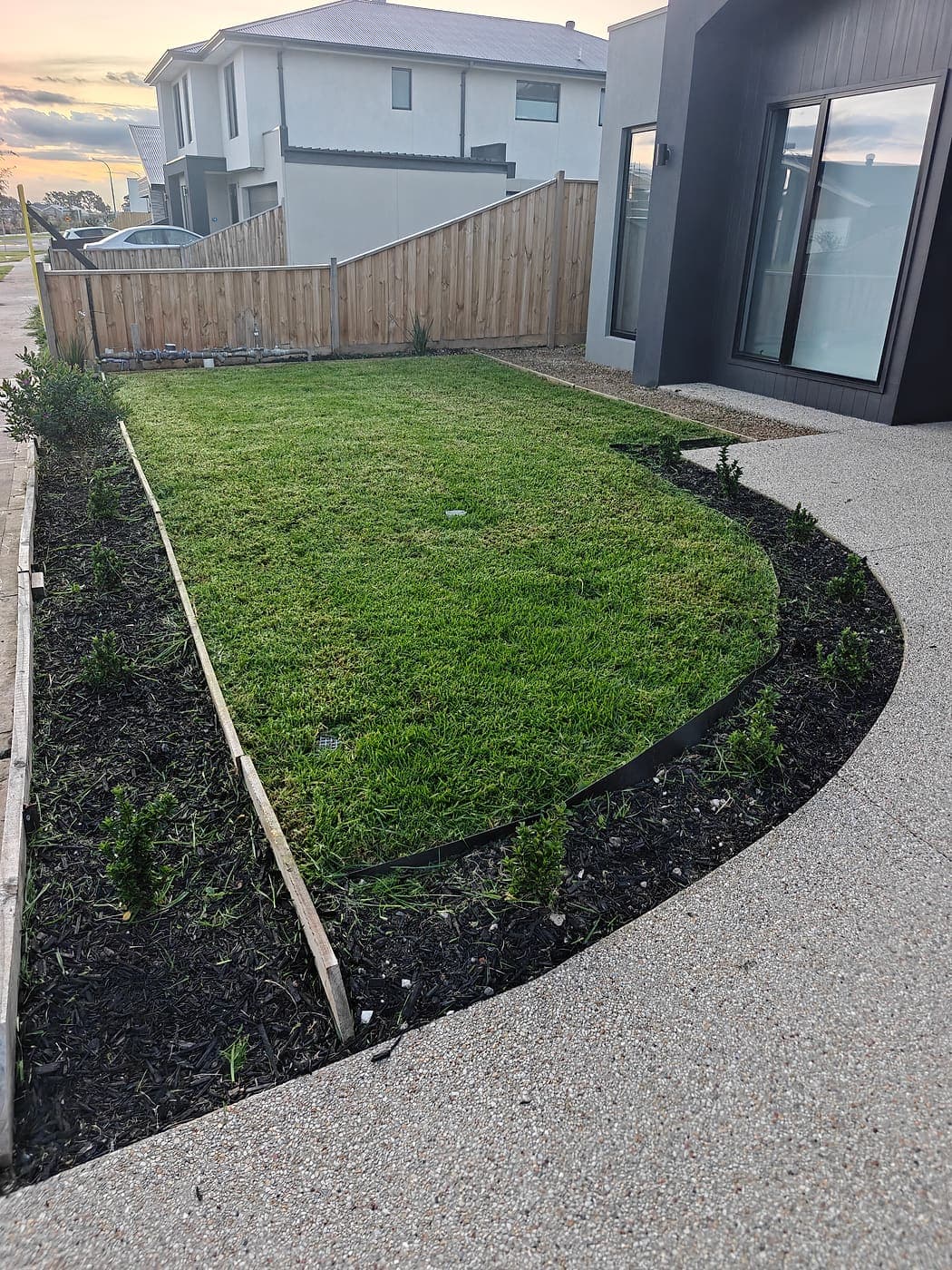
Why is moss growing in my lawn?
Moss grows in a lawn because the grass in that spot is too weak to keep it out. The Royal Horticultural Society (opens in a new tab) lists the usual reasons as sparse or patchy grass, shade, mowing too low, compacted soil, damp or waterlogged ground and acidic soil. Most mossy lawns have two or three of these at once.
The University of Wisconsin's turf advice puts it plainly: shade is usually the biggest factor, and the key is to correct "the cause of lawn decline". Moss does not push grass out. It moves into the space that thinning grass leaves behind, and it is very good at holding that space once it has it.
That is why spraying or raking alone rarely works for long. Unless the conditions change, the grass thins again and the moss returns. This guide covers how to read the cause on your lawn, how to remove the moss at the right time, and how to change the conditions so it stays gone.
Why does moss appear in Melbourne lawns in winter?
Moss shows up in Melbourne lawns mostly from June to September, because that is when the ground stays wet and the main lawn grasses stop growing. Kikuyu, couch and buffalo are warm-season grasses that go dormant in the cold. While they sit still, moss keeps growing in the cool, damp conditions it prefers.
The Bureau of Meteorology (opens in a new tab)'s averages for Melbourne (Olympic Park) show the pattern. Winter rain totals are modest, around 41 to 47 mm a month, but rain falls on more days: about 8.6 days in June, 9.0 in July and 9.3 in August with 1 mm or more. Short, cool days mean that moisture is slow to dry, especially on the shady side of a house or fence.
| Month | Mean days with 1 mm or more of rain | What it means for moss |
|---|---|---|
| February | 3.6 | Moss dry and dormant, grass growing fast |
| May | 8.5 | Grass slowing, surface staying damp |
| July | 9.0 | Peak moss growth, warm-season grass dormant |
| August | 9.3 | Moss at its most visible before spring |
| October | 9.1 | Grass waking up; the time to act |
Source: Bureau of Meteorology, climate statistics for Melbourne (Olympic Park).
By late winter a lawn that looked fine in March can have green cushions of moss along fence lines, under trees and in low spots. Then, as the soil warms in October and the grass wakes up, the moss fades and dries out over summer. That cycle repeats every year until the cause is fixed.
How do you work out what is causing the moss?
Look at where the moss is, then match the pattern to a cause. The location almost always tells you which condition is driving it.
| Where the moss is | Most likely cause | First thing to check |
|---|---|---|
| South side of the house, fence or hedge | Shade and slow drying | Hours of direct sun in winter |
| Under trees | Shade, root competition, dry then wet soil | Canopy density and how low branches hang |
| Low spots and along paths | Waterlogging and compaction | Does water pool after rain? |
| Patches across an open, sunny lawn | Mowing too low, thin or hungry grass | Mower height and feeding history |
| Near sprinklers or downpipes | Overwatering or a leak | Run times and any wet spots in dry weather |
| Over the whole lawn | Several causes together | Drainage, compaction and mowing height first |
The Queensland Government (opens in a new tab)'s waterwise lawn advice notes that moss, toadstools and bright green patches can be signs of overwatering. If moss appears in summer in a sunny area, check the irrigation before anything else.
Quick decision guide
What is behind the moss in this spot?
- Does the spot get less than about four hours of direct sun in winter? If yes, shade is the main cause. Prune for light, mow higher, or plan for a groundcover.
- Does water pool or the ground feel spongy a day after rain? If yes, drainage and compaction are the cause. Aerate and improve the soil.
- Is the mower set at its lowest height, or is the grass thin and pale all over? If yes, low mowing and weak grass are the cause. Raise the cut and feed in spring.
- Is it wet near a sprinkler or downpipe even in dry weather? If yes, cut back the watering or fix the leak.
- None of the above? Test the soil pH, then look at the lawn again in spring once the grass is growing.
How to check drainage and compaction yourself
Push a long screwdriver into the lawn a day or two after rain. If it slides in easily for 100 mm or more, the soil is reasonably open. If you hit hard resistance in the top 50 mm, the soil is compacted.
For drainage, dig a hole about 300 mm deep in the mossy area, fill it with water, let it drain, then fill it again. If the second fill is still standing after several hours, the soil drains poorly. On clay, that is common, and the answer is regular aeration and organic matter, not more watering.
When is the best time to remove moss from a Melbourne lawn?
The best time is mid spring, usually October to November, once your warm-season grass is growing strongly. The RHS gives the same advice for its own climate: remove moss when "the grass is growing strongly", because healthy grass can then fill the gaps straight away.
Removing moss in winter leaves bare soil that the dormant grass cannot cover for months, and moss or weeds simply move back in. Removing it in summer risks exposing soil and runners to heat and drying.
For tall fescue and other cool-season lawns, which grow in autumn and spring, early autumn after the first rain is also a good window. Our complete lawn mowing guide explains how each grass behaves through the Melbourne year.
How do you get rid of moss in a lawn?
Remove the moss physically, then repair and strengthen the grass. Removal on its own is half the job.
- Mow first. Mow the area at your normal height and catch the clippings, so the moss is easy to reach.
- Rake or scarify. For small patches, use a spring-tine rake and pull firmly in two directions. For larger areas, a scarifier or dethatcher lifts moss and thatch together. Expect the lawn to look rough afterwards.
- Collect the moss. Rake it up and add it to compost in small amounts, mixed with other material, since it breaks down slowly. It can also go in the green waste bin.
- Aerate. Core aerate compacted and wet areas while the soil is moist, leaving the cores on the surface to break down. Our guide to aerating a compacted lawn on Melbourne clay covers the method.
- Top-dress. Brush a thin layer of washed sand or a sandy loam mix into the holes and over any hollows.
- Repair the gaps. Oversow or patch the bare ground left behind. The steps are in our guide on how to repair bare patches in a lawn.
- Feed and water. Feed at the label rate and keep the repaired areas moist until they knit in.
A side-on cross-section of two lawn strips. On the left, a sunny strip of dense grass with deep roots in open, crumbly soil; water drains down through the soil and moss spores on the surface find no gaps. On the right, a shaded strip under a fence shadow, with thin grass and shallow roots in compacted clay. Water sits in a layer at the surface, and green moss cushions fill the gaps between the grass plants. Labels point to the four causes: shade, compaction, wet surface, low mowing.
What about moss killers?
Moss killers can clear a heavy infestation faster than raking, but they do not stop it returning. The RHS notes that chemical moss killers give only temporary control unless the conditions that let moss establish are changed.
If you use one, choose a product labelled for moss in lawns and follow the label exactly for rate, timing, watering and re-entry. Products based on iron turn moss black within days; the dead moss still needs to be raked out. Iron products can stain concrete, pavers and render, so keep granules and spray off hard surfaces and sweep up any that land there.
How do you stop moss coming back?
Change the conditions that let it in. These are the fixes that make the difference, roughly in order of how often they matter in Melbourne lawns.
- Mow higher. Raise the cut, especially on shady areas. Taller grass shades the soil surface and leaves less room for moss. Kikuyu, buffalo and fescue all hold up better in shade with more leaf.
- Let in light. Thin overhanging branches and lift low canopies where you can. Moss on the shady side of a fence is often reduced by trimming a hedge or shrub that blocks the low winter sun.
- Relieve compaction. Aerate once or twice a year in heavily used or clay areas, and keep foot traffic and wheelie bins off the lawn when it is wet. The same goes for the mower: our post on whether you should mow wet grass explains why waiting a day helps.
- Improve drainage. Top-dress low spots over a couple of seasons to lift them, and direct downpipes away from the lawn. Persistent waterlogging may need drainage work.
- Water less in the cool months. A lawn rarely needs watering from late autumn to early spring in Melbourne. In summer, water deeply and less often, inside the rules: Yarra Valley Water (opens in a new tab)'s permanent water use rules allow watering systems only between 6pm and 10am, while a hand-held hose with a trigger nozzle can be used at any time.
- Feed in the growing season. A spring feed thickens warm-season grass so it fills gaps before moss can. Feed less in shade, where grass grows slowly; Wisconsin's advice is about half the nitrogen of a sunny lawn.
- Fix the pH only if the test says so. If a soil test shows strongly acidic soil, lime at the rate the product label gives for your soil type. Do not lime a lawn on the assumption that moss means acidity.
When grass is the wrong answer
Some spots will never hold a dense lawn: a narrow south-facing side path, the base of a large evergreen tree, or a strip that stays wet all winter. Fighting moss there every year costs time and water.
Options that work better include a shade-tolerant groundcover, mulched garden beds, stepping stones with low plants between them, or simply accepting a soft moss surface where nobody walks. Our guide to growing a lawn in shade in Melbourne covers which grasses cope with how much shade, and where to stop trying.
What moss treatment mistakes should you avoid?
Most failed moss treatments come from fixing the symptom and not the cause. Avoid these and your effort lasts.
- Treating in late autumn or winter. The dormant grass cannot fill the gaps, so the moss returns by spring.
- Raking and walking away. Bare soil left after removal is an open invitation to moss and weeds. Always repair the gaps.
- Liming without a test. Lime only helps if the soil is acidic. On neutral or alkaline soil it can make things worse for the grass.
- Scalping the lawn. Very low mowing is one of the most common causes of moss on sunny lawns.
- Watering on a fixed timer through winter. Melbourne winters rarely need it, and wet soil feeds the moss.
- Using household products. Vinegar, bleach and detergents can damage grass and soil life.
- Letting iron products touch paving. Rust-coloured stains on concrete are hard to remove.
Moss on hard surfaces is a separate problem with a different fix. If your paths and driveway are slippery as well, see our guide to cleaning moss, mould and slippery paths.
Get help if moss covers most of the lawn, if the cause looks like drainage or a leaking pipe, or if large trees need pruning to let in light. Pruning above shoulder height or near power lines is not a DIY job. If you choose a chemical moss killer and are unsure about the label, pets, children or nearby waterways, ask for advice before applying it.
Is it worth getting help with a mossy lawn?
It is worth handing over when the moss keeps returning, or when the fix involves scarifying, aerating and repairing a whole lawn in the same spring window. Regular mowing at the right height for your grass, with clippings removed, is the simplest long-term defence.
Our lawn mowing service sets the cut height to your grass type and the season, and can add aeration, dethatching, fertiliser and weed control. The other lawn care guides cover the next steps, including caring for new turf if you decide to re-lay a badly affected area.
When you are ready, get a free quote.
Your Garden. Our Promise.
From our jobs
Frequently asked
Does moss in my lawn mean the soil is acidic?
Will moss kill the grass underneath it?
Why does moss vanish from my lawn every summer?
Can I use dishwashing liquid or vinegar to kill moss on a lawn?
Is it worth putting a moss killer on before winter?
How do I stop moss growing back on the shady side of the house?
Can moss come back after the lawn has been scarified?
Sources and further reading
- Moss in lawns (Royal Horticultural Society)
- Managing moss problems in lawns (University of Wisconsin Extension)
- Waterwise gardening, lawns (Queensland Government)
- Melbourne (Olympic Park) climate statistics (Bureau of Meteorology)
- Permanent water use rules (Yarra Valley Water)
Caring for Melbourne gardens since 2019. Updated 18 November 2026.