


Lawn care guide
Growing a lawn in shade: what works in Melbourne
By the Action Garden team · Updated · 15 min read
Checked against: Royal Horticultural Society, Bureau of Meteorology, Royal Botanic Gardens Victoria, HortFlora, Water Victoria, Sustainable Gardening Australia
TL;DR
- Measure the sun in June, not December. Melbourne's winter sun sits so low that a 1.8 metre fence throws a shadow over 3 metres long at midday.
- Soft-leaf buffalo and tall fescue handle shade best; zoysia copes with light shade; kikuyu and couch need close to full sun.
- Mow shady grass at the top of its range, about 60 mm for buffalo and 70 mm for fescue, and catch the clippings.
- Under trees, the roots compete for water and food as much as the canopy blocks light, so feed lightly and water deeply but less often.
- Where the grass keeps failing with under two hours of direct sun, a shade ground cover, mulch or paving beats replanting every year.
| Item | Guide figure | Notes |
|---|---|---|
| Direct sun for a shade lawn | About 3 to 4 hours a day | Measured in winter, when shadows are longest |
| Direct sun most grasses want | 4 to 6 hours a day | The RHS figure for turf grasses in general |
| Mowing height in shade | Buffalo about 60 mm, fescue about 70 mm | Top of each grass's normal range |
| Give up on grass below | About 2 hours of direct sun | Use a ground cover, mulch or paving instead |
Can you grow a lawn in shade in Melbourne?
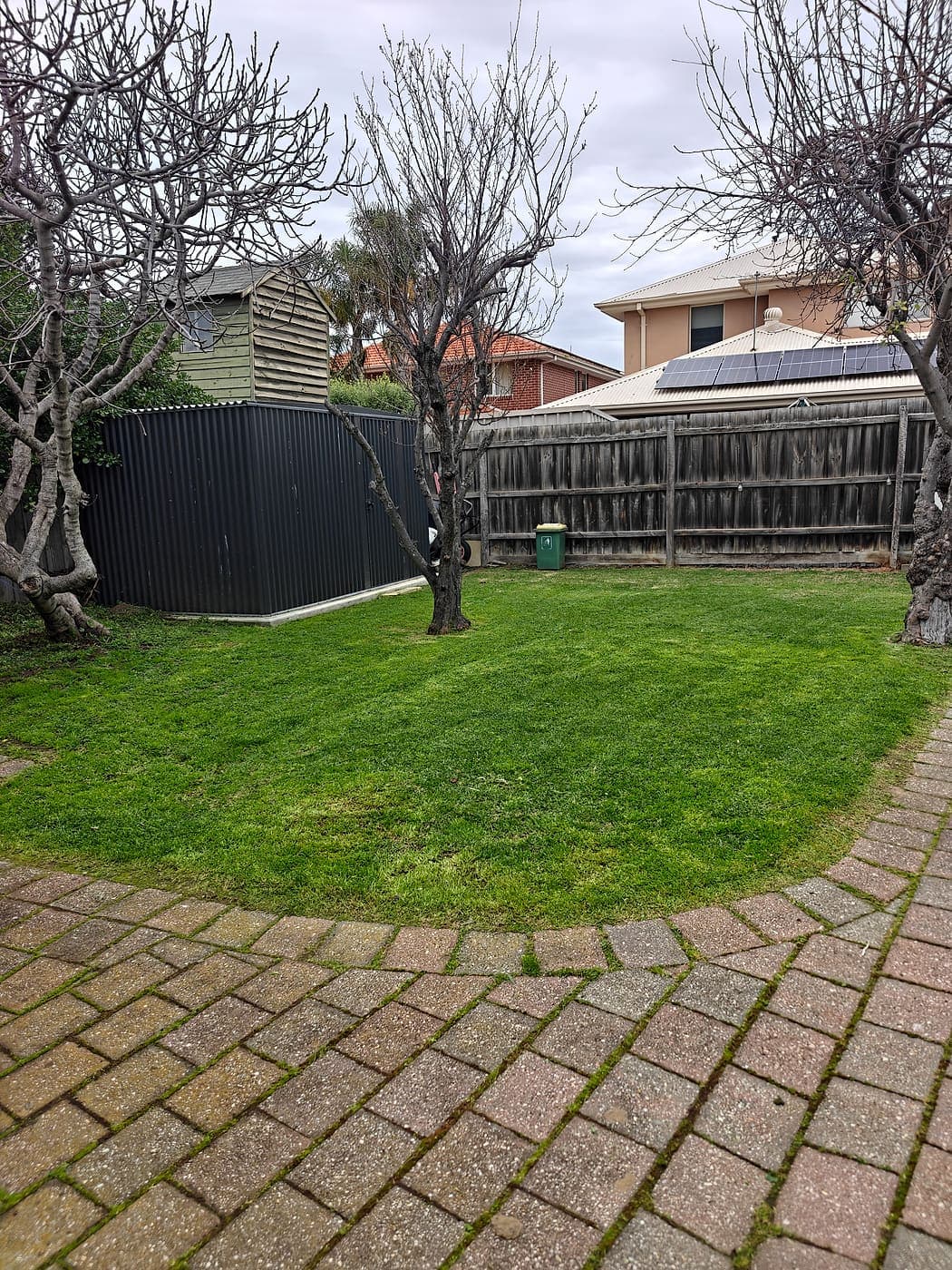
Yes, in part shade, if you choose the right grass and care for it differently. A spot with about three to four hours of direct sun a day can hold a good soft-leaf buffalo or tall fescue lawn. A spot with less than about two hours will not hold any lawn for long, whatever is sown or laid there.
The Royal Horticultural Society (opens in a new tab) puts the general rule simply: "Most species of turf grass require four to six hours of full sun each day to grow well." Shade-tolerant grasses can manage with less, but none of them grows in full shade. The goal is to match the grass to the light you actually have, then give it the care that suits slower growth.
Most shady Melbourne lawns fall into one of four situations. Each needs a slightly different answer.
| Situation | Main problem | Usual answer |
|---|---|---|
| Strip on the south side of a house | Long winter shadow, cold, wet soil | Buffalo or fescue, mown high, or a ground cover close to the wall |
| Under an evergreen tree | Low light all year plus root competition | Lift the canopy, fescue or buffalo, or mulch under the drip line |
| Under a deciduous tree | Shade in summer, leaf litter in autumn | Fescue or buffalo, rake leaves promptly, feed in autumn |
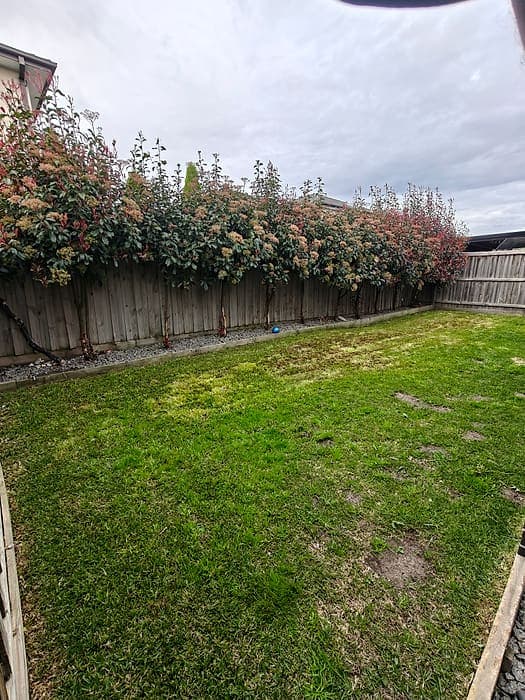
| Beside a tall boundary fence or hedge | A narrow band of shade, worst in winter | Mow high, keep the edge clear, consider a garden bed along the fence |
How much sun does your lawn really get?
Count the hours of direct sun on the patch in winter, not summer. Melbourne sits at about 38 degrees south, so the midday sun is far lower in June than in December, and a strip that is sunny at Christmas can be in shade all day in July.
At the winter solstice the midday sun in Melbourne is only about 29 degrees above the horizon, which makes every shadow roughly 1.8 times as long as the object casting it. At the summer solstice the sun is about 76 degrees up, and the same shadow shrinks to about a quarter of the height. That is why so many shady lawns look fine in February and bare by August.
| Object | Midday shadow in late December | Midday shadow in late June |
|---|---|---|
| 1.8 metre paling fence | About 0.5 metres | About 3.3 metres |
| 2.5 metre hedge | About 0.6 metres | About 4.5 metres |
| Single-storey house, eaves at about 3 metres | About 0.8 metres | About 5.5 metres |
| Double-storey house, about 6 metres | About 1.5 metres | About 11 metres |
These are midday figures on flat ground, worked from the sun's angle; morning and afternoon shadows are longer again. They show why a strip along the south side of a double-storey house can get no direct winter sun at all.
Winter is also when grass can least afford to lose light. The Bureau of Meteorology (opens in a new tab)'s averages for Melbourne (Olympic Park) put the mean maximum at 14.9°C in June and 14.5°C in July, with a July mean minimum of 7.6°C. Warm-season grasses barely grow in that cold even in full sun, so a shaded patch has almost nothing to recover with until spring.
A side-on view of a house wall with a lawn running away from it to the south. Two sun positions are drawn: a high summer sun at about 76 degrees casting a short shadow just past the eaves, and a low winter sun at about 29 degrees casting a long shadow that covers most of the lawn. A scale along the ground marks metres from the wall. Labels show the summer shadow line and the winter shadow line, with the band between them marked as the part of the lawn that is sunny in summer but shaded all winter.
How to map the sun on your lawn
Pick a clear day, ideally in June or early July, and check the patch every hour from about 9am to 4pm. Note whether each part of the lawn is in direct sun, dappled light under a tree, or full shade, then add up the hours.
- Six hours or more: any Melbourne lawn grass will do well, including kikuyu and couch.
- About four to six hours: buffalo, tall fescue and zoysia do well; kikuyu and couch thin out.
- About two to four hours: soft-leaf buffalo or tall fescue only, mown high, with light traffic.
- Under about two hours: grass will keep failing. Plan a ground cover, mulch or paving.
If you cannot wait until winter, look at what the lawn is telling you. Thin, stretched grass with long gaps between leaves, moss in the cooler months and a lawn that is always last to dry after rain all point to too little light.
Which grasses handle shade well in Melbourne?
Soft-leaf buffalo is the most shade-tolerant warm-season grass and tall fescue the most shade-tolerant cool-season grass. Zoysia handles light shade. Kikuyu and couch are sun lovers that thin out quickly once they lose a few hours of light.
Side by side
Lawn grasses in Melbourne shade
| Shade tolerance | Winter in shade | Repairs itself | Best use | |
|---|---|---|---|---|
| Soft-leaf buffalo | Good, needs about 3 to 4 hours of sun | Slows and may yellow, recovers in spring | Yes, by thick surface runners | Part shade with some wear |
| Tall fescue | Good | Keeps growing and stays green | No, grows in clumps, needs reseeding | Cool, shady areas with light wear |
| Zoysia | Moderate, light shade only | Goes dormant and brown | Slowly | Mostly sunny lawns with some shade |
| Kikuyu | Poor, wants 6 or more hours | Stops growing and thins | Fast in sun, slow in shade | Full sun and heavy wear |
| Couch | Poor, wants full sun | Goes dormant and brown | Fast in sun, slow in shade | Full sun, low and fine cut |
Soft-leaf buffalo
Buffalo has broad leaves that catch more light, and thick surface runners that let it repair worn patches. Soft-leaf varieties are the usual choice for part-shaded Melbourne lawns. It is laid as turf rather than sown, so plan any new buffalo for late spring or early summer when it can root in warm soil.
Tall fescue
Tall fescue is a cool-season grass, so it keeps growing through a Melbourne winter when buffalo has slowed down. That makes it a good match for shade that is worst in winter. Its weakness is that it grows in clumps with no runners, so bare spots must be reseeded, ideally in autumn.
Kikuyu and couch in shade
Kikuyu and couch run toward the light, so a sunny lawn often creeps into a shaded corner and then thins there. The grass in that corner is long and stretched, with brown stems showing between leaves. If you are not sure which grass you have, compare the leaf and runners against the table above before you buy seed or turf.
Why do lawns in shade thin out and fail?
Low light is the start, but shady lawns usually fail from three or four problems at once. Light, tree roots, wet soil, wear and low mowing all add up, and fixing only one rarely brings the grass back.
- Too little light. Grass makes its food from sunlight. In shade it grows fewer, longer and thinner leaves, and the lawn opens up.
- Tree roots. The RHS notes that under trees "the tree roots out-compete the grass for water and nutrients". A lawn under a large tree is often dry and hungry as well as dark.
- Soil that stays wet. On the south side of a house, little sun reaches the ground in winter, so the surface stays damp and cold. On heavy clay in the north and west of Melbourne, that soil also compacts underfoot.
- Wear. Shaded grass recovers slowly, so a path to the clothesline or bins wears through fast and stays bare.
- Mowing too low. Cutting shaded grass at a sunny-lawn height removes the leaf it needs to catch what light there is.
- Leaf litter. Leaves left on the lawn in autumn block the little light that gets through and keep the surface wet.
Moss is often the first sign that these problems have taken hold. It does not push grass out; it fills the gaps grass leaves. Our guide to moss in lawns covers how to clear it and stop it returning.
How do you mow and care for a lawn in shade?
Mow it higher and less often, catch the clippings, feed it lightly, water it deeply but less often, and keep traffic off it. Each change gives slow-growing grass more leaf and less stress.
Mow at the top of the range
The RHS suggests raising the cut on shaded lawns "to at least 6cm (2½in) or even up to 9cm (3½in)". In Melbourne that means about 60 mm for buffalo and about 70 mm for tall fescue in shade. Our guide to mowing heights for each grass type gives the full ranges.
Shaded grass also grows more slowly, so the shady part of a lawn often needs mowing less often than the sunny part. Never take more than a third of the leaf in one cut. Our guide to how often to mow in Melbourne sets out the season-by-season rhythm.
Catch the clippings
The RHS advice for shaded lawns is to "always remove the clippings". Clippings left on a damp, shaded lawn break down slowly and form a wet mat that shades the grass further and suits moss and disease. Use the catcher on the shady section even if you mulch-mow the sunny part.
Feed lightly, and at the right time
Shaded grass uses less food, and too much nitrogen gives soft, weak growth. The RHS suggests feeding shaded lawns in autumn, "just before trees lose their leaves", and if feeding in spring, using about half the rate for a sunny lawn. Follow the label of whichever product you use.
Water deeply under trees, less often elsewhere
Under trees, roots take water from the lawn, so the grass often needs a deep soak in summer. Away from trees, a shaded strip dries slowly and usually needs far less water than a sunny lawn. Under Victoria's permanent water saving rules (opens in a new tab), "sprinklers and watering systems can only run between 6pm and 10am", and a hand-held hose with a trigger nozzle can be used at any time.
Keep traffic off
Shaded grass cannot outgrow wear. Move the bins, clothesline or play equipment out of the shady strip if you can, or lay stepping stones along the line people actually walk. Keep dogs off the shady section while it recovers.
Quieter tools for close-in shady spots
Shady lawns are often tucked against houses, fences and neighbours' windows, where noise carries. Battery mowers and line trimmers are quieter at close range and suit small shaded areas that are mown often. Our article comparing battery and petrol garden tools covers noise, fumes and how each copes with long, wet grass.
How can you get more light onto the lawn?
Remove what is blocking the light where you can: lift tree canopies, thin dense shrubs, trim hedges lower or narrower, and choose more open fencing. Even an extra hour of direct sun can be the difference between a thin lawn and a good one.
- Lift the canopy. The RHS describes "crown lifting, where the lower trunk is cleared of branches", which lets low morning and afternoon sun reach the lawn.
- Thin the canopy. Selectively removing some inner branches lets dappled light through without changing the tree's shape.
- Trim hedges. A boundary hedge kept lower, or tapered narrower at the top, throws a shorter shadow.
- Rethink the fence. Where a fence is due for replacement, a slatted top section lets more light through than solid palings.
Check your council's rules before cutting large trees. Many Melbourne councils protect trees above a set size or in certain overlays, and work on them may need a permit. Large trees should be pruned from the ground or a platform by people with the right equipment, not from a ladder.
Deciduous trees and the autumn feed window
A deciduous tree gives the lawn under it full shade in summer and light in winter. That suits cool-season tall fescue, which grows through winter, better than buffalo, which is dormant by the time the leaves fall.
Feed and repair these lawns in early autumn, before the leaves drop and while the soil is still warm. Then keep the leaves raked off, so the grass gets every bit of winter light.
How do you repair or replace a thin lawn in shade?
Fix the conditions first, then reseed or lay new turf of a shade-tolerant grass at the right time of year. Patching a thin shady lawn with the same grass that failed, in the same conditions, gives the same result.
- Map the sun in winter and decide which parts can hold grass and which cannot.
- Improve the light by lifting canopies or trimming hedges where you can.
- Loosen compacted soil with a garden fork or a hollow-tine aerator, especially on clay.
- Choose the grass: tall fescue seed for cool, shady spots with light wear; soft-leaf buffalo turf for part shade with more use.
- Time it well: sow fescue in early autumn, about March to April, when soil is warm and rain returns. Lay buffalo in late spring or early summer.
- Keep it moist while seed germinates or turf roots, then go back to deep, less frequent watering.
- Mow high from the first cut, and keep traffic off until it is established.
A shaded edge along a bed or path also tends to wear and crumble first, because the grass there is thin and gets walked on. Our guide to edging a lawn for a sharp finish shows how to re-cut it once the grass has thickened.
Overseeding fescue into a shaded section
On a mixed lawn, it is common to overseed only the shaded section with tall fescue each autumn. Mow the area short, rake out dead material, scatter the seed at the rate on the pack, then lightly top-dress so the seed sits in contact with soil.
Keep the surface damp with a hand-held hose until the seedlings are established. Raise the mower back to the shade height once the new grass is a few centimetres tall.
When is it time to stop growing grass in shade?
When the spot gets under about two hours of direct sun, or you have replanted it more than once and it still fails, it is time to choose something else. The RHS advice for deep shade is to "consider growing other plants that will thrive in those conditions".
| Option | Suits | Notes |
|---|---|---|
| Native kidney weed (Dichondra repens) | Moist part shade, light foot traffic | Forms a low mat; can spread into beds and become weedy |
| Shade-tolerant ground covers and low plants | Deep shade with no foot traffic | Plant into improved soil and mulch around them |
| Coarse organic mulch | Under a tree's drip line | Keeps roots cool; no mowing at all |
| Stepping stones or pavers with ground cover between | A path through shade | Takes the wear off the plants |
| Gravel or pebbles | A narrow side path beside the house | Keep it below the slab edge and weep holes |
Royal Botanic Gardens Victoria describes Dichondra repens as a common lawn weed that is also an effective ground cover, sometimes used as a lawn substitute in shady spots, and notes it "sometimes spreads rapidly and may become weedy". Keep a firm edge between it and garden beds, and pull runners out of beds as soon as they appear.
A shady lawn does not have to be all or nothing. Many gardens keep grass where there is sun and replace only the deepest strip along the house or fence with a bed, mulch or paving, which also cuts the mowing.
Is it worth handing a shady lawn over?
A shady lawn needs closer attention than a sunny one: a higher cut, a catcher on the shady section, leaves cleared through autumn, and edges kept firm. If keeping all of that on track is a struggle, it can help to hand it over.
Our lawn mowing service sets the cut height to the grass type, trims edges and removes clippings on every visit, with fertiliser, weed control and aeration available as add-ons. For the bigger picture, see our complete guide to lawn mowing in Melbourne and the other lawn care guides.
When you are ready, get a free quote.
Your Garden. Our Promise.
From our jobs
Frequently asked
Will soft-leaf buffalo grow on the south side of a double-storey house?
Is dappled shade under a tree better for grass than solid shade beside a wall?
Can I mix tall fescue seed into a thin buffalo lawn in shade?
Why does my shady lawn look fine in summer but bare by August?
Does a shade lawn need less fertiliser than a lawn in full sun?
Is it worth lifting the canopy of a tree to grow grass under it?
What ground cover can take a little foot traffic in deep shade?
Sources and further reading
- Lawns in shade (Royal Horticultural Society)
- Melbourne (Olympic Park) climate statistics (Bureau of Meteorology)
- Dichondra repens (Royal Botanic Gardens Victoria, HortFlora)
- Permanent water saving rules (Water Victoria)
- Minimising water use on lawns and turf (Sustainable Gardening Australia)
Caring for Melbourne gardens since 2019. Updated 18 November 2026.