


Strata and commercial
Industrial and warehouse grounds: weeds, verges and drainage
By the Action Garden team · Updated · 11 min read
Checked against: Agriculture Victoria, Hume City Council, EPA Victoria, WorkSafe Victoria, CFA
TL;DR
- Industrial grounds are big, open and hard-wearing, so the programme centres on mowing and slashing verges, swales and spare land rather than garden beds.
- Melbourne's north and west have serrated tussock and Chilean needle grass, declared weeds that spread on wind and dirty machinery, so they are identified and dealt with before seed set.
- Swales, pits and grated drains carry stormwater straight to creeks, so clippings, sediment and litter are kept out of them.
- Long, dry grass in summer is a fire risk, and councils can issue fire prevention notices on properties that are not kept down.
- Trucks, forklifts and shift changes make traffic the main safety issue, so every site needs agreed visit times, routes and a site contact.
| Area | Typical task | Why it matters |
|---|---|---|
| Front verges and nature strips | Mow and edge on a set cycle | First impression from the street; council expectations for the strip |
| Swales and drainage lines | Mow, keep inlets clear | Water must flow; clippings and sediment kept out of pits |
| Spare land and back fences | Slash before summer | Fire fuel, snakes and dumped rubbish hide in long grass |
| Gravel yards and fence lines | Weed control | Weeds through gravel and along fences spread seed across the site |
| Car park and office frontage | Mow, prune, litter pick | Staff, visitors and clients see this part first |
What makes industrial and warehouse grounds different?
Industrial grounds are large, open and built for trucks, not people. The garden beds are usually few and small; most of the work is grass on verges, swales, spare land and fence lines, plus weeds in gravel and the drainage that keeps the site from flooding.
A typical warehouse or factory site in Melbourne's industrial areas has:
- Wide front verges and nature strips along the street, often the only part of the site the public sees.
- Swales and grassed drainage lines that carry stormwater from roofs and hardstand to the street drains.
- Spare land: undeveloped lots, back corners, the strip behind the warehouse, land held for expansion.
- Gravel and hardstand where weeds come up along fences and around the edges.
- Heavy traffic: trucks, forklifts and staff cars, often around the clock.
The heavy clay soils of the basalt plains in Melbourne's north and west add their own problems. They crack in summer, go soft in winter and compact under wheels. The result is a programme that looks more like large-area mowing than garden care, which is why it sits with our lawn mowing team. Our complete guide to lawn mowing in Melbourne covers the mowing side in more depth.
How should verges and spare land be mown?
On two cycles: a regular cut for the parts people see, and a lower-frequency slash for the parts they do not. Mixing them up wastes visits on back fences or leaves the frontage shaggy.
| Area | Typical cycle in spring | Typical cycle in summer and winter | Finish |
|---|---|---|---|
| Street verge and nature strip | Every 2 to 3 weeks | Every 3 to 6 weeks | Mown and edged, clippings off paths |
| Office frontage lawn | Every 1 to 2 weeks | Every 2 to 4 weeks | Mown, edged, beds tidied |
| Swales and drainage lines | Every 3 to 4 weeks | As growth needs | Mown, inlets cleared |
| Spare land and back fences | Slash before seed set and before summer | As needed for fire fuel | Slashed low, rubbish removed |
These cycles are a starting point; the right one depends on the grass, the rainfall and how the site is seen. Melbourne's growth peaks in spring, slows in the summer dry and drops right back in winter.
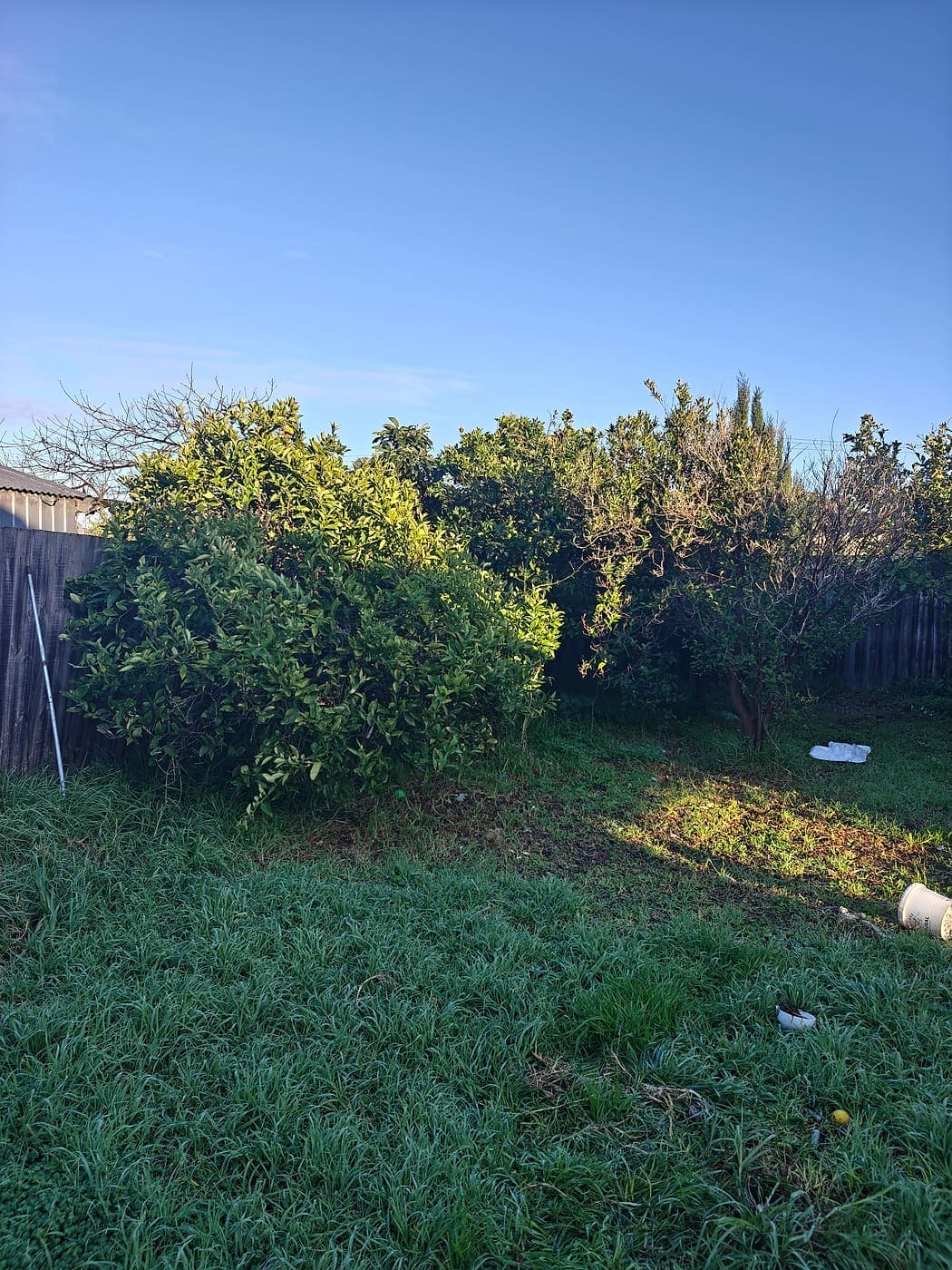
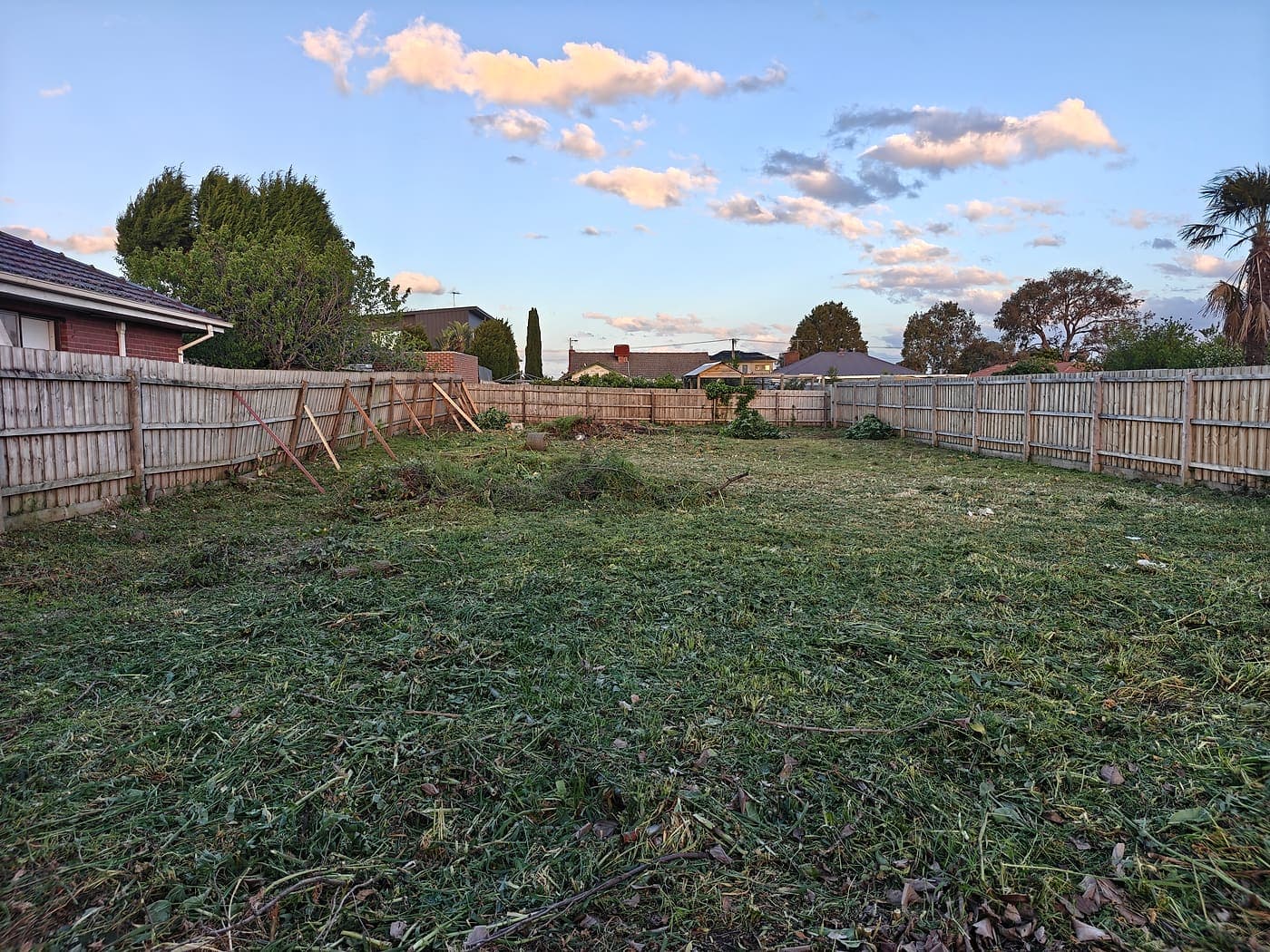
Long grass on spare land is brought down in stages where it has been left for months: a high first cut to take the bulk, then a lower cut once the ground and hidden objects can be seen. Litter, rocks and metal are cleared first, because a mower or slasher can throw them a long way.
Which weeds matter most on industrial land in Melbourne?
The declared grassy weeds of the north and west, above all serrated tussock and Chilean needle grass. Both are declared noxious weeds in Victoria, both thrive on disturbed ground such as industrial lots and road verges, and both spread on wind and on dirty machinery.
Hume City Council (opens in a new tab)'s guidance on serrated tussock gives the key points for site managers:
- It forms a rounded clump up to about 800 mm across, with fine, tightly rolled leaves that feel rough when you run your fingers down them.
- Its seed can germinate up to 15 years after dropping, so one season of seeding sets up years of work.
- It often appears after drainage or fence works, because of contaminated equipment.
- Wind carries the light seed heads, and they can pile up against fences and buildings.
- Small infestations can be dug out and bagged, ideally not during seed fall; larger ones need a planned programme, often over years.
Native tussock grasses look similar, so identification matters before anything is sprayed or dug. The council or Agriculture Victoria (opens in a new tab) can help confirm it. Any herbicide is used strictly as its label directs, and on declared weeds control is timed well before seed set.
Other weeds common on industrial land include fennel, artichoke thistle, wild oats, and broadleaf weeds in gravel and along fences. Our article on council fire prevention notices covers what councils expect when long, dry grass builds up.
Machine hygiene between sites
Weed seed travels on mower decks, slasher housings, tyres, tracks and radiators. On a site with known serrated tussock or Chilean needle grass, a good routine is to mow the clean areas first and the infested areas last, then brush down or wash the machine before it leaves. Hume City Council's guidance specifically recommends pressure washing machinery brought onto a property and checking places like radiators where seed lodges.
How do you keep swales, pits and drains working?
By keeping the grass in swales short and even, keeping inlets and grates clear, and never letting clippings, sediment or litter into the system. Stormwater from industrial roofs and hardstand travels through gutters and drains to Melbourne's creeks and the bay.
EPA Victoria (opens in a new tab) lists leaves, garden clippings, sediment, fertilisers and pesticides among stormwater pollutants. Under the general environmental duty, everyone must reduce the risk of harm and prevent waste entering stormwater drains, so far as reasonably practicable. On a grounds visit that means:
- Clippings are blown back onto the grass or collected, never into a swale invert or a pit.
- Grates, pit lids and the inlets of swales are cleared of leaves and litter at the end of every visit.
- Bare soil in swales is repaired before winter rain washes it into the drains.
- Fuel for mowers is handled on hardstand away from pits, with a spill kit on hand.
- Herbicide is never sprayed into a swale or near a pit unless the product label allows it.
A cross-section of a shallow grassed swale between a warehouse hardstand and the street. Rain falls on the roof and hardstand and flows into the swale, where short, even grass slows it and traps sediment. At the far end, water enters a grated pit and heads to the street drain. A second panel shows the same swale with long, matted grass and a clippings pile at the grate: water backs up and spreads across the hardstand. The water arrows animate along the clean swale when scrolled into view.
Why does verge grass keep wearing out?
Because trucks and cars use it. Verges beside wide crossovers get clipped by turning trucks, staff park on them when the car park is full, and the clay compacts until grass cannot grow.
Repair only works once the cause is fixed. Common fixes the site manager can arrange are bollards or rocks along the verge edge, a gravel or concrete strip where trucks cut the corner, and enough parking that staff stop using the grass. After that, bare patches can be loosened, topped with a sandy soil and reseeded or turfed. Our guide to repairing bare patches in a lawn sets out the method.
Grass under deep awnings, beside tall buildings and under car park trees struggles for a different reason: light. Our guide to growing a lawn in shade explains which grasses cope and when gravel or mulch is the better answer.
Council expectations for the nature strip
In most Melbourne councils the nature strip outside a property is council land, but the owner or occupier is expected to mow and keep it tidy. Rules on what can be planted or placed there, and on keeping the footpath clear, differ between councils. Check your council's nature strip guidelines before planting, laying gravel or installing bollards on the strip itself.
How is grounds work kept safe around trucks and forklifts?
With a site induction, agreed visit times, marked work areas and a site contact. Traffic is the biggest risk on an industrial site, far more than the mowing itself.
WorkSafe Victoria (opens in a new tab) notes that a business engaging a contractor keeps health and safety duties for matters it controls, so the site and the contractor share the planning. Before work starts, a good site:
- explains traffic routes, forklift zones, loading docks and where pedestrians may walk;
- agrees visit times away from peak truck movements and shift changes;
- names a contact on site for access, gates and emergencies;
- points out hazards such as steep swale batters, open pits, stored chemicals and overhead lines.
Our article on working around trading hours covers fitting visits around a working site. Action Garden crews complete your site induction and work to any specific requirements of your site, and visit times are agreed with you. Weekend and public holiday visits are available where access is difficult or foot traffic is high.
Grounds crews should not handle: possible asbestos (broken fibro sheeting is common on older industrial sites); drums or containers of unknown liquid; syringes; large dumped loads; trees with dead or split limbs over buildings, fences or lines; and snakes found in long grass. Keep people clear and report it to the site manager. EPA Victoria provides guidance on dumped waste, asbestos must be handled by a licensed removalist, and tree work on Action Garden jobs is done by our own team.
What should an industrial grounds programme include through the year?
A steady mowing base with seasonal peaks. Most of the year's work and risk sits in spring and early summer.
- Spring: frequent mowing of verges and frontages; weeds identified and dealt with before seed set, especially serrated tussock and Chilean needle grass; swales mown before growth gets away.
- Early summer: spare land and back fences slashed low before the fire season; rubbish and dumped items cleared.
- Summer: fire fuel kept down near buildings and fences, following CFA (opens in a new tab) advice to keep grass short around buildings; snakes are active, so long grass is approached with care.
- Autumn: leaf and litter build-up cleared from pits and grates before winter; any bare verge patches repaired.
- Winter: slower mowing; wet swales checked for ruts and blockages; drainage problems noted for repair.
The scope should list each area, the cycle for each task, and the photo report the manager receives. Our article on a body corporate grounds maintenance schedule shows the same approach for estates run by an owners corporation, and our piece on trees on common property covers planning tree work on shared industrial estates.
When is it worth handing industrial grounds to a team?
When the site is too big for staff to keep on top of, when declared weeds or fire notices are a risk, or when the frontage matters to clients. A regular programme with reports gives the manager a record of what was done and when.
Action Garden's commercial work covers scheduled grounds maintenance, hard waste and litter collection, and a site report with photos after each visit, and we are insured and ABN registered. Our lawn mowing service handles verges, swales and spare land, and more commercial and strata pieces are in our strata and commercial section. When you are ready, ask for a quote with the site address and a rough site map.
Your Garden. Our Promise.
From our jobs
Frequently asked
How often do warehouse verges need mowing in Melbourne?
What does serrated tussock look like on an industrial block?
Why are clean machines important when mowing industrial land?
Can grass clippings be blown into a swale on an industrial site?
Why is the grass on a warehouse verge always bare in the same spots?
Who handles dumped rubbish found on an industrial property?
Sources and further reading
- Serrated tussock (Agriculture Victoria)
- Serrated tussock weed management guidelines (Hume City Council)
- Chilean needle grass (Agriculture Victoria)
- Stormwater (EPA Victoria)
- Dumped waste (EPA Victoria)
- Information on engaging a contractor (WorkSafe Victoria)
- How to prepare your property (CFA)
Caring for Melbourne gardens since 2019. Updated 18 November 2026.