


Local rules and safety
Council fire prevention notices: what they mean and how to comply
By the Action Garden team · Updated · 11 min read
Checked against: Yarra Ranges Council, City of Whittlesea, Nillumbik Shire Council, CFA, Victorian Legislation
TL;DR
- The notice is a legal direction under the Country Fire Authority Act 1958, issued by the council's Municipal Fire Prevention Officer.
- Typical works are cutting grass and weeds to 100 mm or less and clearing dead vegetation, cuttings and rubbish piles.
- Do exactly what the notice lists, by its expiry date, and keep the property that way for the whole Fire Danger Period.
- If the works are not done, the council sends a contractor, bills the owner, and can issue an infringement of 10 penalty units.
- Need more time or think the notice is wrong? Contact the fire prevention officer in writing, before the due date.
| Item | Detail | Notes |
|---|---|---|
| Who issues it | Municipal Fire Prevention Officer | Under section 41 of the Country Fire Authority Act 1958 |
| Who receives it | The owner | Sent to the address on council rates records |
| When inspections run | Before and during the Fire Danger Period | Whittlesea inspects every property at least twice in that period |
| Typical grass limit | 100 mm (10 cm) | Always follow the figure on your own notice |
| Deadline | The date on the notice | Extensions must be asked for before that date |
| If not done | Contractor plus infringement | Contractor and admin costs billed to the owner; fine of 10 penalty units |
What is a council fire prevention notice?
It is a legal direction to the owner of a property to reduce fire fuel, usually grass, weeds, dead vegetation and rubbish, by a set date. Councils issue them under section 41 of the Country Fire Authority (opens in a new tab) Act 1958, through an officer called the Municipal Fire Prevention Officer.
The notice is not a fine. It is a list of works with a deadline, and the fine only comes if the works are not done. Yarra Ranges describes it as "a legal direction, issued under the CFA Act, to a landowner to reduce the amount of fuel".
Councils can only issue notices to private landowners. Land owned by state agencies, such as parks and road reserves, is managed by those agencies, and councils point residents to them for overgrown public land.
Who gets fire prevention notices in Melbourne?
Mostly owners in the outer and growth suburbs, on the edge of grassland and bush, and owners of vacant blocks anywhere in those councils. Councils that publish fire prevention programmes include Whittlesea, Nillumbik, Yarra Ranges, Casey, Cardinia, Frankston and Mornington Peninsula, and even some middle-ring councils such as Darebin issue notices for hazardous land.
Fire Prevention Officers inspect properties street by street in the weeks before and during the Fire Danger Period, which the CFA declares municipality by municipality as grass dries off. Whittlesea states that all properties in the municipality are inspected at least twice during the declared Fire Danger Period.
Notices go to the last known postal address on the council's rates records. Under the CFA Act, a notice sent there counts as served, so an out-of-date address does not stop the clock. If you own a block you do not live on, keep the council's records current.
What does a fire prevention notice usually ask for?
The exact works are written on the notice, and that wording is what you must meet. In practice most notices for suburban blocks ask for some or all of these:
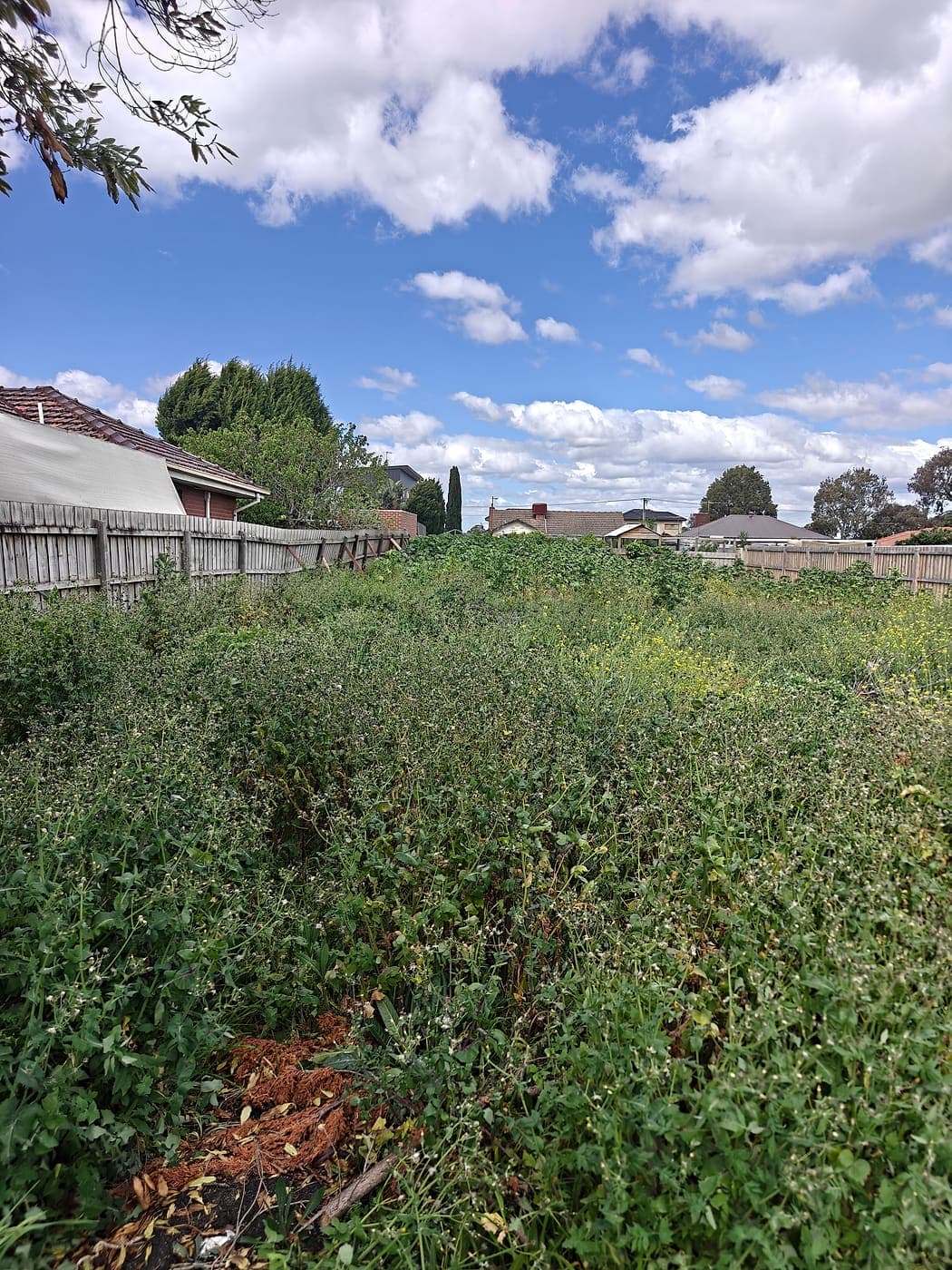
- Cut grass, weeds and undergrowth to a set height, very often 100 mm (10 cm) or less.
- Remove cut material so it does not lie as dry fuel on the block.
- Clear dead vegetation, such as fallen branches, dead shrubs and piles of prunings.
- Move woodpiles and rubbish away from houses and fence lines.
- Cut firebreaks on larger rural blocks, such as the 35 m break from boundaries Whittlesea asks for in grassland areas.
Whittlesea asks for grass, weeds, scrub and undergrowth to be kept under 10 cm from November to March, or earlier if the Fire Danger Period starts sooner. Other councils, such as those in the Alpine and Golden Plains areas, also use 100 mm as the point where grass becomes a hazard.
A side view of grass against a ruler. On the left, long dry grass reaches the 400 mm mark, shaded straw. On the right, the same grass cut to below the 100 mm line, shaded green, with the clippings raked into a neat pile marked "remove". A dashed line at 100 mm is labelled "typical notice limit". The cut animates down from left to right as the reader scrolls.
How do you comply with a fire prevention notice?
Read the notice, do every listed item by the expiry date, and keep the property in that condition until the Fire Danger Period ends. These steps keep it simple:
- Read the works and the date. Note the height limit, any areas named, and the expiry date.
- Book the work early. Spring and early summer are the busiest weeks for slashing and mowing, as every owner receives notices at once.
- Cut to the height on the notice. A slasher or heavy-duty mower suits long grass; a line trimmer finishes fence lines and around posts.
- Remove what you cut. Rake up and take away heavy clippings and piles of dead material, rather than leaving dry fuel on the ground.
- Clear the edges. Fence lines, under trees and around sheds are where officers often find missed fuel.
- Photograph the result. Dated photos are a useful record if there is any question after re-inspection.
- Diary the regrowth. Plan the next cut before the grass is back over the limit.
Our lawn mowing guide for Melbourne explains how mowing frequency changes through spring, when growth is fastest, and our guide to how often to mow a lawn in Melbourne sets out a season-by-season rhythm.
Slashing safely on a hot day
Mowers, slashers and trimmers can start grassfires when a blade hits a rock and throws a spark into dry grass. On hot, windy days, work early in the morning, check the CFA's fire danger rating for your district, and keep water and a phone nearby.
Under CFA rules, some activities are restricted on Total Fire Ban days. Check the CFA's "Can I or can't I" guidance before you slash dry grass on a day of high fire danger, and leave it for a cooler day if in doubt.
What happens if you do not comply?
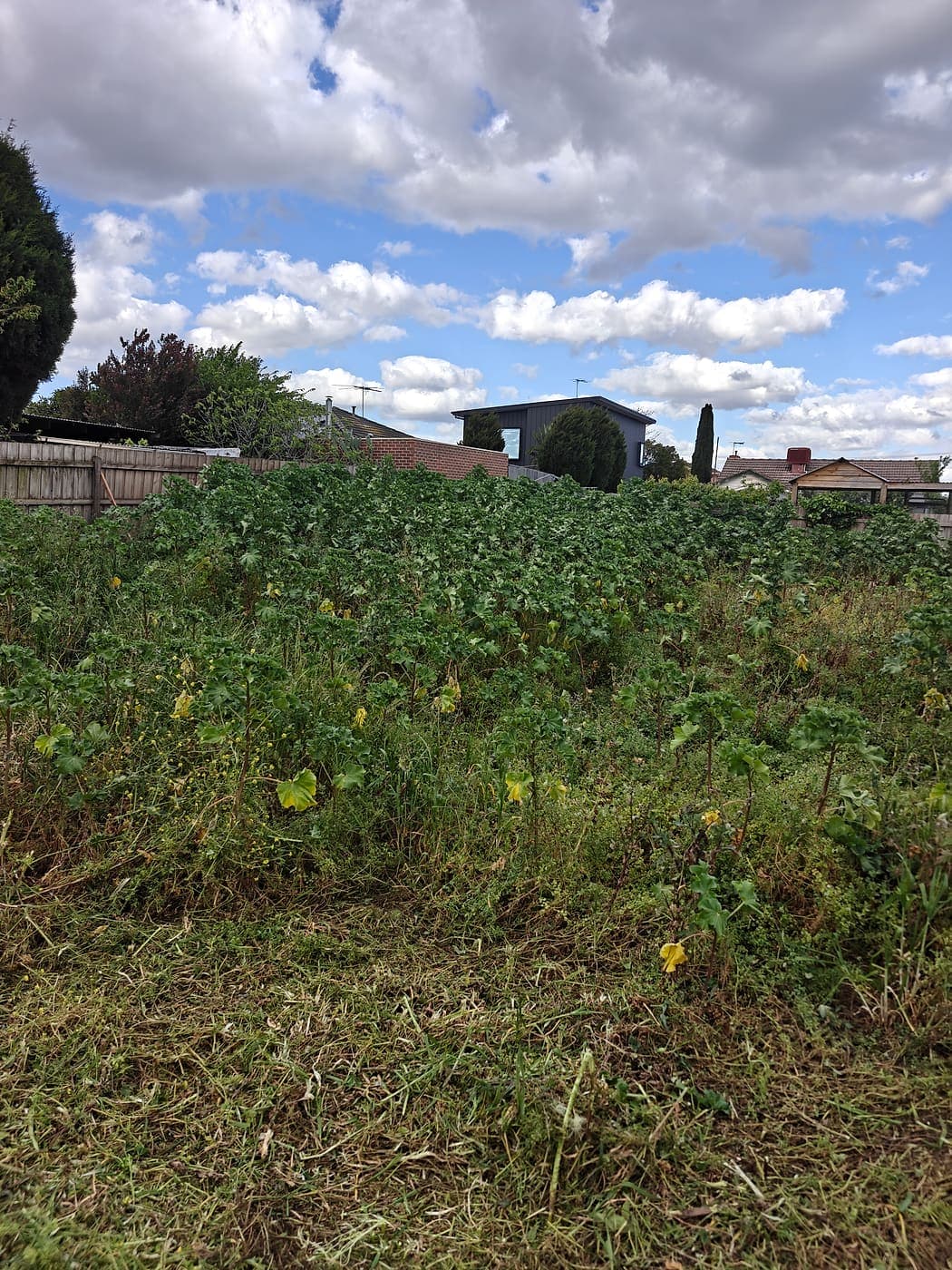
The council will do the works and bill you, and you can also be fined. Fire Prevention Officers re-inspect after the expiry date; if the hazard is still there, a council contractor clears it.
Nillumbik states that an authorised contractor will remove the hazard within seven days of the second inspection. Yarra Ranges says the costs of the works, including contractor costs and an additional council administration fee, are passed on to the owner. Unpaid costs can be pursued like other council debts.
An infringement notice can be issued as well. Yarra Ranges lists it as 10 penalty units, and Nillumbik gives the maximum penalty for failing to comply as 120 penalty units or 12 months' imprisonment. The dollar value of a penalty unit changes each financial year, so check your council's current figure.
Get help for blocks with grass over knee height, steep or rocky ground, hidden hazards such as old fencing, dumped rubbish or possible asbestos sheeting, and any job you cannot finish before the expiry date. Long grass in summer can also hide snakes, so wear boots and long trousers and leave any snake alone. If you find broken fibro or building waste, do not cut or break it; it needs a licensed asbestos removalist.
Can you get more time or object to the notice?
Yes, but you must ask before the due date, not after it. Whittlesea says an extra week or two might be considered if you contact the council before the completion date, and asks for requests for more than two weeks in writing to the Municipal Fire Prevention Officer.
The CFA Act also allows an objection to the notice. Yarra Ranges requires an objection in writing within seven days of receiving the notice, and you can ask for changes to the works to protect native vegetation. Each council's process and time limits are printed on its notices and its fire prevention page.
What to put in an extension or objection
Keep it short and factual. Give the notice number, the property address, the works listed and the reason you need a change, such as a booked contractor date, wet ground, or native grassland that should be cut rather than scraped bare.
Ask for a written reply, and keep a copy of what you sent. If you are planning to cut hay or graze a rural paddock, Whittlesea asks you to tell the Fire Prevention Officer before the due date.
What do you do with the cut grass and rubbish?
Remove it from the block, because a pile of dry clippings is fuel. Burning off is prohibited on all properties during the Fire Danger Period, as Nillumbik reminds owners, and our article on burning off garden waste in Melbourne covers the rules outside it.
The usual options are the green waste bin for small amounts, council green waste vouchers or drop-off days where your council offers them, and a rubbish removal service for large loads or dumped rubbish. Many councils also offer a larger or extra green waste bin.
Got a notice? A quick decision guide
Work down the list in order. It gets most owners from notice to compliance without a fine.
Quick decision guide
You have a fire prevention notice
- Is the expiry date less than a week away and the work not booked? Call the Municipal Fire Prevention Officer today about more time, then book the work.
- Do you think the notice is wrong, or does it risk native vegetation? Lodge a written objection inside the time limit on the notice.
- Is the block steep, overgrown above knee height or full of rubbish? Book a slashing and removal service rather than a standard mow.
- Is it an ordinary suburban lawn or block? Mow to the height on the notice, remove the cuttings and clear fence lines.
- Done? Photograph the result and diary the next cut before regrowth passes the limit.
How do you stay off the inspection list next year?
Treat the notice height as the maximum, not the target, from late spring until autumn. A regular mowing programme keeps grass under the limit through the fastest growth of October to December, and makes each cut quicker and cleaner.
Set the mower to suit the grass and season rather than scalping it: our guide to mowing heights by grass type explains why. Before the Fire Danger Period, work through our fire season property checklist for gutters, woodpiles and clearances around the house.
If you are slashing early, check the noise hours for mowers and other garden tools first. More council and state rules for gardens are collected in our local rules and safety articles.
When is it worth handing the job over?
If the block is vacant, large or simply growing faster than your weekends, our lawn mowing service can mow or slash it to the notice height, take the cuttings away and come back on a schedule through summer. Send a photo of the notice with your quote request.
Your Garden. Our Promise.
From our jobs
Frequently asked
Why did I get a fire prevention notice when my neighbour did not?
Can I object to a fire prevention notice?
I rent the property. Is the fire prevention notice my problem?
Does a fire prevention notice let me remove trees or native shrubs?
Will the council tell me when my block is re-inspected?
Does my vacant block need to be mown all summer, not just once?
Can I burn the cut grass and prunings to comply?
Sources and further reading
- Fire prevention notices FAQs (Yarra Ranges Council)
- Fire prevention program (City of Whittlesea)
- Preparing your property for fire (Nillumbik Shire Council)
- About the Fire Danger Period (CFA)
- Country Fire Authority Act 1958 (Victorian Legislation)
Caring for Melbourne gardens since 2019. Updated 18 November 2026.