


Strata and commercial
A commercial grounds job, start to finish
By the Action Garden team · Updated · 12 min read
Checked against: EPA Victoria, WorkSafe Victoria, Agriculture Victoria, Bureau of Meteorology
TL;DR
- The site in this story had car park islands, gravel beds and formal hedges that had fallen behind, with weeds, overgrowth, litter and hard waste building up.
- Litter and hard waste come off first, so the mowers never throw debris and the crew can see what they are working on.
- Long grass on lawn islands is brought down over more than one cut, never more than a third of the leaf at a time once it is back in range.
- Gravel beds, plantings, topiary and hedge bases are cleared and shaped, and every bag of green waste leaves the site.
- The reset only holds with what follows it, here weekly maintenance visits with a photo report after each one.
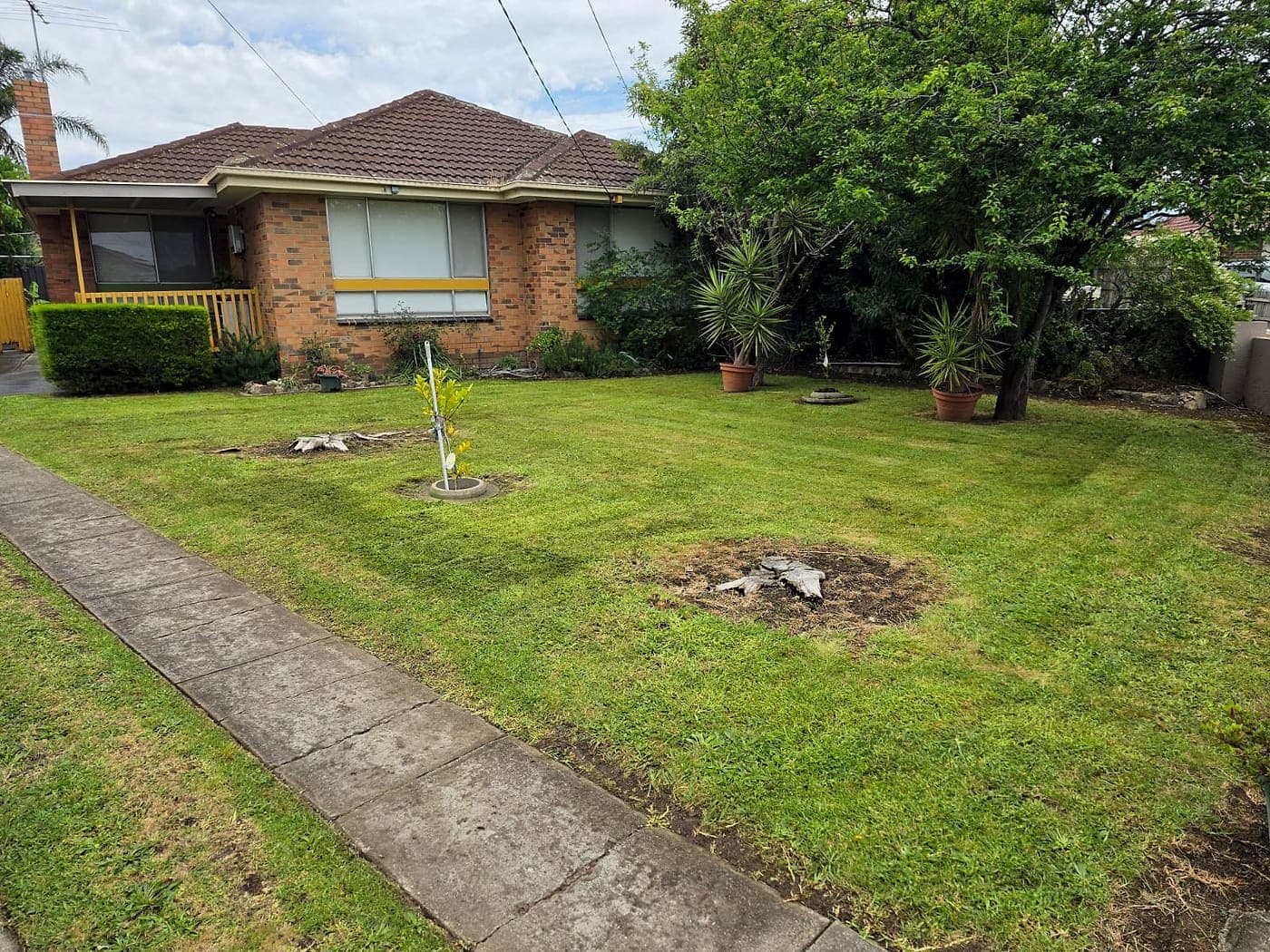
What was the site like before the work started?
It was a large commercial site in Melbourne's north-west whose grounds had fallen behind. The car park islands, gravel beds and formal hedges were all overgrown, weeds had come up through the gravel, and litter and hard waste had built up around the grounds.
None of that is unusual. Commercial grounds slip for ordinary reasons: a contract ends, a tenant moves out, a manager changes, or a dry summer is followed by a wet spring and growth outpaces the visits. By the time someone asks for help, the job is no longer a routine mow but a reset.
This story walks through how that reset was run, stage by stage, using the details the team has confirmed and real photos from the job. The full case study is in our commercial grounds case study. Details still being confirmed by the team are marked below.
| Job detail | This job |
|---|---|
| Site | Commercial grounds in Melbourne's north-west, with car park islands, gravel beds and formal hedges |
| Problem | Overgrown plantings, weeds through the gravel, litter and hard waste building up |
| Services | Gardening, hedge trimming and pruning, rubbish removal, lawn mowing |
| First visit | Within three business days of the call |
| After the reset | Regular maintenance visits |
| Waste removed | Several trailer loads of green waste |
| Now | Weekly maintenance visits with a photo report after each one |
How did the job start?
With a walk around the site and an agreed list of areas and tasks. On a commercial site, the scope has to name every area, because car park islands, frontages, gravel beds and the edges where litter collects are easy to leave out.
For this site, the areas fell into five groups: the car park island plantings, the lawn islands, the gravel beds, the mounded shrubs and topiary balls, and the formal hedges. Litter and hard waste across the grounds were a sixth item that touched all of them.
A walk-through also settles the practical things that decide how the day runs: where the crew can park and unload, when the car park is busiest, who on site to call, and any hazards such as traffic routes, steep edges or drains. WorkSafe Victoria (opens in a new tab) notes that a business engaging a contractor keeps health and safety duties for matters it controls, so this information is shared before work starts. If you are preparing a site for quotes, our article on writing a grounds maintenance scope, in the related reading below, sets out the same process in more detail.
The client first contacted Action Garden through the website.
Why does litter and hard waste come off first?
Because mowers and line trimmers throw whatever they hit. A can, bottle or piece of metal hidden in long grass can be thrown hard enough to hurt someone or crack a window, and it damages blades.
Clearing first also shows what the long grass is hiding. On car park islands that usually means sprinkler heads, kerb edges, drain grates, star pickets and signs, all things a crew needs to see before the machines start.
On this job, hard waste and litter were collected across the grounds as their own task. EPA Victoria (opens in a new tab)'s guidance is that businesses must make sure their waste does not become litter, so far as reasonably practicable, and that keeping waste on a property in a way that it cannot escape is not treated as littering. Regular collection on site is part of how a business keeps to that.
Some things found in a commercial clean-up are not for a grounds crew to handle. Possible asbestos (broken fibro sheeting is common around older industrial sites), syringes, drums of unknown chemicals and large dumped loads should be left where they are, kept clear of people, and reported to the site manager. EPA Victoria provides guidance on reporting dumped waste, and asbestos must be handled by a licensed removalist.
How were the long lawn islands brought back?
In stages, not in one hard cut. The first pass takes the bulk of the length off at a high setting, with clippings collected so they do not sit on the grass and smother it. Later cuts lower the height until the lawn is back in its normal range.
From then on, each mow follows the one-third rule: never remove more than about a third of the leaf in a single cut. Taking more at once leaves the grass pale and weak, and opens space for weeds. Our complete guide to lawn mowing in Melbourne explains the rule and the right heights for common grasses.
Car park islands bring their own challenges:
- Small, awkward shapes. Islands are often too narrow for a large mower, so a smaller mower and a line trimmer do most of the work.
- Kerbs on every side. Edges are cut with a line trimmer or edger, and clippings are blown back off the car park, not into drains.
- Heat and dry soil. Islands surrounded by asphalt dry out fast in summer, so a slightly higher cut helps the grass hold on.
- Shade and damp in winter. Islands in the shadow of buildings stay wet and can grow moss, covered in our guide to moss in lawns.
Why stage the first cuts on a long lawn
Grass makes its food in the leaf. A lawn left long has most of its leaf high up, and the base of each plant is pale and shaded. Cutting it straight down to normal height removes nearly all the green leaf at once, and the lawn can scorch or thin out, especially in summer.
Staging the first cuts gives the grass time to green up at the base between passes. It costs an extra pass or two at the start, but it avoids patchy islands that then need reseeding or new turf. Where islands are too far gone to recover, laying new turf is an option, and our guide to new turf care covers the first weeks after laying.
What happened in the gravel beds and plantings?
The gravel beds were weeded and raked, the car park island plantings were cut back and shaped, the mounded shrubs and topiary balls were trimmed, and the formal hedges were cleared at the base. Each of those is a different job.
- Gravel beds. Weeds in gravel come out by hand or with a tool, roots and all where possible, and the gravel is raked back level so bare patches do not catch new seed. Any herbicide use follows the label and the site's own chemical rules.
- Island plantings. Shrubs in car park islands are cut back clear of kerbs, sight lines and parked cars, so drivers can see pedestrians and doors can open.
- Mounded shrubs and topiary balls. These are trimmed back to a clean, rounded shape, following the line of the original form.
- Formal hedges. Clearing weeds, litter and debris from the base of a hedge improves airflow and makes the line of the hedge clear again.
Agriculture Victoria (opens in a new tab) lists declared noxious weeds that landowners must control, and industrial and commercial edges are where some of them turn up. Regular visits catch new weeds while they are small, before they seed into the gravel again. For more on the weeds and verges typical of these sites, see our article on industrial and warehouse grounds.
Where did all the green waste and hard waste go?
Off the site. Green waste was bagged and removed, and hard waste and litter were collected and taken away, so the grounds were left clear at the end of the reset.
Green waste and hard waste are kept apart on the day, because they go to different places. Green waste goes to the local council tip or transfer station, where it is disposed of safely and repurposed, never dumped. Hard waste goes to the appropriate facility for its type.
The green waste went to the council tip, where it was disposed of safely. It came to several trailer loads.
What happened after the reset?
The site moved onto weekly maintenance visits, with a photo report after each one. That is what keeps a reset from sliding back: the lawn islands are mown before they get long, weeds are pulled while they are small, and litter never builds up.
Weekly visits suit a site like this one, with car park traffic and litter that arrives every day. Each visit covers the same areas, and the photo report shows the site manager what was done without having to walk the grounds. Our article on grounds care for shops, cafes and drive-throughs looks at how visit timing works on sites that trade every day.
The client described the result in their own words: "Professional, reliable and the site has been stunning after the service. Highly recommended."
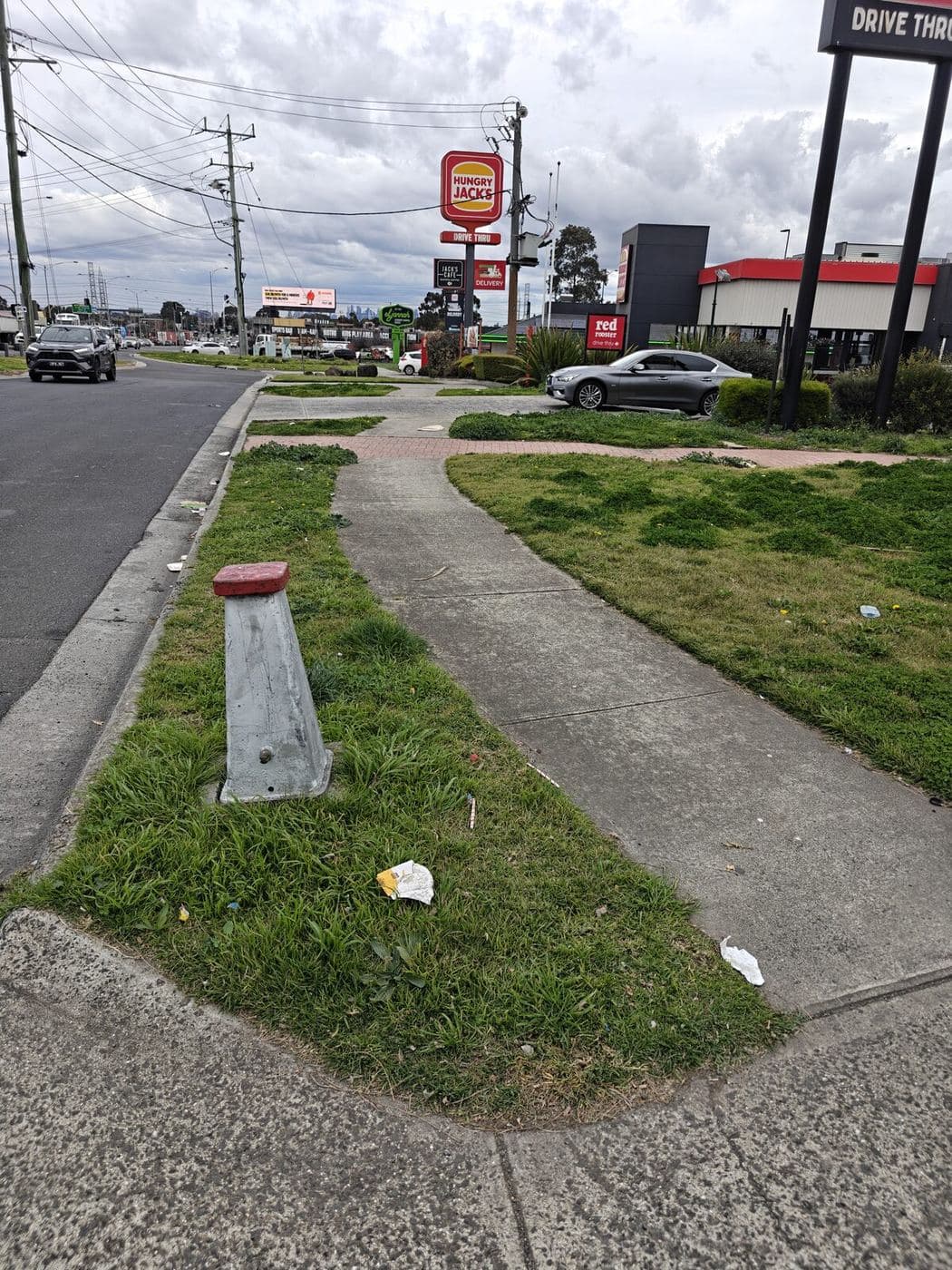
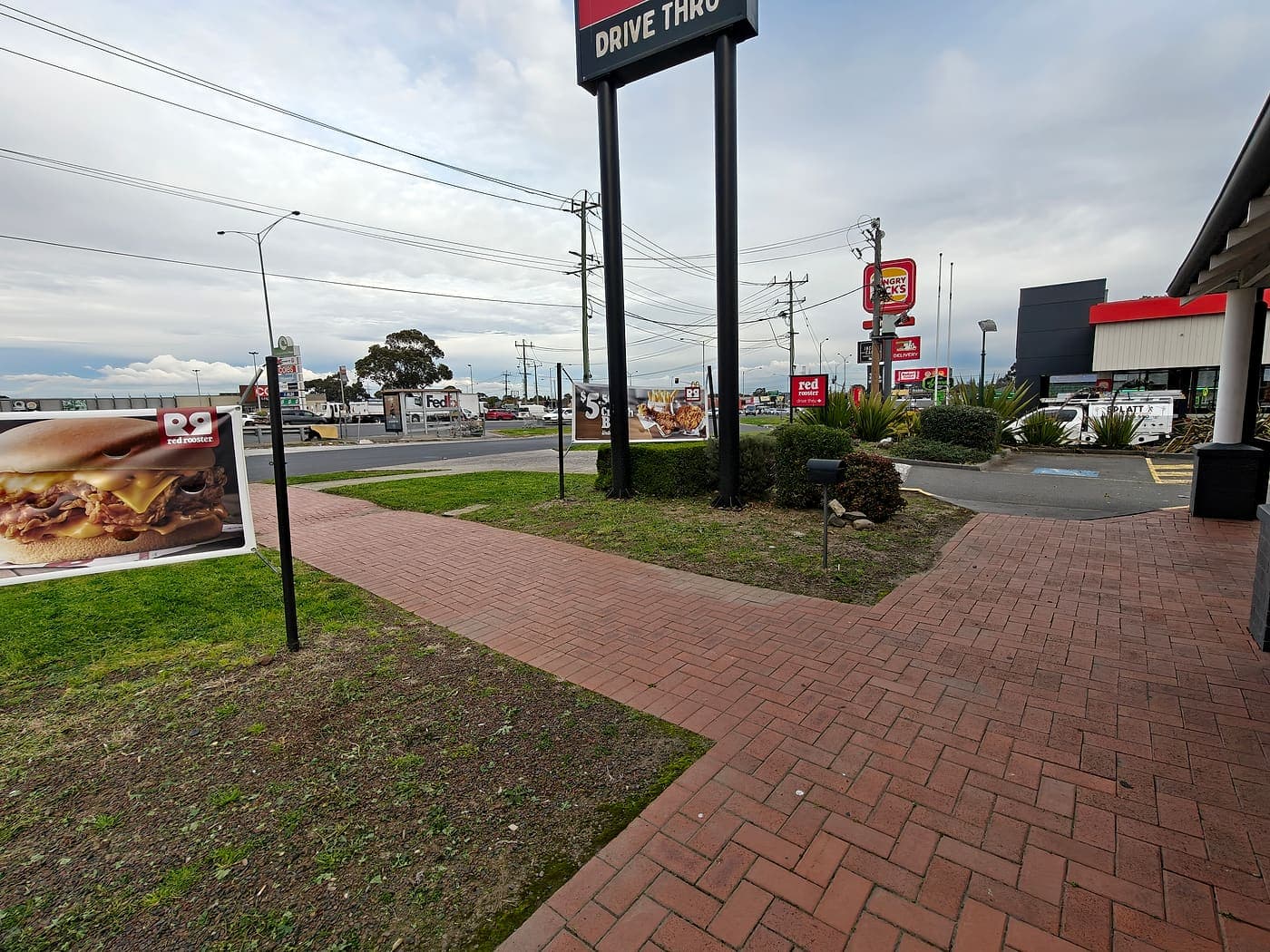
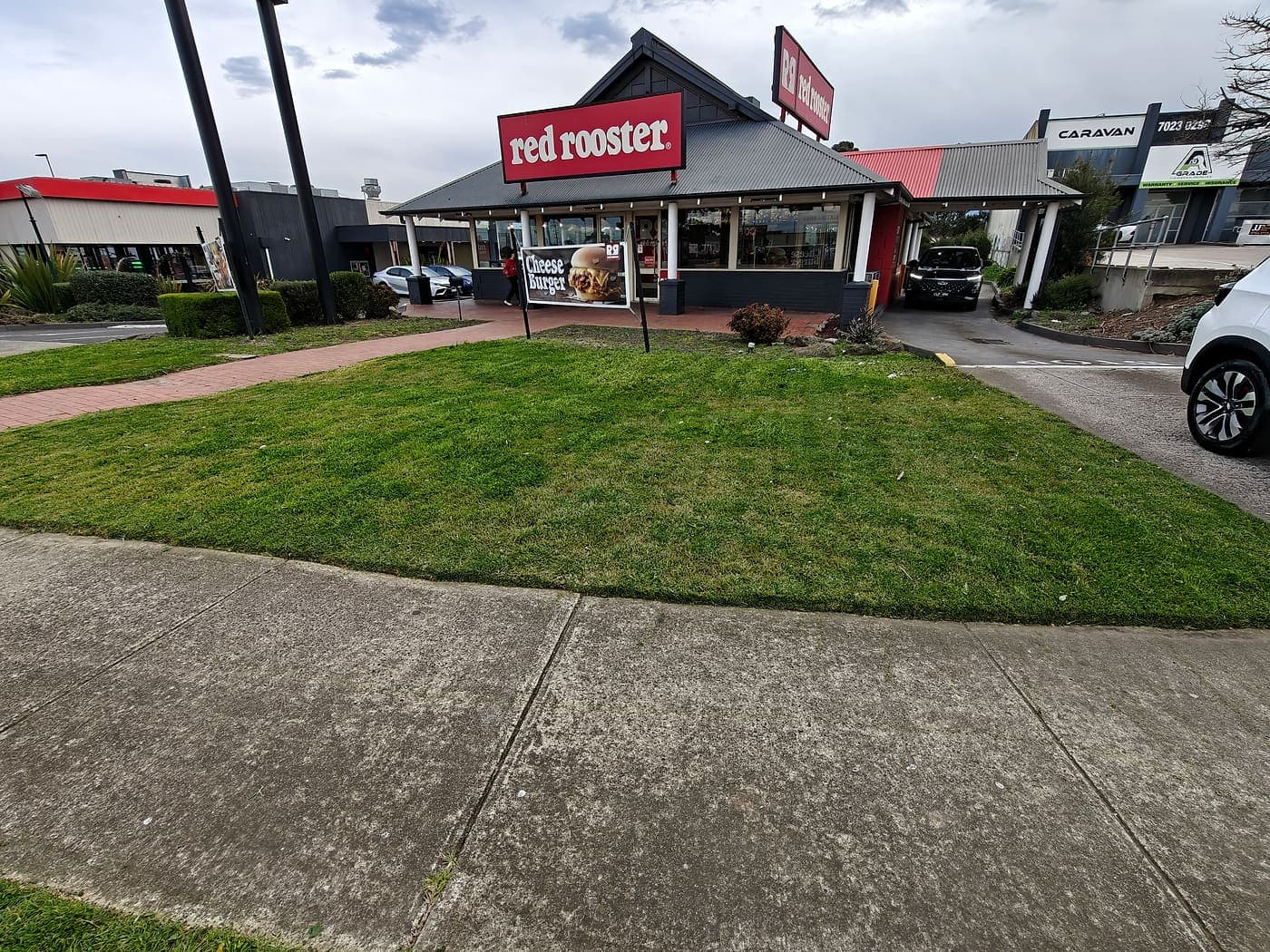
A horizontal timeline across a simplified car park seen from above. Stage one: litter icons and long grass on the islands. Stage two: a bag and a trailer as litter and hard waste leave. Stage three: two mower passes on the islands, the second lower than the first, with a small one-third marker on a grass blade. Stage four: gravel raked, shrubs rounded, hedge base cleared. Stage five: a calendar with a mark every week and a phone showing a photo report.
What can other site managers take from this job?
That a neglected site is a sequence of ordinary jobs done in the right order, and that the regular programme afterwards matters as much as the reset. Most of the lessons apply to any commercial or industrial grounds.
- Scope every area. Car park islands, gravel beds and edges are the first things to slip.
- Clear before you cut. Litter and hard waste first, for safety and to see what is underneath.
- Stage the lawn. Long grass comes down over more than one cut.
- Keep sight lines. Shrubs near kerbs and crossings are pruned for safety first.
- Take everything away. Green waste and hard waste leave the site, kept separate.
- Follow up weekly or fortnightly. A reset without a programme is back where it started within a season, especially through Melbourne's spring growth.
What affects the quote on a commercial reset
Every site is quoted individually after a walk-through. The main things that shape the quote are the number and size of areas, how long the grass and plantings have been left, how much litter and hard waste there is, access and parking, any out-of-hours requirements, and whether the reset is followed by a regular programme. The help centre explains how quotes and site visits work.
When is it worth handing your grounds over?
When the grounds have slipped beyond what a routine visit can fix, or when the site manager is spending more time chasing the gardens than managing the site. One contractor working to a written scope, with a report after each visit, takes that load off.
Action Garden looks after commercial grounds in Melbourne's north, west and inner suburbs: scheduled visits, litter and hard waste collection, and a site report with photos after each visit. Our lawn mowing service covers the lawns and islands, and more articles for site and strata managers are in strata and commercial articles.
If your site needs a reset or a regular programme, ask for a free quote and the team will walk the site first.
Your Garden. Our Promise.
From our jobs
Frequently asked
Why is litter cleared before mowing on a commercial site?
How is long grass on car park lawn islands brought back under control?
How are weeds in gravel beds dealt with on commercial grounds?
What happens to hard waste found on commercial grounds during a clean-up?
How often do commercial grounds need visits after a big reset?
Do commercial grounds look worse straight after a hard cut-back?
Sources and further reading
- Litter (EPA Victoria)
- Dumped waste (EPA Victoria)
- Information on engaging a contractor (WorkSafe Victoria)
- Weeds (Agriculture Victoria)
- Melbourne (Olympic Park) climate statistics (Bureau of Meteorology)
Caring for Melbourne gardens since 2019. Updated 18 November 2026.