


Strata and commercial
Writing a grounds maintenance scope for quotes
By the Action Garden team · Updated · 12 min read
Checked against: WorkSafe Victoria, Consumer Affairs Victoria, EPA Victoria, Water Victoria, Agriculture Victoria
TL;DR
- Start with a site map and number every area, including the narrow strips and bin surrounds that usually get missed.
- For each area, list the tasks and describe the finished result, not just the activity, so standards can be checked.
- Set visit frequency by Melbourne season and put seasonal extras in their own list, quoted separately.
- Write down exclusions, site rules, safety information and the report you expect after each visit.
- Send the same scope to every contractor and ask for prices in the same format, or the quotes cannot be compared.
| Scope section | How often it changes | What it holds |
|---|---|---|
| Site map | Once, updated when the site changes | Every common or managed area numbered, with access points, taps, bins and no-go zones marked. |
| Area schedule | Per area | Tasks, finished standard, frequency by season and any area-specific notes. |
| Seasonal extras | Yearly list | Hedge trims, mulch, pruning, gutters and pressure cleaning, each with its usual month. |
| Exclusions | Once | What the contract does not cover, so nobody assumes it does. |
| Site rules and safety | Once, reviewed yearly | Access, hours, hazards, induction, parking and contacts. |
| Reporting and quoting format | Once | Report content and timing, plus the price layout every contractor must use. |
What is a grounds maintenance scope, and why write one?
A grounds maintenance scope is the written description of every area a contractor looks after, what they do there, how often, and to what standard. It is the document every quote is priced on, and the yardstick every visit is checked against.
Without one, three contractors asked to "quote for the gardens" will each picture a different job. One prices weekly mowing and nothing else, one includes hedges and gutters, and one assumes the bin store is someone else's problem. The lowest quote is often just the narrowest one.
A written scope fixes that. This article walks through writing one in eight steps, for an owners corporation, a commercial site or a property portfolio. It works whether you send it to one contractor or run a formal tender.
What do you need before you start writing?
A site plan, a walk around the site, and the people who know where the problems are. Gather these before you write a word:
- A site plan or aerial image. The plan of subdivision for an owners corporation, a site plan for commercial premises, or a printed aerial view.
- The current scope and reports, if a contractor already looks after the site, plus any complaints from the past year.
- A list of site rules: trading hours, quiet hours, parking, deliveries, induction or sign-in, and keys or codes.
- Known hazards: traffic routes, slopes, drop-offs, underground services, irrigation lines, and anything suspected to contain asbestos.
- Water and power points, green waste bins and any on-site storage the contractor may use.
- Approval rules: who can approve extras, and up to what point, under your organisation's or owners corporation's process.
For an owners corporation, confirm first which gardens are common property and which belong to lots. Our article on common property gardens and what an owners corporation looks after explains how to check.
How do you write the scope, step by step?
Work from the ground up: map the site, describe each area, set the timing, then add the rules around it. Each step builds on the last.
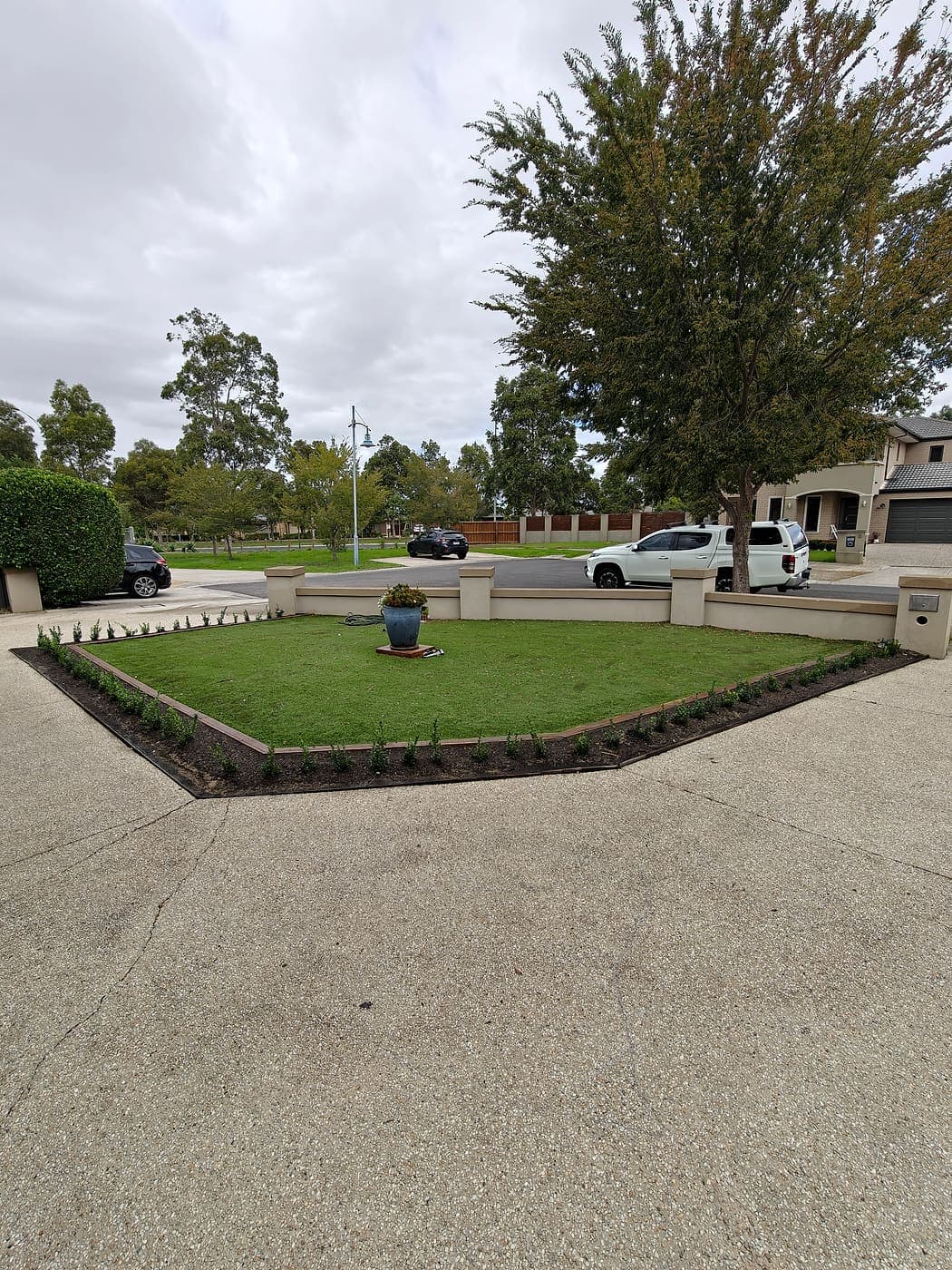
- Map and number every area. Mark each lawn, bed, strip, car park island, path and courtyard on the plan with a number. Include the narrow strips along fences, bin store surrounds and the nature strip, which are the areas most often left out.
- List the tasks for each area. For a lawn: mow, edge, blow paths, remove or mulch clippings. For a bed: weed, remove litter, prune as needed, keep mulch in place. For hard surfaces: blow, remove weeds from joints, pick up litter.
- Describe the finished standard. Say what done looks like: lawns cut evenly with clean edges along paths, beds free of visible weeds, paths clear of clippings and leaves. Standards are what make the work checkable.
- Set frequency by season. Melbourne growth peaks in spring and slows in winter, so set visits per season rather than one figure for the year.
- List seasonal extras separately. Hedge trims, mulching, rose and fruit tree pruning, gutter cleans and pressure cleaning, each with its usual month, priced separately from the routine visit.
- Write the exclusions. Name what is not included, so nobody assumes it is.
- Add site rules, safety and access. Hours, induction, hazards, parking, contacts, and how keys and codes are handled.
- Set the reporting and quoting format. Say what report you expect after each visit and give a price table every contractor must fill in the same way.
Write the scope so a new crew member who has never seen the site could do the job from it. If a sentence only makes sense to someone who already knows the site, such as "the usual beds out the back", rewrite it with an area number.
What does a good area schedule look like?
A table with one row per area, showing the tasks, the finished standard and the frequency. It becomes the checklist on every visit report, so it pays to get it right.
| Area | Tasks each visit | Finished standard | Visits (spring to autumn / winter) |
|---|---|---|---|
| 1. Entry lawn | Mow, edge, blow paths | Even cut, clean edges, paths clear | Fortnightly / monthly |
| 2. Entry beds | Hand weed, litter, deadhead | No visible weeds, mulch kept off paths | Fortnightly / monthly |
| 3. Driveway strip | Weed, edge, blow | Edges straight, no weeds in joints | Fortnightly / monthly |
| 4. Car park islands | Weed, trim plantings, litter | Plantings clear of kerbs and sight lines | Fortnightly / monthly |
| 5. Bin store surrounds | Litter, weed, blow | Area clear, bins not emptied | Every visit |
| 6. Rear native garden | Weed, light tip prune | Natural shape, no weeds | Monthly / every second month |
Notes in the scope can then deal with the details per area. For example, a native garden needs different care from formal beds, set out in our guide to caring for Australian native plants, and fruit trees on common property need a winter pruning extra, as explained in pruning fruit trees in Melbourne.
Task-based or outcome-based specifications?
A task-based scope says what to do and how often: mow fortnightly, weed beds each visit. An outcome-based scope says what the site must look like: grass kept between two heights, beds weed-free at all times. Task-based scopes are easy to price and check. Outcome-based scopes give the contractor more freedom but are harder to compare between quotes.
Most small and medium sites do best with a mix: fixed tasks and frequency for the routine, with a short finished standard for each area. That keeps quotes comparable while still giving the manager something to check the work against.
How do you set visit frequency for Melbourne's seasons?
Match visits to growth: more often in spring, steady through summer and autumn, less often in winter. Fortnightly from spring to autumn and monthly in winter suits many residential sites, with weekly mowing in peak spring growth where presentation matters most.
A few site types need adjusting:
- Retail frontages and food outlets may need weekly litter rounds even when growth is slow.
- Industrial sites with large rough areas may suit fewer, longer visits plus slashing before summer for fire risk.
- Sites near eucalypts need more frequent leaf clearing from paths and car parks in summer and autumn.
Put the frequency per season in the area schedule, not as a single figure, so contractors price the real year. Our article on body corporate grounds schedules, listed in the related reading below, sets out a season-by-season pattern with Melbourne climate data behind it.
What should the scope exclude, and how are extras handled?
Exclude anything a reader might assume is included but is not, and handle it as a quoted extra when it comes up. Clear exclusions protect both sides from "I thought that was part of it".
Common exclusions in a grounds scope:
- tree work above ladder height or near power lines;
- gutter cleaning on buildings above single storey;
- irrigation repairs beyond replacing a sprinkler head;
- replacement plants, mulch and soil (supplied as quoted extras);
- emptying or washing bins;
- storm clean-ups and removal of dumped hard rubbish;
- pest control, including wasps and rodents.
Then list the expected seasonal extras with their usual timing, and ask contractors to price each one separately. That lets a committee approve the year's extras in one decision instead of a stream of small approvals.
Some grounds work carries risks that need specialists and should be scoped separately, not folded into routine visits: tree work at height or near power lines, work on roofs or above single storey, anything involving suspected asbestos, and spraying of restricted chemicals. WorkSafe Victoria (opens in a new tab) notes that high risk construction work needs a safe work method statement before it starts. Ask contractors how they handle these items, and engage the right specialist where needed.
What safety and site rules belong in the scope?
Everything a contractor needs to work safely and fit around the people on site. WorkSafe Victoria explains that a business engaging a contractor keeps health and safety duties for matters it controls, and that duties can be shared between the business and the contractor.
Include at least:
- Working hours, inside EPA Victoria (opens in a new tab)'s residential noise rules where homes are nearby. Lawn mowers are prohibited on weekdays before 7 am and after 8 pm, and on weekends and public holidays before 9 am and after 8 pm.
- Induction and sign-in requirements, and who on site runs them.
- Known hazards: traffic routes, forklifts, slopes and drop-offs, sharps, underground services and suspected asbestos.
- Pedestrian control: where cones or signs are needed while machinery runs.
- Insurance: the certificates the contractor must provide before starting, such as public liability.
- Weeds with legal duties: Agriculture Victoria (opens in a new tab) lists declared noxious weeds that landowners must control, so name any known on the site.
Writing the price table
Give every contractor the same table to fill in: a price per routine visit (or per month), a price for each listed seasonal extra, and an hourly or unit basis for unlisted extras. Ask them to state any assumptions, such as green waste disposal included or excluded.
Prices in different formats are the main reason quotes cannot be compared. A contractor who cannot work to the table can explain why in a note, but the table still gets filled in.
How do you check the finished scope before sending it?
Read it against a checklist, then walk the site with it in hand. If anything on the ground is not in the document, or anything in the document is unclear on the ground, fix it before the quotes go out.
Final checklist:
- every area on the site map has a number and a row in the schedule;
- every row has tasks, a finished standard and a frequency per season;
- seasonal extras are listed with months and priced separately;
- exclusions are written down;
- site rules, hazards, contacts and induction requirements are included;
- the report expected after each visit is described, and our article on what a good grounds maintenance report includes, in the related reading below, gives a format to copy;
- the price table is attached, with instructions;
- a walk-through time and a closing date for quotes are set, with questions answered in writing to everyone.
A flow from left to right. A site plan with numbered areas leads into a table with one row per area. The table splits into two stacks: routine visits and seasonal extras. Both stacks feed into a single price table, which is copied to three envelopes labelled contractor A, B and C. On the right, the three returned tables sit side by side with matching rows, ready to compare.
When is it worth handing the scope to a contractor to draft?
When you know the site but not the gardening, ask a contractor to walk the site and draft the scope with you, then send that scope to others to quote on. A good contractor will happily write a scope that others can price.
Action Garden walks the site first and gives commercial and strata clients a fixed scope per visit, a seasonal schedule of extras, a photo report after each visit, and one contact and one invoice. Our gardening services page covers the work, the complete guide to garden maintenance in Melbourne covers the plant care behind a scope, and a commercial grounds job, start to finish shows a scope in action.
For the people side of the job, see handling resident complaints about common gardens and grounds care for shops, cafes and drive-throughs. More articles are in strata and commercial articles. When your scope is ready, or you want help writing it, ask for a free quote.
Your Garden. Our Promise.
From our jobs
Frequently asked
Should a grounds scope describe tasks or the finished result?
How many contractors should be asked to quote on a grounds scope?
Should contractors visit the site before quoting on a grounds scope?
What should be listed as exclusions in a grounds maintenance scope?
How long should a grounds maintenance contract run?
Can a scope ask for specific equipment such as battery tools?
What is a site walk-through checklist for a grounds tender?
Sources and further reading
- Information on engaging a contractor (WorkSafe Victoria)
- Safe work method statements (WorkSafe Victoria)
- Maintaining and improving common property (Consumer Affairs Victoria)
- Residential noise (EPA Victoria)
- Permanent water saving rules (Water Victoria)
- Weeds (Agriculture Victoria)
Caring for Melbourne gardens since 2019. Updated 18 November 2026.