


Property care: rentals, sales and strata guide
Weekly, fortnightly or monthly: choosing a garden maintenance programme
By the Action Garden team · Updated · 11 min read
Checked against: Bureau of Meteorology, Water Victoria, CFA, Agriculture Victoria
TL;DR
- Fortnightly is the default for most Melbourne homes, because it keeps weeds from setting seed and lawns from overgrowing.
- Weekly suits fast-growing spring lawns, kikuyu and couch in summer, and frontages that must look sharp every day.
- Monthly suits courtyards, units, native and gravel gardens, and most gardens through June to August.
- The right frequency follows the season; a fixed rhythm all year either wastes visits in winter or falls behind in spring.
- Long gaps cost more in the end, because each catch-up visit has more to fix and the garden recovers slowly.
| Programme | Best for | What to expect |
|---|---|---|
| Weekly | Spring and summer lawns, show-home frontages | Mow and edge every visit, beds tidied, photo update |
| Fortnightly | Most Melbourne homes, year round | Mow and edge, beds weeded, hedges tidied as needed |
| Monthly | Winter, low-growth gardens, units | Mow when needed, beds and paths tidied, extras quoted |
| Commercial and strata | Body corporates, sites, councils | Fixed scope per visit, photo report, site visit first |
How often should a garden be maintained in Melbourne?
For most Melbourne homes, fortnightly is the right starting point. It is often enough to keep lawns at a steady height, edges sharp and weeds pulled before they seed, without paying for visits the garden does not need.
Weekly and monthly are the two adjustments. Weekly suits gardens with fast-growing lawns in spring and frontages that must look sharp every day; monthly suits small, slow or native gardens and most gardens in the middle of winter.
The best programmes are not fixed. They step up when the garden is growing hard and back down when it is not, which is why this guide treats frequency as a choice you revisit each season.
What does each visit frequency actually cover?
Each frequency suits a different garden and season. The table compares them side by side, based on the plans Action Garden runs; the full detail is on the regular maintenance plans page.
Side by side
Weekly, fortnightly and monthly programmes compared
| Weekly | Fortnightly | Monthly | |
|---|---|---|---|
| Best for | Spring and summer lawns, show-home frontages | Most Melbourne homes, year round | Winter, low-growth gardens, units |
| Lawn | Mown and edged every visit | Mown and edged every visit | Mown when needed |
| Beds | Tidied | Weeded | Tidied with the paths |
| Hedges | Extra, quoted | Tidied as needed | Extra, quoted |
| Seasonal checks | As agreed | Gutters checked in autumn | Seasonal extras quoted |
| Watch out for | More visits than a slow garden needs in winter | Can fall behind kikuyu or couch at the peak of spring | Weeds can seed and lawns overgrow between spring visits |
Commercial and strata sites sit in their own category. They usually run on a fixed scope per visit with a seasonal schedule of extras and a report after each visit, which our guide to what a commercial grounds programme includes explains.
How does Melbourne's growing year change the right frequency?
Growth follows temperature and rain, and Melbourne's year swings a long way. On the Bureau of Meteorology (opens in a new tab)'s long-term record for central Melbourne, mean maximums climb from 17.3 °C in September to 22.0 °C in November and reach 25.9 °C in January and February, while October is the wettest month.
That warm, moist run from October to December is when lawns and hedges grow fastest and when a fortnightly programme can feel stretched. Warm-season grasses such as couch, buffalo and kikuyu wake up as the soil warms in late September and October, then keep growing hard through summer if they get water.
| Season | What the garden is doing | Typical frequency |
|---|---|---|
| Spring (September to November) | Lawns surge, weeds flower and seed, hedges push new growth | Weekly to fortnightly |
| Summer (December to February) | Warm-season lawns keep growing; cool-season lawns and beds feel the heat | Fortnightly, weekly for kikuyu and couch |
| Autumn (March to May) | Growth slows, leaves fall, a second flush of weeds after rain | Fortnightly |
| Winter (June to August) | Lawns barely grow; winter weeds take hold in wet beds | Monthly, or every three to four weeks |
Which garden features push you towards more visits?
Some gardens simply need more attention than others of the same size. If your garden has several of the features below, lean towards fortnightly or weekly in the growing season.
- Kikuyu or couch lawns. Both run fast in warm weather and creep into beds, so edges need frequent attention.
- Fast hedges. Lilly pilly, murraya, photinia and viburnum can lose their shape within weeks in spring.
- Roses, perennials and annual beds. Deadheading and weeding between plants keep them flowering and tidy.
- Deciduous trees. Plane trees, maples and fruit trees drop a lot of leaves from April, which smother lawns and block drains.
- Exposed soil and new plantings. Bare soil grows weeds quickly until plants and mulch cover it.
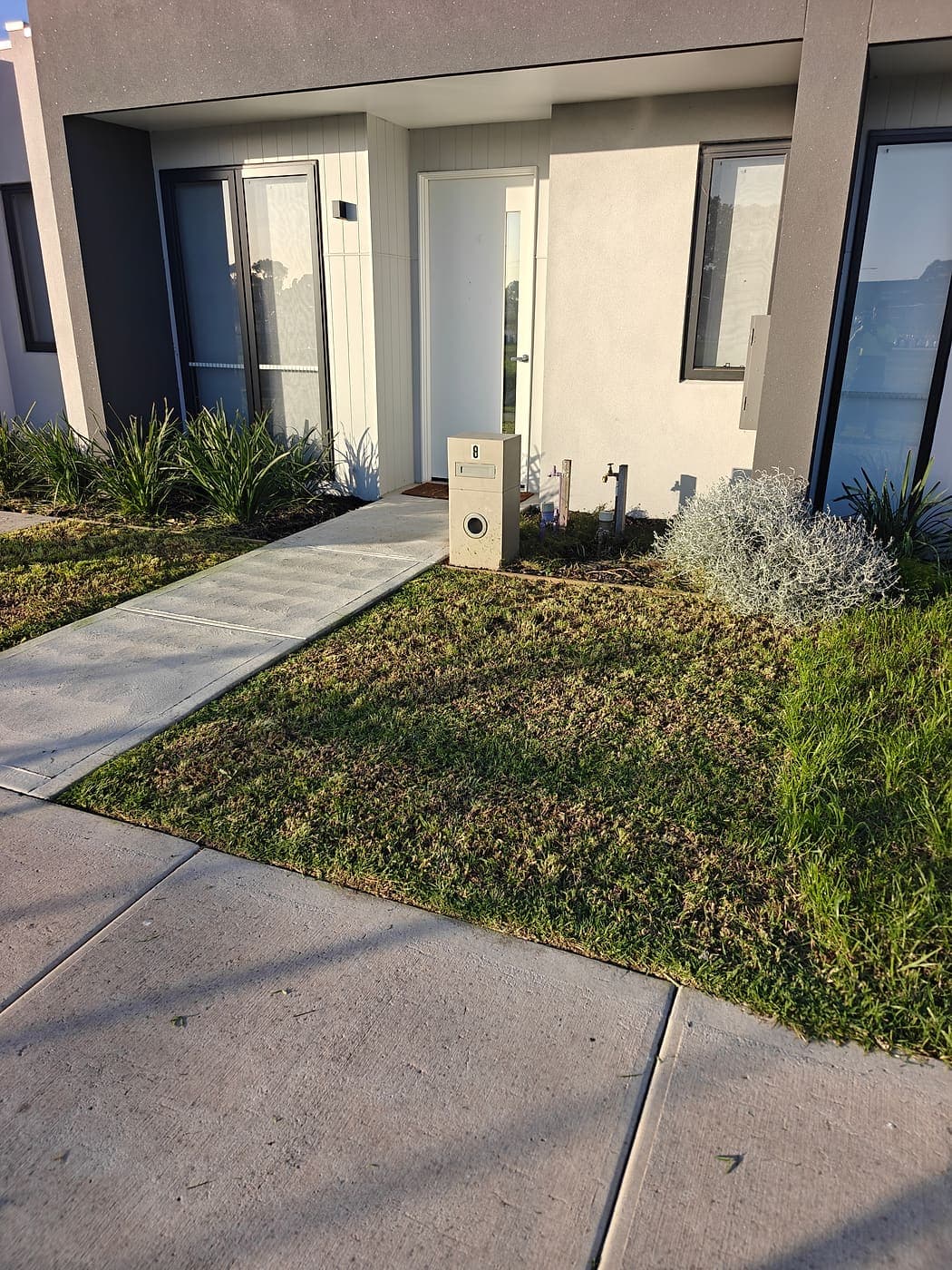
- A frontage that matters. A house for sale or lease, a shop front or a body corporate entrance is judged on any given day, not on the day after a visit.
Why lawns punish long gaps
Turf recovers best when no more than about a third of the leaf is removed in one cut. If a spring lawn goes a month between mows, getting it back to height takes either a scalping cut that browns it off or two visits close together.
That is the main reason a lawn-heavy garden rarely suits monthly visits from September to December. Our complete guide to garden maintenance in Melbourne covers how mowing, weeding and pruning fit together across the year.
When is a monthly programme enough?
Monthly works when growth is slow and the garden is built to hold its shape. That usually means little or no lawn, mulched or gravel beds, established plants and not too many fast hedges.
- Courtyards and small unit gardens, especially with paving or artificial turf.
- Established native gardens on a mulch or gravel base.
- Most gardens in June, July and August, when grass barely grows.
- Gardens where the owner does the mowing and wants help with beds, pruning and clean-ups.
The risk with monthly is spring. Weeds that flower in September and October can drop seed between visits, and the garden then fights that seed for years, so many monthly programmes step up to fortnightly from September to November.
What does a long gap between visits cost the garden?
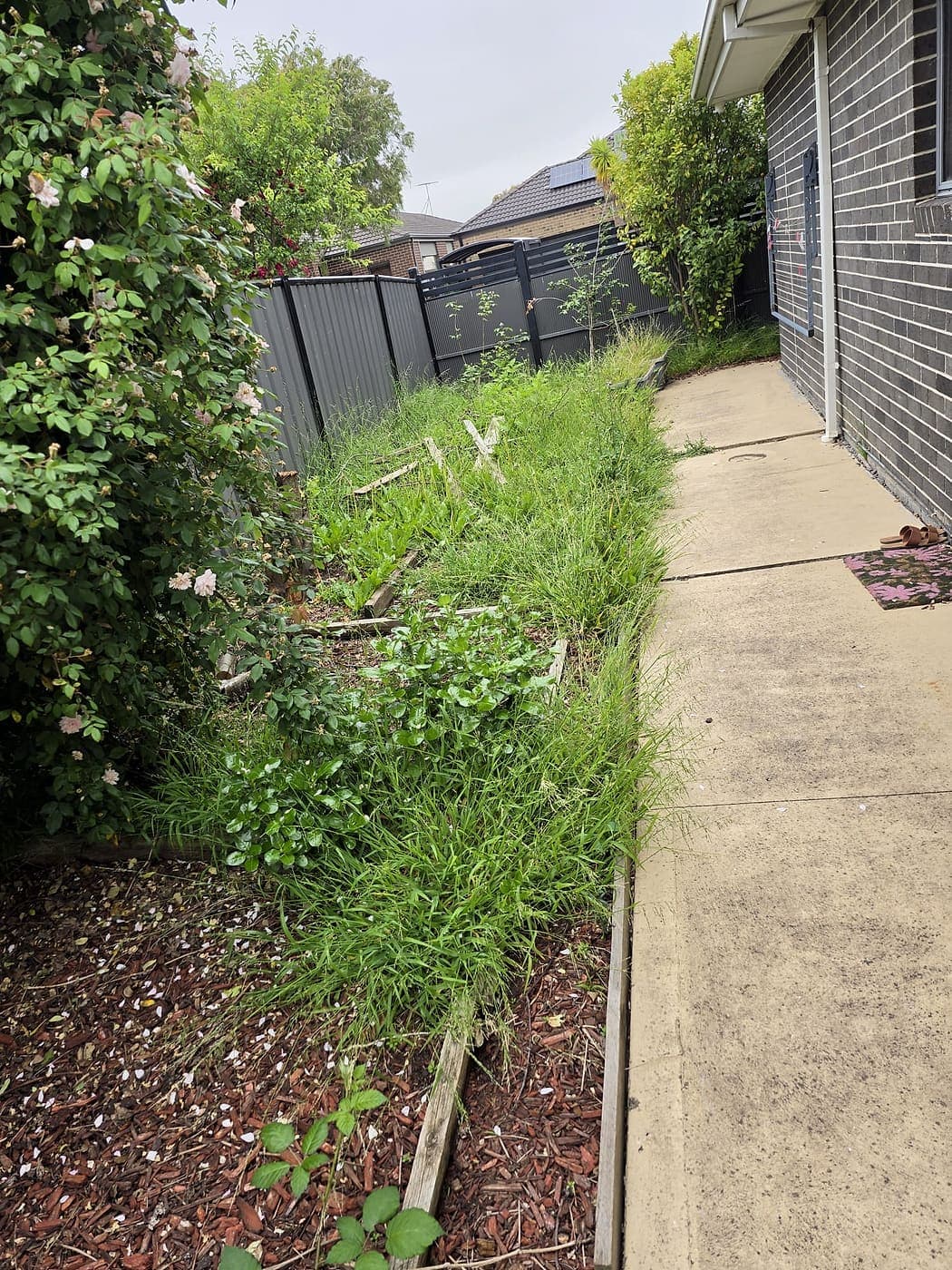
More than the visits you saved. When the gap is too long, each visit turns into a catch-up: weeds have seeded, the lawn needs a staged cut, shrubs have grown over paths and green waste piles up.
- Weed seed. Many common garden weeds flower within weeks in spring and scatter seed into beds and lawns. Pulling them before they seed is far easier than dealing with the seed bank later.
- Lawn stress. A hard cut after a long gap leaves brown, scalped patches that take weeks to recover in summer heat.
- Hedge shape. Once a hedge has put on a season of soft growth, trimming it back to shape can leave bare patches.
- Fire risk. In outer suburbs, long dry grass in summer is a fire hazard. CFA (opens in a new tab) guidance includes keeping grass short around the property through the fire danger period, which our fire season property checklist sets out.
Catch-up visits also take longer and produce more green waste, which affects the quote. A steady rhythm usually means shorter, more predictable visits.
How do rentals, vacant properties and commercial sites change the choice?
Who uses the property, and who is looking at it, matters as much as the plants. A garden that only the owner sees can stretch to monthly in winter; one that is inspected, leased or on show usually cannot.
- Rentals. Rental providers who include the garden in the agreement often choose fortnightly in the growing season, so the garden is always ready for routine inspections. Under Consumer Affairs Victoria's guidelines, regular garden work is the renter's unless the agreement says otherwise.
- Vacant houses and blocks. An empty property needs to look lived in and stay compliant with council fire prevention rules. Our guide to keeping vacant blocks tidy and compliant covers the rhythm for open lots.
- Body corporate and commercial sites. These usually run on a written scope per area with reports after each visit. Our article on writing a grounds maintenance scope for quotes helps committees and managers specify frequency clearly, and what a good grounds maintenance report includes covers the reporting side.
Native gardens and low-water gardens
Natives and drought-tolerant gardens on mulch or gravel often need less frequent visits, but not none. They still need light pruning after flowering, removal of dead growth, weeding and a top-up of mulch before summer.
A common pattern is monthly visits for most of the year, with an extra visit in late spring for pruning and weeding before summer, and one after the autumn rain when weeds come up again.
How do you choose the right frequency for your garden?
Work through the questions below in order and stop at the first "yes". Then review the choice at the start of each season.
Quick decision guide
Which programme suits your garden?
- Is the property on the market, or must the frontage look sharp every day? Weekly, at least through spring and summer.
- Is the lawn kikuyu or couch, or does the lawn cover most of the garden? Weekly in spring and summer, fortnightly the rest of the year.
- Is it a body corporate, rental portfolio or commercial site? A written scope with a set rhythm per area, usually fortnightly, with seasonal extras scheduled.
- Is it a typical house garden with lawn, beds and a hedge or two? Fortnightly year round, dropping to monthly in winter if growth stops.
- Is it a courtyard, unit garden or established native garden with little or no lawn? Monthly, stepping up to fortnightly in spring.
- Not sure? Start fortnightly, then adjust after two months of seeing how fast the garden grows.
A ring divided into twelve months, starting at September at the top. Each month carries dots for visits: four dots in October and November for weekly growth, two dots per month through summer and autumn for fortnightly, and one dot per month from June to August. A green band behind the ring rises and falls to show growth, peaking in late spring and dipping in midwinter, so the visit dots visibly follow the growth curve.
When is a regular programme worth it?
When the garden grows faster than you have time to keep up with, or when it has to look right on a schedule that is not yours. A programme also catches small problems early: a blocked drain, a sick shrub or a weed that is about to seed.
Before you commit, check any business against the questions in our guide to choosing a gardener, listed in the related reading below. Action Garden's gardening services can be booked weekly, fortnightly or monthly, with seasonal extras quoted ahead, and more guides for homes, rentals and strata are under property care guides. If you would like a programme matched to your garden, ask for a free quote.
Your Garden. Our Promise.
From our jobs
Frequently asked
Is weekly garden maintenance worth it for a small garden?
What happens to a garden if visits stop over winter?
How many visits a year does a fortnightly programme mean?
Does a native garden need less frequent maintenance?
Is monthly maintenance enough for a rental property?
Should hedges be trimmed on every visit?
What frequency suits a garden with lots of deciduous trees?
Can I start on one frequency and change it later?
Sources and further reading
- Climate statistics for Melbourne Regional Office (Bureau of Meteorology)
- Climate statistics for Melbourne (Olympic Park) (Bureau of Meteorology)
- Permanent water saving rules (Water Victoria)
- How to prepare your property (CFA)
- Weeds (Agriculture Victoria)
Caring for Melbourne gardens since 2019. Updated 18 November 2026.