


Gardening
Weed mat: when it helps and when it makes things worse
By the Action Garden team · Updated · 12 min read
Checked against: Sustainable Gardening Australia, Penn State Extension, Washington State University Extension, Yakima County, CFA
TL;DR
- Weed mat earns its place under gravel, pebbles, pavers and paths, where its job is separating stone from soil
- In planted beds, mulch breaks down on top of the fabric and weeds grow in that layer, rooting through it
- Fabric stops leaves and mulch feeding the soil, and Sustainable Gardening Australia does not recommend it in beds
- Black plastic is worse again; it blocks water and air, though it can smother a weedy patch for a few summer weeks
- Old weed mat can be removed in sections; replace it with coarse mulch and plants that cover the ground
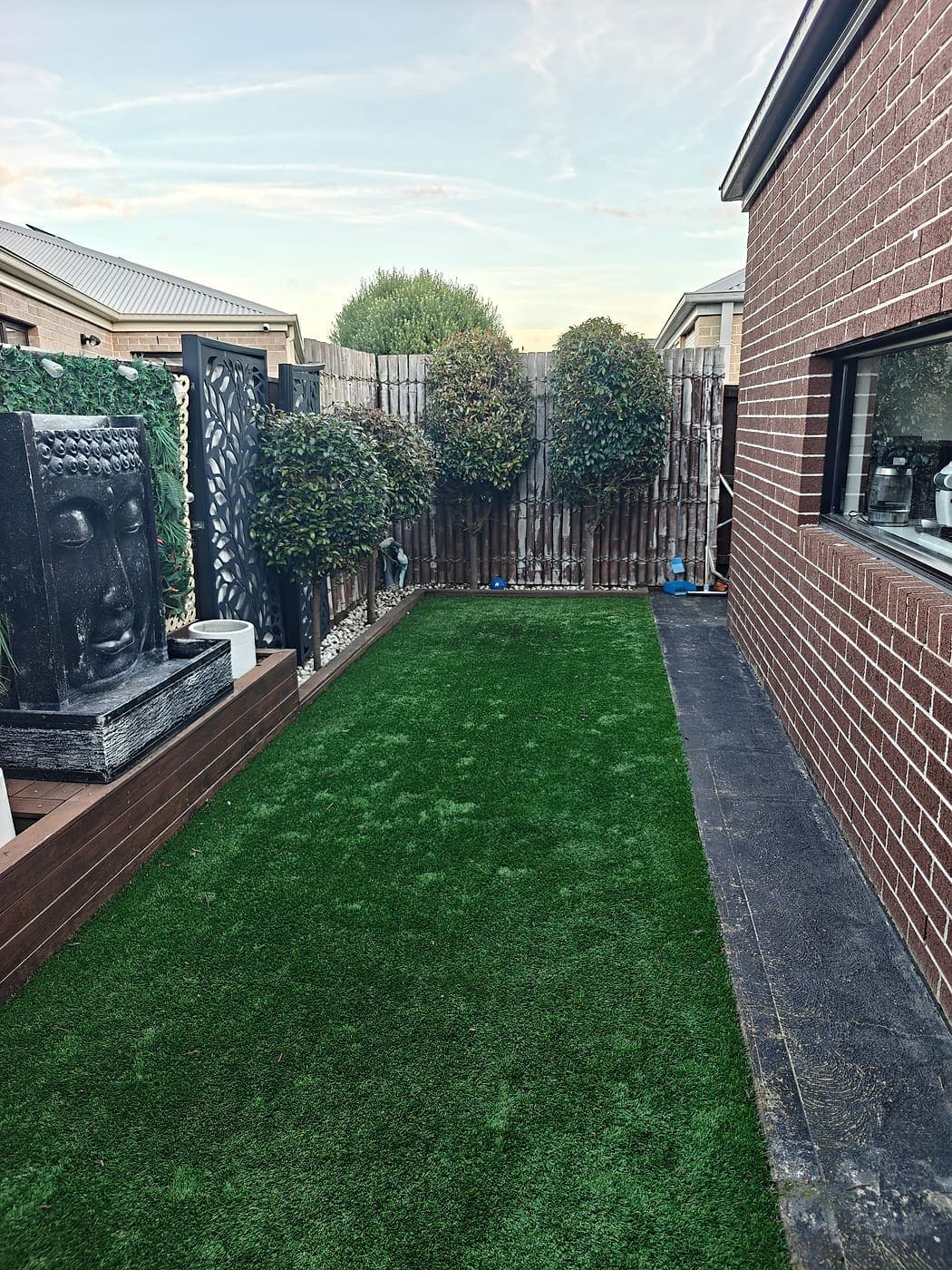
Is weed mat a good idea in a garden bed?
In most planted garden beds, no. Weed mat looks like a one-off fix, but within a few years mulch breaks down into a fine layer on top, wind-blown seed germinates in it, and the roots grow into the fabric, so you end up weeding anyway and the job is harder.
Sustainable Gardening Australia (opens in a new tab) (SGA) puts it plainly: plastic sheeting and landscape fabrics suppress weeds but "don't add nutrients to the soil", plastic hinders the passage of water and air, and although landscape fabric is more permeable, "SGA does not recommend their use."
Horticulturists overseas reached the same view. A Washington State University extension horticulturist compares the search for permanent weed control to "the perpetual dieter searching for a permanent weight loss pill", and a Penn State Extension (opens in a new tab) article records the conclusion that fabrics "will eventually cause maintenance problems in terms of appearance, weed control, and landscape plant health."
That does not make weed mat useless. It is the right product in the wrong place. Under stone, it works; under living plants, it fights the very things that keep a bed healthy.
Where does weed mat actually help?
Weed mat earns its place wherever its real job is separation, not weed control: keeping gravel, pebbles or a path base from sinking into the soil, and keeping soil from working up into the stone. In those spots nothing needs to root through it and no organic matter needs to reach the soil.
| Situation | Does fabric help? | Why |
|---|---|---|
| Gravel, crushed rock or pebble paths | Yes | Stops stone and soil mixing; keeps the surface firm |
| Decorative pebble strips along the house | Yes | Keeps stone clean; CFA (opens in a new tab) prefers stone to organic mulch near homes in bushfire areas |
| Under the compacted base of pavers or a gravel driveway | Yes, a non-woven geotextile | Spreads load and separates base from subgrade |
| Dry creek beds and drainage swales | Yes | Holds rock in place and stops soil washing into it |
| Behind retaining walls (drainage fabric) | Yes, as part of the wall's drainage | Keeps soil out of the drainage gravel; a structural job |
| Under a planted ornamental bed with organic mulch | No | Mulch breaks down on top; weeds root into it; soil goes hungry |
| Around trees, natives and shrubs long term | No | Blocks leaf litter and organic matter; roots grow up into it |
| Under groundcovers or spreading perennials | No | Stops plants rooting and spreading to cover the soil |
| Vegetable beds | No | Beds are dug and replanted each season; fabric gets in the way |
Even where it helps, weed mat does not stop weeds forever. Dust, leaves and seed collect between stones and weeds grow in that, so gravel areas still need a regular blow-out and weeding. Our article on gravel and succulent gardens looks at how much work a stone garden really is.
Woven, non-woven and plastic: not all "weed mat" is the same
Woven polypropylene is the common black or green "weed mat". It lets water through, blocks light, and frays at cut edges. It is fine under stone but clogs with fine soil and mulch over time.
Non-woven geotextile looks like felt. It is the separation fabric used under path and driveway bases and in drainage. It lets water through well and resists punctures from stone.
Black plastic sheeting is not weed mat at all. It is impermeable, so water runs off it and the soil beneath goes dry and airless. It has one good use: smothering weeds for a few hot weeks before planting, then coming out.
Natural fibre matting (jute or coir) is used on slopes and in revegetation to hold soil while plants establish. It breaks down over a couple of years, which is the point.
Why does weed mat fail under mulch?
Weed mat fails under mulch because the mulch keeps breaking down. Every year, a layer of fine organic matter builds up on top of the fabric, seed lands in it, and weeds germinate in that rich, moist layer and root straight into and through the weave.
Washington State University Extension describes the sequence: the fabrics break down "by physical forces or by becoming clogged with soil particles", the pores "are filled with bits of soil", and the fabric becomes "a perfect medium for growing weeds." The Penn State article describes weeds rooted through the fabric, mulch sliding off it, and soil underneath that was poor after years under cover.
Two cross-sections side by side. Year one: dark soil, a smooth black fabric layer, and a fresh layer of coarse bark on top, with no weeds. Year four: the bark has broken down into a thin, fine layer; weeds grow in it with roots threading through the fabric into the soil; shrub roots have grown up into the fabric surface; the soil beneath is paler and compacted, with fewer worms. Animated arrows in year one show rain soaking through; in year four, water beads and runs across the clogged surface.
Three slower problems follow:
- The soil goes hungry. Leaves and mulch can no longer break down into the soil, so it loses organic matter, worms and structure. On Melbourne's heavy clays in the north and west, that means harder, worse-draining soil over time.
- Roots move up. Shrub and tree roots chase moisture and air to the surface, growing into the fabric itself, which makes it almost impossible to lift later without damage.
- Plants cannot spread. Groundcovers and perennials that should knit together into a living cover stay as isolated clumps in a sea of mulch, so there is always open ground for weeds.
What works better than weed mat in a garden bed?
A coarse organic mulch over weeded soil, dense planting that closes over the ground, and regular light weeding work better than fabric in a planted bed. Together they suppress weeds, feed the soil and get easier each year rather than harder.
- Clear the weeds properly first, including bulbs, runners and roots. Mulch slows new weeds but will not kill established perennial ones.
- Water the soil before mulching, so moisture is locked in.
- Lay a coarse mulch 50 to 75 mm deep. SGA's figures show chunky mulch cuts evaporation far more than fine mulch, and coarse pieces are harder for weed seed to germinate in. Our comparison of mulch types covers which suits each bed, and our step-by-step mulching guide shows how to lay it.
- Plant closely enough to cover the ground. Groundcovers, strappy plants and shrubs spaced to meet within a season or two shade out weed seedlings. Our articles on plants that cope with Melbourne summers and native plants for clay soils suggest tough options.
- Weed little and often. A few minutes every couple of weeks in spring beats a full day every few months.
- Top up mulch each spring and autumn rather than letting it thin out.
For a heavily weeded patch you are about to replant, plain cardboard can smother weeds for a season under mulch and then break down, unlike plastic fabric. Remove tape and labels first and soak it well.
Smothering with plastic: the one good use
Solarising, or smothering with plastic, can clear a heavily weeded patch before planting. Mow or slash the weeds low, water the soil, lay clear or black plastic flat, and weigh down or bury the edges. Through the hottest weeks of a Melbourne summer, the heat and darkness kill many weeds and seeds near the surface.
Then take the plastic off. Left on permanently, it blocks water and air, and SGA notes plastic sheeting hinders the passage of both to the soil. It also breaks down in the sun into fragments that end up in the soil.
How do you remove old weed mat from a garden?
Remove old weed mat in sections: rake the mulch off, cut the fabric into manageable strips, lift it slowly while cutting around stems and roots, then feed the soil and re-mulch. It is a messy job, but the bed is easier to look after from then on.
- Rake the mulch onto a tarp. Most of it can go back on afterwards if it is still coarse.
- Cut the fabric into strips about a metre wide with a sharp knife or heavy scissors.
- Lift from one end. Where roots have grown into the fabric, cut the fabric around them rather than pulling the roots up.
- Cut around plant stems and lift the fabric away in pieces; leave small pieces stuck around large trunks rather than damaging the bark.
- Pull the weeds that were growing on top, roots and all.
- Fork compost lightly into the top of the soil where you can do so without damaging roots.
- Water, then re-mulch with coarse organic mulch.
- Dispose of the fabric as rubbish, not green waste: it is plastic.
Leave fabric in place where it is part of a structure: drainage fabric behind a retaining wall, or the geotextile under a driveway or path base, does a job that removing it can undo. Get help for large areas, beds on steep slopes, or fabric tangled in the roots of established trees, where heavy pulling can damage the tree.
What mistakes do people make with weed mat?
The biggest mistake is laying fabric over a weedy bed and expecting it to solve the problem. Weeds below survive at the edges and seams, and new weeds grow in the mulch above within a season or two.
- Laying it over established weeds. Bulbs, runners and perennial roots find every gap.
- Using it under organic mulch in planted beds. The mulch breaks down and becomes a weed seedbed on top.
- Leaving it exposed to the sun. Uncovered fabric goes brittle and shreds into fragments.
- Using black plastic as a permanent layer. It starves the soil of water and air.
- Planting groundcovers through it. They cannot root and spread to cover the soil.
- Skipping the edge. Lawn runners cross over fabric; a solid, trimmed edge is what stops them.
- Leaving it behind at the end of a lease. Shredded, weedy fabric is hard work to fix later; our end-of-lease garden checklist covers what to tidy before you hand back the keys.
Weed control is one part of a bigger seasonal routine. Our complete guide to garden maintenance in Melbourne shows where weeding and mulching fit across the year, and there are more articles in the gardening section of our blog.
When is it worth handing the job over?
If you have beds of old, shredded fabric to strip out, or you would rather the weeding, mulching and replanting were done in one go, it is worth handing over. Our gardening services cover weeding, soil preparation, planting and mulching, and you can get a free quote whenever you are ready.
Your Garden. Our Promise.
From our jobs
Frequently asked
Will weed mat stop onion weed and nutgrass?
How long does weed mat last in the Melbourne sun?
Do I need fabric under a gravel path or driveway edge?
How do I get old weed mat out of a garden bed?
Can groundcover plants spread if they are planted through weed mat?
Can black plastic clear a weedy patch before planting?
Is jute or coir matting better than weed mat on a slope?
Will weed mat stop couch grass spreading into a garden bed?
Sources and further reading
- Choosing mulch for your garden (Sustainable Gardening Australia)
- Putting an end to my landscape fabric nightmare (Penn State Extension)
- Weed barrier fabric (Washington State University Extension, Yakima County)
- Landscaping for bushfire (CFA)
- Weeds (Sustainable Gardening Australia)
Caring for Melbourne gardens since 2019. Updated 18 November 2026.