


Local rules and safety
Snakes in Melbourne gardens: what to do and how we work safely
By the Action Garden team · Updated · 12 min read
Checked against: Wildlife Victoria, Victorian Government, Better Health Channel
TL;DR
- Snakes are protected under the Wildlife Act 1975, so it is illegal to capture, harm, disturb or kill one.
- Tiger snakes, eastern brown snakes and red-bellied black snakes are among the venomous snakes seen around Melbourne, mostly near creeks, wetlands and open land.
- Keep still or back away, keep children and pets clear, and call 136 186 for a list of licensed snake controllers if one will not move on.
- For a bite: call 000, keep the person still, apply a firm pressure bandage and splint, and do not wash the bite.
- Short grass, no rubbish or timber piles and fewer mice make a garden far less inviting to snakes.
| Season | Snake activity | What it means in the garden |
|---|---|---|
| Early spring | Snakes emerge | As days warm, snakes leave winter shelter to bask, feed and find a mate |
| Late spring and summer | Most active | Tiger and brown snakes can move at night in hot weather |
| Autumn | Still active on warm days | Snakes look for winter shelter in logs, burrows, compost and leaf piles |
| Winter | Mostly sheltering | Snakes hibernate and are rarely seen, though a warm day can bring one out |
Are there really snakes in Melbourne gardens?
Yes, though most suburban gardens never see one. Snakes live along Melbourne's creeks, wetlands and bushland reserves, and on the urban fringe where new estates meet open paddocks, so gardens near water or open land see them most.
The Victorian Government's wildlife fact sheet says snakes are generally shy, prefer to keep away from people, and that a snake found in a backyard is often just moving through to another habitat. It also notes that snake bites in urban Victoria are very rare, and that most people bitten survive when modern first aid is followed by hospital treatment.
That does not make them harmless. The same fact sheet points out that most Victorian snakes are front-fanged venomous snakes and that even very young, small snakes can deliver a lethal bite. The working rule is simple: treat every snake as venomous and leave it alone.
Which snakes might you see in a Melbourne garden?
The Better Health Channel (opens in a new tab) lists the tiger snake, the copperhead, the red-bellied black snake and the eastern brown snake among the venomous snakes to watch for in Victoria, and names the tiger snake as the most common cause of snake envenoming in Victoria.
Plant profiles
Venomous snakes to know in Victoria
Tiger snake (Notechis scutatus). Usually about 1 metre long, grey-brown to black, often with yellowish bands, though some have none. Most often seen near creeks, rivers and swamps, and active at night in warm weather. Eats mainly frogs.
Eastern brown snake (Pseudonaja textilis). Long and slender, about 1.5 metres on average, plain pale to dark brown. Prefers open, dry areas, has adapted well to semi-urban land, and shelters under rubbish around buildings. Eats mostly mice and rats.
Red-bellied black snake (Pseudechis porphyriacus). Shiny black with a creamy pink to red underside, usually about 1.5 metres. Lives near water, creek banks and swamps. The fact sheet describes it as not aggressive and usually quick to retreat.
Copperhead. Listed by the Better Health Channel among Victoria's venomous snakes. Like every snake here, it is best left well alone.
Colour is not a safe way to identify a snake. The tiger snake fact sheet notes that body colour varies so much it cannot be used on its own, and young snakes can look quite different from adults. You do not need to know the species to do the right thing, and you do not need it for a bite to be treated.
What should you do if you see a snake in the garden?
Stay calm, keep still or back away slowly, and get children and pets out of the area. Then give the snake space and time to leave.
- Stop. If you are very close and the snake is raised or striking, the fact sheet advises freezing and standing very still until it stops posturing and moves off.
- Back away once it is safe, and call children and dogs inside.
- Watch from a distance if you can, so you know where it went.
- Leave it alone. Never try to move, catch or kill it. Snakes are protected under the Wildlife Act 1975, and many bites happen when people try.
- Call for help if it stays. If the snake is near the house and likely to be a danger to people or pets, call 136 186 for a list of licensed snake controllers.
What if the snake is inside, in the shed or near children?
Close internal doors to keep it in one room, keep everyone out, and call a licensed snake controller. Do not try to sweep or herd it out yourself.
If it is in a garage, shed or under a deck, keep the door shut, keep pets away and watch the exit from a distance until help arrives. The Department of Energy, Environment and Climate Action does not remove snakes itself; controllers on its list work privately.
What should you do if someone is bitten?
Call triple zero (000) straight away, keep the person lying down and still, and apply a pressure bandage and splint. Treat every suspected bite as serious, even if there is little pain or no obvious mark.
The Better Health Channel sets out these first aid steps:
- Follow DRSABCD and call 000 for an ambulance.
- Lie the person down, ask them to keep still and reassure them.
- Remove jewellery from the bitten limb if you can.
- Apply a broad pressure bandage over the bite, then an elasticised roller bandage 10 to 15 cm wide, starting just above the fingers or toes and moving up the limb as far as you can reach.
- Make the bandage as firm as possible; you should not be able to slide a finger easily under it. Mark the bite site on the bandage with an X.
- Splint the limb and keep the person completely still.
- Write down the time of the bite and when the bandage went on.
- Bring the ambulance to the person; do not make them walk.
Do not wash the bite, cut it, suck it or use a tourniquet. Venom left on the skin or clothing helps the hospital identify it. Signs of a bite are not always visible, and symptoms can take an hour or more to show.
Call 000 for any suspected snake bite, every time. Call a licensed snake controller, through the list on 136 186, for a snake inside the house, in a shed or under a deck, or one that keeps returning near where children play. Never try to catch, move or kill a snake yourself.
What goes in a garden first aid kit for snake season
The wildlife fact sheet recommends several wide elastic compression bandages, not crepe, and a charged mobile phone when you are outdoors in snake season. A first aid course is the best preparation.
Keep a pen in the kit to mark the bite site on the bandage, and a notepad for the time of the bite. A kit in the shed or with the outdoor tools is far more useful than one in the bathroom cupboard.
Why do snakes come into gardens, and how do you make yours less inviting?
Snakes come into gardens for food, water and shelter. Mice, rats and frogs draw them in, and long grass, rubbish and timber piles give them somewhere to hide.
The Victorian Government's fact sheet lists these steps:
- Keep grass short, especially along fences and around the house.
- Remove rubbish, piles of wood and other cover, such as sheets of iron and rock piles.
- Make the garden less attractive to mice and frogs, which attract snakes.
- Check compost bins and leaf piles, where snakes may shelter over winter.
- Screen doors and windows and block off gaps where a snake could get inside.
In practice, mice follow food: spilled bird seed, pet food left outside, and unsecured chook feed. Ponds and wet corners draw frogs. Neither has to go, but keeping them away from doorways and play areas helps. If you are adding water features or changing how you water, our guide to Melbourne's water rules for gardens is worth reading first.
Is it safe to mow or clear long grass in snake season?
It can be, with care. Long grass is exactly the cover snakes use, so the risk is highest on the first cut of spring or on a block that has been left to grow.
- Walk the area first in boots and long trousers, looking where you put your feet.
- Pick up timber, sheets and rubbish carefully, lifting the far edge first so anything underneath can leave away from you.
- Cut very long grass in stages, lowering the height over several passes so you can see the ground.
- Keep children and pets inside while you work.
- Stop and back away if you see a snake, and give it time to leave before you carry on in that area.
A plan view of an overgrown backyard. A dotted line traces a slow walk around the edge, with small eye icons at the fence line, a woodpile and a sheet of iron. A first mowing pass then cuts the grass halfway down in wide stripes, and a second pass brings it to lawn height. In one corner, a small snake icon appears; the mower path stops, an arrow shows the operator stepping back, and the snake slides out under the fence before the last stripe is finished.
Spring is when snakes emerge and when lawns need the most work. If you are planning a spring lawn renovation, scarifying and top-dressing mean time on your knees in the grass, so check the area before you start. A lawn left long because of brown patches or a slow recovery deserves the same care.
How does Action Garden work safely around snakes?
The team plans each job around what you tell them about access, pets and hazards, and checks the work area on arrival. A snake is left alone, and a licensed snake catcher is the right call for one that stays.
What helps us most is knowing before the visit. If you have seen a snake recently, mention it when you book or message us on WhatsApp, along with where it was and when.
In snake season the crew wears snake protection gear. If a snake is seen during a job, the team pauses work in that area, tells you, and contacts a licensed snake catcher or the local authority. Work continues once the snake has been dealt with.
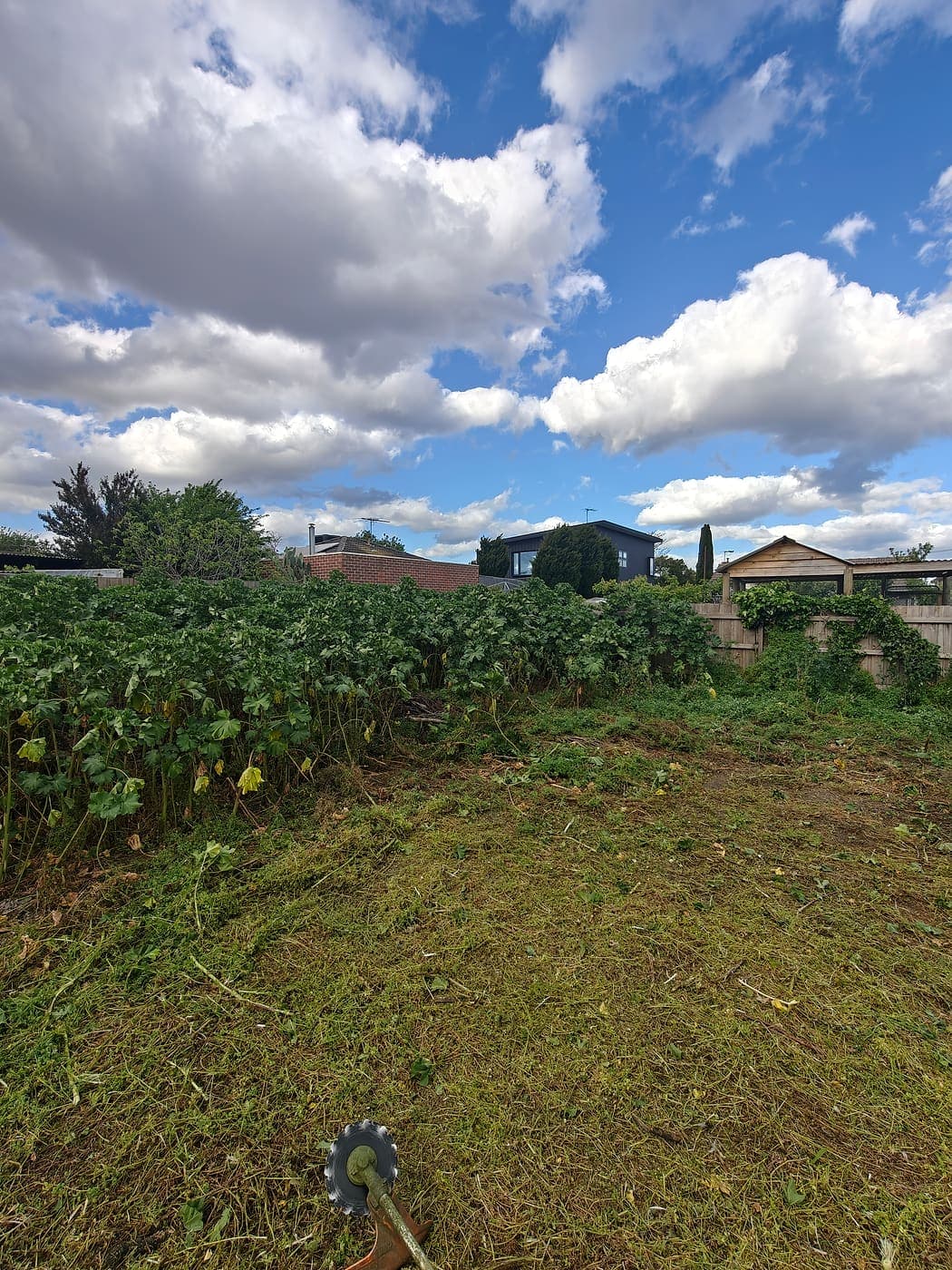
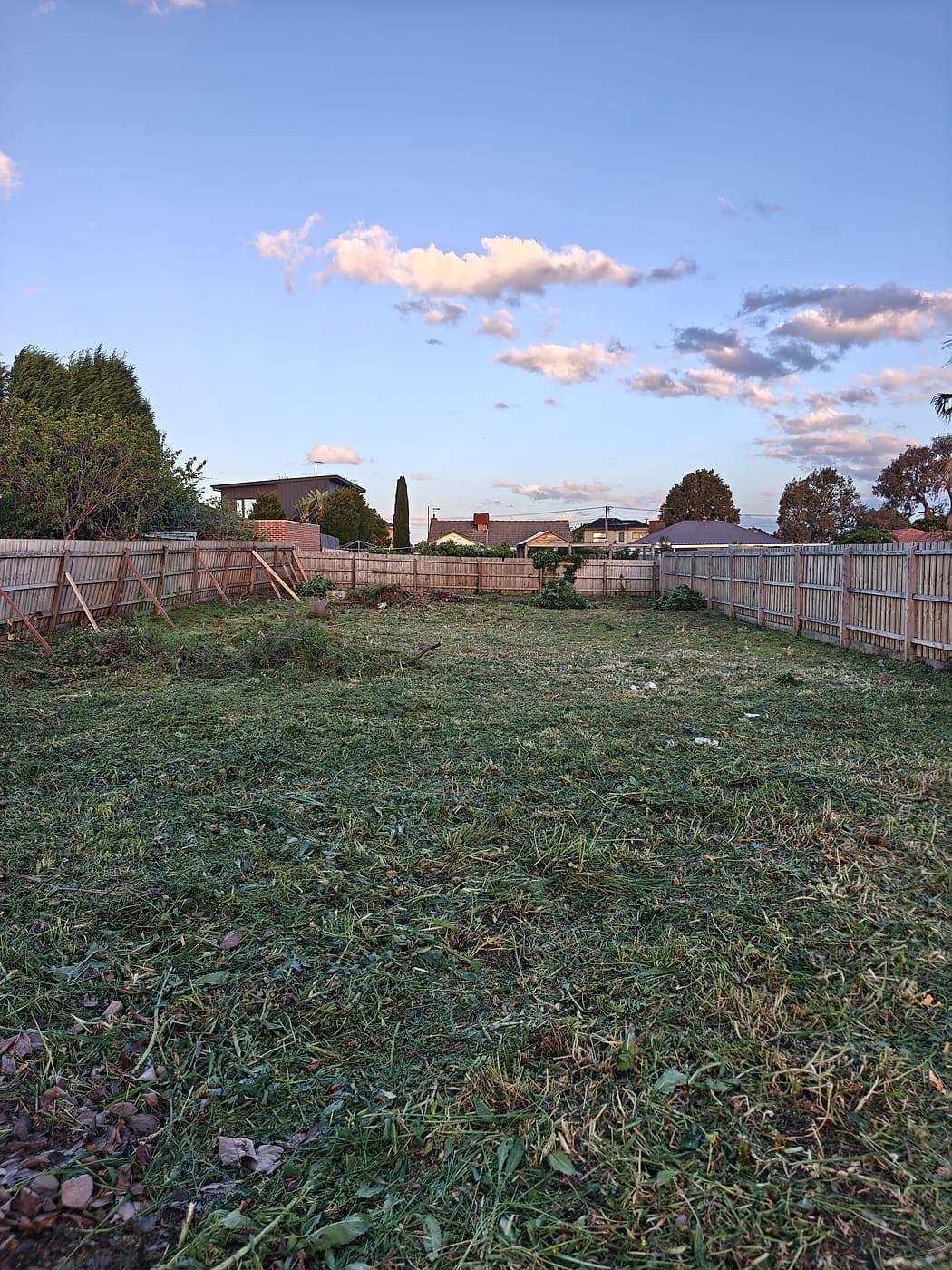
Why short grass on a vacant block matters
Overgrown blocks offer snakes and mice exactly what they need. The same long grass is also a fire fuel, which is why councils on the urban fringe issue fire prevention notices each summer.
A regular cut through spring and summer keeps both problems down, and makes each visit quicker and safer for whoever does the work.
What mistakes put people at risk?
The most common mistake is trying to deal with the snake. The fact sheet is blunt: many bites happen when people try to catch or kill snakes.
- Trying to kill or move it. It is illegal and it is how most bites happen.
- Losing sight of children and pets. A curious dog or cat can corner a snake.
- Reaching into piles and under sheets without looking first.
- Mowing long grass blind in sandals and shorts.
- Washing the bite or using a tourniquet. Both are outdated and unhelpful.
- Waiting to see if a bite gets worse. Symptoms can be delayed; call 000 at once.
Quick decision guide
You have seen a snake
- Has anyone been bitten, or might have been? Call 000 now and apply a pressure bandage.
- Is the snake inside the house, shed or under a deck? Shut it in if you can, keep everyone clear and call a licensed snake controller.
- Is it near children, pets or a doorway and not moving off? Keep everyone away and call 136 186 for a list of snake controllers.
- Is it out in the garden or passing through? Keep clear, bring pets in and let it move on.
- Has it gone? Tidy away cover, keep the grass short and tell your gardener before their next visit.
There are more articles about council rules and outdoor safety in the local rules and safety section of our blog. Snakes are not the only wildlife that shares Melbourne gardens; our article on possums in the garden covers the rules for those, and the help centre answers common questions about visits and access.
When is it worth handing the job over?
If the grass is long, the block backs onto a creek or open land, or you simply would rather not be the one walking it in summer, it is worth handing over. Our lawn mowing service keeps grass short on a regular schedule through the warm months, and our complete guide to lawn mowing in Melbourne explains how often each season needs a cut. You can get a free quote whenever it suits you.
Your Garden. Our Promise.
From our jobs
Frequently asked
Is it legal to kill a snake in my backyard in Victoria?
How do I find a licensed snake catcher in Melbourne?
When are snakes most active in Melbourne?
Do I need to know what kind of snake it was if someone is bitten?
How do I stop a snake getting into the house from the garden?
What should I do if my dog or cat is bitten by a snake?
Should I cancel a mowing visit if I have seen a snake in the yard?
Sources and further reading
- Living with snakes fact sheet (Wildlife Victoria, Victorian Government)
- Bites and stings, first aid (Better Health Channel)
- Tiger snake fact sheet (Wildlife Victoria, Victorian Government)
- Eastern brown snake fact sheet (Wildlife Victoria, Victorian Government)
- Red-bellied black snake fact sheet (Wildlife Victoria, Victorian Government)
Caring for Melbourne gardens since 2019. Updated 18 November 2026.