


Local rules and safety
Declared weeds on your property: obligations in Victoria
By the Action Garden team · Updated · 14 min read
Checked against: Agriculture Victoria, Hume City Council, City of Whittlesea, Wyndham City Council
TL;DR
- The duty sits with land owners, public and private, from a suburban backyard to a farm, under section 20 of the Catchment and Land Protection Act 1994.
- Most of Melbourne is in the Port Phillip and Westernport region: 22 regionally prohibited and 51 regionally controlled weeds on the consolidated list.
- Agriculture Victoria can serve a Directions Notice or Land Management Notice, and failing to comply is an offence.
- Some councils, such as Hume and Whittlesea, also run weed local laws with their own notices and infringements.
- Report a suspected State prohibited weed on 136 186 and leave it alone; for the rest, control it before it seeds and never move it without a permit.
| Category | Your duty | Melbourne region count |
|---|---|---|
| State prohibited | Report it on 136 186 | The Victorian Government eradicates these; 25 species statewide |
| Regionally prohibited | Eradicate it | 22 species in Port Phillip and Westernport |
| Regionally controlled | Stop growth and spread | 51 species in Port Phillip and Westernport |
| Restricted | Do not sell or trade it | 31 species apply in Port Phillip and Westernport |
What is a declared weed in Victoria?
A declared weed, often called a declared noxious weed, is a plant listed under Victoria's Catchment and Land Protection Act 1994 (the CaLP Act) because it threatens farming, the environment, Crown land or community health. Unlike an ordinary garden weed, it carries legal duties for whoever owns the land it grows on.
The Act sorts declared weeds into four categories, and each weed is classified separately for each of Victoria's ten catchment regions. Most of metropolitan Melbourne sits in the Port Phillip and Westernport region, so that is the column that matters on Agriculture Victoria (opens in a new tab)'s consolidated list.
- State prohibited weeds either are not in Victoria yet or can still be wiped out. The Victorian Government is responsible for eradicating them.
- Regionally prohibited weeds are not widespread in the region but can spread further. Land owners must take all reasonable steps to eradicate them.
- Regionally controlled weeds are usually widespread. Land owners must take all reasonable steps to stop them growing and spreading.
- Restricted weeds are a serious risk to other states or territories, so trade in the plants and their seeds is banned.
The key facts table above shows how many species fall into each category for the Melbourne region. A plant that is merely invasive in bushland, such as agapanthus or English ivy, is an environmental weed without these legal duties; our article on environmental weeds every Victorian gardener should know covers those plants and how to recognise them.
What does the law require of you as a land owner?
Section 20 of the CaLP Act requires every land owner to take all reasonable steps to eradicate regionally prohibited weeds and to prevent the growth and spread of regionally controlled weeds on their land. Agriculture Victoria is clear that this covers all land owners and occupiers, public and private, including the Crown and public authorities.
The same section also requires land owners to avoid causing land degradation that could damage a neighbour's land, and to control established pest animals such as rabbits and foxes. Native animals are different: possums, for example, are protected wildlife, and our article on possums in the garden and the rules around them explains what you can and cannot do.
Beyond the section 20 duty, the Act restricts what you do with any declared weed, whatever its category. Agriculture Victoria lists these as things you cannot do without a permit:
- buy, sell, possess for sale, display or propagate a noxious weed, its seed or any part that can grow;
- bring it into Victoria or transport it within Victoria;
- deposit a noxious weed, or a part capable of germinating, on land;
- remove or sell soil, sand, gravel or stone that contains, or is likely to contain, part of a noxious weed, or that comes from land where noxious weeds grow.
That last pair is the one that catches gardeners out. Tipping blackberry canes over the back fence, or carting soil from an infested corner to fill a garden bed, can breach the Act even if you never planted the weed in the first place.
What "all reasonable steps" means in practice
The Act does not set a fixed standard for a backyard. In practice, it means acting in proportion to the weed and the land: finding the plants, controlling them before they set seed, following up on regrowth, and not moving infested material.
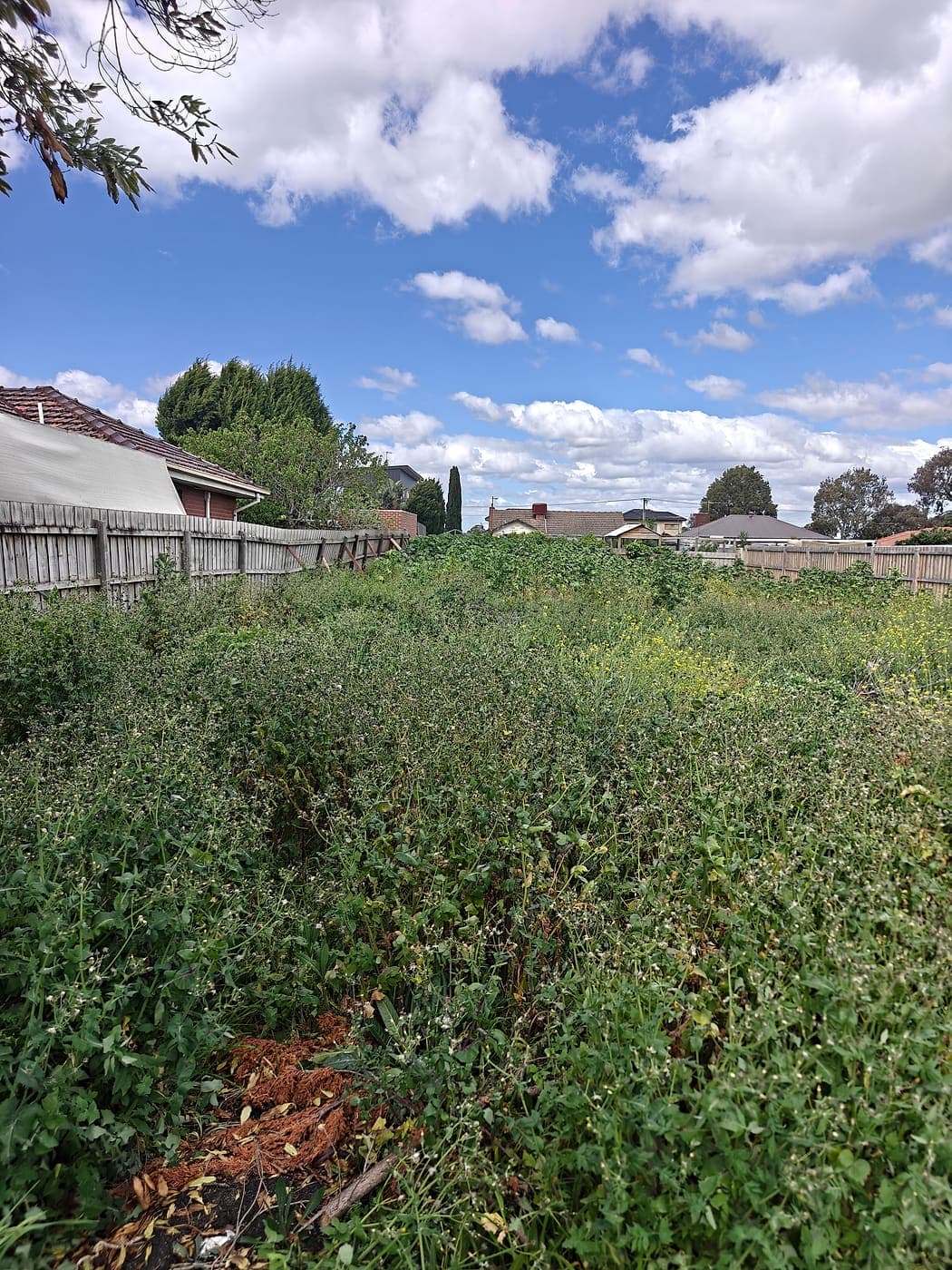
A small, isolated infestation that is cut out and followed up each season is the kind of effort the duty describes. An infestation left to seed for years, or spreading onto a neighbour's land, is the kind of situation that leads to a notice.
Which declared weeds turn up on Melbourne properties?
Most of the 129 declared weeds that apply in the Port Phillip and Westernport region are farm and roadside weeds, but a handful are common in suburban gardens, creek-side blocks and vacant land. Counted from Agriculture Victoria's consolidated list, which consolidates the Government Gazette of 20 July 2017:
| Category in Port Phillip and Westernport | Number of species |
|---|---|
| State prohibited (statewide) | 25 |
| Regionally prohibited | 22 |
| Regionally controlled | 51 |
| Restricted (regional and whole of state) | 31 |
Source: Agriculture Victoria, consolidated list of declared noxious weeds by common name, Port Phillip and Westernport column. Classifications can change, so check the current list before acting.
These are the declared weeds most likely to come up on a residential or small commercial property around Melbourne, with their classification in the region:
Plant profiles
Declared weeds found on Melbourne properties
Blackberry (Rubus fruticosus agg.). Regionally controlled. Arching, thorny canes along fences, creek banks and neglected corners, spread by birds eating the fruit. Also a Weed of National Significance.
Boneseed (Chrysanthemoides monilifera). Regionally controlled. A yellow-flowered shrub from old coastal and bayside plantings, with hard seed that lasts in the soil.
Cape broom and English broom (Genista monspessulana, Cytisus scoparius). Regionally controlled. Yellow pea flowers in spring, and seed pods that flick seed well away from the parent plant.
Gorse (Ulex europaeus). Regionally controlled. A spiny, yellow-flowered shrub, often from old hedges on the rural fringe.
Tree of heaven (Ailanthus altissima). Regionally controlled. A fast shade tree that suckers widely, so cutting it down without treating the stump usually makes the problem worse.
Wild watsonia and sweet briar (Watsonia meriana var. bulbillifera, Rosa rubiginosa). Regionally controlled. Watsonia spreads by bulbils in dumped garden waste; sweet briar by bird-spread hips.
Chilean cestrum (Cestrum parqui). Regionally prohibited in this region, so the duty is to eradicate it, not just contain it.
Caltrop (Tribulus terrestris). Regionally prohibited in this region. A low, spreading summer weed with hard, spiny burrs that turns up on bare, disturbed ground.
Serrated tussock and African boxthorn (Nassella trichotoma, Lycium ferocissimum). Regionally controlled. Common on the northern and western fringe, and named by Wyndham as among the worst weeds there.
Who enforces the rules: Agriculture Victoria or your council?
Agriculture Victoria enforces the CaLP Act. Councils manage declared weeds on land they own and manage, and some also make their own weed local laws, which they enforce separately.
Agriculture Victoria notices
If a land owner does not meet the section 20 duty, an authorised officer can serve a Directions Notice or a Land Management Notice. Agriculture Victoria describes these as the most commonly used tools for making sure noxious weeds are controlled. Each sets out the measures to take, and it is an offence not to comply.
For State prohibited weeds, the government does the eradication, but an officer can direct a land owner to prevent their growth and spread for a set period. Failing to follow that direction is also an offence.
Council local laws, council by council
Council rules vary, so check your own council's website. Three examples from Melbourne's growth areas show the range:
| Council | Local rule | How it works |
|---|---|---|
| Hume | Section 33, General Purpose Local Law No. 1 2023 | Owners must take reasonable steps to control noxious weeds. A courtesy Weed Advisory Notice comes first, then a Notice to Comply with 14 days to act, then a penalty infringement notice, and finally court |
| Whittlesea | Pest Plant Local Law (section 2.15, Community Local Law) | Covers 12 prescribed weeds, including blackberry, gorse, serrated tussock, sweet briar and Paterson's curse, through a yearly seasonal education and compliance programme |
| Wyndham | Section 17, Community Amenity Local Law 2023 | Covers environmental weeds; it does not apply to CaLP noxious weeds, which stay with Agriculture Victoria |
Source: each council's weed page, listed under Sources below.
Roadsides depend on who manages the road. Wyndham, for example, says it controls invasive weeds on land it owns and manages, including rural roadsides. Plants on the nature strip outside a suburban house are a different matter again, covered in our article on what the council expects of nature strips.
A horizontal path of five stepping stones, each lighting up in turn. Stone one: a declared weed spreading along a fence line. Stone two: an officer's visit, shown as a clipboard. Stone three: a notice listing the weed, the measures and a due date, with a calendar ticking down. Stone four: two branches split from the calendar. The upper branch shows the weed cut, bagged and the area mulched, ending in a green tick. The lower branch shows the weed still growing past the due date, ending in a grey gavel icon for a penalty.
What should you do if you receive a weed notice?
Read the notice carefully, act on the listed measures before the due date, and contact the issuing officer early if anything is unclear or the timing will not work. Hume, for example, says it may grant more time at the Notice to Comply stage if you ask.
The measures will come from the four prescribed under the CaLP Act:
- Application of a registered herbicide, following the product label exactly. Agriculture Victoria notes a marker dye may be a legal requirement for complying with a notice, and that sprayed plants usually should not be removed for at least 6 months so the herbicide can work.
- Cultivation, meaning turning the soil to a depth of at least 15 centimetres, best done before seed sets. It does not suit weeds that regrow from small pieces.
- Physical removal of the whole plant, including roots, crowns or bulbs that can regrow.
- Mulching, which smothers seedlings and regrowth.
Keep a record of what was done and when, with dated photos of the area before and after. If the work is done by someone else, ask for the date, the method and the area treated in writing.
Quick decision guide
You have found a declared weed on your property
- Could it be a State prohibited weed, such as Mexican feather grass? Leave it alone and call Agriculture Victoria on 136 186.
- Have you received a Directions Notice, Land Management Notice or council weed notice? Follow the measures on the notice by the due date, and call the officer now if you need more time.
- Is it regionally prohibited in Port Phillip and Westernport? Plan to eradicate it completely, with follow-up visits for regrowth and seedlings.
- Is it regionally controlled, such as blackberry or broom? Control it before it seeds, stop it spreading off your land, and follow up every season.
- Is it a restricted weed in your garden, such as angled onion? Keep it from spreading and never sell, swap or give away plants or seed.
How do you control a declared weed without breaking the movement rules?
Control it where it grows, before it sets seed, and keep every part that can regrow contained. The movement rules mean the disposal step matters as much as the removal.
- Time it to the plant. Agriculture Victoria advises treating plants when they are actively growing and not under stress, and cultivating before seed sets.
- Bag seed heads, bulbs and berries before you cut the rest, so seed does not drop as you work.
- Do not dump it. Depositing a noxious weed part that can germinate on land needs a permit, and that includes a neighbour's block or a bush reserve.
- Check your council's green bin rules before using the bin for declared weed material, and ask the council where to take it if the bin is not allowed.
- Clean tools, boots and machinery before leaving an infested area, so seed does not ride to the next patch.
- Leave sprayed plants standing for as long as the label and Agriculture Victoria's guidance say, then cut and remove them.
Why cutting can make some declared weeds worse
Tree of heaven, blackberry and some brooms respond to being cut by resprouting from the base or the roots. Cutting alone can turn one plant into a thicket.
Agriculture Victoria describes the cut and paint method for woody weeds: cut the stem as low as possible and immediately paint the stump with a registered herbicide, before it seals over. Follow the label for which products and rates apply.
Who is responsible on rentals, strata sites, vacant blocks and sales?
The CaLP duty follows the land owner, but day-to-day weeding is often shared through a lease, a strata arrangement or a maintenance contract. Being clear about who does what stops an infestation falling between two parties.
- Rental properties. The rental provider owns the land and carries the legal risk. Renters usually keep garden beds tidy under the lease, so the practical step is for renters to report a declared weed in writing. Our end-of-lease garden checklist covers what renters are usually expected to leave behind.
- Owners corporations. Weeds on common property are a matter for the owners corporation, and are worth adding to the grounds maintenance scope by name.
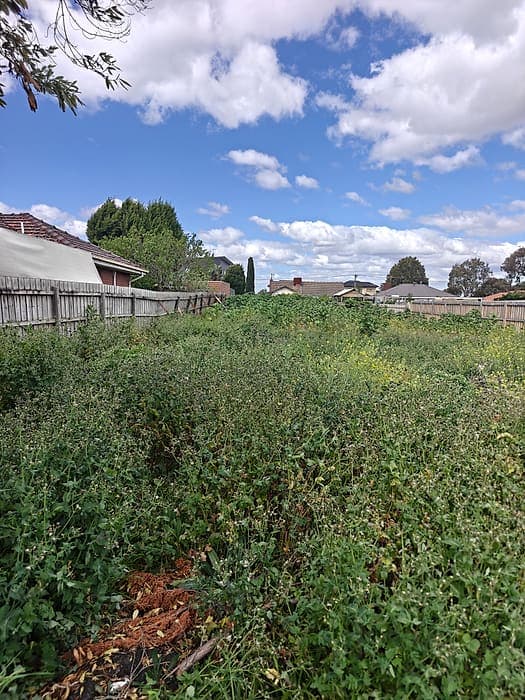
- Vacant blocks. Absent owners are easy to miss until a notice arrives. A regular slash and weed check through spring keeps both weed and fire notices away.
- Buying or selling. Ask your conveyancer whether any CaLP notice affects the land, and walk the boundary for blackberry, broom or tussock before settlement.
Hiring someone to do the work
Tell the contractor exactly which weed it is and whether a notice applies, so the method matches what the notice requires. Ask how seed heads, bulbs and canes will be bagged and where they will be taken.
Ask too who will apply any herbicide, and what permit or training they hold. Our guide on how to choose a gardener in Melbourne and the questions to ask has a fuller checklist.
What mistakes get land owners into trouble?
The most common mistake is waiting. A few blackberry canes along a fence are an afternoon's work; five years of seeding canes are a notice waiting to happen.
- Ignoring the first letter. A council courtesy notice is the easiest point to act, before formal steps begin.
- Mowing or slashing a seeding weed. It spreads seed across the block and onto machinery.
- Cutting woody weeds without treating the stump. Suckers come back thicker.
- Dumping cuttings. It spreads the weed and can breach the Act.
- Moving soil from an infested patch. It carries seed and bulbs to new ground.
- No follow-up. Seed in the soil keeps germinating for years, so one clean-up rarely ends the duty.
Call Agriculture Victoria on 136 186 for any suspected State prohibited weed, and do not touch it. Get professional help for thorny thickets of blackberry or gorse, steep or creek-side ground, any herbicide work you are not trained for, and any job tied to a notice deadline. Dense thickets can also shelter snakes in warm weather; our article on snakes in Melbourne gardens and what to do explains how to work around them.
Declared weed control fits into the same seasonal routine as the rest of the garden, and our complete guide to garden maintenance in Melbourne shows where weeding and follow-up visits sit across the year. You will find more articles on council rules and safety in the local rules and safety section of our blog.
When is it worth handing the job over?
If the infestation is large, tangled in a fence line or tied to a notice date, it is worth handing over to a team that can come back for the follow-up. Our gardening services cover weeding, revitalising overgrown gardens and garden waste removal. Weed spraying is done by our own team. You can get a free quote whenever it suits you.
Your Garden. Our Promise.
From our jobs
Frequently asked
Do declared weed duties apply to a suburban house block, or only to farms?
Can I be fined for declared noxious weeds on my land in Victoria?
Does a Directions Notice tell me how to control the weed?
Who is responsible for declared weeds on a rented property?
Who controls declared weeds on the roadside next to my property?
Can I move soil or fill that might contain declared weed seed?
Who do I call about a suspected State prohibited weed in my garden?
Sources and further reading
- Legal responsibilities for managing invasive species (Agriculture Victoria)
- Managing noxious weeds (Agriculture Victoria)
- Invasive plant classifications (Agriculture Victoria)
- Consolidated lists of declared noxious weeds and pest animals (Agriculture Victoria)
- Prescribed measures for the control of noxious weeds (Agriculture Victoria)
- Invasive species laws and the Catchment and Land Protection Act 1994 (Agriculture Victoria)
- Weed Compliance and Education Program (Hume City Council)
- Weeds and pest plants (City of Whittlesea)
- Weed management (Wyndham City Council)
Caring for Melbourne gardens since 2019. Updated 18 November 2026.