


Sustainable gardening
Lawn alternatives: native grasses and groundcovers
By the Action Garden team · Updated · 15 min read
Checked against: Sustainable Gardening Australia, Water Victoria
TL;DR
- Start with use, not plants: heavy play needs turf, light foot traffic suits tough groundcovers or a native grass lawn, and no-traffic corners suit beds or spreading groundcovers.
- Weeping grass is the native grass that looks most like a traditional lawn; it stays green through winter, copes with shade and can be mown, but it does not like heavy wear or dog urine.
- Groundcovers such as dichondra, native violet, creeping thyme and myoporum suit shade, slopes, paths and the strip along a fence where a mower struggles.
- Taking out an existing couch or kikuyu lawn is the hard part; runners left in the soil come back through most replacements, so the old grass has to be fully removed first.
- A smaller, well kept lawn framed by native beds is often the best result in a Melbourne garden, with less mowing and water but somewhere to sit and play.
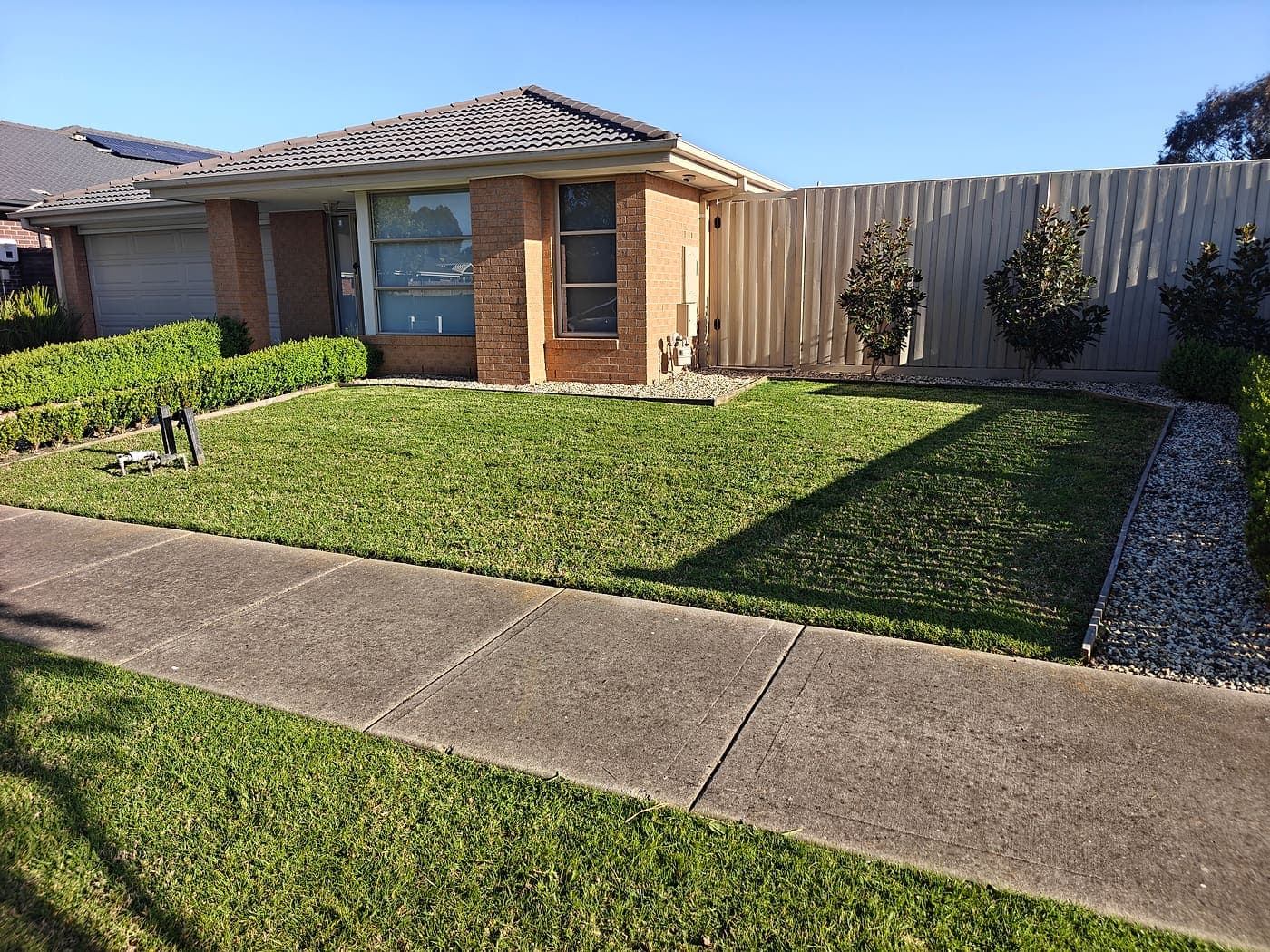
What are the main alternatives to a lawn in Melbourne?
There are five realistic alternatives to a traditional lawn: a native grass lawn, spreading groundcovers, a meadow lawn, mulched garden beds, and a smaller lawn framed by native fringe planting. Synthetic turf is a sixth option, but it is not a planting and it has its own trade-offs.
Each one solves a different problem. A native grass lawn keeps the look of lawn on less water. Groundcovers fill the awkward places where turf never thrives. A meadow swaps weekly mowing for one or two cuts a year, and beds swap mowing for occasional weeding and pruning.
Sustainable Gardening Australia (opens in a new tab) makes the point simply: if a lawn is only being mown and not enjoyed, it is worth asking whether that space needs to be lawn at all. The answer is often "some of it", not "all of it".
Which option suits which part of the garden?
Match the option to the foot traffic the area gets. That single question rules most choices in or out before you look at a single plant.
Side by side
Lawn and the main alternatives side by side
| Turf lawn | Native grass lawn | Groundcovers | Meadow lawn | Mulched native bed | |
|---|---|---|---|---|---|
| Foot traffic | Heavy | Light to moderate | Light, or none | Light, on mown paths | None |
| Mowing | Weekly to fortnightly in the growing season | Occasional to regular, by choice | None, some trimming | Once or twice a year | None |
| Summer water once established | Moderate to high | Low; may brown off and recover | Low to moderate | Low | Low |
| Shade | Most turf grasses struggle | Weeping grass copes with shade | Many suit shade | Mostly sun | Choose plants to suit |
| Weed control | Mowing helps keep weeds down | Hand weeding while it thickens | Hand weeding until it covers | Hand weeding, spot work | Mulch plus hand weeding |
| Habitat value | Low | Moderate | Moderate | High | High |
| Main catch | Water, mowing and feeding | Slow to establish, dislikes dogs | Patchy until it spreads | Can look untidy | Needs a full year to settle |
The table is a guide, not a rule. A dense groundcover such as dichondra can take more wear than a thin native lawn, and a well chosen turf in full sun can be fairly frugal with water.
A simple backyard plan in three zones. The area by the back door and the play space carry heavy traffic and stay turf. A band of light traffic, such as the front lawn and the way to the clothesline, shifts to a native grass lawn or stepping stones set into groundcover. The no-traffic edges, under trees, along fences, on the slope and in the narrow side passage, become mulched beds and spreading groundcovers. Arrows show how people actually move through the garden, and the turf follows the arrows.
What are native grass lawns, and what are they like to live with?
Native grass lawns use Australian grasses that can be mown, most often weeping grass and wallaby grass. They need little fertiliser and less water than most turf once their deep roots are established, but they establish slowly and do not suit heavy wear.
Sustainable Gardening Australia describes weeping grass as perhaps the most suitable native for the look of a traditional lawn. It is a cool season grass, so it stays green through winter unless rain stops for a long time. It spreads short distances by underground stems, grows in a wide range of soils and tolerates shade, but the same source rates its tolerance of heavy traffic and dog urine as low.
Wallaby grass is a tufting grass that survives without irrigation on soils from medium clays to sandy loams with good drainage. It should be mown no lower than 4 cm and has fluffy white seed heads in spring. Kangaroo grass and redgrass are warm season natives that brown off in winter; kangaroo grass tolerates mowing only about twice a year, so it suits a meadow better than a lawn.
What to expect in the first year
- Seed or plugs: both are sold through specialist nurseries; seed covers large areas more easily, plugs fill in more reliably.
- Water: seed must not dry out while it germinates. After that, water for longer on fewer days to drive roots down.
- Weeds: the first season is a weeding season, by hand, while the grass thickens.
- Feeding: little or none. SGA notes that native lawns thrive on low fertility soil, where weeds are at a disadvantage, and that returning clippings may be all the feeding they need.
During drought, a native lawn may brown off. Well established plants resprout with the first good rain, so a brown patch in February is not a dead lawn.
Local seed and the clay of the north and west
Sustainable Gardening Australia advises using seed or plugs from local populations, because they suit the local climate best. That matters in Melbourne, where heavy basalt clay in the northern and western suburbs and sandy soils in the south-east behave very differently in a wet winter and a dry summer. On clay, wallaby grass and kangaroo grass are natural fits, since both belong to the grassy plains that once covered much of the west. On light sand, weeping grass needs more help through its first summer. Your council's indigenous nursery or a local indigenous plant guide is the best place to ask which grasses grew naturally in your area.
Which groundcovers work instead of grass?
Low groundcovers work best where turf struggles: under trees, along fences, on slopes and in narrow side passages. Some take light foot traffic; others are for looking at, not walking on.
Plant profiles
Groundcovers and grasses that can replace lawn
Weeping grass (Microlaena stipoides). Native cool season grass. Can be mown, stays green in winter, shade tolerant, high drought and frost tolerance. Low tolerance of heavy wear and dog urine.
Wallaby grass (Rytidosperma species, formerly Austrodanthonia). Native tufting grass. Survives without irrigation on clays and loams with good drainage. Mow no lower than 4 cm.
Kidney weed (Dichondra repens). Native, low and creeping, with small round leaves. Takes light foot traffic and grows well under trees. Needs some summer water in full sun.
Native violet (Viola hederacea). Native groundcover for dry shade and under trees, with small mauve and white flowers. Light foot traffic only.
Creeping boobialla (Myoporum parvifolium). Native, fast spreading and low growing. Good on slopes and banks and in full sun. Not for walking on.
Prostrate grevilleas. Native, low and spreading, with flowers that feed honeyeaters. Suit sunny banks and slopes. No foot traffic.
Creeping thyme. Not native, but tough, scented and fine with light foot traffic in full sun. Suits stepping stone gaps.
Dwarf mondo grass. Not native. Slow, dense and neat, handles light foot traffic and shade. Good for gaps in paving and narrow strips.
Sustainable Gardening Australia rates all of these as low weed potential in its lawn alternatives guide. Avoid groundcovers that escape into bushland, such as gazania and some pigface, because a few are listed environmental weeds in Victoria.
What is a meadow lawn, and when does it suit?
A meadow lawn mixes grasses with flowering perennials, bulbs and wildflowers, and is cut once or twice a year instead of every week or two. It suits larger front yards, back corners and the edges of a property where you want colour and habitat more than a play surface.
SGA's advice is to cut after the main spring flowering and again in late autumn, and to rake off the cut material so nutrients do not build up. Lean soil favours the grasses and wildflowers over vigorous weeds.
The risk with a meadow is that it can look neglected. The fix is a frame: a crisp mown edge along the footpath, mown paths through it, and edged garden beds. Neat edges tell neighbours, and buyers, that the long grass is a choice.
Fire, snakes and long grass on the urban fringe
In outer suburbs near grassland or bush, long grass close to the house adds fuel in summer, and long grass also gives snakes cover. If you live in a bushfire prone area, keep a meadow well away from buildings and keep the grass near the house short through the fire season. Your council may issue fire prevention notices for long grass on some properties, so check your council's requirements before letting an area grow out.
How do mulched beds and fringe planting compare?
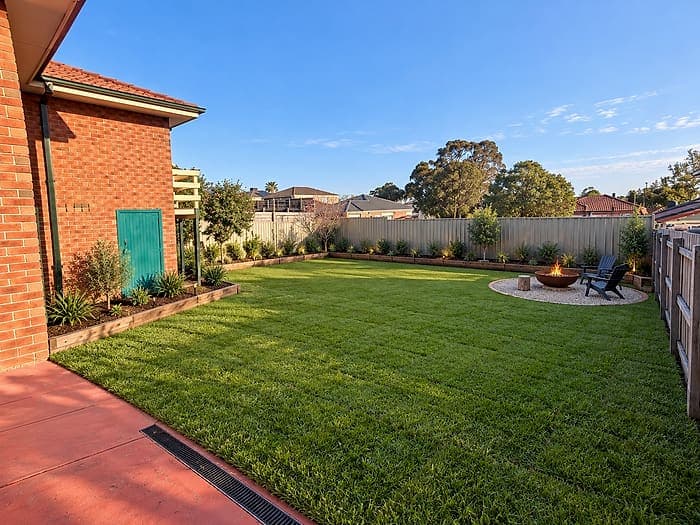
Mulched beds replace mowing with a little weeding, pruning and a mulch top-up once a year. Fringe planting is the middle path: keep a smaller lawn in the middle for living on, and turn the edges into beds of grasses and shrubs.
Fringe planting is often the best result for a family garden. SGA suggests ornamental grasses such as Poa, Lomandra 'Tanika', Carex, blue fescue and Deschampsia for these edges. Shrinking a lawn by a metre or two all the way round removes the hardest mowing and edging work, along fences and around trees, while keeping the open space.
A bed also gives you somewhere to put habitat. A dense, layered border along the back fence does far more for wildlife than turf. Our article on hedges that shelter small birds shows how to build that layer, and the one on shade trees and cooler homes covers the tree layer above it.
Water still matters in a new bed. Under Victoria's permanent water saving rules (opens in a new tab), sprinklers and other watering systems may only run between 6pm and 10am, while a hand-held hose with a trigger nozzle can be used at any time. Drip lines on a timer through new plantings are an efficient way to get them through the first summer.
How do you take out an existing lawn?
Take the lawn out completely before planting anything. Running grasses such as couch and kikuyu regrow from small pieces of runner left in the soil, and they will come back through groundcovers, mulch and native grass alike.
- Mark the new shape. Lay a hose along the new lawn edge and live with it for a week before cutting.
- Check for services. Find out where pipes, irrigation and cables run before digging.
- Remove the turf. Cut it out with a spade or turf cutter, going deep enough to take the runners, or smother it under overlapping cardboard and thick mulch for a few months.
- Pull regrowth. Expect runners to push through for weeks. Pull every one, with as much root as you can.
- Prepare the soil. Loosen compacted ground. On heavy clay, add organic matter to the planting area; if water sits for days, read our article on soggy backyards and rain gardens on clay first.
- Plant and mulch. Plant in autumn where possible, when the soil is still warm and rain is coming, and mulch straight away.
If you choose a herbicide to clear runners, follow its label exactly, including any waiting time before planting. A clear edge between what stays lawn and what does not, such as a steel or timber edge set deep enough to stop runners, saves years of grass creeping into the new beds.
Get help before digging if you do not know where underground pipes, cables or irrigation lines run, and lodge a free enquiry with Before You Dig Australia first. Large areas of couch or kikuyu, steep banks, root-filled ground under big trees and lots of turf to take away are all jobs where the right tools and a trailer save a lot of time and back strain.
Why not just lay weed mat under the new plants?
Weed mat stops weeds from below for a while, but grass runners still travel along the top and through the planting holes, and seeds blown onto the mulch above it grow anyway. Over time the mat clogs with fine material, stops groundcovers from rooting as they spread, and becomes hard to remove. For a groundcover bed, full removal of the old grass and a thick layer of organic mulch usually works better.
When should you keep the lawn, or improve it instead?
Keep turf where it earns its place: the play area, the dog run, the patch you sit on in summer. A lawn that gets used is worth the water and mowing, and often it only needs better care, not replacement.
Many tired lawns are compacted, thin and patchy, not wrongly chosen. Our guides on aerating a compacted lawn on Melbourne clay and top-dressing and levelling a bumpy lawn can turn a struggling lawn around, and the complete guide to lawn mowing in Melbourne covers heights and frequency by season. If you are weighing a fake lawn instead, our comparison of real lawn and synthetic turf sets out the trade-offs, including heat.
Quick decision guide
Should this area stay lawn?
- Do people play, run or sit on it every week? Keep turf, and improve its care.
- Is it walked across but not played on? A native grass lawn, or groundcover with stepping stones.
- Is it shaded most of the day, under trees or beside the house? Groundcover such as native violet or dichondra, or a mulched bed.
- Is it a slope or bank that is hard to mow? Myoporum, prostrate grevillea or a planted bed.
- Is it a big open area you only look at? A meadow with mown edges and paths.
- Is it the narrow strip along a fence or driveway? A bed or groundcover; it removes the fiddliest edging.
What are the common mistakes with lawn alternatives?
The most common mistake is planting into a lawn that has not been fully removed. The others are about expectations and timing.
- Expecting instant cover. Groundcovers and native grasses take a season or more to fill in. Mulch bare soil while they do.
- Planting in late spring. New plants then face their first summer with shallow roots. Autumn planting gives them winter rain to establish.
- Putting a delicate option where traffic is heavy. Native grass on the dog's favourite run will thin and fail.
- No edges. Without a clear edge, a meadow or bed reads as neglect, and grass creeps back in.
- Planting environmental weeds. Check a plant is not a known garden escape before you buy it.
- Ignoring council rules on the nature strip. Most councils have guidelines for nature strip planting, including plant height near driveways and footpaths. Read yours before you replace the grass out the front.
When is it worth getting help with a lawn conversion?
Help is worth it for the heavy parts: stripping old turf, removing running grass, preparing clay, and carting away the soil and roots. The ongoing care afterwards is lighter, and can be added to a regular visit.
Action Garden's lawn mowing service can keep the lawn you keep sharp, with edges trimmed and cut height set to the grass type, while the beds around it are weeded and mulched. When you ask for a quote, say which areas you want to keep as lawn and which you want to change, and photos help. More ideas for a lower-impact garden sit in the sustainable gardening articles.
Your Garden. Our Promise.
From our jobs
Frequently asked
Can a native grass lawn handle kids playing cricket or footy on it?
How long does a weeping grass lawn take to establish from seed?
What height should a wallaby grass lawn be mown to?
Which groundcover can be walked on between stepping stones?
Does replacing lawn with garden beds actually reduce the work?
Can I convert a lawn to groundcover without using herbicide?
Is a meadow lawn a good idea in a small front yard?
Sources and further reading
- Beyond the lawn: sustainable alternatives to traditional grass (Sustainable Gardening Australia)
- Native lawns (Sustainable Gardening Australia)
- Permanent water saving rules (Water Victoria)
Caring for Melbourne gardens since 2019. Updated 18 November 2026.