


Sustainable gardening
Soggy backyard? Rain gardens and planting for drainage on clay
By the Action Garden team · Updated · 16 min read
Checked against: Sustainable Gardening Australia, Merri-bek City Council, Building and Plumbing Commission, Bureau of Meteorology
TL;DR
- Clay drains slowly and Melbourne's winters are damp and still, so water sits in low spots from about May to October.
- Start with the source of the water (downpipes, leaking gutters, paving run-off) before changing the garden.
- A rain garden is a bed built to take roof or paving water, sized at about 2 percent of the area that drains to it, and it should be empty again within a day.
- On heavy clay, rain gardens are usually lined or raised, with a slotted pipe at the base and an overflow to the stormwater drain fitted by a plumber.
- Plant sedges and rushes that cope with both ponding and drought, such as Carex appressa, Juncus amabilis and Ficinia nodosa, at about 10 plants per square metre.
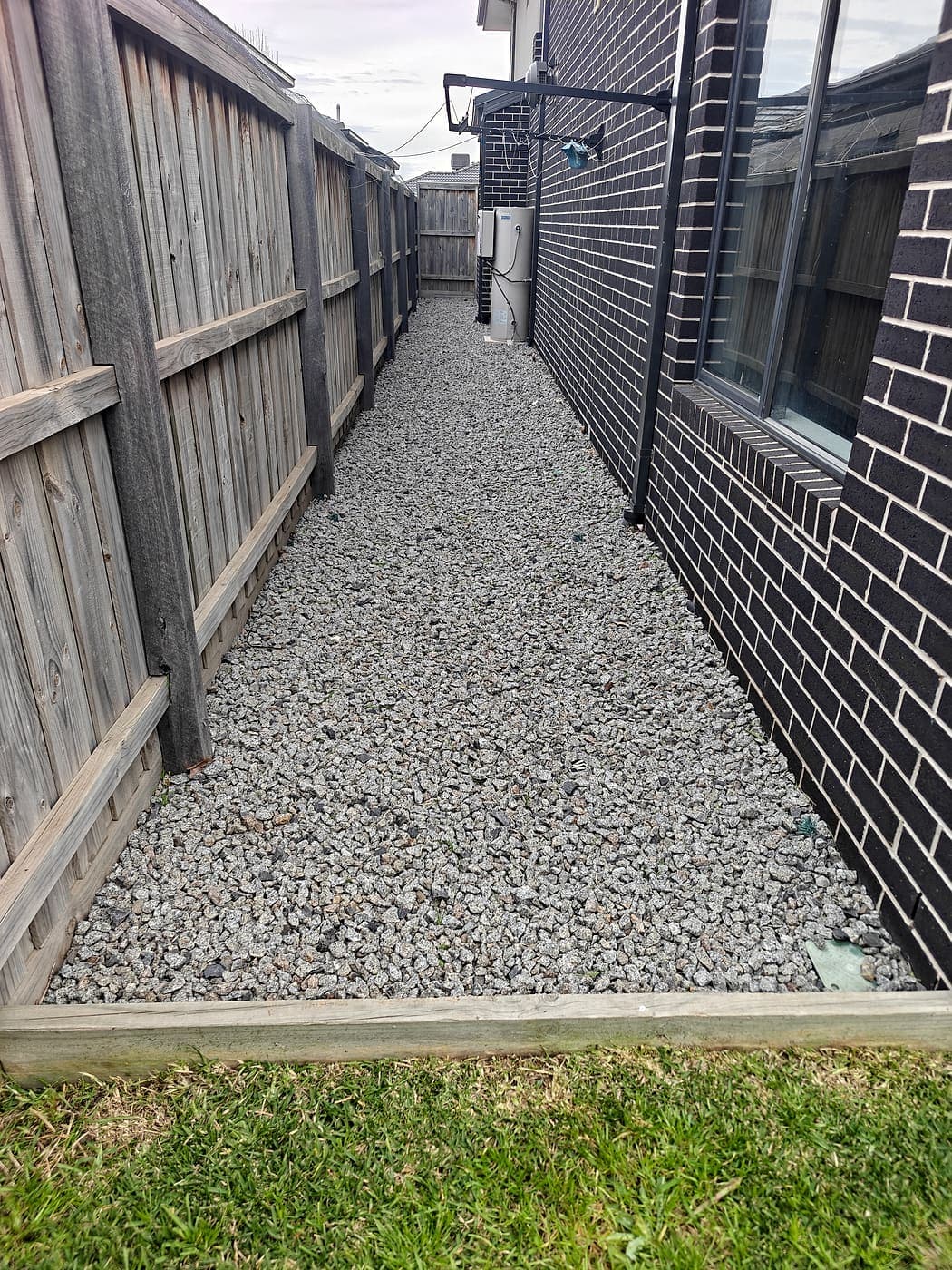
| Option | Suits | Notes |
|---|---|---|
| Source fix | Before any garden work | Repair leaking gutters, taps and tanks; a plumber alters downpipes and stormwater connections |
| Regrade and raise | Small to medium wet patches | Slope soil and beds away from the house; lift planting 20 to 30 cm above the wet layer |
| Rain garden | Roof or paving water with nowhere to go | About 2 percent of the area that drains to it, empty within a day of rain |
| Planter box rain garden | Very heavy clay or little space | Above ground and sealed, with an outlet and overflow; easier than digging into clay |
| Plant choice | Wherever water sits for days | Sedges and rushes for the wettest zone, tougher shrubs on the higher edges |
Why does a clay backyard stay soggy for weeks?
Because clay lets water in very slowly, and a Melbourne winter gives it little chance to dry out. Water arrives from rain, the roof and paving faster than it can soak down, so it sits in the top layer and in every low spot.
Clay particles are tiny and pack tightly, which leaves few large pores for water and air. Once those pores fill, the soil is saturated and roots sit in water with no oxygen. That is why plants in a soggy patch yellow, rot at the base or simply stop growing over winter.
The Melbourne soils guide explains the difference between the heavy basalt clays of the north and west, the duplex soils with a clay layer under sandy loam, and the sands of the south-east. A soggy backyard is most common on the first two.
What Melbourne's weather adds
The problem is seasonal. At the Bureau of Meteorology (opens in a new tab)'s long-running Melbourne Regional Office station, the number of days with at least 1 mm of rain climbs from about 5 a month in summer to 9 or 10 a month from May to October.
Over the same months, evaporation almost stops. Mean daily evaporation falls from 5.8 mm in January to 1.1 mm in June and 1.2 mm in July, so very little of each shower dries off before the next one lands.
| Month | Days with 1 mm of rain or more | Mean daily evaporation (mm) |
|---|---|---|
| January | 5.6 | 5.8 |
| April | 7.9 | 2.5 |
| June | 9.4 | 1.1 |
| July | 9.7 | 1.2 |
| August | 10.4 | 1.7 |
| October | 10.2 | 3.6 |
Source: Bureau of Meteorology, Melbourne Regional Office (086071), long-term averages.
Put frequent light rain together with almost no drying and slow clay, and a low corner of the yard can stay wet from late autumn into spring. The same corner may then crack open in February.
Where is the water in your backyard actually coming from?
Usually from the house and the hard surfaces around it, not from rain falling on the lawn. Before you change a single plant, walk the yard in the rain and follow the water.
Common sources in Melbourne backyards:
- Downpipes that discharge onto the ground or into a broken or blocked stormwater pipe, so roof water spills out at the base.
- Overflowing or leaking gutters, which drop a curtain of water along one side of the house. Clean, sound gutters are the first line of defence for a dry yard.
- Paving, driveways and patios that fall towards the lawn or garden instead of to a drain.
- Tank overflows that run into a garden bed with nowhere else to go.
- Leaking taps, hoses and irrigation, which keep one spot wet all year.
- A neighbouring yard that sits higher than yours, so surface water crosses the boundary after heavy rain.
Victoria's Building and Plumbing Commission (opens in a new tab) advises repairing damaged or leaking gutters, water tanks, taps and hoses promptly, and maintaining any drainage your builder installed. Those fixes often cure a soggy patch outright.
Reading a wet patch: the clues that point to the source
A strip of wet soil along a wall, with algae on the brickwork, usually means a gutter or downpipe problem. A wet patch that appears only after long rain and sits at the lowest point of the yard is surface run-off collecting.
A patch that stays wet in dry weather points to a leaking tap, irrigation line or water pipe. A wet area near the back fence after storms, with silt fanned across the lawn, often means water is crossing from higher ground next door.
Mossy, compacted lawn on a path everyone walks along is a sign of compaction rather than a drainage fault. That is a job for aeration, not for a rain garden.
What is a rain garden, and how does it help on clay?
A rain garden is a garden bed built to receive water from a roof downpipe, a tank overflow or a paved area, hold it briefly, and let it soak away through sandy filter soil. Sustainable Gardening Australia (opens in a new tab) describes it as a constructed bed with an overflow at the top and pipes at the bottom that slowly carry filtered water away.
Instead of roof water spilling across the lawn, it goes somewhere planned. The plants and soil also filter out sediment and nutrients before the water reaches the stormwater drain, which is why councils build them along streets and in car parks.
On free-draining sand, a rain garden can be a simple shallow dip that lets water soak straight into the ground. On clay, it needs more structure, because the surrounding soil will not take the water fast enough:
- A lined bed, so water does not spread sideways into clay near the house.
- Filter soil, usually a sandy loam, that drains much faster than the clay around it.
- A slotted pipe at the base, set in gravel, that carries the filtered water to the stormwater system.
- An overflow pipe near the top, so a big storm cannot flood the bed or back water up the downpipe.
Sustainable Gardening Australia notes that above-ground rain gardens may be easier to install on heavy clay. A sealed planter box needs no deep digging, sits on paving or a level pad, and can go right beside a downpipe.
A cut-away view of a rain garden bed set into clay. A downpipe on the left drops water into the bed, where it ponds briefly in a shallow dip around the plants. Arrows show the water soaking down through a sandy filter layer, then a thin transition layer, into a gravel layer holding a slotted pipe. The slotted pipe runs out to the right to a stormwater pit. Near the top edge, an overflow pipe takes any excess straight to the same pit. A liner wraps the sides and base, separating the bed from the grey clay around it, and sedges and rushes grow in the filter layer.
How big should a rain garden be, and where should it go?
Size it at about 2 percent of the hard surface that drains to it, and place it well away from the house, on a site where the water can leave by gravity. Merri-bek City Council (opens in a new tab)'s raingarden technical notes use a 2 percent filter area as the typical size.
For a home, that works out simply:
| Roof or paving area draining to the bed | Rain garden filter area (about 2 percent) |
|---|---|
| 50 square metres | 1 square metre |
| 100 square metres | 2 square metres |
| 150 square metres | 3 square metres |
| 200 square metres | 4 square metres |
Measure only the part of the roof that drains to the downpipe you plan to use. Most houses have several downpipes, each serving a section of roof.
Placement rules worth following
- Away from the house. The Building and Plumbing Commission advises avoiding garden beds alongside the house, and sloping soil, paving, paths and beds away from the building. Reactive clay swells when wet and shrinks when dry, and extra water near footings can move a slab.
- Downhill, with somewhere to drain. Merri-bek's notes say the outlets of in-ground raingardens are typically set 600 to 800 mm below the inlet and must drain by gravity. A flat block with a shallow stormwater pipe may suit a planter box better.
- Clear of services. Water, gas, power and telecommunications lines often run through backyards. Locate them before anyone digs.
- Clear of big trees. Tree roots find the moist filter soil and can block pipes over time.
Which plants cope with wet winters and dry summers on clay?
Plants that handle both ponding and drought, and that is a short list led by native sedges and rushes. Merri-bek's raingarden planting note asks for species that withstand prolonged ponding and drought, with the primary group making up at least 75 percent of plant numbers.
For the wettest zone and the rain garden floor
- Tall sedge (Carex appressa): a tough, upright tussock that tolerates wet feet and dry spells.
- Rushes (Juncus amabilis and Juncus flavidus): fine, upright stems that cope with standing water and recover after summer.
- Knobby club-rush (Ficinia nodosa): a dense, rounded clump that handles wet and dry, and salty wind near the bay.
Plant these densely. The council note sets at least 10 plants per square metre for sedges, rushes and grasses, which gives enough root mass to keep the filter soil open and crowd out weeds.
For the edges and higher ground
Merri-bek's secondary list, at no more than 25 percent of the planting, includes flax-lilies (Dianella longifolia and Dianella revoluta), spiny-headed mat-rush (Lomandra longifolia), kangaroo paws, cut-leaf daisy (Brachyscome multifida), cushion bush (Leucophyta brownii) and creeping boobialla (Myoporum parvifolium). These suit the rim of a rain garden and the drier parts of a wet yard.
For a wider planting palette on heavy clay away from the wettest spot, the guide to native plants that thrive on clay covers grasses, shrubs and small trees for Melbourne's north.
Plants that usually fail in soggy clay
Plants that need sharp drainage tend to rot in a wet corner, however well they are fed. Lavender, rosemary, most grevilleas and banksias, many Western Australian natives, succulents and citrus are the usual casualties.
If you want them, grow them on a raised bed or mound well above the wet layer, or in a different part of the garden. Keep the low spot for plants that like it there.
What can you do if a rain garden is not practical?
Raise the planting, reshape the ground, or change the surface, depending on how wet the spot is and why. Many soggy yards need no rain garden at all.
- Regrade the soil. Small dips can be filled and gently sloped so water moves away from the house and towards a drain or a planted low area. Even a slight fall makes a difference on clay.
- Raise the beds. Lifting planting 20 to 30 cm above the surrounding soil, in mounds or edged beds, keeps the root zone above the wettest layer. Blend the raised soil into the clay surface below, rather than sitting a sharp layer on top.
- Plant a planned wet zone. Let the lowest corner be wet, and plant it with sedges and rushes instead of fighting to keep lawn there.
- Swap hard surfaces for permeable ones. Gravel, open-jointed pavers and planted strips let rain soak in where it lands, rather than running across to the lawn.
- Improve the topsoil gradually. Compost and coarse organic matter worked into the top layer, and gypsum only where the clay is sodic, open up the surface over time. The soils guide explains how to tell which clay you have.
- Ease compaction. Lawns on clay that are walked on all winter compact into a seal. Aerating while the soil is moist but not wet lets water in.
Why a sump of good soil in clay makes things worse
Digging a deep hole in clay and filling it with potting mix or loose garden soil creates a bathtub. Water drains quickly into the loose soil, then stops at the clay walls and base, and the plant sits in a pool.
Wide, shallow planting holes with roughened sides, and raised beds that blend into the clay below, avoid that problem. It is also why a liner and underdrain matter in a rain garden on clay: without an exit, the filter soil simply fills.
How do you keep a rain garden working year after year?
Keep the inlet and overflow clear, weed it, and watch how fast it drains after rain. A rain garden that empties within a day is working, and Sustainable Gardening Australia's test is simple: if it turns into a bog, it is not working properly.
A simple maintenance programme:
- After heavy rain: check that the water has gone within a day, and that the downpipe and overflow are not blocked by leaves.
- Autumn: clear leaves and sediment from the inlet and the bed surface, and clean the gutters that feed it. Leaf litter washed off the roof is the main thing that clogs a rain garden.
- Spring: weed by hand while weeds are small, and replace any plants that died over winter. The guide to weeding garden beds covers methods that keep soil disturbance low.
- Summer: water new plants deeply while they establish, then leave established sedges and rushes to rainfall.
- Every few years: if water starts lingering, scrape off the fine silt crust on the surface and replace the top few centimetres of filter soil.
Avoid fertiliser and herbicide in or near a rain garden. Whatever goes on the bed is carried through to the stormwater drain, which defeats the point of filtering the water.
Is a rain garden part of a lower-impact garden?
Yes, and it fits with the other changes that make the biggest difference. Keeping roof water on site slows the flow into creeks and the bay, and it waters a garden bed from every winter storm.
It works alongside a water-wise garden plan, where thirsty plants are grouped and mulch keeps summer moisture in. The wider changes, from leaving clippings on the lawn to cutting chemical use, are in lower-impact garden maintenance, and the choice of tools for those visits is covered in battery or petrol garden tools.
Be realistic about what it cannot do. Sustainable Gardening Australia points out that a rain garden receives no water in dry periods, so for a summer supply a rainwater tank is the better tool. Many Melbourne homes could use both: the tank first, with the tank overflow feeding the rain garden.
More pieces on this theme sit in the sustainable gardening articles.
What are the most common drainage mistakes on clay?
Treating the symptom instead of the source, and working the soil while it is wet. Most of the rest follow from those two.
- Planting before finding the water. New plants in a spot fed by a broken downpipe will drown, however well chosen.
- Building a rain garden against the house. It moves water towards the footings, which is the opposite of the building regulator's advice.
- Leaving out the underdrain or overflow on clay. Without them, an in-ground rain garden on clay becomes a pond.
- Digging, rotary hoeing or walking on wet clay. Wet clay smears and compacts into a layer that drains even worse. Wait until it crumbles in your hand.
- Using fine mulch or loose soil in the low spot. Fine material floats, washes about and seals the surface.
- Directing water at the boundary. Sending your water onto the land next door can start a dispute. Talk to your council before changing how surface water leaves your block.
Call a plumber for any change to downpipes, stormwater pipes or overflow connections; in Victoria that is plumbing work. Call a building surveyor or engineer if you see new cracks in walls, sticking doors or a moving slab near a wet area. Before any digging, check for buried water, gas, power and telecommunications lines through Before You Dig Australia.
When is it worth getting help with a soggy backyard?
When the wet area is large, close to the house, or tied up with pipes, it is worth having the right trades look at it together: a plumber for the water source, and a gardener for the regrading, raised beds and planting. Smaller wet patches are often a weekend of regrading and replanting.
Action Garden's gardening services cover the garden side: clearing and preparing beds, soil preparation, planting and transplanting, mulching and seasonal care. For the year-round picture of looking after beds on clay, start with the garden maintenance guide for Melbourne. If you would like a hand reshaping a wet corner or planting a rain garden once the plumbing is done, ask for a quote.
Your Garden. Our Promise.
From our jobs
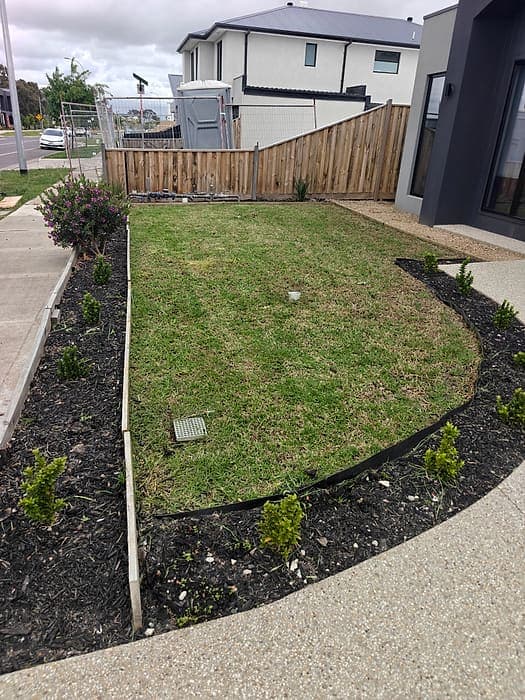
Frequently asked
How do I tell if a soggy patch of clay will drain on its own after rain?
Can a rain garden on clay soil sit right next to the house?
How big should a backyard rain garden be for one downpipe?
Do rain gardens breed mosquitoes in Melbourne backyards?
Which plants survive both standing water and dry summers in a rain garden?
Should I mulch the surface of a rain garden?
Do I need a plumber to send a downpipe into a rain garden?
Will a soggy lawn on clay fix itself once summer arrives?
Sources and further reading
- Raingardens (Sustainable Gardening Australia)
- WSUD typical raingarden layout, technical note C120.01 (Merri-bek City Council)
- WSUD raingarden plants, technical note C120.04 (Merri-bek City Council)
- Minimising foundation movement and damage to your house (Building and Plumbing Commission)
- Roofing (stormwater) FAQs (Building and Plumbing Commission)
- Melbourne Regional Office climate statistics (Bureau of Meteorology)
Caring for Melbourne gardens since 2019. Updated 18 November 2026.