


Sustainable gardening
Shade trees and cooler homes in Melbourne's north and west
By the Action Garden team · Updated · 13 min read
Checked against: Victorian Government, Planning, Building and Plumbing Commission, Water Victoria
TL;DR
- Melbourne's Western region had the lowest urban tree canopy in 2018, at 5.5 percent, against 25.9 percent in the Eastern region, and the west and north carry some of the highest urban heat readings.
- The state's 2018 analysis found tree canopy had the strongest link with lower urban heat, more than grass or shrub cover.
- Plant for the afternoon sun first; west and north-west walls, windows and paving gain the most heat on a summer afternoon.
- Deciduous trees suit the north side, giving summer shade and letting winter sun through; evergreens suit the west and the boundaries.
- On reactive clay, keep thirsty, large trees well away from footings and choose a mature size that fits the block, then shape the tree while it is young.
| Side of the house | Shade priority | What to plant and why |
|---|---|---|
| West and north-west | Highest priority | Low afternoon sun heats walls, windows and paving most; evergreen or deciduous trees, set back from the house |
| North | High priority | Deciduous trees, so leaves shade in summer and bare branches let winter sun in |
| East | Medium priority | Morning sun is milder; a small tree or tall shrub is usually enough |
| South | Low priority | Little direct summer sun on the wall; trees here mainly shade the yard |
| Driveway and paving | High priority | Shaded hard surfaces store less heat and release less into the evening |
Why do homes in Melbourne's north and west get so hot?
Homes in the north and west get hot because the suburbs have little tree canopy, many hard surfaces, and summer winds that come off the dry inland. Much of the area was open basalt grassland before it was built on, and many newer estates have small lots, wide roofs and little room for trees.
The Victorian Government's mapping of Melbourne's vegetation and heat puts numbers on it. In 2018, metropolitan Melbourne had 15.3 percent urban tree canopy. The Western region had the lowest, at 5.5 percent, and the Melton and Wyndham council areas had the lowest of any council, at 4.1 and 4.2 percent.
The same work measured the urban heat island: how much warmer built-up areas run than a non-urban baseline. Brimbank, Casey, Melton and Moonee Valley averaged summer readings over 9.5 °C, and large concentrations of urban heat appeared in the western and south-eastern suburbs, with scattered pockets in the north.
Urban tree canopy cover by Melbourne region, 2018
| Region | Urban tree canopy (%) |
|---|---|
| Western | 5.5 |
| Northern | 12.1 |
| Inner metro | 12.6 |
| Southern | 15.2 |
| Inner South East | 17.4 |
| Eastern | 25.9 |
Source: Victorian Government, "Melbourne's vegetation, heat and land use data", 2018 urban tree cover by region. Metropolitan Melbourne overall: 15.3 percent.
How does a tree actually cool a house?
A tree cools a house in two ways: it shades walls, windows, roofs and paving so they absorb less sun, and it releases water vapour through its leaves, which cools the air around it. Shade does most of the work for the house itself.
A sunlit brick wall or concrete driveway soaks up heat all afternoon and gives it back long after sunset. That is why a west-facing bedroom can still be hot at 10pm. Keeping the sun off those surfaces stops the heat being stored in the first place.
The state's analysis found that tree canopy had the strongest relationship with reducing heat in urban areas, and found less evidence that grass and shrub cover have a large influence. Lawn and garden beds still matter for soil, water and wildlife, but for cooling a home, height and canopy count.
Why the evening matters as much as the afternoon
In a heatwave, the hardest hours for many households are the evening and the night, when the house has stored heat all day and the air outside is slow to cool. Shading the west and north-west walls and the paving next to them reduces how much heat is stored by sunset. Opening up a shaded house once the cool change or the night air arrives then works much better, because the walls and floors are not radiating heat back into the rooms.
Where should a shade tree go on a Melbourne block?
Put the first shade tree where it blocks the afternoon sun: on the west or north-west side of the house, the driveway or the outdoor living area. Then add deciduous shade on the north, and leave the east and south for smaller plantings.
The summer sun is high in the middle of the day and low in the late afternoon. Eaves handle the high sun on north windows well, but the low western sun comes in almost sideways, under eaves and straight through glass. Only something tall and set out from the wall, such as a tree, a pergola or an external screen, blocks it.
Check the spot against what is above and below before you dig:
- Overhead power lines: keep tall-growing trees away from lines, and choose small trees near them.
- Underground services: find out where water, sewer, gas, stormwater and cables run, and keep trees off them.
- The house: allow for the tree's full mature canopy width, so branches will not sit on the roof or in the gutters.
- The neighbours: think about the shade and leaf fall the tree will throw over the fence in ten years.
- Solar panels: a tree to the north or west of panels can shade them later; place it so the panels stay in sun.
Deciduous or evergreen: which suits which side?
Choose a deciduous tree on the north side and either deciduous or evergreen on the west. Deciduous trees shade in summer and drop their leaves in autumn, so the low winter sun can still warm the house when you want it.
An evergreen on the north blocks winter sun from living areas, making the house colder and darker from May to August, and it keeps paths and roofs damp. On the west and along boundaries, an evergreen gives year-round shade and screening, and winter sun from that side matters less to most homes.
Deciduous trees do bring a job in autumn: leaves in the gutters and on the paths. A tree near the roof line means more frequent gutter cleaning, so allow for that when choosing the spot.
What to look for in a shade tree for the north and west
- Mature size that fits: a canopy wide enough to shade the wall or window, on a trunk that fits the space. Read the label for height and width at maturity, not after five years.
- Heat and dry tolerance: the north and west are hot, windy and dry in summer. Choose trees known to cope with heat once established.
- Clay tolerance: most of the north and west sits on heavy basalt clay that is waterlogged in winter and hard in summer.
- Not an environmental weed: some popular shade and screen trees spread into bushland. Check before you buy.
- Root behaviour: some species are known for aggressive surface roots. Keep those away from paths, pipes and footings.
Our article on trees for small Melbourne gardens goes through species that fit tighter blocks.
How close can a shade tree be to the house on clay soil?
Keep large, thirsty trees well away from the house on reactive clay, and plant smaller trees where space is tight. Clay soils across the north and west shrink as they dry and swell when wet, and tree roots drawing water near the footings can add to that movement.
The Building and Plumbing Commission (opens in a new tab) advises owners to tell their builder, before signing a building contract, about any trees they want to grow, keep or remove near the house, so the engineer can allow for them in the footing design. For new trees, its advice is to plant them away from the house to leave room for the roots. It also advises against digging close to footings, and never below the base of the footing.
There is no single safe distance for every tree and every block, because it depends on the species, its mature size, the soil's reactivity and the footings. For a large tree close to the house, ask a structural engineer or a qualified arborist before planting.
Get help if you want to plant a large tree within its own mature height of the house on reactive clay, if a tree is planned near power lines or over pipes, or if the house already shows cracks that open and close with the seasons. An engineer can assess the footings, and a qualified arborist can advise on species, root behaviour and placement.
How do you plant and water a shade tree so it survives the first summer?
Plant in autumn or early winter, into a wide hole no deeper than the root ball, then water deeply and mulch. A common reason new trees fail in the north and west is too little deep watering in their first two summers.
- Dig wide, not deep. Make the hole two to three times as wide as the pot and only as deep as the root ball, so the tree sits at the same level it grew in the pot.
- Loosen the sides on clay. Rough up the walls of the hole so roots can escape, instead of circling in a smooth clay pot.
- Backfill with the same soil. Mix in a little compost, but avoid a rich pocket of potting mix that roots never leave.
- Build a watering ring. A low ring of soil around the root zone holds water while it soaks in.
- Mulch. Spread mulch over the root zone, kept a hand's width off the trunk.
- Stake only if needed. Use two stakes with loose ties, and remove them after a year.
Through the first summers, a deep, slow soak about once a week, and more in a heatwave, does far more than a daily sprinkle. Under the permanent water saving rules (opens in a new tab), a hand-held hose with a trigger nozzle may be used at any time, and watering systems such as drip lines only from 6pm to 10am. Our article on a water-wise garden in Melbourne covers efficient watering in more depth.
Clay that turns to a bathtub in winter
On heavy clay, a planting hole can fill with water after winter rain and stay full, which drowns roots. Before planting, dig the hole and fill it with water. If it is still full the next day, plant on a low mound instead, or choose a tree that tolerates wet feet. Our article on soggy backyards and rain gardens on clay explains how to read a wet clay garden.
Why does shaping a young tree matter for shade?
Shaping a young tree gives it one strong trunk, well spaced branches and a canopy at the height where it shades the wall or window. Formative pruning in the first few years avoids the heavy cuts and weak forks that cause problems when the tree is large.
For a shade tree beside a house, the aim is usually a single leader, branches lifted gradually so you can walk and park underneath, and a canopy that spreads out over the wall instead of straight up. Pruning a little each year, over several years, achieves that without stressing the tree.
Avoid topping a tree to keep it small. Cutting the main stems back to stubs produces a mass of weak shoots that grow back quickly and can break, which is the opposite of good shade. Our guide to tree shaping and formative pruning explains the cuts and the timing.
Street trees can shade your house too
The tree on the nature strip belongs to the council, and it can do much of the work of shading the front of the house. Some councils run street tree planting programmes and take requests for a tree outside a property. Our article on council street trees explains what you can and cannot do with the tree out the front.
Can trees and other plants work together to cool a garden?
Yes. A tree gives the shade, and the layers beneath it, shrubs, groundcovers and mulch, keep the soil cool and moist and make the garden more useful to wildlife. A shaded, planted garden is cooler to sit in than one of lawn and paving alone.
Dense shrubs along a western boundary also slow hot summer winds, and they give small birds the cover that a single tree does not. Our article on hedges that shelter small birds shows how to build that middle layer. More ways to make the garden lower-impact sit in the sustainable gardening articles.
When is it worth getting help with shade trees?
Help is worth it when a tree needs shaping as it grows, when you are unsure where a tree can safely go, or when an older tree near the house needs pruning to keep shade without risk to the roof.
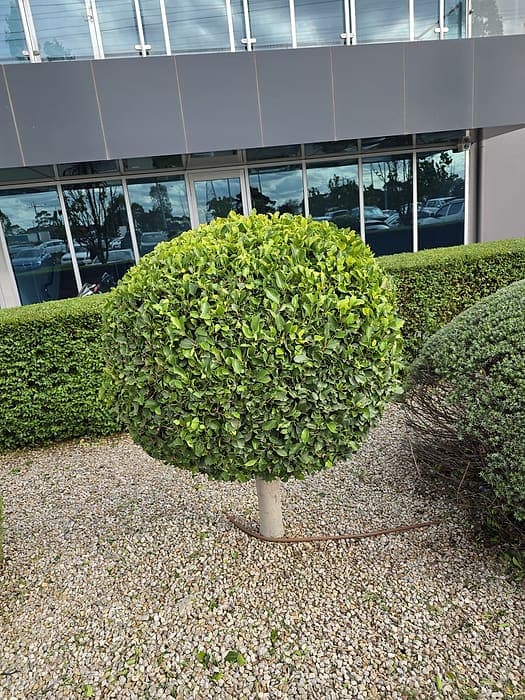
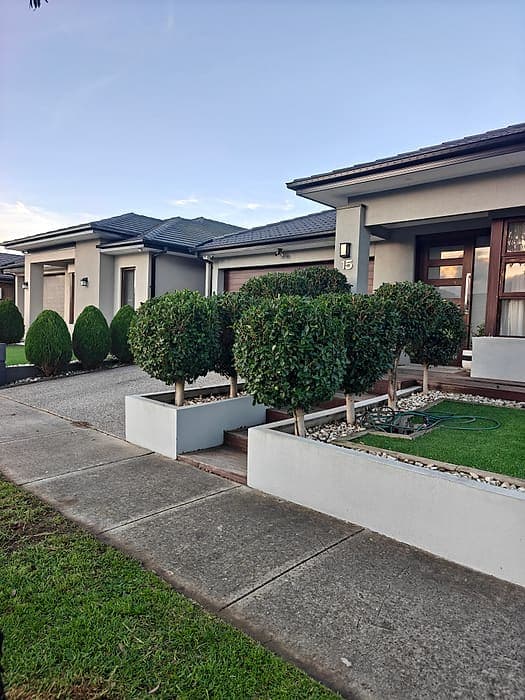
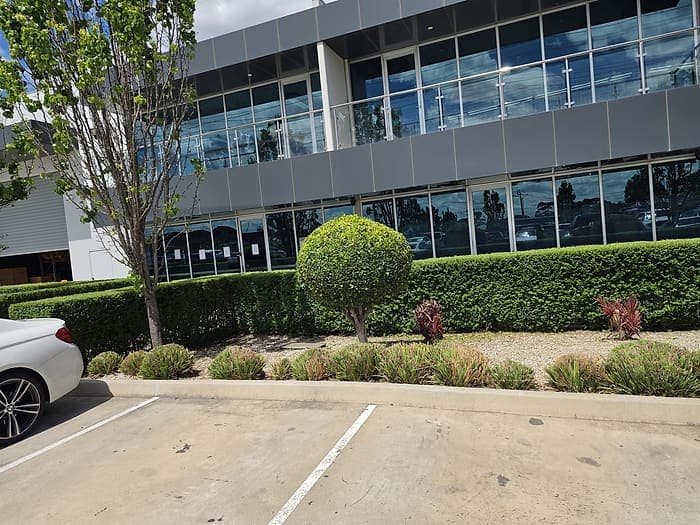
Action Garden's tree shaping and pruning service covers formative pruning of young trees and shaping of ornamental and feature trees, done by the Action Garden team, with the cuttings removed. Larger trees are quoted after a site visit; our help article on how tree work is quoted and done explains the steps. To get started, ask for a quote and add a photo of the tree and the side of the house it shades.
Your Garden. Our Promise.
From our jobs
Frequently asked
Which side of a Melbourne house should a shade tree go on?
Do deciduous or evergreen trees cool a house better?
Why are Melbourne's western suburbs hotter than the east in summer?
How long until a new shade tree actually shades the house?
Can a shade tree crack the slab or footings on clay soil?
How should a new shade tree be watered through its first Melbourne summer?
Does pruning a young shade tree make it grow faster?
Sources and further reading
- Melbourne's vegetation, heat and land use data (Victorian Government, Planning)
- Minimising foundation movement and damage to your house (Building and Plumbing Commission)
- Permanent water saving rules (Water Victoria)
Caring for Melbourne gardens since 2019. Updated 18 November 2026.