


Lawn care
Bringing a lawn back after a dry summer
By the Action Garden team · Updated · 12 min read
Checked against: Sustainable Gardening Australia, Yarra Valley Water, Soil Quality Pty Ltd fact sheet, Bureau of Meteorology, Purdue University Turfgrass Science
TL;DR
- Most warm-season lawns brown off to survive a dry summer and recover once water and milder weather return.
- Do the tug test and look for green at the base of the stems before deciding a patch is dead.
- Deep, infrequent watering before 10am rebuilds roots; water that beads or runs off points to water-repellent soil.
- Mow high, keep traffic off, and feed lightly only once the grass is actively growing again.
- Repair dead patches in early autumn while the soil is warm; leave dethatching and heavy renovation for spring.
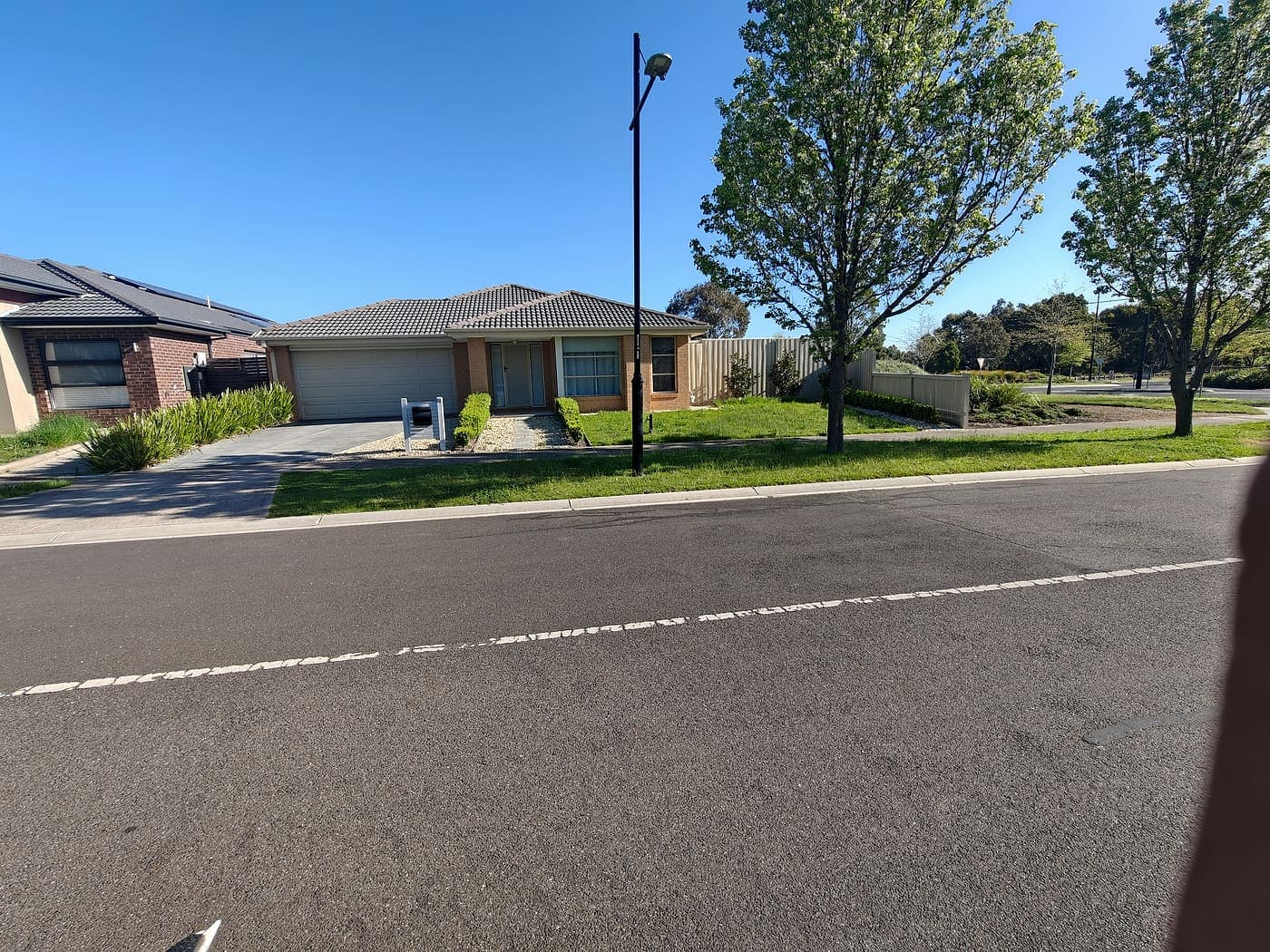
| Month | Mean rainfall | Mean maximum and what it means |
|---|---|---|
| December | 50.2 mm | 24.7°C; lawns start to dry out between storms |
| January | 53.3 mm | 26.8°C; rain falls in bursts, heat dries the soil fast |
| February | 26.3 mm | 25.9°C; the driest month, when most lawns brown off |
| March | 36.4 mm | 24.3°C; soil still warm, the best month to start recovery |
| April | 63.0 mm | 20.9°C; rain returns, last good weeks for warm-season repair |
Is a brown lawn after summer dead or just dormant?
Usually it is dormant. Kikuyu, couch and buffalo, the warm-season grasses in most Melbourne lawns, slow down and brown off in a long dry spell to save water. Sustainable Gardening Australia (opens in a new tab) describes that browning as temporary, because these grasses are built to recover naturally once water returns.
The Bureau of Meteorology (opens in a new tab)'s averages for Melbourne (Olympic Park) explain why late summer is the crunch. February averages just 26.3 mm of rain, the lowest of any month, with a mean maximum of 25.9°C, and January is hotter still. Lawns that were not watered deeply through those weeks are often straw-coloured by early March.
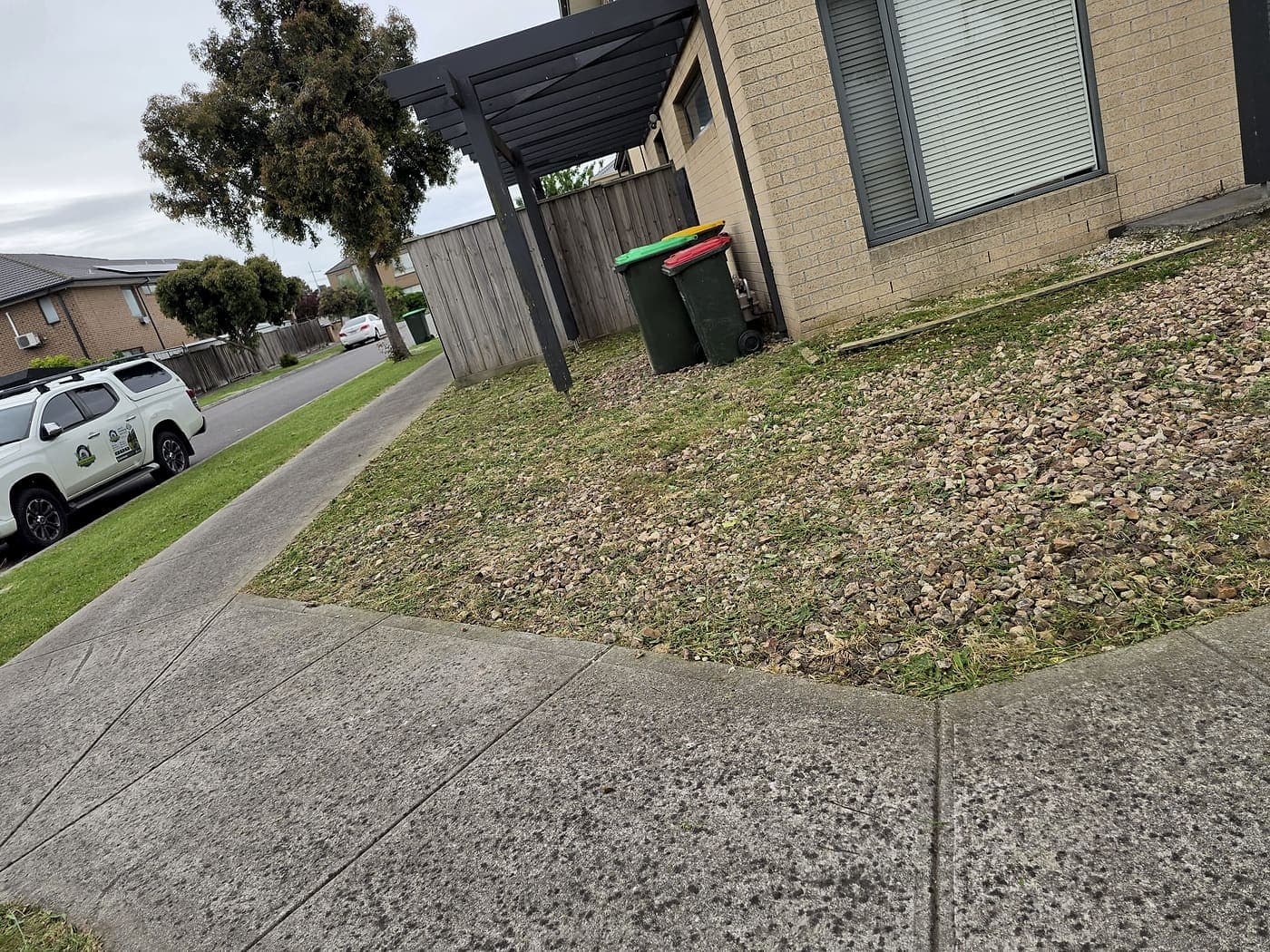
Cool-season lawns are the exception. Tall fescue and ryegrass have no runners, so patches that die in a heatwave do not spread back on their own and need sowing again with seed.
How do you check which parts will recover?
Walk the lawn and test several spots, because some areas may be resting while others have died. Three quick checks tell you most of what you need.
- The tug test. Grab a small handful of brown grass and pull gently. If it holds firm, the roots are alive. If it lifts out easily like loose hay, that patch is dead.
- Look at the base. Part the leaves and look at the crowns and runners right at soil level. Firm stems with a hint of green or cream mean the grass is alive.
- Read the pattern. A lawn that has browned evenly all over is usually dormant. Sharp-edged dead patches, especially under trees, along hot driveways or in high-traffic paths, are more likely to be lost.
If more than about half the lawn fails the tug test, recovery will be slow and patchy, and it may be worth thinking about new turf in early autumn. Otherwise, the steps below usually bring it back.
Why patches under trees and along driveways die first
Tree roots spread well past the canopy and take water from the top layer of soil before the grass can, so lawns under trees run dry first. Driveways, paths and north-facing walls store heat and radiate it back into the edge of the lawn through the afternoon.
Those are also the spots where soil compacts most from foot traffic and car wheels. A compacted strip next to a hot driveway is often the first part of a lawn to die in February, and the last to come back.
What do you need to bring a lawn back?
Most of the work is done with tools you already have. A hired aerator helps on compacted clay, but it is not essential on a small lawn.
- A hose with a trigger nozzle for hand watering, and a sprinkler on a timer
- A long screwdriver or soil moisture probe to check how deep the water goes
- A garden fork or a hollow-tine aerator for compacted areas
- A soil wetting agent, if water beads on the surface (follow the label)
- A sharp mower blade and a catcher
- A lawn fertiliser for your grass type and a spreader
- Top-dressing sand or a sandy loam for low spots and bare patches
- Turf, runners or seed for patches that are truly dead
How do you bring a dry lawn back, step by step?
Work through these steps in order, starting in late February or March once the worst heat has passed. Most warm-season lawns show new green within two to four weeks of steady water, depending on how dry they got.
- Check the water is going in. Water a small patch and watch. If it soaks in, move on. If it beads, sits on the surface or runs off, the soil is water repellent; see the section below.
- Water deeply, early in the morning. Give the lawn a slow, deep soak, then test with a screwdriver. Sustainable Gardening Australia's guide is that it should push in 15 to 20 cm, ideally about 25 cm. On clay, water in two or three shorter runs an hour apart so it soaks in instead of running off.
- Then water less often. Repeat the soak once or twice a week in warm, dry weather rather than a little every day, so the roots grow down after the water.
- Aerate compacted areas. Once the soil is moist, push a garden fork in every 10 to 15 cm across hard, compacted strips and rock it gently, or use a hollow-tine aerator on bigger areas.
- Mow high, with a sharp blade. Raise the mower a notch above its normal height and take only the top off. Catch the clippings for the first few mows, so dead leaf and debris come off with them.
- Feed lightly once it is growing. When new shoots and runners appear, apply a light feed for your grass type at the label rate and water it in.
- Repair dead patches. Once the rest of the lawn is growing, loosen the soil in dead patches, add a little top-dressing, and lay turf, peg in runners, or sow seed to suit your grass.
- Keep traffic off. Keep kids, dogs and wheelie bins off recovering areas for a few weeks where you can.
A side view of a single warm-season grass plant over a few weeks. In the first frame, brown leaves sit on a firm crown with a runner along the soil and short roots in dry, pale soil. In the second, a deep soak darkens the soil down to the root zone and a drop of water reaches the crown. In the third, new green shoots rise from the crown and the runner, and roots grow down into the moist soil. In the last, the runner has rooted at a joint and sent up a new shoot into a bare patch next to it.
What if the water just runs off the lawn?
That is usually water repellence, and it is common on sandy soils after a long dry spell. Waxy material from decaying plant matter coats the soil particles, so dry soil sheds water instead of soaking it up. The Soil Quality fact sheet on water repellency notes that sandy soils, especially those under 5 percent clay, are the most susceptible, because less material is needed to coat coarse particles.
In Melbourne that points to the sandy soils of the south-east and the bayside suburbs, although dry patches can turn water repellent on any soil. Signs are water pooling or running off, a dry layer just under a wet surface, and brown patches that stay dry after rain.
- Apply a soil wetting agent across the affected area, at the rate and timing on the label, and water it in.
- Aerate first if the area is also compacted, so the wetting agent and water can get into the soil.
- Water slowly, in short runs, so the water has time to soak in.
- Top-dress thin patches with a sandy loam once the grass is growing to build up organic matter over time.
When is the best time to repair the lawn?
Early autumn, from March to mid April, is the best window for warm-season lawns in Melbourne. The soil is still warm from summer, so runners and new turf root quickly, while the temperatures ease and the rain starts to return. April averages 63.0 mm of rain at Olympic Park, more than double February.
| Grass | How it recovers | Best time to repair |
|---|---|---|
| Kikuyu | Runners spread fast into gaps | March to mid April, or wait until spring |
| Couch | Runners spread into gaps | March to mid April, or wait until spring |
| Soft-leaf buffalo | Slower runners; small patches fill | March to early April with turf plugs, or spring |
| Tall fescue | No runners; sow seed into bare areas | Autumn, as days cool and soil is warm |
Leave heavy jobs such as dethatching and full renovation until October to December, when warm-season grasses are growing at full strength. Doing them on a lawn that is still weak from summer can kill the patches that would have recovered.
Turf, runners or seed for the dead patches
For kikuyu and couch, small dead patches usually fill on their own once the surrounding grass is growing, especially if you loosen the soil and add a little top-dressing to give the runners somewhere to root. Larger patches can be planted with pieces of runner pegged into the soil or with turf cut to fit.
Buffalo spreads more slowly, so turf plugs or cut-to-fit turf work better than waiting. Tall fescue needs seed: loosen the soil, sow at the rate on the bag, rake it in lightly and keep it moist. Our guide on how to repair bare patches in a lawn covers each method, and our guide to new turf care in the first eight weeks covers watering in new turf.
What are the common mistakes when reviving a lawn?
The most common mistake is trying to force a lawn back before it is ready. A dry, dormant lawn responds to water and time, not to a heavy feed or a hard mow.
- Fertilising a brown lawn. Dormant grass cannot use it. Wait for new growth.
- Light daily watering. It keeps only the surface wet and grows shallow roots.
- Watering in the evening. It keeps leaves wet overnight and invites disease.
- Mowing low to "tidy up" the brown. It removes the leaf the grass needs to recover.
- Dethatching or scarifying in autumn. Save it for spring.
- Ignoring the cause. If patches die in the same spot every summer, look at trees, shade, compaction or water repellence before replanting.
As autumn turns wet, thin, shaded parts of a recovering lawn can grow moss. Our guide to moss in the lawn explains why and what to change.
Get help if more than half the lawn is dead and you are weighing up new turf, if large areas are compacted clay that needs a powered aerator, if the lawn sits on a slope where water runs straight off, or if you would rather not handle wetting agents and fertilisers yourself. A professional can also check for pests such as curl grubs, which can look like drought damage.
How do you keep the lawn from browning off next summer?
Build deep roots before the heat arrives. Mow a notch higher from December, water deeply and early in the morning a day or two before hot spells, and keep the blade sharp so the leaf is cut cleanly rather than torn. Our post on why sharp mower blades matter explains how a blunt blade adds to heat stress.
Plan around wear, too. Lawns used hard by pets brown off first, and our post on lawns and dogs covers urine spots and wear paths. Through the cooler months, regular mowing at the right height keeps the turf thick enough to hold its own next February.
When is it worth handing the job over?
If the lawn is large, the soil is hard clay, or you simply do not have the weekends, a regular visit through autumn takes care of the high mows, catching and edging while the lawn recovers. Our lawn mowing service includes fertiliser, weed control, aeration and dethatching as add-ons, and the complete guide to lawn mowing in Melbourne sets out heights and timing for every season. There is more in the lawn care section of the blog, including how lawn stripes are made. When you are ready, get a free quote.
Your Garden. Our Promise.
From our jobs
Frequently asked
Should I fertilise a brown lawn straight after the first autumn rain?
When is it too late in autumn to repair a warm-season lawn?
Will a tall fescue lawn that died off in February recover on its own?
How often should a recovering lawn be watered in March?
Should I dethatch a lawn that is still recovering from drought?
Why do weeds show up first in a lawn after a dry summer?
Is it worth laying new turf in autumn instead of waiting for recovery?
Sources and further reading
- Minimising water use on lawns and turf (Sustainable Gardening Australia)
- Permanent water use rules (Yarra Valley Water)
- Water repellency (Soil Quality Pty Ltd fact sheet)
- Melbourne (Olympic Park) climate statistics (Bureau of Meteorology)
- Lawn diseases 2016 (Purdue University Turfgrass Science)
Caring for Melbourne gardens since 2019. Updated 18 November 2026.