


Lawn care
Why sharp mower blades matter for lawn health
By the Action Garden team · Updated · 13 min read
Checked against: University of California Statewide IPM Program, Purdue University Turfgrass Science, Better Health Channel, Victorian Department of Health, Sustainable Gardening Australia
TL;DR
- Blunt blades rip grass instead of cutting it, and the torn tips brown off within days.
- Torn leaves lose more moisture and are more open to fungal disease, especially in mild, damp Melbourne weather.
- The best test is the lawn itself; look closely at the leaf tips after a mow.
- Weekly spring mowing, sandy soil and hidden sticks or stones blunt blades faster, so check them more often.
- Sharpening is only half the job; a blade must also be balanced, undamaged and fitted the right way up.
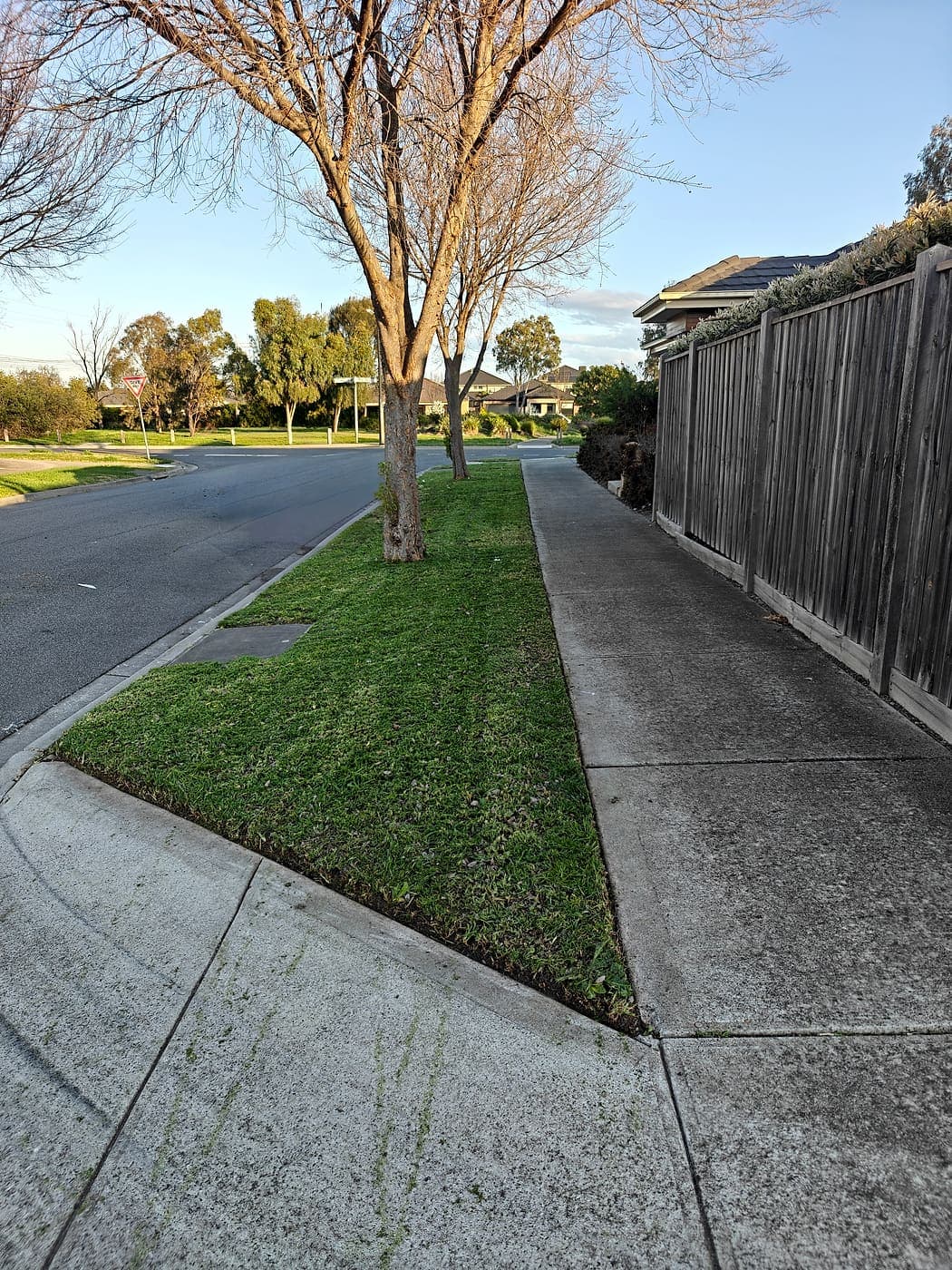
| Grass | Sign of a blunt cut | Notes |
|---|---|---|
| Tall fescue and ryegrass | Grey, shredded tips | Soft leaves fray visibly; the lawn takes on a whitish cast a day after mowing. |
| Kikuyu | Stringy, torn ends and pulled runners | Tough, fast-growing leaves blunt blades quickly in spring and summer. |
| Buffalo | Bruised, browning tips | Broad leaves crush rather than shred; brown edges show along each pass. |
| Couch and zoysia | Uneven, tufted finish | Fine, dense leaves show missed tufts and ragged patches under a blunt cylinder or rotary. |
Why does a sharp mower blade matter for the lawn?
A sharp blade cuts the leaf; a blunt one tears it. A clean cut closes over quickly and the leaf keeps growing, while a torn tip dries out, dies back and leaves an open wound on every leaf you mowed.
The University of California's turf pest guide describes the result plainly: lawns injured by dull mower blades turn somewhat grey soon after they are mowed, and the torn or shredded leaf tips eventually turn yellow to brown and die. It adds that turf weakened this way is more susceptible to drought and disease.
Purdue University's turf specialists make the same point about disease. Ripping the grass, they say, leaves the turf damaged and open to disease pathogens. Across a whole lawn, that is a lot of extra stress from a problem that is easy to fix.
Two magnified grass leaves side by side. On the left, a sharp blade passes through the leaf in a single clean line, and the cut edge stays green with only a thin sealed rim. On the right, a blunt blade strikes the leaf and rips it, leaving a split, frayed end with loose fibres; over the next few frames the frayed end dries to white, then fades to brown, while small fungal spores drift towards the open wound.
How can you tell if your mower blades are blunt?
The lawn tells you before the blade does. Walk out a day or two after a mow and look closely at the cut ends of the leaves: clean, straight tips mean a sharp blade, and frayed, split or whitish tips mean a blunt one.
Other signs build up over a few mows:
- A grey or whitish cast across the lawn, most visible looking towards the sun. Purdue describes ragged tips giving the turf a whitish cast when viewed from a distance.
- An uneven finish, with tufts or thin strips of uncut grass between passes.
- Shredded clippings that look torn and stringy rather than cleanly chopped.
- A mower that labours in grass it used to handle easily, or a battery that runs flat sooner.
- Visible damage on the blade itself: rounded edges, nicks, a bent tip or a worn-away back edge.
Check the blade after any hard strike. A single hit on a kerb, sprinkler head, rock or tree root can blunt or bend a blade in one moment, even if it was sharpened last week.
How often should mower blades be sharpened?
There is no single interval; it depends on how much you mow and what the blade meets. Purdue notes that the more often you mow, the duller the blades become, and that a blade may need sharpening as often as four to six times a year on a lawn mown frequently.
In Melbourne the heaviest wear comes in spring and early summer, when warm-season grasses such as kikuyu and couch grow fastest and the lawn is mown weekly. Our guide to how often to mow in Melbourne shows how the interval changes through the year, and the busy months are when blades lose their edge fastest.
A practical routine for a home lawn is to check the blade before the spring flush in September, again in mid-summer, and after any strike. Inspecting the cut leaf tips is more reliable than counting hours.
Does a blunt blade really cause lawn disease?
A blunt blade does not bring disease with it, but it makes the lawn an easier target. Each torn tip is a wound, and fungal diseases that thrive on damp leaves can get in through damaged tissue more easily than through a clean cut.
The risk is highest when the conditions suit fungi anyway: mild, humid weather, long dewy mornings in autumn and spring, and evening watering that keeps leaves wet overnight. The University of California's advice is to inspect leaf blades regularly after mowing, sharpen as needed, and avoid mowing in drought or when leaf blades are wet.
Torn tips also lose moisture faster than clean cuts. In a hot Melbourne summer, a lawn mown with a blunt blade can look stressed and brown sooner than one mown at the same height with a sharp blade.
Why a blunt blade can still seem to cut fine
On a dry day in soft grass, a slightly blunt rotary blade can still leave the lawn looking acceptable straight after the mow. The blade spins fast enough to smash through the leaves, and the damage only shows as the torn tips dry out over the next day or two.
That delay is why blunt blades go unnoticed for weeks. The mower seems fine, but the lawn slowly looks duller and the owner reaches for fertiliser or more water, when the real fix is a sharp edge. If the lawn looks great at the end of the mow and grey two days later, suspect the blade first.
Which grasses show a blunt cut most?
Every lawn suffers from a blunt blade, but some show it more. The key facts table on this page sets out the signs for the common Melbourne grasses.
Soft cool-season grasses, such as tall fescue and ryegrass, fray most visibly and turn grey quickly. Kikuyu is tough and fibrous, so it blunts blades fast in the growing season and tears into stringy ends when the edge goes. Buffalo has broad leaves that tend to bruise and brown along their edges, while fine couch and zoysia show a tufted, uneven finish.
Cut height and blade condition work together. Sustainable Gardening Australia (opens in a new tab)'s advice is that in most instances a lawn should not be cut closer than 50 mm, and a sharp blade at the right height does far less damage than either problem alone. Our guide to mowing heights by grass type gives the range for each grass.
How is a mower blade sharpened, balanced and replaced?
A blade is sharpened by restoring the original cutting angle on each end, then checked for balance before it goes back on. The outline below is a guide; your mower's manual is the authority on removal, the correct part and the bolt torque.
- Make the mower safe. Disconnect the spark plug lead on a petrol mower, or remove the battery or unplug an electric one. Purdue's guidance also starts with disconnecting the spark plug wire.
- Tip it the right way. Follow the manual, usually with the air filter and carburettor side up, so fuel and oil do not leak.
- Mark and remove the blade. Mark the underside so it goes back the same way up, wear heavy gloves and block the blade before undoing the bolt.
- File the edge. Follow the existing angle, take even strokes on each end and remove only enough metal to restore a clean edge. Purdue describes filing at about 45 degrees with equal strokes on each side.
- Balance it. Hang the blade on a balancer or a nail through the centre hole. If one end drops, take a little more metal off that end until it sits level.
- Refit and tighten. Fit it the right way up, with the cutting edges leading in the direction of rotation, and tighten the bolt to the specified torque.
Replace the blade rather than sharpen it if it is bent, cracked, worn thin or has lost the curved back edge, often called the sail or lift, that stands the grass up for cutting. Better Health Channel notes that mowers can cause open wounds and fractures to hands and feet, so heavy gloves and closed shoes are part of the job, not an extra.
Leave it to a mower repairer or a professional crew if the blade is bent or cracked after a strike, the mower vibrates badly after refitting, the bolt is seized, or you are unsure which way up the blade goes. Cylinder mower reels need specialist grinding and setting. Never run a mower with a damaged blade: a piece breaking off at full speed is dangerous to anyone nearby.
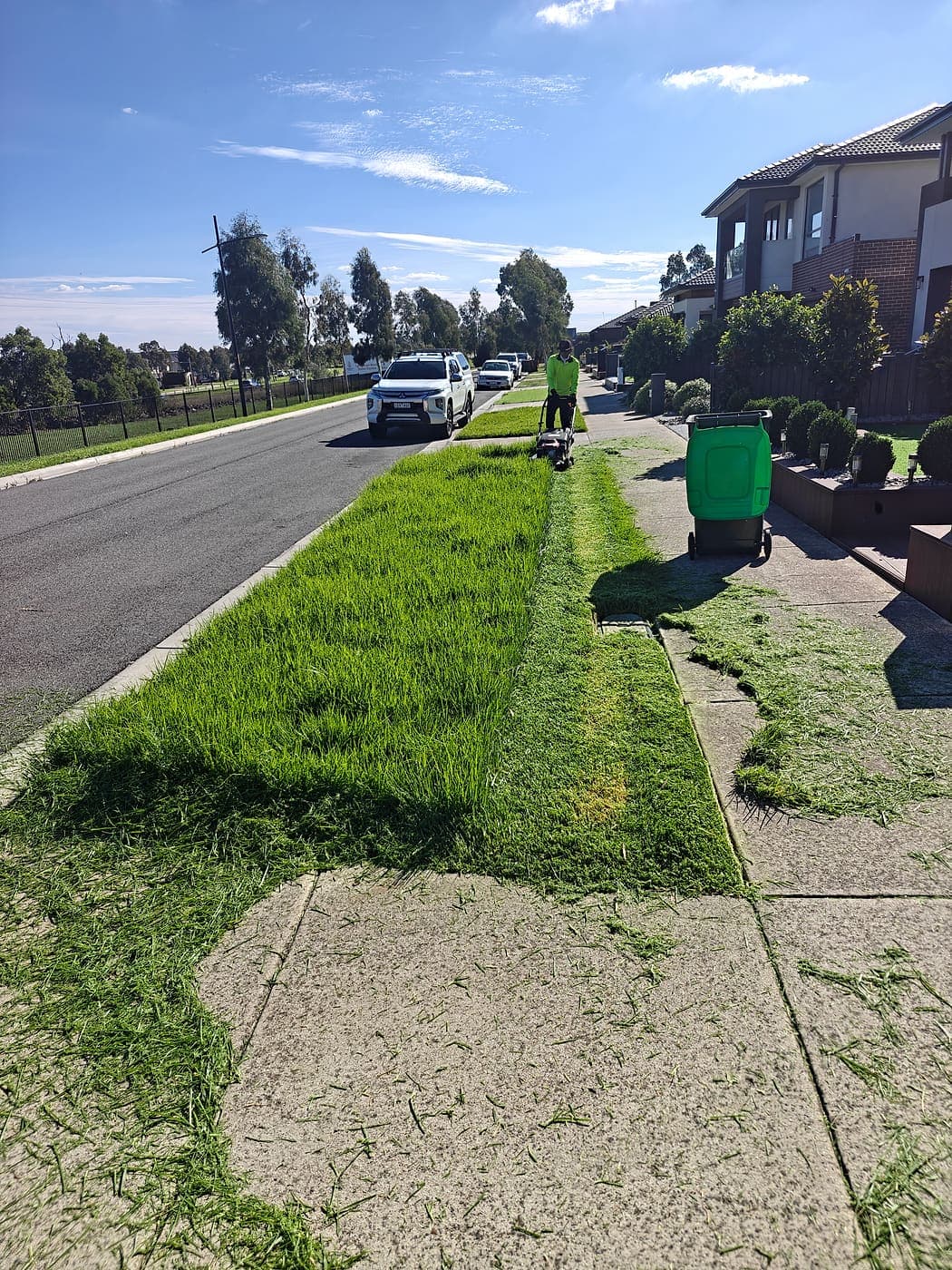
What else wears down the cut besides the main blade?
The main blade is only one cutting edge on a typical mowing visit. String trimmers, edgers and cylinder reels all affect the finish, and each blunts in its own way.
- String trimmer line frays and splits as it wears, which tears the grass along edges and around posts. Feed out fresh line regularly and replace old, brittle line.
- Edger blades round off against concrete, leaving a ragged edge along paths and kerbs. Replace the edger blade once it no longer leaves a straight, clean line.
- Cylinder mower reels need the reel and bottom blade kept sharp and set just touching. When the set drifts, the reel folds the leaf instead of shearing it.
A sharp edge on every tool shows in the finish. It is also what gives a lawn a clean, even stripe, which our post on how lawn stripes are made explains.
Hidden hazards that blunt blades on suburban lawns
Most sudden blade damage comes from things hidden in the grass. The usual culprits are sprinkler heads and pop-up pits, garden stakes and edging pins, dog toys, fallen sticks after wind, loose bricks or pavers, and stones flicked up from footpaths and driveways onto nature strips.
A quick walk across the lawn before mowing, picking up anything that should not be there, saves blades and protects people too. Better Health Channel warns that mower blades can flick up debris such as sticks and stones and cause eye injuries, so eye protection matters even on a small lawn.
What blade mistakes cause the most lawn damage?
Most blade damage comes from a few habits that are easy to change. Avoid these and the lawn and the mower both last longer.
- Mowing wet grass. Wet leaves bend away from the blade and tear rather than cut, and clumps smother the lawn.
- Waiting for the mower to struggle. By then the lawn has already had several weeks of torn tips.
- Sharpening to a razor edge. A very thin edge chips on the first stone; a slightly sturdier edge at the original angle lasts longer.
- Skipping the balance check. An unbalanced blade vibrates, cuts unevenly and wears the mower.
- Refitting upside down. The blade then pushes air the wrong way, stops lifting the grass and barely cuts.
- Scalping humps and edges. The blade strikes soil and stones, which blunts it, and the scalped strips brown off.
If your lawn browns soon after mowing in the cooler months, the cause may be the season rather than the blade. Our article on why lawns go yellow in a Melbourne winter helps tell the two apart, and our post on the lawn problems seen most in Melbourne's northern suburbs covers other common causes.
When is it worth handing the mowing over?
If blade care, height settings and the spring rush are more than you want to manage, a regular mowing visit takes it off your hands, with the cut height set to your grass and the interval following the season. Our lawn mowing service covers weekly, fortnightly and one-off visits, and the complete guide to lawn mowing in Melbourne explains the whole routine.
For the year at a glance, see the Melbourne lawn care calendar, and browse more in the lawn care section of the blog. When you are ready, you can get a free quote.
Your Garden. Our Promise.
From our jobs
Frequently asked
How soon after mowing can you tell the blade was blunt?
How many times a year should a home mower blade be sharpened?
Can a blunt mower blade make a lawn look brown after mowing?
Is it better to sharpen or replace a mower blade?
Why does my mower vibrate more after the blade was sharpened?
Do battery mowers need their blades sharpened as often as petrol mowers?
Sources and further reading
- Dull mower blade injury (University of California Statewide IPM Program)
- Sharpen mower blades (Purdue University Turfgrass Science)
- Gardening safety (Better Health Channel, Victorian Department of Health)
- Can't see the trees for the lawns (Sustainable Gardening Australia)
Caring for Melbourne gardens since 2019. Updated 18 November 2026.