


Lawn care
Lawn problems we see most in Melbourne's northern suburbs
By the Action Garden team · Updated · 12 min read
Checked against: Sustainable Gardening Australia, Agriculture Victoria, Water Victoria
TL;DR
- Heavy clay is the common thread; it compacts, cracks when dry and stays soggy when wet.
- New estate lawns often sit on a thin layer of topsoil over compacted fill, so roots stay shallow.
- Hot, dry northerly winds brown shallow-rooted lawns within days; deep, early-morning watering helps.
- Bindii, onion weed, winter grass and clover move into thin turf, and declared weeds such as serrated tussock need reporting, not just mowing.
- Fix the soil first with coring, top-dressing and the right cut height, then feed and seed.
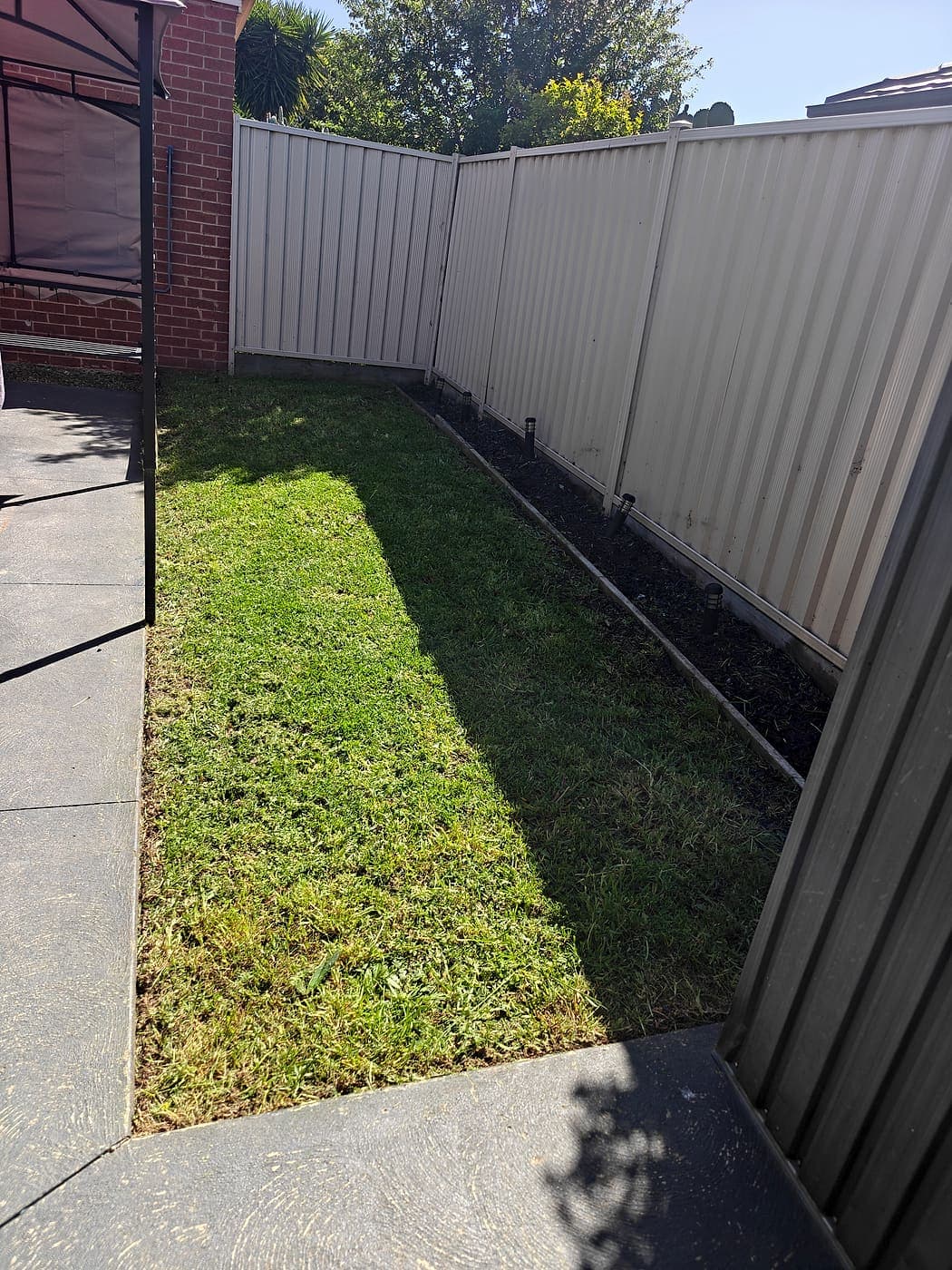
| Problem | When it shows | What to look for |
|---|---|---|
| Compaction | All year, worst on paths and play areas | A screwdriver stops short in moist soil; water runs off instead of soaking in. |
| Summer browning | December to March | Shallow roots on clay dry out fast in hot northerly winds. |
| Waterlogging and yellowing | June to August | Clay holds water; mowers rut soft ground and grass thins. |
| Bindii and clover | Seedlings in winter, prickles by late spring | Take hold in thin, low-cut turf. |
| Curl grubs | Feeding through summer | Brown patches that lift like carpet; worse in dry years. |
What makes lawns in Melbourne's northern suburbs different?
Mostly the soil. Much of the north sits on the volcanic plains that stretch from the Plenty River west, where heavy clay is the rule, and that clay sets the pattern for almost every lawn problem in the area. Add open, exposed new estates and hot northerly winds in summer, and lawns here are pushed harder than those on the sandier soils of the south-east.
The north is also our home ground, where most of our regular runs are, from Reservoir and Bundoora up to Mernda, Wollert and Craigieburn.
The sections below take each problem in turn: what it looks like, why clay makes it worse, and what fixes the cause rather than the symptom. Most of them are linked, so fixing the soil fixes several at once.
Why does compaction show up on so many northern lawns?
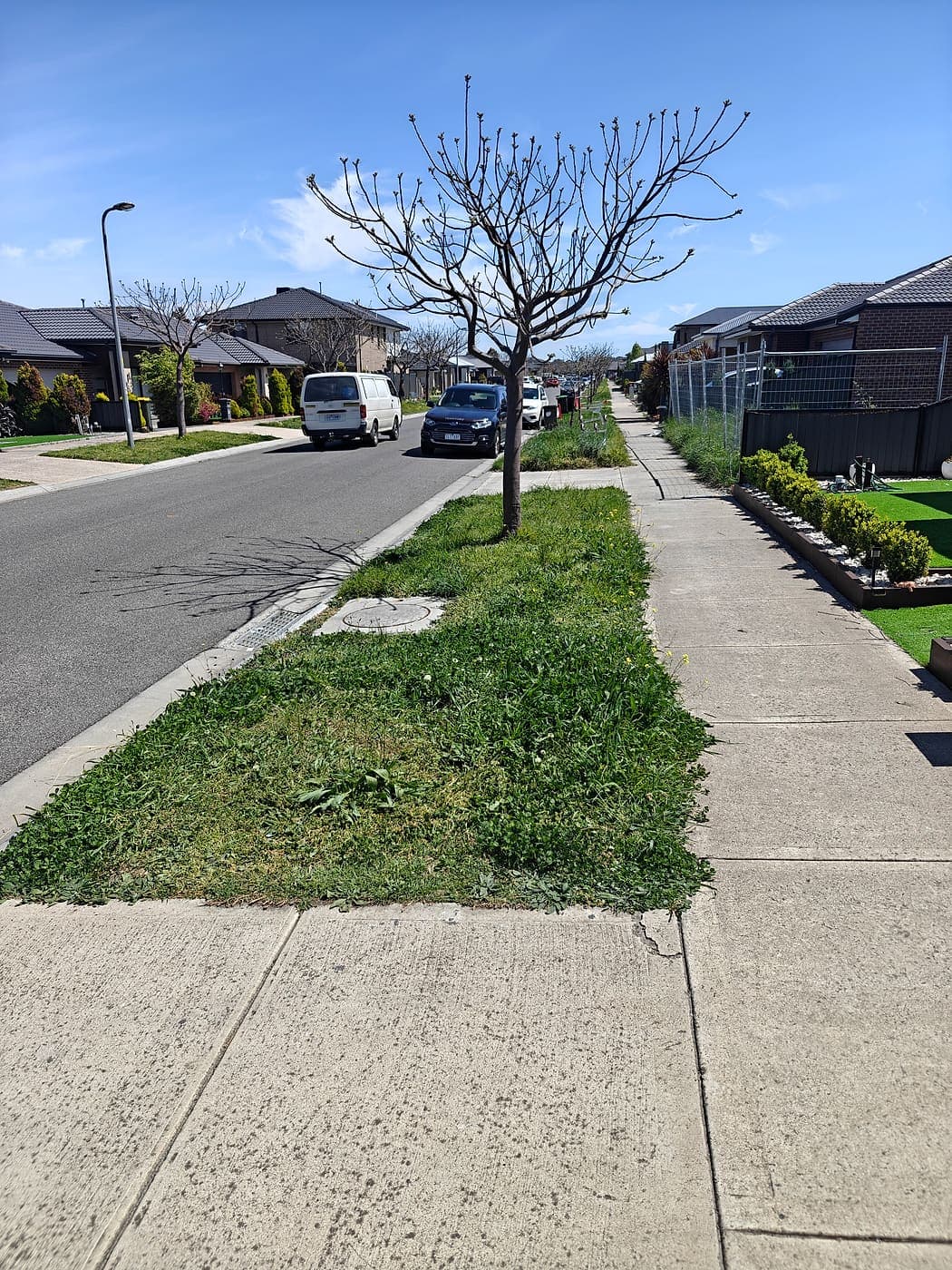
Because clay particles are tiny and flat, they pack together tightly under feet, mowers, cars and rain, squeezing out the air spaces roots need. Paths across the lawn, play areas, the dog's run and the strip beside the driveway compact first.
The quick check comes from Sustainable Gardening Australia (opens in a new tab): push a screwdriver into moist soil. Ideally it reaches about 25 cm, and 15 to 20 cm still shows a good base; resistance at a shallower depth points to compacted, dry soil too close to the surface. On many northern lawns the screwdriver stops at a few centimetres.
Compaction shows up as water that pools or runs off, thin grass that wears through, and moss or broadleaf weeds in damp, packed spots. Coring aeration, which pulls out small plugs of soil, is the usual fix, ideally followed by a top-dressing of sandy loam that falls into the holes.
A cross-section of a lawn on heavy clay. On the left, the top few centimetres are packed tight, roots spread sideways just under the surface, and rain sits on top before running off. A coring machine passes over, pulling out finger-sized plugs. On the right, weeks later, the holes have filled with top-dressing, water soaks down through them, and roots follow each channel deeper into the clay.
Does gypsum fix clay?
Gypsum helps some clays and not others. It works on dispersive (sodic) clay, the kind that turns water cloudy and sets like concrete, because the calcium replaces sodium on the clay particles and lets them clump into crumbs that drain.
A simple test: drop a dry crumb of your soil into a glass of rainwater and leave it overnight. If a milky halo spreads around it, the clay is dispersive and gypsum is worth trying. If the water stays clear, gypsum will do little, and coring and organic matter are the better path. Always follow the product label for rates.
Why do new estate lawns struggle in their first few years?
Many new estate lawns are laid on a thin layer of imported topsoil over clay that has been cut, filled and compacted by machinery. Roots cannot get through the hard layer below, so the lawn behaves like a shallow mat that dries out in days and wears through quickly.
A common pattern is a lawn that looks good in its first spring, browns badly in its first hot summer and never quite thickens up. Builder's rubble, buried concrete and offcuts under the turf make it worse, showing as patches that dry out first and never recover.
The answer is patience and the soil. Core once or twice a year, top-dress in thin layers, water deeply and occasionally rather than lightly every day, and keep the cut height up so the leaf shades the soil. Over a couple of seasons the roots go deeper and the lawn steadies.
Why do northern lawns brown so fast in summer?
Shallow roots in clay that has dried hard. When a hot, dry northerly blows for a day or two, a lawn with roots in the top few centimetres has nothing to draw on, and it browns almost overnight.
Sustainable Gardening Australia's advice is that less frequent, deep watering is the best way to keep a healthy lawn long term, because it encourages a deeper root system that copes better in dry spells. On clay, water soaks in slowly, so apply it in two or three short runs half an hour apart rather than one long run that ends up in the gutter. Water early in the morning to cut evaporation and the risk of fungal disease.
Stay inside Victoria's permanent water saving rules (opens in a new tab): a watering system may be used only between 6pm and 10am, and a hand-held hose with a trigger nozzle can be used at any time. Our Melbourne lawn care calendar shows when to start and ease off summer watering.
Why do northern lawns turn yellow and thin in winter?
The same clay that dries hard in summer holds water through winter. Roots in saturated soil run short of air, warm-season grasses are already slowing down in the cold, and the lawn yellows and thins, especially in low spots and shaded corners.
Wet clay also marks easily. Mowers, wheelie bins and foot traffic on soggy ground leave ruts and compact the surface further, setting up next summer's dry patches. The fix is to mow only when the surface is firm enough to walk on without leaving footprints, and to skip a visit rather than mow on soaked ground.
Much winter yellowing is normal dormancy rather than a problem. Our post on why lawns go yellow in a Melbourne winter explains how to tell the two apart and when to worry.
Which weeds take hold in northern lawns?
Weeds move into whatever gaps compaction, drought and scalping leave behind. The usual northern lawn weeds are common across Melbourne, but thin turf on clay gives them more room.
| Weed | When it shows | What it tells you |
|---|---|---|
| Bindii | Seedlings in winter, prickly seeds by late spring | Thin, low-cut turf; treat before it sets seed |
| Clover | Spring, in patches | Low nitrogen and thin grass |
| Onion weed | Winter and spring | Spreads by small bulbs; digging scatters them |
| Winter grass | Late winter to spring seed heads | Compacted, damp, shaded areas |
| Paspalum and summer grass | Summer | Thin, scalped areas and lawn edges |
Two grasses deserve more care. Serrated tussock and Chilean needle grass both grow in Melbourne's north and are declared noxious weeds in Victoria, and mowing them can spread seed on the mower. If you suspect either, check the Agriculture Victoria (opens in a new tab) weed pages and your council's advice before doing anything.
Most other lawn weeds back off once the grass is thick, mown at the right height and fed at the right time. Our guide to when to fertilise a lawn in Melbourne covers the timing.
Why scalped strips along driveways get the worst weeds
The strips beside driveways, paths and kerbs are often the highest points of the lawn, so the mower takes them lowest. Scalped turf lets light reach the soil, and that is what weed seeds need to germinate.
The same strips take the most wheel and foot traffic, so they are compacted as well. Raising the mower a notch on those edges, or trimming them by hand, often does more for weeds than any spray.
What about curl grubs, kikuyu creep and nature strips?
These three come up again and again on northern lawns, and each has a simple first check.
Curl grubs. Sustainable Gardening Australia describes dying, brown areas that look a bit like dry sections, where the grass pulls out easily or rolls back like a carpet. The adult beetles lay eggs in spring, the grubs feed on roots through summer, and dry weather makes their feeding worse. SGA suggests a bucket of water with biodegradable detergent poured over a patch to bring grubs to the surface for birds, and keeping the lawn well watered over spring and summer, within water restrictions.
Kikuyu creep. Kikuyu is common in the north because it handles heat and clay, but its runners push into garden beds, under fences and across paths. Regular edging, a firm bed edge and mowing on time keep it in check. If you are not sure whether your lawn is kikuyu, couch or buffalo, our guide to identifying your lawn grass will help.
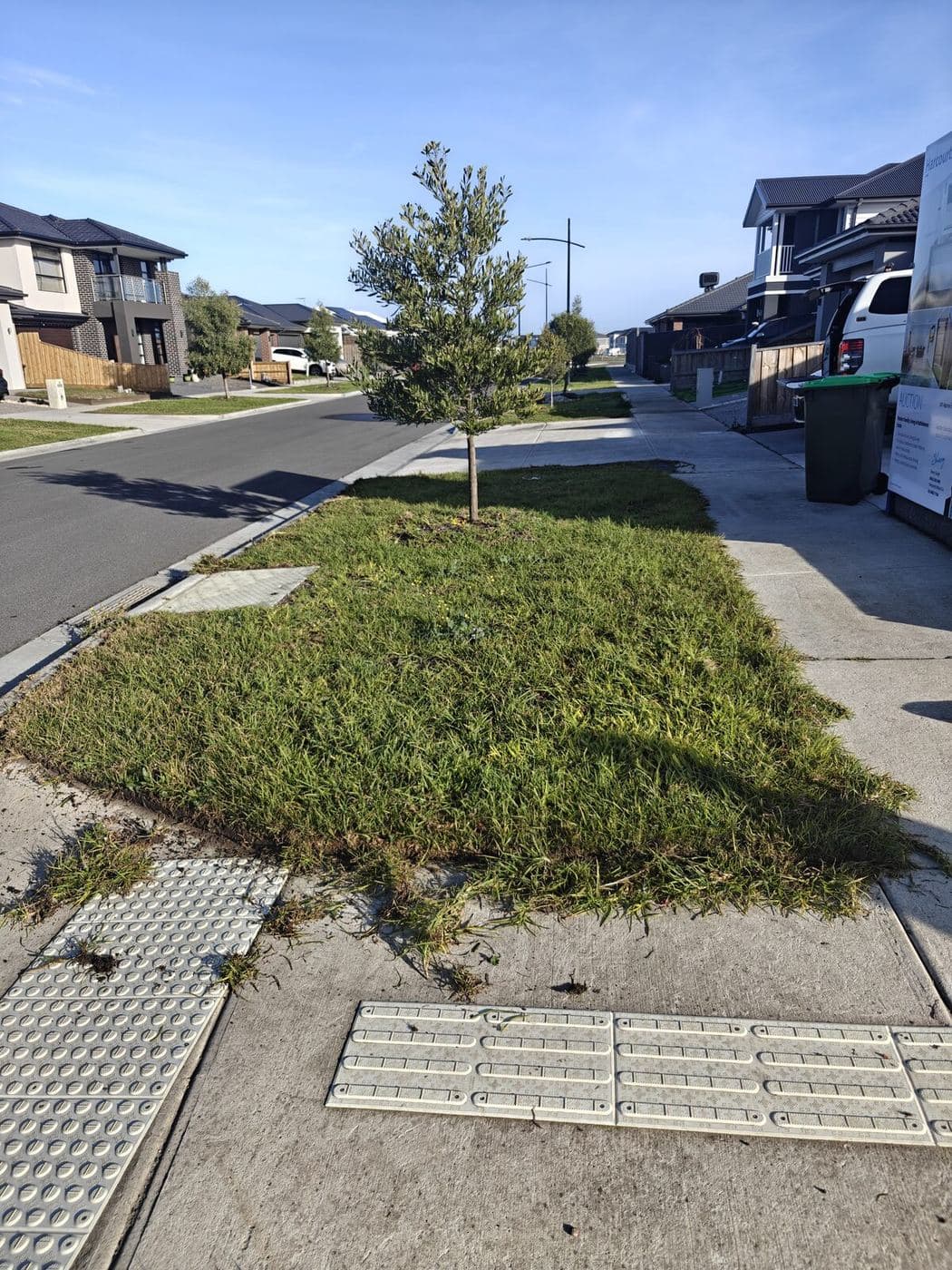
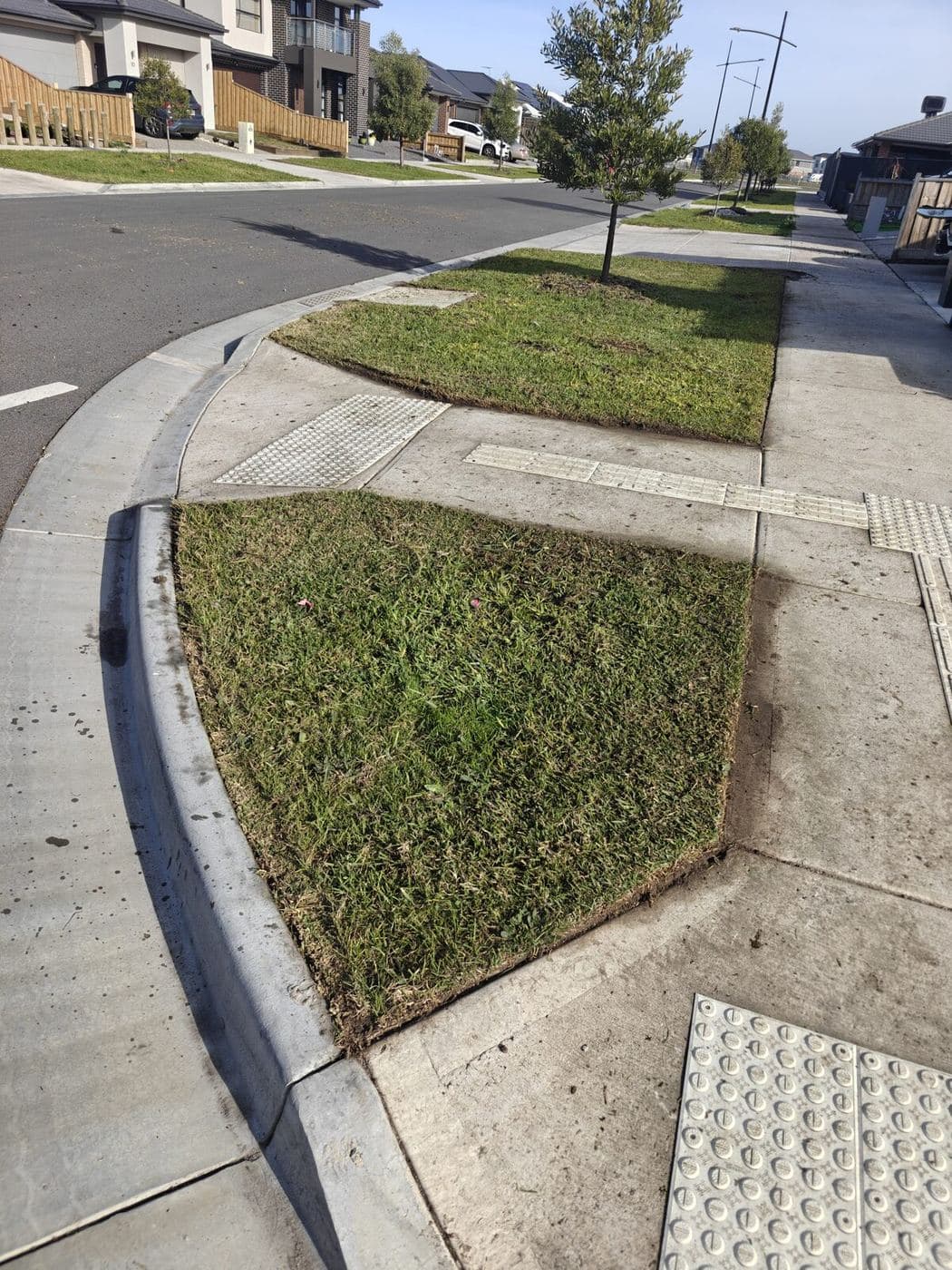
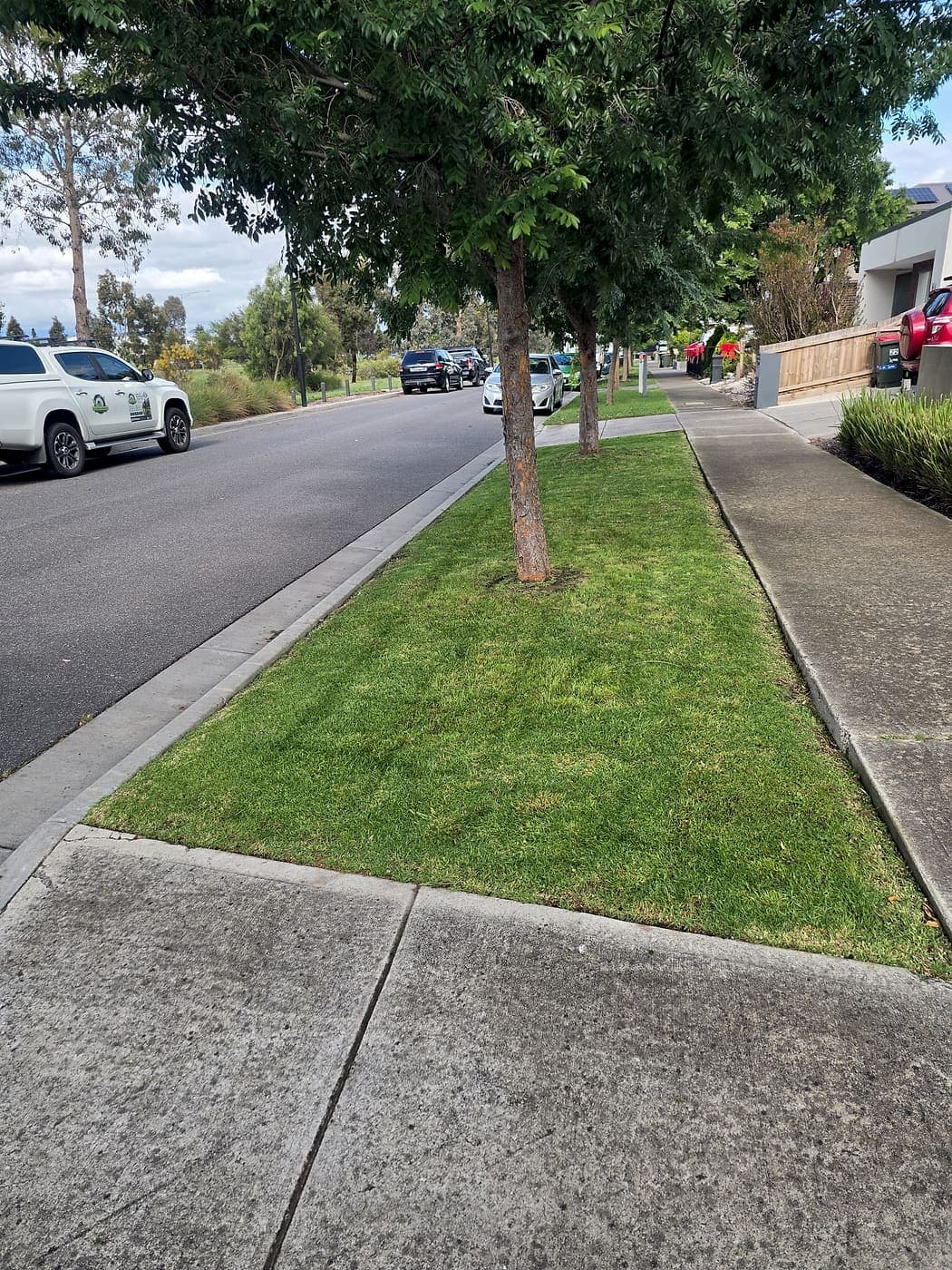
Nature strips. Strips under street trees deal with shade, dry soil around tree roots and the most compaction on the property. They are often the first part of a northern frontage to thin out.
What fixes a tired lawn on northern clay?
Work from the soil up, in this order. Skipping to fertiliser or seed on compacted clay usually wastes both.
- Find the cause. Use the screwdriver test, check for grubs, note the shaded and worn spots, and confirm the grass type.
- Relieve compaction. Core when the clay is moist but not wet, usually mid to late spring for warm-season grasses.
- Top-dress. Spread a thin layer of sandy loam into the core holes and low spots, letting the grass grow through.
- Set the height. Raise the cut for the grass type and season, and never take more than a third of the leaf.
- Feed at the right time. Feed once the lawn is actively growing, following the product label.
- Water deeply and less often. Early morning, in short runs on clay, inside the water rules.
Clippings help too. On a healthy lawn mown regularly, returning short clippings feeds the soil and adds organic matter that clay badly needs. Our post on mulch mowing or catching clippings explains when each is the better choice.
When is it worth handing a northern lawn over?
If your lawn keeps browning, thinning or filling with weeds despite your weekends, a regular visit with the height set to your grass and the interval following the season takes the pressure off. Our lawn mowing service covers weekly, fortnightly and one-off visits, with aeration, dethatching, fertiliser and weed control as add-ons, and the complete guide to lawn mowing in Melbourne explains the full routine.
There are more articles in the lawn care section of the blog, and our help centre answers questions about visits and plans. When you are ready, you can get a free quote.
Your Garden. Our Promise.
From our jobs
Frequently asked
Why does clay soil in the northern suburbs make lawns so hard to keep green?
Why is the lawn on my new estate home struggling after only a year or two?
Does gypsum help a clay lawn in Melbourne's north?
What is the spiky grass tussock on my northern suburbs nature strip?
Should a clay lawn be mown shorter to stop it looking patchy?
When is the best time to core and top-dress a lawn on northern clay?
Sources and further reading
- Minimising water use on lawns and turf (Sustainable Gardening Australia)
- Hi, my name is: White Curl Grub (Sustainable Gardening Australia)
- Can't see the trees for the lawns (Sustainable Gardening Australia)
- Weeds (Agriculture Victoria)
- Permanent water saving rules (Water Victoria)
Caring for Melbourne gardens since 2019. Updated 18 November 2026.