


Lawn care
Lawns and dogs: urine spots, wear paths and fixes
By the Action Garden team · Updated · 12 min read
Checked against: Colorado State University Extension, NC State Extension, Washington State University HortSense, Water Victoria
TL;DR
- Urine spots are a chemical burn: too much nitrogen, salt and lactic acid in one small patch, worst from big dogs that squat.
- Water is the only proven remedy: flush the spot soon after, and water the lawn well so it never dries and concentrates the salts.
- Supplements, "dog rocks", bicarb soda, gypsum and detergent have no proven benefit, and some can harm the dog or the grass.
- Couch, kikuyu and buffalo run and repair themselves in the warm months; tall fescue clumps, so dead spots must be reseeded or patched.
- Wear paths along fences come from running and compaction: spread the traffic, aerate in spring and give the dog a toilet area that is not lawn.
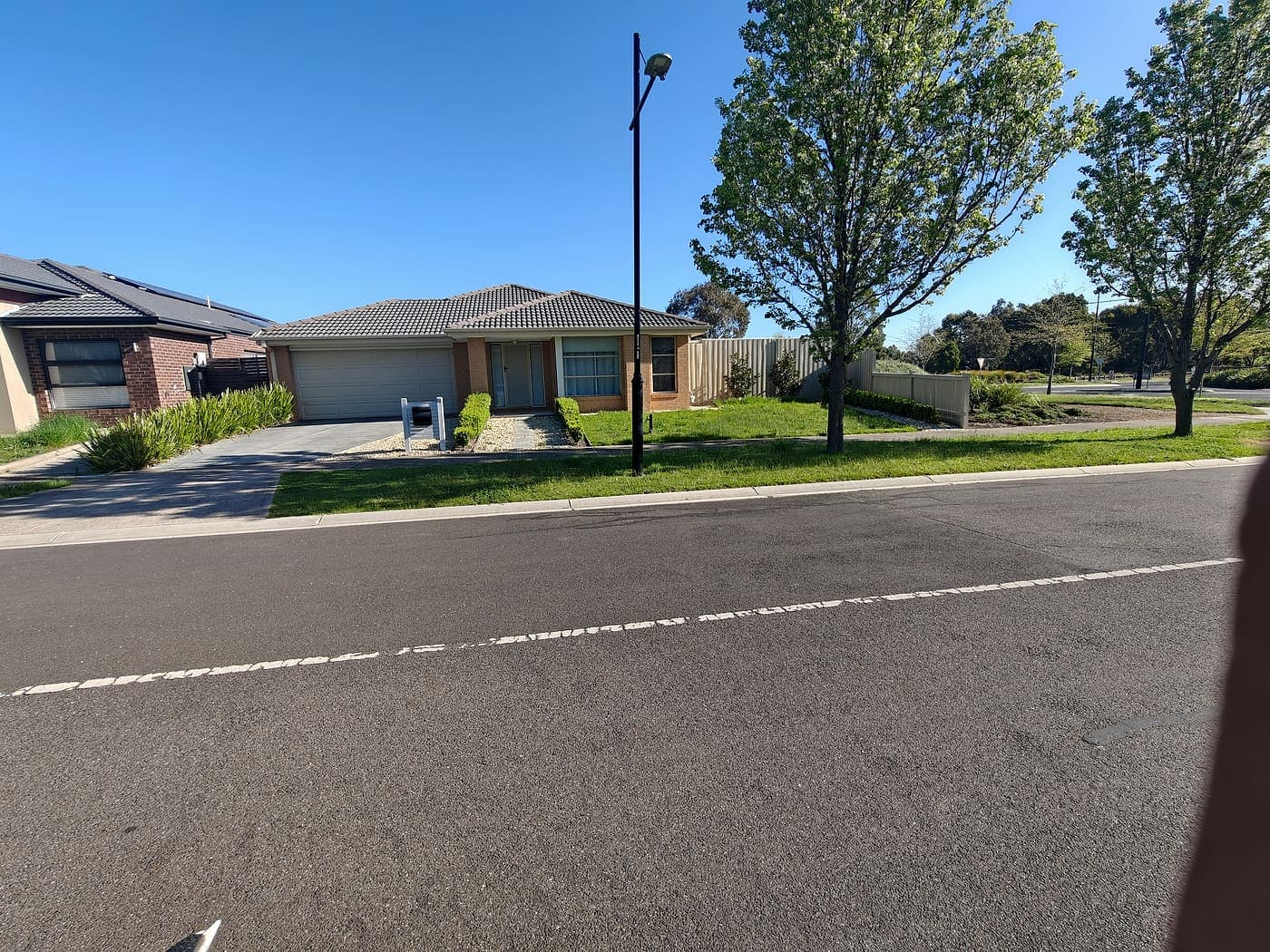
What causes brown dog urine spots on a lawn?
A urine spot is a chemical burn. When a dog empties its bladder on one small patch, it delivers far more nitrogen, salt and acid than the grass in that spot can take, and the leaves and crowns die. The result is a round, straw-coloured patch that shows up a few days after the damage.
For years the blame went to nitrogen and salts. Urine is rich in urea, which breaks down to nitrogen, and concentrated salts draw water out of grass roots, much like a fertiliser spill. More recent research reported by NC State Extension (opens in a new tab) points to a third culprit: lactic acid, which damages the cell membranes of the grass.
Lactic acid in urine rises with exercise, diet and health, so the same dog can do more damage on some days than others. What matters for a Melbourne lawn is the practical side: every one of these causes is a dose problem. Too much lands in one place, often on grass that is already under stress, which is why water, timing and grass type do far more than any product.
Why do some spots have a dark green ring?
The ring is the same urine, diluted. At the centre the dose is high enough to burn; at the edge it is weak enough to act like fertiliser, so the grass there grows faster and darker than the rest of the lawn. You can even get dark green spots with no brown centre at all, when a smaller dog or a well-watered lawn dilutes the dose.
NC State Extension notes that dark green spotting shows up most on lawns short of nitrogen, because the fed patches stand out against a paler background. A lawn fed on a sensible programme hides those green spots better, and it is generally less affected by the nitrogen and salts in urine.
A plan view and a cross-section of one spot. In plan, three rings: a straw-brown dead centre labelled "burn zone: nitrogen, salt and acid too strong", a dark green band labelled "feed zone: diluted urine acts as fertiliser", and normal lawn outside. In cross-section, urine soaks into the soil under the centre; a watering can then adds water, and arrows show the dose spreading and sinking below the root zone while the brown centre shrinks. Reduced motion shows the before and after frames side by side.
Is it really a urine spot, or something else?
Check before you treat, because several Melbourne lawn problems look alike. Urine spots are round, appear where the dog toilets, and the dead grass stays anchored in the soil. Grub damage, fungal patches and dry spots behave differently.
Quick decision guide
Dog spot or a different lawn problem?
- Is the patch roughly round, about the size of a dinner plate or smaller, in a place the dog uses, with a dark green ring? If yes, it is almost certainly a urine spot.
- Tug a handful of the brown grass. Does it lift out like a loose mat with chewed or missing roots? If yes, look for curl grubs or lawn armyworm, not the dog.
- Is the patch irregular and spreading, or does it have a darker, wet-looking edge in humid weather? If yes, a fungal problem or waterlogging is more likely.
- Is the brown area on a slope, a high spot or beside a hot path or driveway, and does it worsen in a dry spell? If yes, it is probably a dry patch. See our guide to repairing bare patches in a lawn.
- Still not sure? Watch whether new spots appear only where the dog goes. Urine damage follows the dog; grubs and fungus follow the weather.
Fertiliser spills are the other look-alike. A dropped handful of granular fertiliser burns a patch the same way urine does, so think about whether the lawn was fed recently before blaming the dog.
How do you fix a urine spot that has already gone brown?
Water first, then wait, then repair. The grass around the spot is usually alive, and on a running grass it will often grow back over the patch on its own once the salts are washed through and the weather is warm. Only a fully dead centre needs patching.
- Soak the spot. Give the patch and a ring around it a long, slow drink with a watering can or a hose fitted with a trigger nozzle, enough to wet the soil well below the roots. This washes salts and acid down and out of the root zone.
- Keep watering through dry weather. Colorado State University Extension (opens in a new tab) notes that drought lets salts build up, while regular, adequate watering dilutes them. In a Melbourne summer this is often the difference between a spot that heals and one that spreads.
- Wait two to three weeks in the growing season. Watch the edges. On couch, kikuyu and buffalo, new runners usually start creeping in from the green margin.
- Remove the dead centre if nothing comes back. Cut out the dead turf and about 1 to 2 centimetres of soil under it, where the residue sits, and loosen the soil below.
- Patch or reseed to match the lawn. Use a piece of turf from an out-of-the-way part of the same lawn, or matching turf or seed, as the extension services advise. Firm it in, top-dress the joins and water it in.
- Protect it. Keep the dog off with a small barrier until the patch has rooted and resists a gentle tug.
Why bicarb soda, gypsum and detergent make it worse
These home remedies are often recommended to "neutralise" urine, and Colorado State University Extension rates them false. Bicarb soda (sodium bicarbonate) and gypsum are salts, and salt is part of what burns the grass in the first place, so adding more can compound the damage. Some dishwashing detergents can burn grass on their own.
The extension service's summary is blunt: the only "product" shown to neutralise urine's effect on a lawn is water. Its myth list also rejects the idea that the spots come from alkaline urine, and it notes that no spray-on lawn product has been shown to prevent or cure them.
Which Melbourne lawn grasses cope best with dogs?
Running grasses recover best, so most dog owners in Melbourne do well with couch, kikuyu or a tough buffalo. These warm-season grasses spread by runners above and below the ground, so they grow back into urine spots and worn patches by themselves from late spring to early autumn.
NC State Extension reports research showing that bermudagrass, which Australians call couch, and zoysia handle lactic acid better than cool-season grasses. Among cool-season grasses, tall fescue was the most tolerant. The catch with fescue is its growth habit: it forms clumps and does not spread, so dead spots stay bare until they are reseeded or patched.
We have not found published lactic acid research on kikuyu or buffalo, so their place in the table below comes from how fast they spread, not from urine trials.
| Grass | How it repairs | With dogs |
|---|---|---|
| Couch | Runners above and below ground; fast in summer | Very good wear and recovery in sun; dormant and slow in winter; poor in shade |
| Kikuyu | Vigorous runners; very fast in warm weather | Recovers quickly from spots and wear; can invade beds; pale in winter |
| Buffalo | Above-ground runners; moderate speed | Good wear tolerance and more shade tolerance than couch; slower to fill big patches |
| Zoysia | Slow runners | Tolerant of urine in research, but slow to repair worn areas |
| Tall fescue | Clumps; does not spread | Stays green in winter and tolerates urine well for a cool-season grass, but bare spots need reseeding |
The season matters as much as the grass. Couch, kikuyu and buffalo slow right down or go dormant through a Melbourne winter, and NC State Extension notes that dormant warm-season grass has less wear tolerance. A dog that is fine on a couch lawn in January can grind a bare path into the same lawn by August.
What about shaded backyards?
Dogs often wear out the shady side of a yard first, because that is where they lie in summer and where grass is weakest. Couch thins out in shade, so a shaded dog run on couch rarely holds. Buffalo copes better with some shade, and fescue handles cool, shaded spots, but no lawn grass recovers well from both deep shade and daily wear.
For what grows under trees and beside fences, see our guide to growing a lawn in shade. Sometimes the honest answer is mulch or pavers where the dog lies, and lawn where it does not.
Why do dogs wear paths along fences, and how do you fix them?
Wear paths come from running the same line every day, usually along a fence where the dog can see or hear people, cars or other animals. The grass leaves are crushed, the crowns are bruised, and on Melbourne's clay soils in the north and west the soil compacts so hard that roots and water cannot get in. Sandy soils in the south-east compact less, but they dry out fast, so worn strips there often brown off in summer instead.
Fixing a path is about changing the traffic first, then repairing the soil:
- Spread or redirect the traffic. Move water bowls, toys and favourite lookout spots so the dog uses more of the yard, or use temporary barriers to rest one stretch while it recovers.
- Accept the path where it will never hold. A narrow strip of coarse mulch, gravel or stepping pavers along the fence line turns a muddy rut into a deliberate dog run.
- Aerate compacted strips in spring. Coring opens clay so air and water reach the roots; our guide on aerating a compacted lawn on Melbourne clay covers timing and tools.
- Mow higher on the worn areas. Taller leaves cushion the crowns and recover faster from being trampled.
- Feed for recovery, within the label rate. NC State Extension suggests raising nitrogen within recommended guidelines to speed recovery from wear.
How do you stop new spots from forming?
Prevention beats repair, and the most reliable method is the least glamorous: train the dog to toilet somewhere that is not lawn. Colorado State University Extension calls this the only sure solution. A small area of coarse mulch or gravel near the back door, used consistently with praise and rewards, takes the pressure off the lawn.
If training is not realistic, reduce the dose:
- Flush the morning wee. The first urine of the day is usually the most concentrated, so follow the dog out with a full watering can for that one.
- Keep the lawn watered and fed. A lawn that is never drought-stressed and has steady nutrition hides spots better and recovers faster.
- Encourage drinking. More water in the dog means more dilute urine. Adding water to the dog's food is the one change Colorado State University Extension treats as safe without a vet's advice.
- Avoid the shortcuts. Do not add salt, supplements or "neutralisers" to food or water to change the urine. The same extension service warns that some can harm dogs, particularly older dogs and dogs with heart or kidney problems.
Can regular mowing make a dog-friendly lawn easier to keep?
Yes. A lawn mown at the right height for its grass, with sharp blades, on a steady programme, is denser and tougher, and a dense lawn both hides spots and closes over them faster. Scalping a lawn short leaves bare soil and stressed crowns, which is the worst starting point for a lawn that also has to cope with a dog.
Blade condition matters more than most people think. A blunt blade tears leaf tips, which then brown off and add to the patchy look; our post on why sharp mower blades matter for lawn health explains the difference. Before any mowing, the yard also needs to be clear of droppings, toys and chews, both for a clean cut and for the safety of whoever is mowing.
What a regular mowing visit can do for a dog lawn
On a mowing visit, the cut height can be set a notch higher on the patches the dog uses, edges kept clean so couch and kikuyu runners do not escape into beds, and clippings handled to suit the lawn. Because the same lawn is seen every week or fortnight, new spots, spreading patches or a wear path that is getting worse are easier to notice early, while the fix is still small.
Our lawn mowing service covers scheduled mowing, edging and clean-up, with aeration, fertiliser and weed control available as add-ons.
For the bigger picture on cut heights, seasons and frequency, our complete guide to lawn mowing in Melbourne is the place to start. Lawns in the clay-heavy northern suburbs have their own pattern of problems, covered in lawn problems we see most in the north.
When is it time to call a professional?
Call in help when the damage is bigger than a few spots, when you cannot tell what is causing it, or when a product is being considered. Large dead areas, compacted clay that will not take water, and patches that keep spreading away from where the dog goes are all signs of more than urine.
Get help if a large share of the lawn is dead or bare, if a whole strip has compacted so hard that water runs off, or if brown patches spread to areas the dog never uses, which points to grubs, disease or drainage. Before using any fertiliser, insecticide, herbicide or wetting agent on a lawn a dog uses, read the label in full, follow its rates and its directions on how long pets must stay off the treated area, and store products where the dog cannot reach them. Our post on pet-safe gardens covers plants and products to keep away from dogs.
A dog and a good lawn can share a backyard. It takes the right grass for the conditions, steady watering and mowing, and a plan for where the dog goes. If you would like the lawn kept in shape on a regular programme, or worn areas assessed and repaired, you can ask for a free quote. More lawn reading is in our lawn care articles.
Your Garden. Our Promise.
From our jobs
Frequently asked
Why does a dog urine spot have a dark green ring around the brown centre?
Do female dogs cause more lawn spots than male dogs?
How soon after my dog wees on the lawn should I water the spot?
Do dog rocks or urine-neutralising supplements stop lawn burn?
Which Melbourne lawn grass copes best with a dog?
Can I reseed or patch a urine spot in winter?
Should I keep my dog off a newly repaired patch, and for how long?
Will mowing higher help a lawn that a dog runs on?
Sources and further reading
- Dog urine damage on lawns: causes, cures and prevention (Colorado State University Extension)
- Dogs and turfgrass interactions (NC State Extension)
- Lawn and turf: dog injury (Washington State University HortSense)
- Permanent water saving rules (Water Victoria)
Caring for Melbourne gardens since 2019. Updated 18 November 2026.