


Trees and stumps guide
After a storm damages a tree: staying safe and who to call
By the Action Garden team · Updated · 12 min read
Checked against: Victoria State Emergency Service, Energy Safe Victoria, Insurance Council of Australia, WorkSafe Victoria, Sustainable Gardening Australia, City of Whittlesea, Bureau of Meteorology
TL;DR
- Safety first: stay at least 8 to 10 metres from any fallen power line and keep out of the fall zone of split or hanging limbs.
- Call 000 for danger to life, VICSES on 132 500 for a tree on the house or blocking an exit, your council for street trees.
- VICSES makes the situation safe; removing timber, cutting standing trees and permanent repairs are arranged privately, often through your insurer.
- Photograph everything before anything is moved, and contact your insurer as soon as possible, even before you know the full damage.
- A damaged tree under tension is dangerous to cut; leave chainsaw work, hangers and anything near lines to an experienced tree crew.
| Situation | First call | Then |
|---|---|---|
| Someone is injured or trapped | 000 | Keep clear of the tree until help arrives |
| Power line down or touching the tree | 000 if lives are at risk; your electricity distributor | Stay 8 to 10 metres away; treat the line as live |
| Tree on the house or car, or blocking an exit | VICSES on 132 500 | Then your insurer and a tree crew |
| Council street or park tree down | Your council | Do not cut council trees yourself |
| Branches down in the garden, no damage | No emergency call needed | Photos, then clean-up once it is safe |
What should you do first when a storm damages a tree?
Check that everyone is safe, then look for power lines before going anywhere near the tree. Most injuries after storms come from what people do next: walking under a hanging limb, touching a line hidden in the branches, or starting a chainsaw on a trunk that is under tension.
Work through the first hour in this order:
- People. Account for everyone, keep children and pets inside, and call 000 if anyone is hurt or trapped.
- Power lines. Look from a distance, and from inside if you can, for lines that are down, sagging or tangled in the branches.
- The house. If the tree has hit the roof, a wall or a window, stay out of those rooms and call VICSES (opens in a new tab) on 132 500.
- The fall zone. Keep out of the area under split, leaning or hanging limbs, which can drop hours or days after the storm.
- Records. Photograph the damage before anything is moved.
Only once those are covered should anyone think about clearing up. The clean-up of the rest of the garden, from gutters to garden beds, is covered in our article on the order of jobs after a Melbourne storm.
What if the tree has brought down or is touching a power line?
Treat every fallen or sagging line as live, and keep at least 8 to 10 metres away from it and anything it touches, including the tree, a fence or a puddle. Energy Safe Victoria (opens in a new tab) warns that you do not need to touch a fallen line to get an electric shock.
Energy Safe Victoria's steps if a tree hits a power line:
- If lives are in danger, call 000.
- Keep well back from the line and anything touching it.
- Report it to your electricity distributor. Energy Safe Victoria points to the Energy Victoria website to find which distributor covers your address.
Never try to move a branch off a line, even with a timber pole or a rope. Energy Safe Victoria says you are responsible for keeping trees on your property clear of the service line to your house, but once a storm has brought a tree into contact with a line, it is a job for the distributor and authorised workers only.
An animated plan view of a house, a fallen tree and a power pole. A red circle grows around a fallen line to show the 8 to 10 metre keep-away distance, then an amber zone appears under a split limb still hanging in the canopy, then a green path shows the safe route from the back door to the street that avoids both zones. In the reduced-motion frame all three zones show together with labels.
When should you call VICSES, 000 or your council?
Call the service that matches the danger. VICSES handles storm damage that threatens your home or traps you in it, 000 is for danger to life, and councils deal with their own trees in streets and parks.
| Who | Call them when | What they do |
|---|---|---|
| 000 | Someone is hurt, trapped or in danger, or a line is down and lives are at risk | Police, fire and ambulance response |
| VICSES, 132 500 | A tree has damaged your house or car, caused significant roof damage, or blocks your exit | Makes the situation safe, may carry out emergency temporary repairs |
| Electricity distributor | A tree is on or near a line, or the power is out because of a tree | Makes lines safe, clears trees from network lines |
| Your council | A street or park tree has fallen or split | Clears its own trees and the road or footpath |
| Your insurer | Your home, car or fences are damaged | Starts the claim, may arrange assessors and repairs |
| A tree crew | The emergency is over and timber, hangers or a damaged tree remain | Removes timber, makes damaged trees safe, cleans up |
VICSES is clear about its limits. Its guidance says that for minor leaks, superficial damage, removal of debris and cutting down trees that are still standing, you should contact a professional tradesperson. In a big storm VICSES also has to prioritise calls, so a tree across the backyard with no damage to the house may wait.
How do you record the damage for your insurer?
Photograph everything before anything is moved, then contact your insurer as soon as possible. The Insurance Council of Australia (opens in a new tab) advises contacting your insurer even if you do not yet know the full extent of the damage, and warns that if you delay reporting, your insurer may not pay for loss or damage caused by the delay.
Photos and notes worth taking:
- Wide shots from several angles showing the whole tree, where it fell and what it hit.
- The break or root plate, close up. A clean snap, an old crack, rot or a lifted root plate tells an assessor how it failed.
- Every damaged item: roof, gutters, fences, sheds, cars, garden furniture.
- Where the tree stands, so it is clear whether it was yours, a neighbour's or a street tree.
- Time and date notes, including the warnings that were current.
Ask your insurer before booking any tree work whether they need a quote first, whether they arrange contractors themselves, and what emergency work you can go ahead with. The Insurance Council's fact sheet says insurers must respond to a claim within 10 business days, and longer assessments may need specialist reports.
Why healthy trees fall in storms
Sustainable Gardening Australia (opens in a new tab) explains that in strong winds, roots break free from wet soil more easily than from dry soil, which arborists call windthrow. Heavy rain followed by strong wind, a common pattern in Melbourne's spring, is the classic setup.
The same article notes that most anchoring roots grow on the windward side of a large tree, so a gust from an unusual direction can topple a tree that has stood for decades. It also says a storm failure may be the result of root damage done 10 to 15 years earlier, through digging, paving or compaction. This is worth mentioning to your insurer and any arborist who looks at what is left.
Is it safe to clean up storm-damaged branches yourself?
Small branches lying loose on the ground are fine to clear once the storm has passed and lines have been checked. Anything larger, hanging, pinned or near the house is not, because storm-damaged wood behaves unpredictably when cut.
What makes storm damage different from normal pruning:
- Tension and compression. A trunk bent under another trunk, or a branch pinned under its own weight, stores energy that releases sideways when cut.
- Hangers. Broken branches caught in the canopy can drop at any time, including when the tree below is disturbed.
- Hidden splits. A limb that looks attached may be torn down into the trunk.
- Roots. A partly uprooted tree can settle or roll as soon as weight comes off one side.
- Wet, slippery ground under foot and on ladders.
WorkSafe Victoria (opens in a new tab)'s guidance on working safely with trees lists working near overhead power lines, working at height, chainsaws, falling objects and wood chippers among the hazards, and notes that tree workers are killed or seriously injured each year. Storm work combines all of them.
Call a tree crew for any branch thicker than your arm, anything above head height or hanging in the canopy, any trunk or limb pinned under another, any partly uprooted tree, any chainsaw work, and anything within reach of a power line. Do not climb or prop a damaged tree. Action Garden arranges storm clean-ups and damaged tree work with its own team.
Should the damaged tree be pruned, kept or removed?
That depends on what broke and what is left. A single clean break on an otherwise sound tree can often be tidied with a correct pruning cut, while a torn trunk, a split main fork or a lifted root plate usually means the tree is no longer safe to keep.
Quick decision guide
What does the damage mean for the tree?
- Is the root plate lifted, or is the tree now leaning with cracked soil on one side? The tree is likely to need removal. Keep clear and get it assessed urgently.
- Has the trunk split, or has one of two main stems torn away? Removal is often needed, as the wound runs into the main structure.
- Has one limb snapped cleanly, with the rest of the tree sound? The stub can usually be cut back properly to a junction or the branch collar.
- Are there only small broken twigs and leaves? Clean up the debris and check the tree again in a few weeks for dieback.
- Not sure? Have an arborist assess it before you decide.
Our guide to the signs a tree may be unsafe explains each of these faults in more detail. If you are not sure whether you need an arborist's opinion or just a crew to do the work, see our guide to choosing an arborist or a gardener.
Ragged stubs and why they need a proper cut
A branch torn off in wind leaves a jagged stub or a strip of torn bark down the trunk. Left as it is, the stub dies back and decay can spread into the trunk.
A proper cut just outside the branch collar, the swollen ring where the branch joins the trunk, lets the tree seal the wound. Torn bark is trimmed back cleanly to live tissue without widening the wound. Wound paints and sealants are not needed.
Do you need a council permit after a storm?
Not for the part of a tree that is an immediate danger, but often for anything more. Councils allow emergency work to make a tree safe, and then the usual tree rules apply to the rest.
Whittlesea, for example, says a tree presenting an immediate risk of personal injury or damage to property may be removed without a permit, but only the part of the tree that presents that risk, such as a broken hanging branch. After that, it suggests an arborist assess the whole tree and that you contact the council about any further work.
- Photograph the danger before the emergency work.
- Remove only what is needed to make it safe.
- Check your council's rules before removing a protected tree that survived the storm.
Our guide to tree removal permits in Melbourne shows how to check the rules for your address.
How is a storm-damaged tree cleaned up?
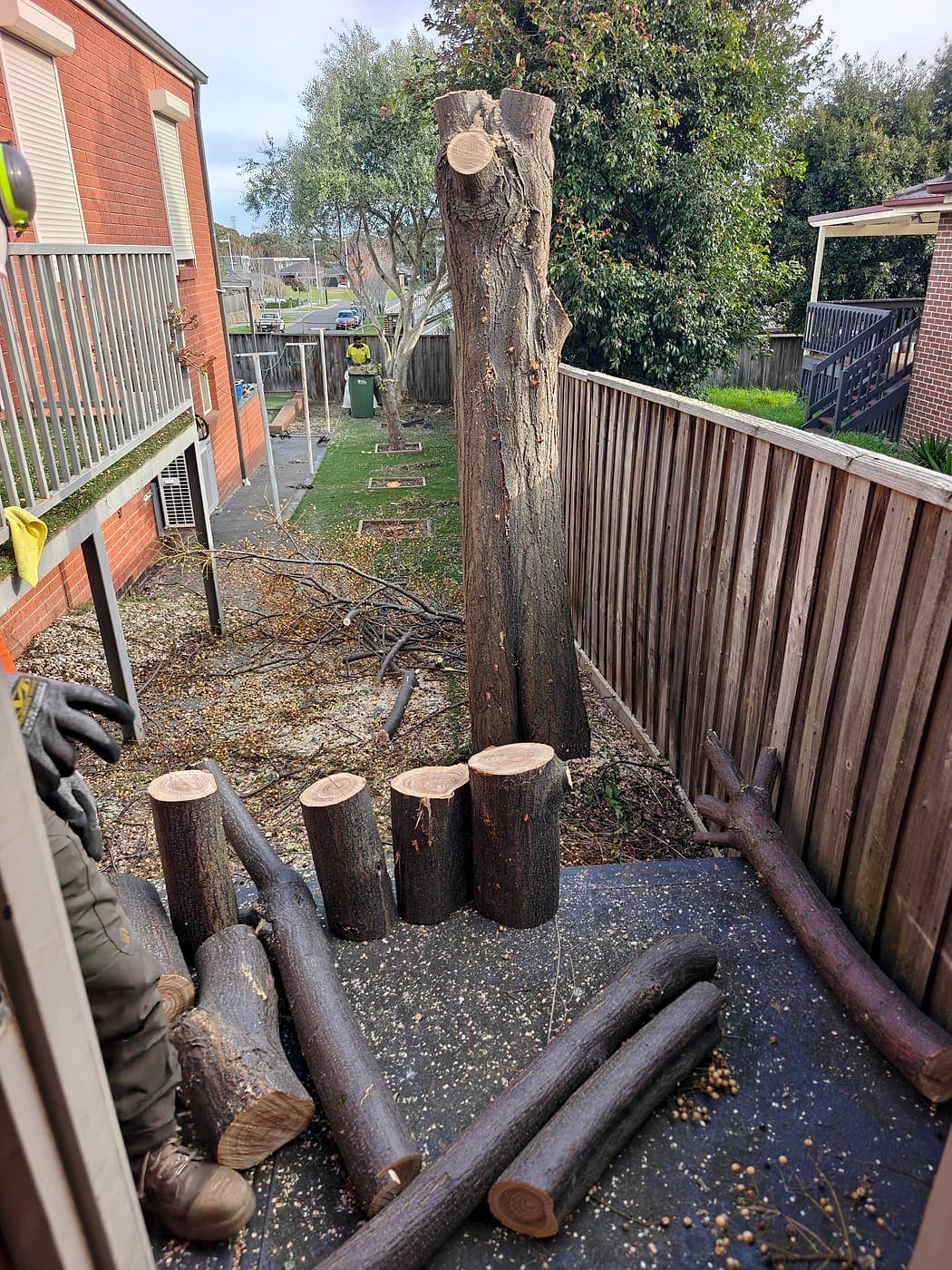
A tree crew makes the hazards safe first, then cuts and removes the fallen timber, and finally deals with whatever is left standing. On a residential block the work is usually done in sections and lowered on ropes, as in any removal.
- Assess and plan. The crew looks at lines, tension in the timber, what is underneath and where pieces can land.
- Hangers first. Broken branches still in the canopy are brought down before anyone works below.
- Release tension in a controlled way. Pinned and bent wood is cut in an order that lets stored energy release safely.
- Lift timber off structures. Branches on roofs and fences are cut and lowered piece by piece, not dragged.
- Chip and remove. Branches go through the chipper and logs are removed or left if you ask.
- Decide on what remains. The standing tree is pruned, monitored or removed, and the stump dealt with.
Our tree removal guide for Melbourne covers sectional removal in detail, and our article on tree work in tight backyards explains how crews protect roofs, fences and lawns where access is limited. If the tree has to come out, see our guide to replanting after stump grinding for what to put in its place.
Is it time to hand it over?
Once the emergency services have made things safe and your insurer knows about the damage, Action Garden can arrange the clean-up of fallen timber and any damaged tree through its tree cutting and removal service, done by the Action Garden team. After a storm, the team helps as soon as possible; how quickly depends on the situation and the jobs already booked. Every job starts with a site visit and a council permit check. More guides on trees are on the trees and stumps topic page.
You can get a free quote with just your name and mobile.
Your Garden. Our Promise.
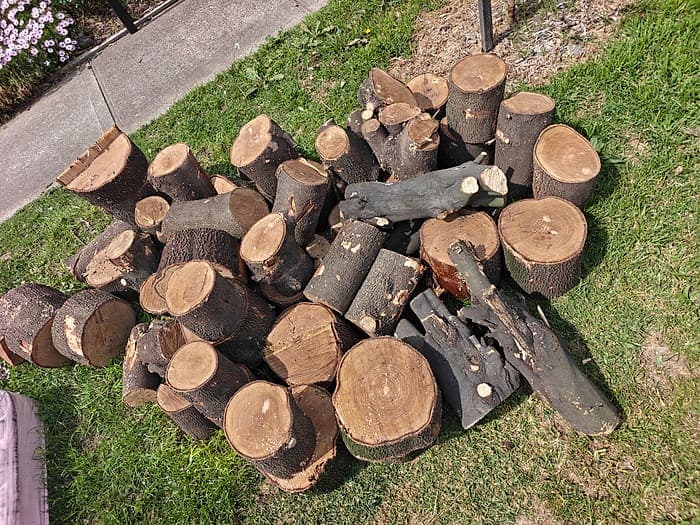
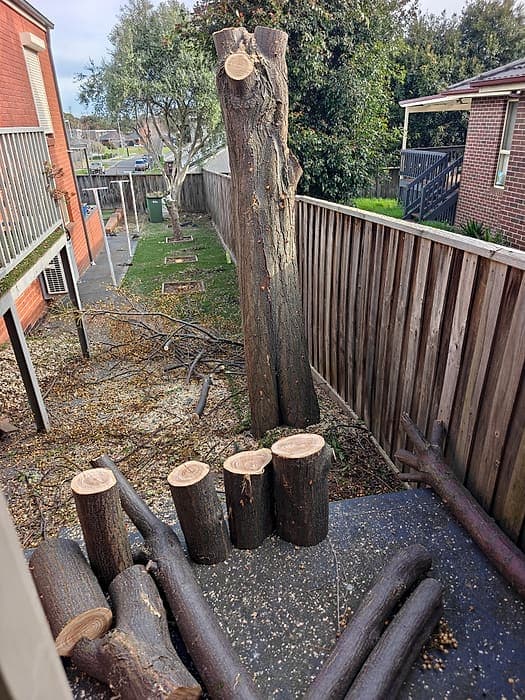
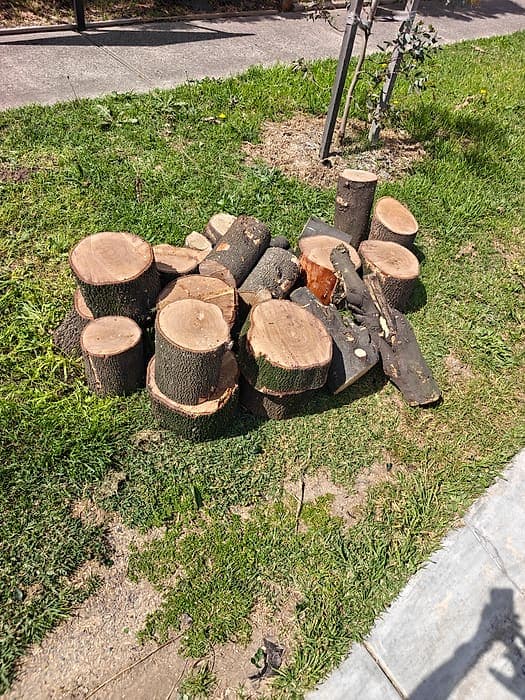
From our jobs
Frequently asked
Does VICSES remove fallen trees from my yard?
Who do I call if a storm brings down a street tree?
My neighbour's tree fell onto my property in a storm. What do I do?
Can I cut up a storm-damaged tree myself with a chainsaw?
Should I wait for my insurer before booking tree removal?
Is a tree that lost a big limb in a storm still safe to keep?
How soon after a storm can I clean up fallen branches?
Sources and further reading
- When to call VICSES (Victoria State Emergency Service)
- Trees and vegetation, frequently asked questions (Energy Safe Victoria)
- A guide to home insurance claims, fact sheet (Insurance Council of Australia)
- Working safely with trees (WorkSafe Victoria)
- Why living trees suddenly fall down (Sustainable Gardening Australia)
- Pruning or removing a tree on private property (City of Whittlesea)
- Victorian warnings (Bureau of Meteorology)
Caring for Melbourne gardens since 2019. Updated 18 November 2026.