


Trees and stumps guide
Arborist or gardener: who should do your tree work?
By the Action Garden team · Updated · 12 min read
Checked against: training.gov.au, Merri-bek City Council, City of Whittlesea, Maroondah City Council, Energy Safe Victoria, WorkSafe Victoria, Consumer Affairs Victoria
TL;DR
- Gardeners look after hedges, shrubs, roses, fruit trees and small ornamental trees that can be pruned safely from the ground.
- Arborists are trained tree workers; the national Certificate III in Arboriculture covers climbing, elevated platforms, cranes and tree dismantling.
- Councils that ask for an arborist report usually want a consulting arborist with a Diploma (AQF Level 5) qualification.
- Ladders, chainsaws above shoulder height, limbs over roofs or fences, and anything near a power line all point to an arborist.
- Ask any tree contractor about qualifications, insurance, the pruning standard they follow and the council permit check before work starts.
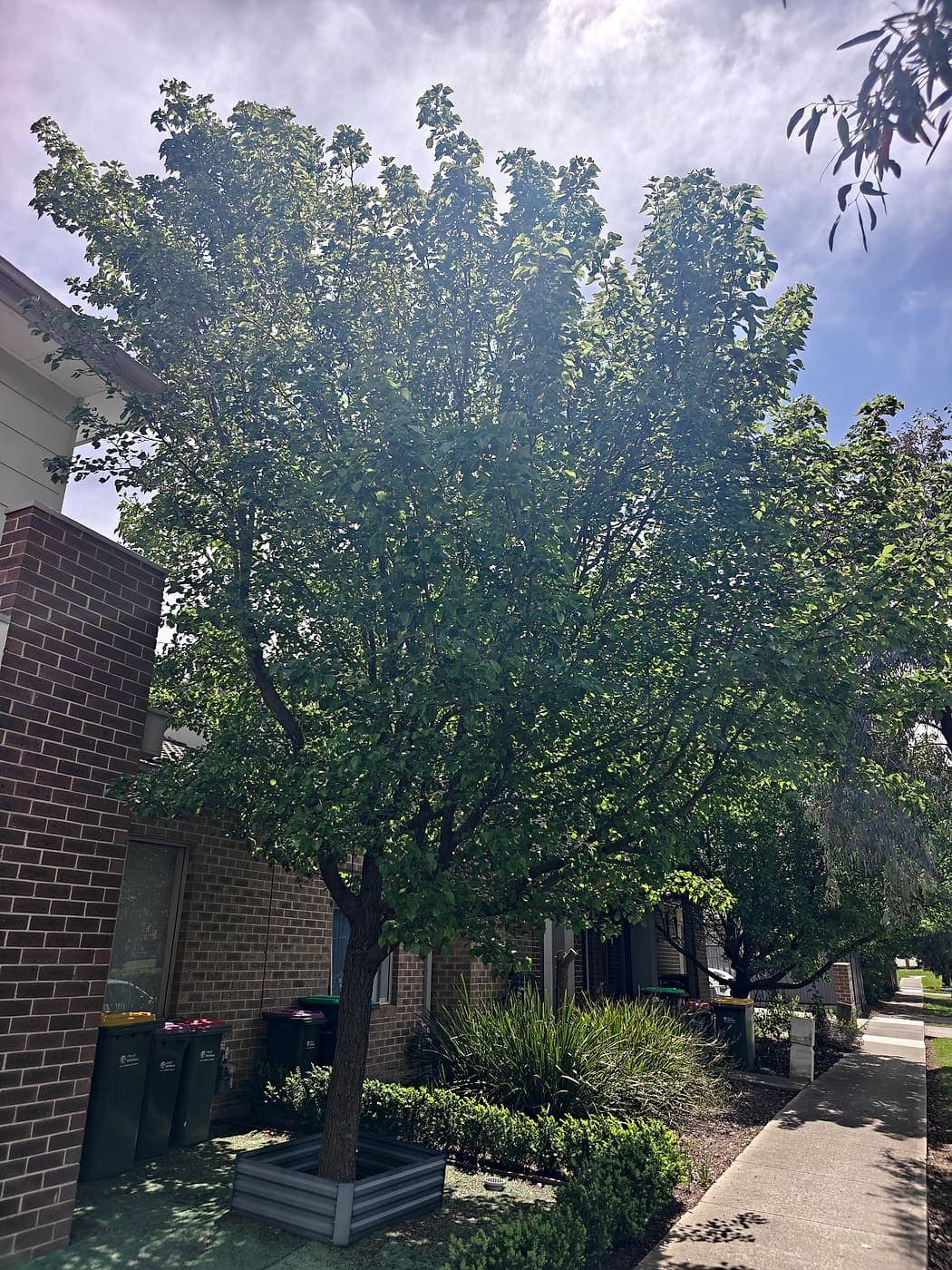
Who should do your tree work: an arborist or a gardener?
It depends on the size of the tree, the height of the cut and what is at stake. A gardener is the right person for hedges, shrubs and small trees pruned from the ground; an arborist is the right person once the work needs climbing, a chainsaw at height, ropes to lower branches, or an expert opinion on a tree's health or safety.
The line is not about how important the tree is. A prized Japanese maple at head height is gardener's work; an ordinary gum with one dead limb over the roof is arborist's work. Height, weight and risk decide it.
Side by side
Arborist or gardener at a glance
| Gardener | Arborist | |
|---|---|---|
| Typical plants | Hedges, shrubs, roses, climbers, fruit trees and small ornamental trees | Medium and large trees, palms, gums, any tree over a structure |
| How the work is done | From the ground, with secateurs, loppers, pruning saws and hedge trimmers | Climbing on ropes, from an elevated platform or crane, with chainsaws and rigging |
| Training | Horticulture skills and experience | Certificate III in Arboriculture for tree workers; Diploma for consulting arborists |
| Assessments and reports | Not their role | Consulting arborists assess health, structure and risk and write reports for councils |
| Near power lines | Not near lines | Only trained, authorised people within regulated distances |
| Typical result | A tidy garden, shaped hedges and healthy shrubs | Deadwood removed, crowns lifted, thinned or reduced, trees dismantled and removed |
Most households need both over time. The gardener keeps the garden in shape all year; the arborist comes in every few years for the trees that have grown beyond reach. Our tree trimming guide for Melbourne explains the main types of tree work in more detail.
What does an arborist actually do?
An arborist is a tree specialist trained to prune, assess, dismantle and remove trees safely. The work covers everything from pruning a young street tree to taking a 20 metre gum down in sections over a house.
The national qualification for practical tree work is the AHC30820 Certificate III in Arboriculture. Its description covers trade-level roles including climbing arborist, elevated work platform arborist, crane specialist, environmental arborist and works coordinator. It lists shaping and canopy management, tree health and remediation, habitat work and tree dismantling and removal, and notes that the work involves high-risk operations at height.
Typical arborist jobs in a Melbourne garden:
- Deadwooding: removing dead, dying and broken branches from the canopy.
- Crown lifting: removing lower branches to clear a roof, driveway or path.
- Crown thinning: removing selected branches to let light and wind through.
- Crown reduction: shortening a tree's height or spread back to suitable junctions.
- Clearance pruning: keeping branches off roofs, gutters and the service line to the house.
- Removal: taking a tree down in sections, lowering heavy pieces on ropes.
- Assessment: judging whether a tree, or one part of it, is likely to fail.
Working arborist and consulting arborist: what is the difference?
A working arborist does the physical tree work. A consulting arborist assesses trees and writes reports, often for council permits, planning applications, building sites and disputes, and does not usually do the cutting for the same job.
Councils set the bar for reports. Merri-bek says the arborist writing a report should hold an AQF Level 5 (Diploma) qualification or higher, and Whittlesea asks for an arborist report by a Level 5 qualified arborist when a tree is to be removed or lopped for health or stability. Maroondah recommends an arborist who understands risk assessment and holds, preferably, at least a Certificate V in Arboriculture.
What tree work can a gardener do?
A gardener can prune hedges, shrubs and small trees whenever every cut is within safe reach from the ground and the branches are light enough to handle. That covers a large share of the "tree" work in a typical suburban garden.
Jobs that usually sit with gardeners:
- Hedges and screens, including lilly pilly, viburnum, photinia and murraya, trimmed to shape.
- Shrubs and small ornamentals, such as crepe myrtle, Japanese maple, frangipani and dwarf fruit trees kept to head height.
- Fruit trees pruned for size and fruiting, on dwarf and semi-dwarf rootstocks.
- Suckers and water shoots at the base of trees and on ornamental plums and pears.
- Low dead twigs that can be reached from the ground with a pole pruner.
- The clean-up after tree work: raking, mulching, replanting and lawn repair.
For hedges, Action Garden's own team handles hedge trimming and pruning as part of its regular garden work.
Where is the line between the two?
The line is crossed as soon as a job brings in height, weight, risk to property or people, power lines, or council protection. Any one of those is enough to move the job to an arborist, even on a small tree.
An animated side view of a house, a medium tree and the service line to the roof. A green band fills the space from the ground to about head height and is labelled as gardener work. An amber band rises above it to the top of the tree and is labelled as arborist work. A red zone then pulses around the service line to show that only trained, authorised people work there. A final arrow points from a branch over the roof to the amber band. In the reduced-motion frame the three bands show together with their labels.
| The job involves | Who should do it |
|---|---|
| Any cut that needs a ladder | Arborist |
| A chainsaw above shoulder height | Arborist |
| A limb over a roof, fence, pool, car or neighbour's yard | Arborist |
| Anything near a power line | Your distributor for network lines; trained, authorised workers near the service line to the house |
| A tree with cracks, a new lean, fungi or big dead limbs | Arborist, with an assessment first |
| A tree protected by a council local law or overlay | Check the council rules; a qualified arborist is often required |
| Hedges, shrubs and small trees pruned from the ground | Gardener |
Energy Safe Victoria (opens in a new tab) says you are responsible for keeping trees on your property clear of the service line to your house, and recommends clearing them before they grow within one metre of the line in any direction. Lines outside your boundary are cleared by the electricity distributor. Work close to any line needs people trained and authorised for it, not a gardener with a pole saw.
Why do council rules often point to an arborist?
Because many councils expect pruning of significant or protected trees to meet the Australian Standard, and they ask for a qualified arborist's report before a protected tree is lopped or removed. A gardener can still look after the rest of the garden; the protected tree needs the right person.
Whittlesea is a good example. Its canopy tree controls say pruning by a qualified arborist to AS 4373-2007, the Australian Standard for pruning amenity trees, does not need a permit, while lopping a protected tree does. Other councils have similar rules, and the size thresholds for protection differ widely across Melbourne.
- Check your council's tree local law before any major pruning.
- Check your property's planning overlays, which can protect trees regardless of size.
- Ask the contractor whether they prune to AS 4373 and who checks the permit.
Our guide to tree removal permits in Melbourne shows how to check the rules for your address, and our guide on when to prune trees in Melbourne covers the timing by species.
Lopping versus pruning
Lopping cuts branches back to stubs or a fixed height regardless of where junctions are. The tree responds with a mass of fast, weakly attached shoots from just below each cut, and the stubs often decay.
Proper pruning removes a branch back to a junction or the branch collar, so the tree can seal the wound and keep its natural shape. This is why many councils treat lopping as a regulated act on protected trees, and why it is worth asking any contractor how they cut.
Which Melbourne trees usually need an arborist?
Large native trees, especially eucalypts, nearly always need an arborist, and so do fast-growing exotics that have reached roof height. These are also the trees most likely to be protected by a council.
| Tree | Why it usually needs an arborist |
|---|---|
| Eucalypts and gums | Height, heavy limbs, and summer branch drop; often protected |
| Liquidambar and plane trees | Large crowns over roofs and gutters; roots near paths |
| Pines and cypress | Height, weight and resin; often grown as tall windbreaks |
| Palms | Fronds and seed heads at height; climbing or a platform needed |
| Desert ash, poplar, willow | Fast growth and weak wood; frequent suckering |
| Old fruit trees grown tall | Brittle wood and decay once they are past their prime |
Gum trees in particular can shed large limbs in hot, still weather. Our article on why gum trees drop limbs in summer explains what is known about it and what to watch for.
Quick decision guide
Do I need an arborist for this job?
- Is the plant a hedge, shrub or small tree you can prune from the ground with hand tools? A gardener is usually right.
- Does any cut need a ladder, a chainsaw at height or ropes? Book an arborist.
- Is the tree near a power line? Contact your distributor for network lines; use trained, authorised workers near the service line.
- Does the tree have cracks, a new lean, fungi or large dead limbs? Get an arborist assessment first.
- Is the tree protected, or does the council want a report? You need a qualified arborist, and for reports a consulting arborist at Diploma level.
What should you ask before booking tree work?
Ask about qualifications, insurance, method and paperwork, whoever you book. Consumer Affairs Victoria (opens in a new tab) suggests getting the scope clearly defined and in writing, and that applies to tree work as much as building work.
- Qualifications. Who will climb or operate the chainsaw, and what arboriculture qualification do they hold?
- Insurance. Do they hold public liability insurance, and can you see the certificate of currency?
- Pruning standard. Do they prune to AS 4373, and will they avoid lopping?
- Permits. Will they check the council rules before work, and who lodges any application?
- Method. How will the branches be lowered, and how will roofs, fences and lawns be protected?
- Clean-up. Are the branches chipped and removed, or is the chip or timber left for you?
- Written quote. Does it list each tree and exactly what will be done to it?
WorkSafe Victoria (opens in a new tab) notes that workers in the tree industry are killed or seriously injured each year, and lists overhead power lines, working at height, chainsaws, falling objects and wood chippers among the hazards. A contractor who can explain how they manage each of those is a good sign.
How do strata and rental properties change who you call?
On shared and rented properties the main question is often who is responsible, not who does the work. Trees on common property belong to the owners corporation, so tree work goes through the committee or manager, and in a rental the split between renter and rental provider decides who books it.
For owners corporations, a gardener on a regular plan often keeps hedges and shrubs in order, with an arborist booked separately for large trees. Our article on trees on common property covers how to plan tree work with an owners corporation.
If a tree on any property has to come out, the gardener's role returns after the arborist leaves: grinding is followed by soil, turf or new plants. Our guide to replanting after stump grinding covers that step.
How does Action Garden handle tree work?
Action Garden's own team looks after lawns, garden beds, hedges, gutters, rubbish and pressure cleaning, and the same team does tree trimming, tree removal, shaping and stump grinding. You deal with one business from the first message to the clean-up, and every tree job is quoted after a site visit and a council permit check.
Action Garden is insured for the tree work it does. The team assesses each tree on site before quoting, but does not write arborist reports; if your council asks for one, you engage a consulting arborist for it.
More guides on trees and stumps are on the trees and stumps topic page. When you are ready, you can get a free quote and mention the trees in the comments.
Your Garden. Our Promise.
From our jobs
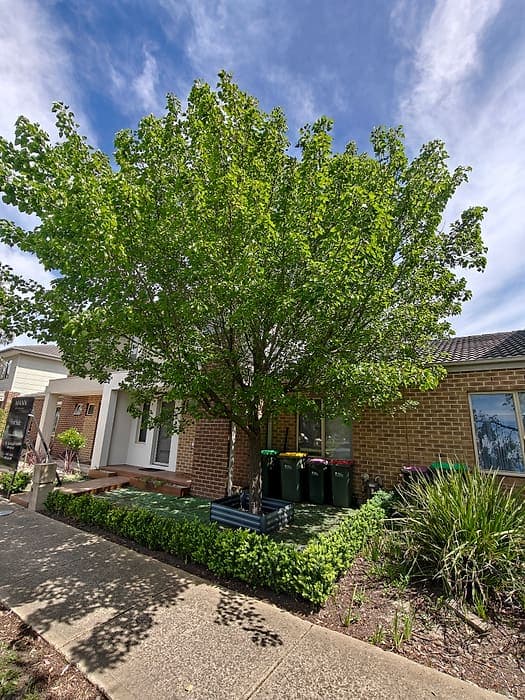
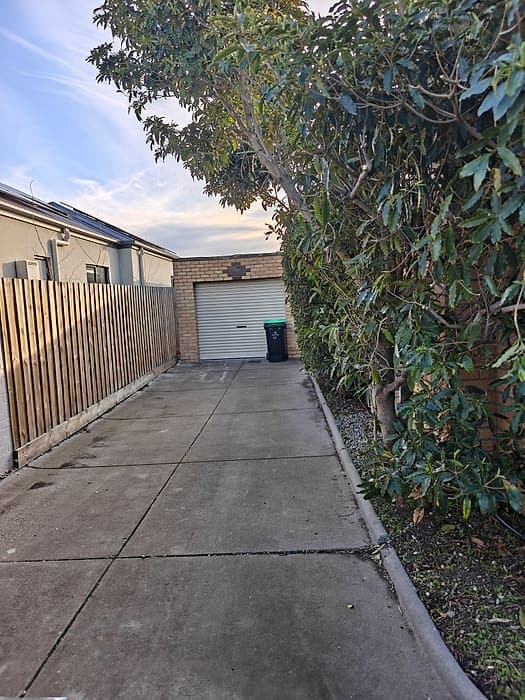
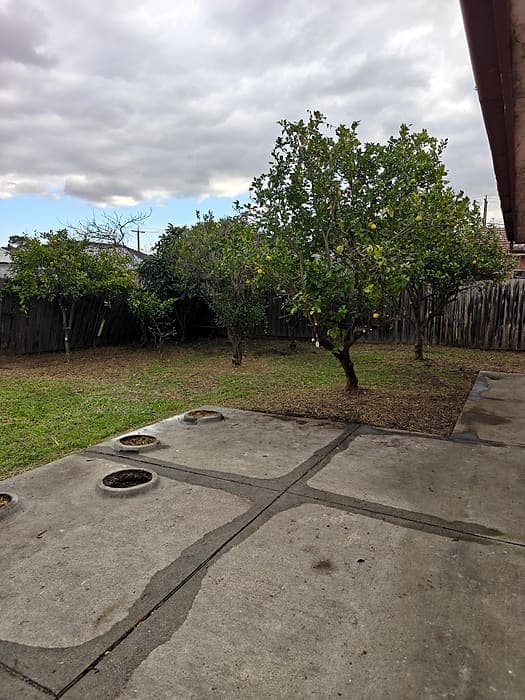
Frequently asked
What qualification should a tree worker have in Victoria?
Is a tree lopper the same as an arborist?
Do I need an arborist report or just a quote for tree work?
Can a gardener remove a small tree?
Who should cut back a hedge that has grown into a row of trees?
What should I ask a tree contractor before booking?
Can an arborist also do the garden clean-up afterwards?
Sources and further reading
- AHC30820 Certificate III in Arboriculture, qualification details (training.gov.au)
- AHC50520 Diploma of Arboriculture (training.gov.au)
- Trees on private property (Merri-bek City Council)
- Pruning or removing a tree on private property (City of Whittlesea)
- Is that tree dangerous? (Maroondah City Council)
- Trees and vegetation, frequently asked questions (Energy Safe Victoria)
- Working safely with trees (WorkSafe Victoria)
- Getting quotes (Consumer Affairs Victoria)
Caring for Melbourne gardens since 2019. Updated 18 November 2026.