


Green waste and rubbish guide
Clearing the garden of a family home after a loss or a move into care
By the Action Garden team · Updated · 11 min read
Checked against: Supreme Court of Victoria, Victoria Legal Aid, Office of the Public Advocate, Victorian Government, Asbestos in Victoria, Better Health Channel, EPA Victoria, Paintback drop-off for unwanted paint, Water Victoria
TL;DR
- Check who can make decisions first, the executor or administrator after a death, or the attorney while the person is alive in care.
- Walk the garden together before any clearing, and mark the plants, ornaments and tools the family wants to keep.
- Old sheds hide garden chemicals, gas bottles and fibro; set them aside for the right collection and never bin them.
- Sort everything into keep, give away, recycle and dispose piles, then measure what is left before you book a route.
- Leave the garden mown, trimmed and safe for an empty house, and set a simple upkeep cycle until it is sold or let.
What does clearing a family home's garden involve?
It is a sequence of decisions before it is a sequence of jobs: who can decide, what the family keeps, what is unsafe, and only then what leaves and how. Getting the order right protects the plants and keepsakes people care about, and stops a skip from taking something that cannot be replaced.
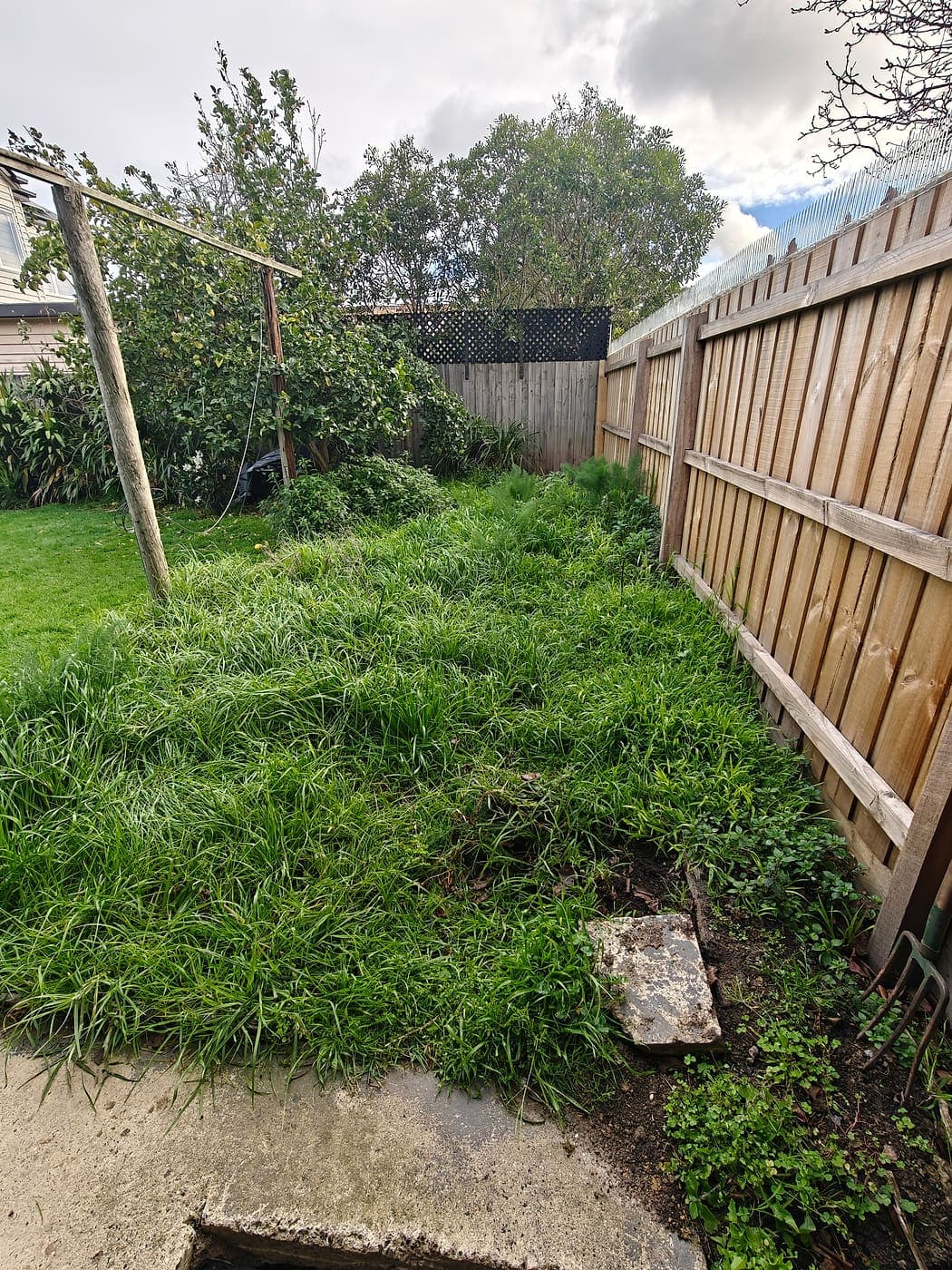
A garden that one person has tended for decades holds more than plants. There may be a rose grown from a cutting of a grandparent's bush, a shed full of tools collected over a lifetime, and pots, ornaments and edging that carry memories. There is usually also an overgrown corner, a pile of old prunings, and a shelf of chemicals nobody has looked at in years.
This checklist is for families and executors clearing that garden, whether the home is being sold, let, handed over or simply left empty for a while. For every disposal route in detail, see our complete guide to garden rubbish removal in Melbourne.
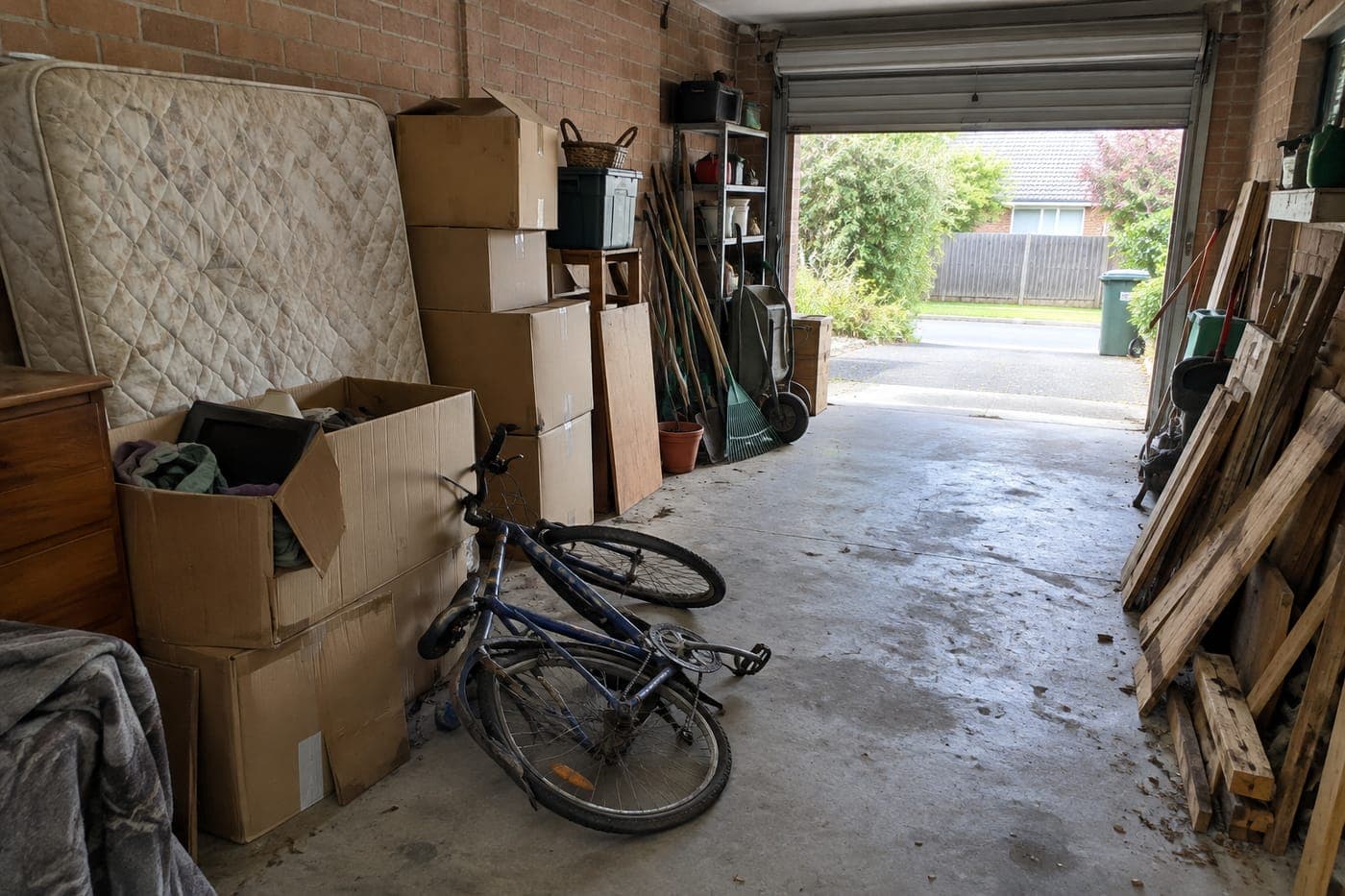
A path runs through a garden in four zones from left to right. In the first, two people stand with a notebook beside a shed, a small key and a document icon above them for "who decides". In the second, name tags hang from a rose bush, a pot and a bench, with a pair of secateurs taking a cutting. In the third, the shed door is open and three items glow with warning outlines: a rusty chemical tin, a gas bottle and a grey fibro sheet, each with an arrow off the path. In the fourth, four tidy piles are labelled keep, give, recycle and dispose, and the lawn behind them is freshly mown.
Who has the authority to clear the garden?
Start by confirming who can make decisions about the property and its contents. After a death, that is usually the executor named in the will, or an administrator appointed by the court if there is no will or no executor. While a person is alive in care, it is the person, or their attorney if they can no longer decide.
The Supreme Court of Victoria's Probate Office (opens in a new tab) describes an executor as "a person appointed by the will to administer the estate", and notes "there is no automatic requirement to apply for probate when someone dies". When the family cannot agree on who takes what, Victoria Legal Aid's wills and estates information (opens in a new tab) is a good place to start. We do not give legal advice on estates.
When the person has moved into aged care, the situation is different. The house and garden are still theirs, and the Office of the Public Advocate (opens in a new tab) explains how an enduring power of attorney works if they can no longer manage their affairs.
Practical points to settle before clearing:
- Who signs off. One person should approve what leaves the property, so nothing is removed that another family member expected to keep.
- Who holds the keys. Agree who lets workers in, and where any lockbox or gate code lives.
- Insurance. Many home insurance policies have conditions for a house that is left unoccupied. Read the policy and tell the insurer the house is empty.
- Timing. If a sale or a lease is planned, work back from the date the photos or inspections happen.
What should the family do before anything is removed?
Walk the garden together, photograph it, and tag what people want to keep. This is the step that is most often skipped, and it is the one families regret skipping, because once a pile goes on a truck there is no getting it back.
- Photograph the whole garden as it is. Wide shots from the back door and the street, and close-ups of favourite plants, the vegetable patch, the shed and any ornaments.
- Walk it together. Even a video call walk-through for family who live interstate helps.
- Tag what people want. A plastic plant tag or a strip of tape with a name on each pot, plant, ornament or tool.
- Write a short list. Who wants what, and when they will collect it. Set a date after which untagged items can go.
- Note what is unknown. Unlabelled tins, odd sheeting, buried edging and anything nobody recognises goes on a separate list for the safety check.
How do you save sentimental plants before the house changes hands?
Take cuttings or divisions in the right season, pot up small plants, and only try to move large ones when they are dormant. A cutting of a much-loved plant is far more likely to survive than a forty-year-old shrub dug out in a hurry.
| Plant | Best way to keep it | Best time in Melbourne |
|---|---|---|
| Roses | Hardwood cuttings, or lift the whole bush when dormant | Winter |
| Camellias, azaleas, daphne | Semi-hardwood cuttings; small plants can be lifted with a root ball | Late summer to autumn |
| Perennials and bulbs (agapanthus, clivia, iris, daffodils) | Divide clumps or lift bulbs | Autumn, or after flowering |
| Succulents and geraniums | Snap off a piece, let it dry, pot it up | Most of the year |
| Fruit trees and citrus | Ask a nursery about grafting a new tree from it; moving an old tree rarely works | Winter for deciduous fruit trees |
| Herbs and vegetables | Collect seed or take a pot of the herb | When seed is ripe |
| Potted plants | Move the pot itself | Any time, watered the day before |
Taking cuttings that actually strike
Cut a healthy, non-flowering shoot about the length of a hand, just below a leaf node. Strip the lower leaves, push it into a pot of free-draining propagating mix, and keep it moist and out of hot sun. Several cuttings of each plant give you a much better chance than one.
Label every pot with the plant name and where it came from. A cutting from a parent's garden is easy to lose track of once it is sitting among other pots at someone else's house.
If a sale is planned, check the contract before removing established plants. Buyers may reasonably expect the garden they saw at inspection, and fixtures in the garden can be part of what is sold. That is a question for the agent or the conveyancer, not the gardener.
What hazards turn up in an older family garden?
Old garden chemicals, gas bottles, paint, possible asbestos, treated timber and, in warm weather, snakes in long grass. A shed that has not been cleared in decades can hold products that are no longer sold, in containers that have rusted or lost their labels.
Common finds and where they go:
| Find | What to do | Where it goes |
|---|---|---|
| Weed killers, pesticides, snail bait, pool chemicals | Keep sealed and upright; do not mix or tip out | Household chemical collection |
| Mower fuel, oils, solvents | Keep in the original container, lid on | Household chemical collection |
| Gas bottles from barbecues and heaters | Do not put in any bin or skip | Bottle exchange or a collection that accepts them |
| Paint tins | Lids on, tins upright | Paintback drop-off |
| Fibro sheeting, old fence panels, sheds, eaves | Do not break, cut, sweep or bag | Licensed asbestos removalist |
| Treated pine sleepers and old painted timber | Never burn, chip or mulch | Landfill as industrial waste |
The Victorian Government (opens in a new tab)'s Detox Your Home collections (opens in a new tab) take garden herbicides, pesticides, fertilisers, pool chemicals, fuels and solvents in containers no larger than 20 kg or 20 L. Paintback (opens in a new tab) takes leftover paint. EPA Victoria (opens in a new tab) says treated timber needs to be separated from untreated timber, and that only untreated timber can go back on the land as mulch.
If the house or shed was built or renovated before about 1990, treat fibrous grey sheeting, old garden edging, broken pipe and shed walls as possible asbestos. Asbestos in Victoria (opens in a new tab) lists sheds, fences and eaves among the places it is found. Better Health says the only way to be certain is to have a sample tested by an accredited laboratory. Do not move it; call a licensed asbestos removalist. In long grass in warm weather, back away from any snake, keep children and pets clear, and call an authorised snake catcher. Our guide to asbestos and chemicals in the garden explains who to call for each.
How do you sort what stays and what goes?
Make four piles: keep, give away, recycle and dispose. Everything the family tagged goes to keep, usable items nobody wants go to give away, metals and e-waste go to recycle, and only what is left goes to dispose.
- Keep: tagged plants, cuttings, pots, ornaments and tools, moved somewhere dry and out of the way until they are collected.
- Give away: good tools, pots, wheelbarrows, hoses, outdoor furniture and garden books. Neighbours, community gardens, schools and men's sheds often welcome them.
- Recycle: scrap metal such as old frames, wire and corrugated iron, plus e-waste such as power tools, batteries and old mowers, kept separate for the right drop-off.
- Dispose: broken furniture, rotten timber, worn-out hoses and pots, and the green waste from the clear-out itself.
Sorting on site matters because a mixed pile is slower and harder to clear than a sorted one, and most routes refuse something. Measure each disposal pile in cubic metres before you book anything; our guide to estimating green waste and rubbish volume shows how to measure a heap.
When the family cannot agree
Disagreements about a garden are rarely about the plants. If two people want the same item, set it aside and leave the decision to the executor or the person in care. Keep the photos and the tag list, so everyone can see what was there and where it went.
If the dispute is about the estate itself, it is a legal question. Victoria Legal Aid (opens in a new tab)'s wills and estates information explains the options, and the clear-out can wait for the more valuable items while ordinary upkeep carries on.
Which disposal route suits each pile?
Match each pile to its route, from smallest to largest. Soft green waste goes in the FOGO bin over a few collections, branches and hard waste can go to a council booking, and large or mixed loads go with a skip or a removal service.
| Route | Suits | Watch out for |
|---|---|---|
| FOGO or green bin | Soft prunings, leaves, weeds, a few collections' worth | Bin limits, and seeding weeds your council asks you to bag |
| Council hard rubbish booking | Furniture, some metal, bundled branches | Allowances and accepted items differ by council |
| Tip run | A trailer load of sorted material you can lift safely | Separate areas for each stream at the transfer station |
| Skip | Several days of loading by the family | What the hire company refuses, and where the skip sits |
| Removal service | Large, mixed or bulky piles, or a deadline | Describe chemicals and suspected asbestos up front |
Council collections are a good fit for a few items, but a whole family garden often runs over the allowance. Our guide to council hard rubbish or private removal compares the two, and branches, palm fronds and stumps are covered in the guide to bulky garden waste.
Burning is rarely the answer. Our post on burning off garden waste in Melbourne explains why most suburban blocks cannot do it.
Clearing from interstate or overseas
When no family member lives nearby, the clear-out is usually done in two or three visits around a single trip. A video walk-through with someone on site does the tagging, the photos do the record keeping, and a clear sign-off list tells the team what goes and what stays.
Leave the keep pile in one locked place, such as the garage, with a list on the door. That way nothing tagged is removed by mistake while the family is away.
How should the garden be left once the clear-out is done?
Leave it looking cared for, safe and easy to maintain. An empty house with long grass, full gutters and mail in the letterbox looks empty, and that matters for security, for insurance and for buyers or tenants who see it next.
- Mow and edge the lawn, and trim hedges back from paths, windows and the front fence.
- Clear paths and steps of moss, leaves and trip hazards.
- Check the gutters, which fill quickly in an autumn with nobody living there.
- Remove dead plants but keep healthy trees, hedges and established beds.
- Set the watering. Turn off a system that is no longer needed, or check it runs only inside the permanent water saving rules (opens in a new tab), which allow watering systems from 6pm to 10am.
- Set an upkeep cycle until the property is sold, let or handed over.
How to keep an empty house looking lived in, week to week, is covered in our post on keeping a vacant house garden cared for.
Is it worth handing the clear-out to a team?
It can be, once the family has walked the garden, tagged what matters and settled who signs off. Deceased estate clean-outs are part of our rubbish removal service: our team loads and removes garden waste, furniture, appliances and general clutter, with green waste taken to the council tip or transfer station and a sweep and tidy afterwards. A regular mow and trim can follow until the house changes hands.
More guides like this are in our green waste and rubbish guides. Send a photo of each pile, or a short video of the garden, and get a free quote.
Your Garden. Our Promise.
From our jobs
Frequently asked
Can family members start clearing the garden before probate is granted?
Who decides about the garden when a parent has moved into aged care?
How do we move a much-loved rose or camellia from a parent's garden?
What do we do with old weed killers found in a parent's shed?
Should the garden be cleared completely before the house is sold?
How long does it take to clear the garden of a family home?
Is it safe to burn a parent's garden prunings during the clear-out?
Sources and further reading
- Probate Office FAQs (Supreme Court of Victoria)
- Wills and estates (Victoria Legal Aid)
- Power of attorney (Office of the Public Advocate)
- Detox Your Home household chemical collections (Victorian Government)
- Where is asbestos (Asbestos in Victoria)
- Asbestos in the home (Better Health Channel)
- Manage and dispose of treated timber (EPA Victoria)
- Paintback drop-off for unwanted paint
- Living with snakes fact sheet (Victorian Government)
- Permanent water saving rules (Water Victoria)
Caring for Melbourne gardens since 2019. Updated 18 November 2026.