


Green waste and rubbish guide
Council hard rubbish or private removal: which suits your job?
By the Action Garden team · Updated · 11 min read
Checked against: City of Whittlesea, Darebin City Council, Glen Eira City Council, Merri-bek City Council, Moonee Valley City Council, EPA Victoria
TL;DR
- Council hard rubbish suits furniture and household junk that fits the volume limit, the accepted items list and a wait of up to four weeks.
- Many Melbourne councils refuse garden waste in hard rubbish and run a separate bundled branch booking, or none at all.
- A private removal suits loose green waste, mixed piles, tight deadlines, piles at the back of the block and anything over the council limit.
- You can combine both, with the council taking eligible junk and a removal service taking the green waste and the rest.
- Whoever takes it, hazardous items such as asbestos and chemicals need their own official route, never hard rubbish or a general load.
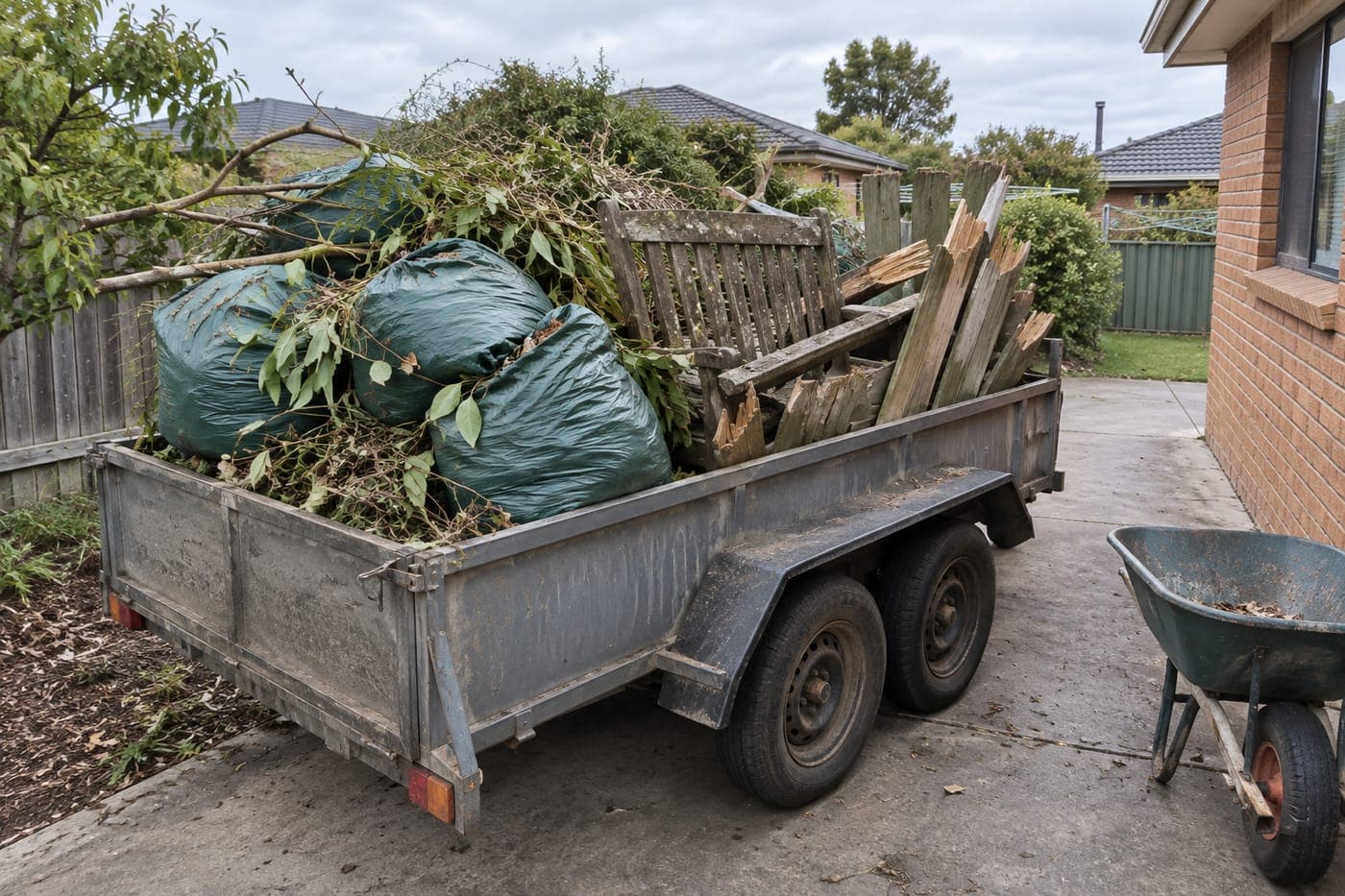
What is the difference between council hard rubbish and a private removal?
A council hard rubbish collection is a booked kerbside pick-up, run by your council's contractor, for a set volume of accepted household items. A private removal is a business you hire to load and take away a pile from wherever it sits, on a day you agree. The council route is part of your property's waste service; the private route is a job quoted on the pile.
The difference that matters most is not who drives the truck. It is what each will take, how much, how soon, and who does the carrying. Council collections come with rules on all four, and those rules are set council by council across Melbourne.
A private removal works the other way round. You describe or photograph the pile, the operator tells you what it can take, and the crew does the lifting. Our complete guide to garden rubbish removal in Melbourne covers every route for a pile, from the FOGO bin to a removal service; this guide narrows it to the choice between these two.
How do council hard rubbish collections work in Melbourne?
Most Melbourne councils now run booked collections: you book online or by phone, wait for a date, put items out in the window the council gives, and the contractor collects them. Each council sets its own number of collections, volume limit, accepted items and placement rules. Your rates notice tells you which council you are in.
The rules differ more than most people expect. The table below shows five councils as their own pages read in November 2026. They change, so treat this as a picture of the variety, not a rule for your street.
| Council | Collections | Volume limit | Garden waste in hard rubbish? | Where items go |
|---|---|---|---|---|
| Whittlesea (opens in a new tab) | Up to two per financial year | 3 cubic metres (3 m x 1 m x 1 m) | Not accepted | Nature strip, no earlier than the night before |
| Darebin (opens in a new tab) | One booked collection per financial year | 2 cubic metres | Bundled or bagged garden organics and loose clippings not accepted | Nature strip, by 6am Monday of the collection week |
| Glen Eira (opens in a new tab) | Up to three per financial year | 4 cubic metres | Not accepted; separate bundled branch bookings | As the council booking instructs |
| Merri-bek (opens in a new tab) | A 2 cubic metre annual allocation | 2 cubic metres a year | Bundled branches tied with natural fibre, booked from the same allocation | Nature strip, by 6am Monday of the collection week |
| Moonee Valley (opens in a new tab) | Two per financial year | 2 cubic metres each | Check the council's accepted list | Within 5 m of the front boundary, not on the nature strip |
Lead times are the other big variable. Whittlesea asks residents to allow up to four weeks, Darebin says a date could be four weeks from booking, and Merri-bek usually needs two to four weeks' notice.
What do councils usually refuse in a hard rubbish collection?
Councils usually refuse garden waste, building and renovation materials, soil and rubble, chemicals and paint, gas bottles, batteries, asbestos, and anything too big or heavy for two people to lift. The exact list is on your council's page, and a pile with refused items in it can be left behind.
The refused lists from the councils above overlap heavily. These items come up again and again:
- garden waste: loose clippings, leaves, bagged prunings and, in some councils, any garden organics at all;
- building materials: concrete, rubble, soil, rocks, fence palings, corrugated sheeting and renovation offcuts;
- hazardous items: asbestos, paint, chemicals, gas bottles, batteries and, in some councils, anything with a plug, cord or battery;
- oversized or heavy items: Merri-bek and Darebin want items under 1.5 metres long and liftable by two people, and Darebin refuses single items over 30 kg;
- general rubbish: bagged household waste and kerbside recycling.
A typical garden clean-up hits several of these at once. Prunings, old edging, a broken birdbath, half a pallet of pavers and a bag of potting mix can all be refused by a council collection, even though they came out of the same backyard. Each of those materials has its own best route, and our green waste and rubbish guides cover them one by one.
Why a council pile gets left behind
The common reasons are predictable. Items went out without a booking or before the window opened. The pile was bigger than the booked volume, often because neighbours added to it overnight. Refused items were mixed in, or branches were loose instead of bundled.
Some councils mark a refused pile with a notice and leave it for you to clear. Darebin says excess waste must be removed within 24 hours of the collection. A refused pile on the nature strip is still yours, so plan a fallback before you put it out.
How do council hard rubbish and private removal compare side by side?
Council hard rubbish wins on simplicity for small piles of eligible junk when time is not tight. Private removal wins on flexibility: what it takes, how much, from where, and how soon. The table sets the two against the questions that usually decide it.
Side by side
Council hard rubbish and private removal
| Question | Council hard rubbish | Private removal |
|---|---|---|
| What it takes | The council's accepted list only; garden waste often refused | Garden waste, furniture, appliances, building debris and general clutter, depending on the operator |
| How much | A fixed volume, often 2 to 4 cubic metres | Quoted on the pile, any size of job |
| How soon | A booked date, often two to four weeks away | Same-day or scheduled, depending on the operator |
| Who carries it | You, to the nature strip or front boundary | The crew, from wherever the pile sits |
| Sorting | You sort out refused items first | The operator sorts for recycling where possible |
| Mess afterwards | Whatever the truck leaves on the strip | A sweep and tidy, if it is part of the job |
| Hazardous items | Refused | Refused by most general operators; need their own route |
| How often | Limited bookings per financial year | Whenever you need it |
Neither option takes asbestos or chemicals as part of a normal load. Those go to a licensed asbestos removalist or a Detox Your Home collection, as the pillar guide explains.
A two-lane diagram. A pile of rubbish sits at the top, and four gates run down the page: "Is it on the council's accepted list?", "Does it fit the volume limit?", "Can it wait for the booked date?" and "Can you carry it to the kerb?". A pile that passes every gate drops into the council lane, drawn as a truck on the nature strip. A pile that fails any gate slides across to the private removal lane, drawn as a crew loading from the backyard. A small side path in a warning tone sends hazardous items to their own official route.
When is a council hard rubbish collection the better choice?
The council collection is the better choice when the pile is household junk on the accepted list, it fits the volume limit, you can wait for the booked date, and you can safely carry everything to the kerb. Old outdoor furniture, a broken barbecue frame or a few boxes of odds and ends from the shed are the classic fit.
It also suits people who plan ahead. If you book early in the financial year, you can use the collection for the bulky items and keep the rest of the clean-up small enough for your green bin. Councils that offer two or three collections a year let you spread a big clear-out over several months.
The council route is a poor fit when the clock is running. An end of lease, a settlement date or a sale campaign rarely lines up with a booking four weeks away, and a pile left on the nature strip during an open for inspection is not the look anyone wants.
Getting the most out of a council booking
Read the accepted list twice and take a photo of your pile before you put it out. Tape and tie doors on furniture, wrap glass as the council instructs, and keep recyclable metal in its own pile if your council asks for that.
Put items out only in the window, keep them off the road and footpath, and leave a clear path for pedestrians. If neighbours are likely to add to the pile, put it out as late as the rules allow, because extra items can push it over the limit.
When does a private removal make more sense?
A private removal makes more sense when the pile is mostly garden waste, mixed with items the council refuses, bigger than the volume limit, hard to reach, or due to be gone by a fixed date. It also suits anyone who cannot safely lift and carry heavy items to the kerb.
These are the situations where a private removal is usually the better fit:
- The pile is green waste. Hedge cut-backs, a garden rescue or an autumn leaf clear-out produce volumes that hard rubbish refuses and a green bin takes weeks to clear.
- It is mixed. Prunings, old pavers, timber edging and furniture together would need three or four separate routes.
- It is over the limit. A shed clear-out or a deceased estate garden often runs well past 2 to 4 cubic metres.
- The access is hard. Steps, a narrow side path or a pile at the back of a long block mean a lot of carrying before anything reaches the kerb.
- There is a deadline. End of lease, settlement, a sale campaign or guests arriving.
- It follows storm damage. After the wind, the pile is mostly branches, and waiting a month is not practical. Our order of jobs for a garden clean-up after a storm covers what to do first.
For green waste that comes in a steady flow rather than one big pile, the routes that cost you nothing extra come first: the FOGO bin, home compost and a bundled branch booking. Our guide to green waste disposal options in Melbourne compares them, and burning is rarely one of them; the post on burning off garden waste explains why.
Quick decision guide
Council collection or private removal?
- Could anything in the pile be asbestos, chemicals or batteries? Set those aside for their own official route first.
- Is most of the pile garden waste? Check whether your council runs a bundled branch booking; if not, or if the waste is loose, use a private removal.
- Is everything left on your council's accepted list? If not, a private removal or a split job.
- Does it fit your council's volume limit? If not, book the council for what fits and arrange removal for the rest.
- Can it wait two to four weeks, and can you carry it to the kerb? If yes, book the council. If no, use a private removal.
Can you use council hard rubbish and a private removal on the same clean-up?
Yes, and for large clean-ups it is often the most sensible plan. Book the council collection for the eligible household junk, and have a removal service take the green waste, the refused items and anything over the limit. The trick is to sort the pile early so each part goes the right way.
A split job works best in this order:
- Sort the whole pile into green waste, accepted hard rubbish, refused items and anything hazardous.
- Book the council collection early, because the date is the slow part.
- Arrange the private removal for the rest, ideally before the council date so nothing refused ends up on the strip.
- Put the council pile out in the window, measured to the limit.
Our guide to skip bins and rubbish removal for garden clean-ups covers the third option for large, multi-day jobs. Soft waste that is left over can keep going out in the green bin; the guide to what goes in the FOGO and green bin shows what your council is likely to accept.
Measuring a pile against the council limit
A cubic metre is a box 1 m long, 1 m wide and 1 m high. Picture the smallest box your pile would fit inside, measure its length, width and height, and multiply them. Whittlesea describes its 3 cubic metre limit as 3 m x 1 m x 1 m, which is a useful picture to keep in mind.
Measure after you have stacked and compacted the pile, not before. Loose furniture with gaps between it looks bigger than it is, while a neat stack with doors taped shut takes up much less of the allowance.
How do you check a private removal is done properly?
Ask the operator where the waste is going and for a receipt or record showing it reached a licensed landfill, transfer station or recycling facility. EPA Victoria (opens in a new tab) advises choosing a reputable company and being wary of offers that seem too low, because they can mean the waste is dumped in the bush, a park or a creek.
The law here is plain. EPA Victoria says you break the law if you "dump, abandon or bury any kind of waste at a place not authorised to accept it", including private land, and that waste duties apply to anyone who generates, transports or receives waste. Choosing a careful operator protects your property and the street.
Simple checks before you book:
- the business has an ABN and a real contact number;
- it tells you what it will and will not take before the day;
- it can say where green waste and recyclables go;
- it gives you a written quote and an invoice afterwards;
- it flags anything that needs a specialist, such as suspected asbestos, instead of loading it.
Stop and get specialist help if the pile includes fibro sheeting, old cement pipes, broken roofing or suspect fill: do not break, cut or bag it, and contact a licensed asbestos removalist. EPA Victoria says asbestos waste must go to a landfill authorised to receive it. Heavy items that need two people, piles near power lines, and storm debris still under tension are also worth handing over rather than dragging to the kerb.
What affects a private removal quote, and when is it worth handing over?
A private removal quote depends on the volume, the type of waste, the access and carry distance, and how much sorting is needed for recycling. A photo of the whole pile, with a wheelie bin in shot for scale, is usually enough to quote it accurately.
Our rubbish removal service takes garden waste, furniture, appliances, renovation debris and general clutter, loaded by our team, with a sweep and tidy afterwards. Same-day removal is often possible, and scheduled removal suits planned clean-ups; volume is estimated in trailer loads. Green waste goes to the local council tip or transfer station, where it is disposed of properly and repurposed; it is never dumped. Action Garden does not take paint, gas bottles, batteries, e-waste, asbestos or other hazardous waste that is not accepted in a hard waste collection. Hard rubbish is discussed with you first and quoted as an extra.
If the council booking is weeks away, or half the pile would be refused anyway, that is usually the point to hand the job over. Send a photo of the pile and you can get a free quote with just your name and mobile.
Your Garden. Our Promise.
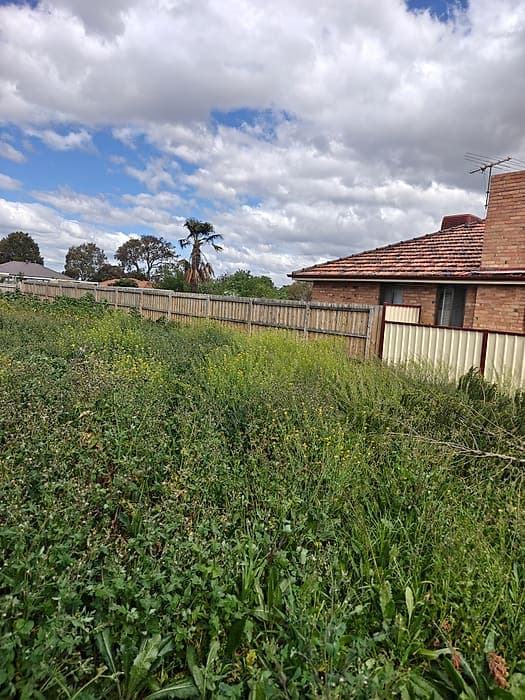
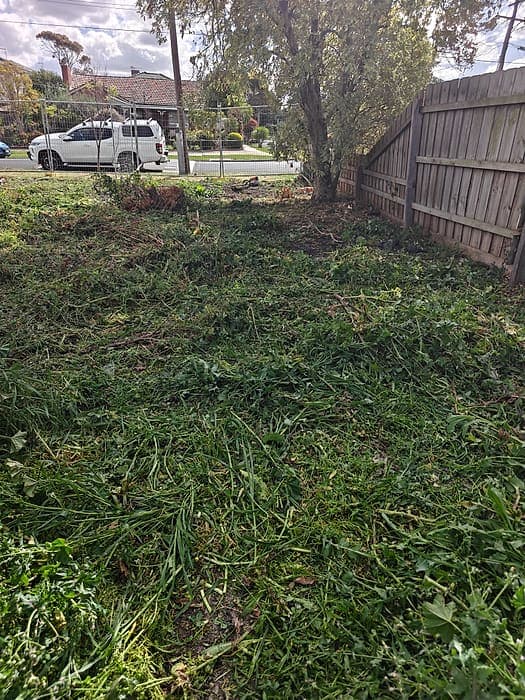
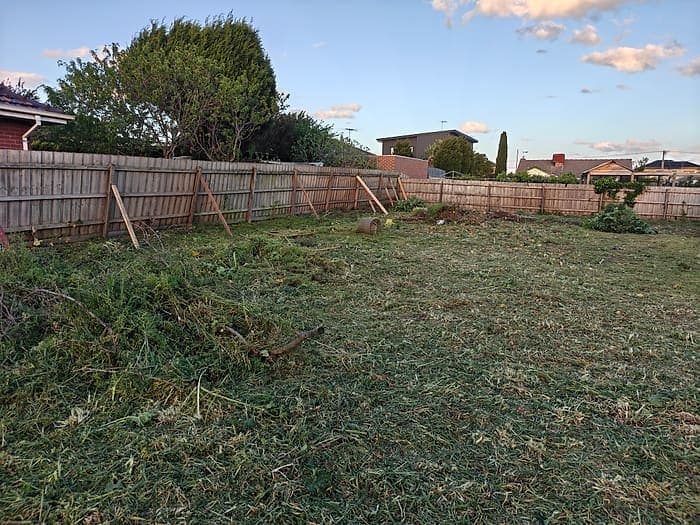
From our jobs
Frequently asked
How long does a council hard rubbish booking usually take to come around?
Can I put my hard rubbish out a week early so it is ready?
What happens if my hard rubbish pile is bigger than the council limit?
Will the council take a pile of loose garden clippings with hard rubbish?
Can a tenant book the council hard rubbish collection?
Is a private removal worth it when the council collection comes with my rates?
How do I know a private rubbish removal business disposes of waste lawfully?
Sources and further reading
- Hard rubbish (City of Whittlesea)
- Our hard waste collections (Darebin City Council)
- Hard rubbish, branches and cardboard (Glen Eira City Council)
- Hard waste collection (Merri-bek City Council)
- Hard waste collection (Moonee Valley City Council)
- Dumped waste (EPA Victoria)
- EPA's winter clean up tips (EPA Victoria)
- Manage asbestos waste (EPA Victoria)
Caring for Melbourne gardens since 2019. Updated 18 November 2026.