


Green waste and rubbish guide
Green waste disposal options in Melbourne
By the Action Garden team · Updated · 11 min read
Checked against: Victorian Government, Glen Eira City Council, Merri-bek City Council, City of Whittlesea, Banyule City Council, EPA Victoria
TL;DR
- Soft garden waste belongs in the lime green FOGO or green bin, which turns clippings into compost and mulch instead of sending them to landfill.
- Branches usually need a separate bundled branch booking, with rules on length, thickness and ties that differ by council.
- Transfer stations and green waste facilities take larger loads you can carry yourself, usually unloaded apart from general rubbish.
- Home composting and mulching suit a steady flow of soft waste, but not seeding weeds, diseased plants or thick wood.
- Burning is rarely an option on suburban blocks, and a removal service suits big, mixed or urgent piles.
| Route | Best for | Check first |
|---|---|---|
| FOGO or green bin | Clippings, leaves, weeds and soft prunings, week by week | Your council's list of what goes in the bin |
| Bundled branch collection | Tied branches a few times a year | Bundle length, thickness, ties and how many per booking |
| Transfer station or green waste facility | Trailer loads you can move yourself | Opening hours, proof of address and what is accepted |
| Home compost and mulch | A steady flow of soft waste | Keep out seeding weeds, diseased plants and thick wood |
| Removal service | Big, mixed, awkward or urgent piles | What the operator takes and where it goes |
What are your green waste disposal options in Melbourne?
You have six main routes: the FOGO or green bin, a council bundled branch collection, a trip to a transfer station or green waste facility, composting and mulching at home, a skip, or a removal service. Most households use two or three of them through the year, depending on the season and the size of the job.
The right route depends on three things: how much there is, what it is made of, and how soon it has to go. A weekly bag of clippings and a 4 cubic metre hedge cut-back are different problems, and they rarely share an answer.
Green waste here means anything that grew in the garden: grass clippings, leaves, weeds, prunings, branches, palm fronds, spent plants and old mulch. More on each kind of waste is in our green waste and rubbish guides. Building debris, soil and junk are a separate question, covered in our complete guide to garden rubbish removal in Melbourne.
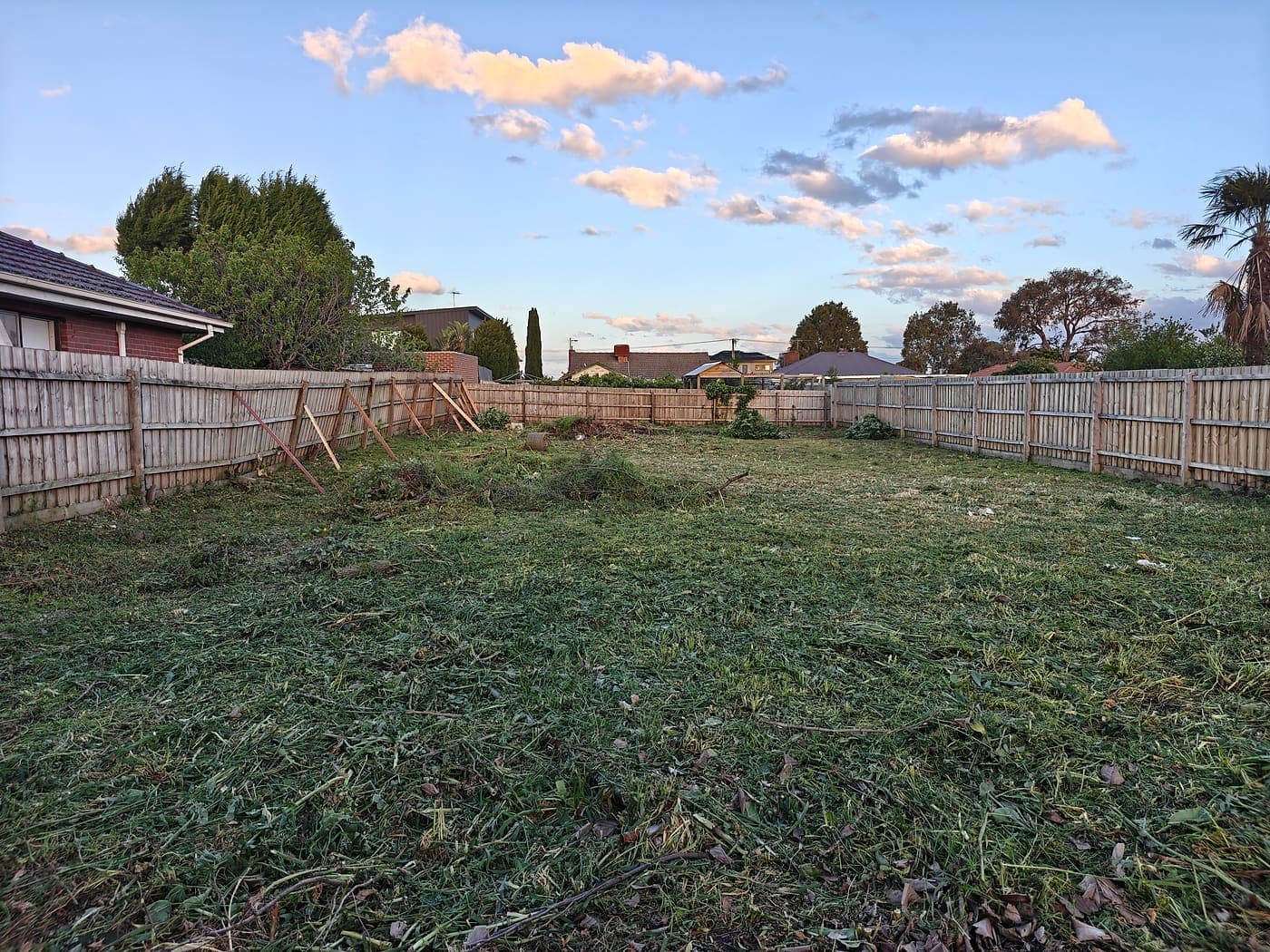
A horizontal diagram that grows from left to right. On the left, a small handful of clippings flows into a lime green bin. Next, a tied bundle of branches sits on the nature strip with a council truck. Then a loaded trailer heads for a transfer station sign. Beside it, a compost bay turns slowly. On the far right, a large mixed pile is loaded onto a removal truck. A thin scale line under the whole diagram runs from "a bin load" to "several cubic metres", so the reader sees each route matched to a size of job.
How do the green waste routes compare?
The FOGO bin handles small, steady volumes; bundled branch bookings take tied woody waste a few times a year; transfer stations and facilities take what you can carry; home composting takes soft waste slowly; and a removal service takes the rest. The table shows where each one fits.
Side by side
Green waste routes side by side
| Route | Typical volume | What it takes | Who does the work | Main limit |
|---|---|---|---|---|
| FOGO or green bin | One bin per collection | Clippings, leaves, weeds, small prunings | You | Bin size and collection day |
| Bundled branch collection | Up to the council's limit, a few times a year | Tied branches within length and thickness rules | You bundle and place; council collects | Number of bookings and bundle rules |
| Transfer station or green waste facility | A car boot to a trailer load | Most garden organics, sorted from other waste | You load, drive and unload | Needs a trailer or ute; hours and residency rules |
| Home compost and mulch | A steady trickle | Soft green waste; chipped prunings | You | Slow; not for seeding weeds or thick wood |
| Skip bin | Several cubic metres over days | Green waste, often in a separate or green-only skip | You load | Space, permits on council land, restricted items |
| Removal service | Any size | Green waste and mixed piles, depending on the operator | The crew | Hazardous items need their own route |
A common pattern in Melbourne is the bin every week, a branch booking once or twice a year, and a removal for the one big job, such as a hedge rejuvenation or the clean-up before a sale. Skips are compared in detail in our guide to skip bins and rubbish removal for garden clean-ups.
What goes in the FOGO or green bin?
Soft garden waste goes in: grass clippings, leaves, weeds, flowers and small prunings that fit with the lid closed. In FOGO areas, food scraps go in too. Plastic bags, soil, rocks, timber and anything hazardous stay out, and your council has the final word.
The Victorian Government (opens in a new tab) says that by 2030 "all Victorians with council recycling and waste services will have their own lime green-lidded FOGO bin or a communal drop-off location", and that until then "the rules about what can and cannot go in each bin are specific to each local government area". Our guide to what goes in the FOGO and green bin goes through the item lists in detail.
The bin is the right home for green waste for a simple reason. When garden clippings go into the general rubbish bin they end up in landfill, where, in the Victorian Government's words, "they break down in a way that releases methane, a potent greenhouse gas."
How do council bundled branch collections work?
You book a collection, cut branches to the council's maximum length and thickness, tie them in bundles with natural string, and place them out as instructed. Councils differ on how many bookings you get, how many bundles each takes, and whether branches come out of your hard rubbish allowance.
Three councils show the range, as their pages read in November 2026:
| Council | Bookings | Bundle rules | Not accepted |
|---|---|---|---|
| Glen Eira (opens in a new tab) | Up to three bundled branch collections per financial year | No more than 2 m long and 30 cm thick; up to 20 bundles, 3 cubic metres in total; strong string, not plastic or wire | Branches over 15 cm thick, stumps, roots, loose or bagged green waste, ivy, weeds, grass, leaves |
| Merri-bek (opens in a new tab) | Booked from the 2 cubic metre annual hard waste allocation, using at least 1 cubic metre | Tied with natural fibre; items under 1.5 m long and liftable by two people | Anything on the council's not accepted list |
| Whittlesea (opens in a new tab) | Hard rubbish only | Garden waste is not accepted in hard rubbish | Garden waste |
The lesson is to read your own council's page before you start cutting. A bundle that is 10 cm too long or tied with wire can be left on the strip.
How to bundle branches so they get collected
Cut branches to just under the council's maximum length, so a slightly crooked stem does not tip the bundle over the limit. Lay the thickest pieces at the bottom, keep the cut ends together, and tie each bundle in two places with natural string or twine.
Keep every bundle light enough for one or two people to lift, as the council asks. Strip out ivy, weeds and anything thorny if your council refuses them, and keep loose leaves for the green bin. Place the bundles neatly in the spot and window your booking gives.
Can you take green waste to a transfer station or green waste facility yourself?
Yes. Council transfer stations and resource recovery centres across Melbourne take garden waste, and private green waste and composting facilities take loads too. You will need a trailer or ute, a covered and secured load, and a check of the facility's hours, accepted items and residency rules before you go.
Green waste is usually unloaded in its own area, apart from general rubbish, so keep it separate on the trailer. Material contaminated with plastic, soil, timber with nails, or treated wood may be refused or treated as general waste.
A tip run makes sense for a load of one or two trailers that you can lift safely, and when you have the time to drive, queue and unload. It makes less sense for wet, heavy or awkward material, such as palm fronds or roots with soil, and for anyone without a trailer. Tie or net the load before you drive: loose leaves and prunings blow off trailers easily, and anything that falls onto the road counts as litter.
What a facility may ask you on arrival
Council-run sites often ask for proof of a local address, such as a rates notice, licence or utility bill. Staff may ask what is in the load and direct you to the green waste area, then to other areas for metal, timber or general rubbish.
Some sites charge by load size and some limit the number of visits. Hours change with the season and on public holidays, so check the page on the day.
Can you compost or mulch green waste at home?
Yes, for soft material in a steady flow. Leaves, clippings, spent annuals and soft prunings compost well, and chipped prunings make a coarse mulch for beds. Thick wood, weeds that have set seed, and diseased plants are better sent away, because a home heap rarely gets hot enough to deal with them.
A working home system usually means:
- two or three bays or bins, so one can mature while another fills;
- a mix of green material (clippings, fresh leaves) and brown material (dry leaves, shredded prunings);
- enough moisture to feel like a wrung-out sponge;
- turning every week or two to let air in.
Mulching prunings back onto beds closes the loop fastest. Our step-by-step guide to mulching garden beds covers the right depth and the gap to leave around stems.
Large volumes are where home systems fail. A hedge cut-back or a full garden rescue can produce more in one day than a backyard compost takes in a year, and that is the point to use the bin, a branch booking or a removal.
Is burning green waste allowed in Melbourne?
On most suburban blocks, no, or only with a permit that is rarely granted. Councils control open-air burning through local laws, and the CFA declares fire danger periods when it is banned outright. Check your own council's local laws before burning anything.
Banyule shows how strict the rules can be. It says "You must obtain a permit to burn green waste on your property", that a permit "will only be granted if there are no other means to dispose the materials", and that permits are only granted to properties of 2,500 square metres or larger. Smaller properties are pointed to the bundled branch collection instead.
Burning also wastes material that could become compost and mulch, and the smoke affects neighbours. Our post on burning off garden waste in Melbourne covers the council and CFA rules in more depth.
What happens to green waste after it leaves your garden?
Green waste collected in FOGO and green bins goes to a processing facility, where it is turned into compost and mulch for farms, parks, gardens and landscaping. Green waste that goes into the general rubbish bin goes to landfill instead.
The Victorian Government describes the cycle in five steps: you put garden scraps in the bin, trucks take them to a processing facility, "food scraps and garden clippings are turned into compost and mulch", the compost goes to farmers, and the food they grow goes back to the shops. Contamination is the weak link: if packaging and rubbish go in the bin, the compost "becomes contaminated and may go to landfill."
Our post on where your green waste goes after it leaves the garden follows that journey further, including what happens to loads taken by removal services.
When is a removal service the right way to dispose of green waste?
A removal service is the right choice when the pile is too big for the bin and the next branch booking, mixed with other waste, hard to reach, or due to be gone by a set date. It is also the safe option when nobody at the property can lift, load and drive a trailer.
Common examples are a hedge rejuvenation, an overgrown garden rescue, a storm clean-up, an end-of-lease tidy and the yard clean-up at the end of a renovation; our post-renovation yard clean-up checklist covers that last one step by step.
Leave branches that are hung up in trees, under tension after a storm, or anywhere near power lines to professionals. Wear gloves and long sleeves for palm fronds and thorny prunings, and do not lift heavy, wet or soil-laden material alone. If a green waste pile hides fibro, old pipes or anything that might be asbestos, stop and contact a licensed asbestos removalist; do not break or bag it.
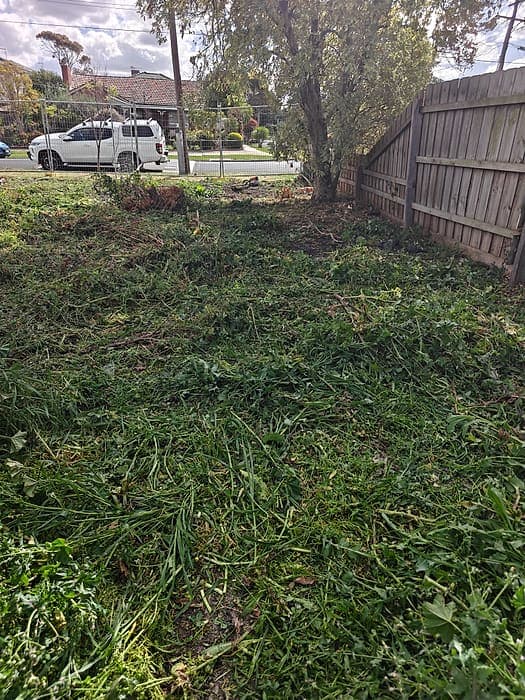
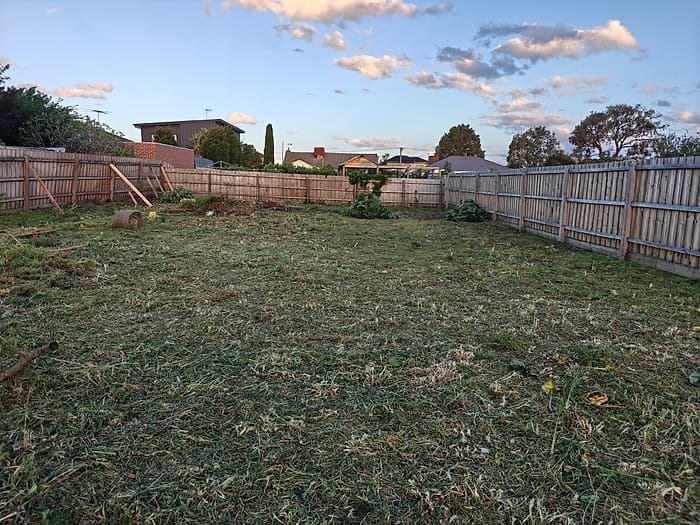
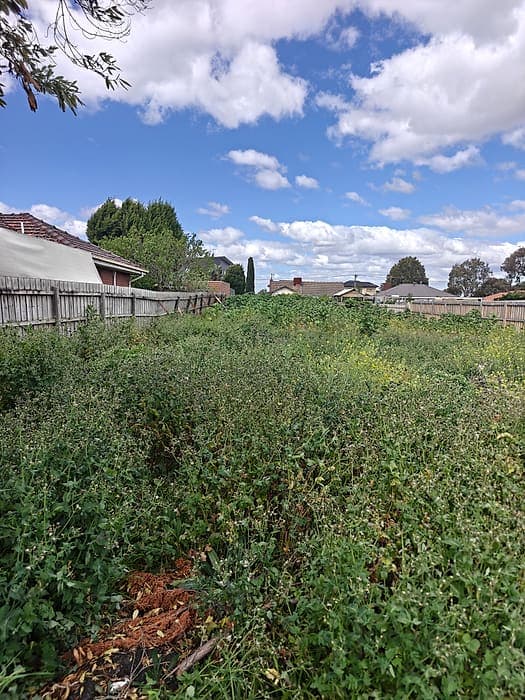
Our rubbish removal service takes garden waste and prunings, loaded by our team, with a sweep and tidy afterwards. A quote depends on the volume, which we estimate in trailer loads, the type of waste, the access and carry distance, and any sorting for recycling. Green waste goes to the local council tip or transfer station, where it is disposed of properly and repurposed; it is never dumped.
If the pile has outgrown the bin and the branch booking, a photo is all it takes to get a free quote.
Your Garden. Our Promise.
From our jobs
Frequently asked
What is the difference between green waste and FOGO?
Can I ask my council for a second green waste bin?
Do green waste facilities take loads from people outside the council area?
Are tree stumps and roots counted as green waste?
Can lawn clippings that were sprayed with weed killer go in the green bin?
Is it better to compost green waste at home or use the FOGO bin?
How long can I store a green waste pile before it becomes a problem?
Sources and further reading
- Recycling food and garden organics in Victoria (Victorian Government)
- Standardising household recycling across Victoria (Victorian Government)
- Hard rubbish, branches and cardboard (Glen Eira City Council)
- Hard waste collection (Merri-bek City Council)
- Hard rubbish (City of Whittlesea)
- Burning off, wood heaters and smoke (Banyule City Council)
- Dumped waste (EPA Victoria)
Caring for Melbourne gardens since 2019. Updated 18 November 2026.